




Reimagining the Core of Our Faith
Quakers tend to be mystics. Across all of our differences, Quakers use the metaphor of the “Inner Light” to describe the object of their search: whether the Divine or universal reality. They believe that the Inner Light is elusive; it is easily obscured by human-created obstacles or distractions. It is easily misunderstood, or inadequately articulated or implemented.
Quakers believe, however, that if that Inner Light is diligently, carefully, respectfully, and honestly sought in the company of diverse but like-minded, well-intentioned people, it can be trusted to guide them toward that which will give their lives meaning, purpose, joy, fulfillment, and inner peace. It will unite its seekers as one with all of life. It will guide them in discerning and removing the causes of war and conflict; it will lead them into a world of peace and mutual sufficiency.
A second metaphor common among Quakers is that of the “journey.” Life is a journey during which we can learn to discover joy through right relationships with each other and nature. From these relationships we can learn and understand the world, its evolutionary function, and our role as living beings within it.
The challenge facing Quakers today, however, is not what they believe. The challenge is how to feel and share the experience described by George Fox: “There is one, even Christ Jesus, that can speak to thy condition.” His experience must be described and shared in new ways, using contemporary language.
In the beginning of his Michener Lecture to Southeastern Yearly Meeting (SEYM), in 2018, Friend C. Wess Daniels quoted from rabbi and theologian Abraham Joshua Heschel’s God in Search of Man:
Religion declined not because it was refuted, but because it became irrelevant, dull, oppressive, insipid. When faith is completely replaced by creed, worship by discipline, love by habit; when the crisis of today is ignored because of the splendor of the past; when faith becomes an heirloom rather than a living fountain; when religion speaks only in the name of authority rather than with the voice of compassion—its message becomes meaningless.
Daniels then spoke to SEYM Friends using the concept of “remixing the faith,” borrowing a musical metaphor for reworking a familiar piece of music into something fresh, new, interesting, and inviting while preserving its original energy and emotion. In 2015, he wrote a book on the subject, A Convergent Model of Renewal: Remixing the Quaker Tradition in a Participatory Culture.
Many people of faith believe that religious authorities are misinterpreting the guidance of the Holy Spirit, what Quakers call the Inner Light. Quakers are being called again to “speak Truth to power.” Discerning, articulating, and implementing the guidance of the Inner Light through contemporary language and targeted actions has never been more important.
The Bible and other religious writings must be re-examined, not to recommit to historic Quaker beliefs, but to discern and articulate contemporary applications of those testimonies.
The Bible and other religious writings must be re-examined, not to recommit to historic Quaker beliefs, but to discern and articulate contemporary applications of those testimonies: to “remix” them in a manner consistent with current understandings of science, moral psychology, and sociology. Continuing revelation is uniquely suited to that task.
Consider these examples:
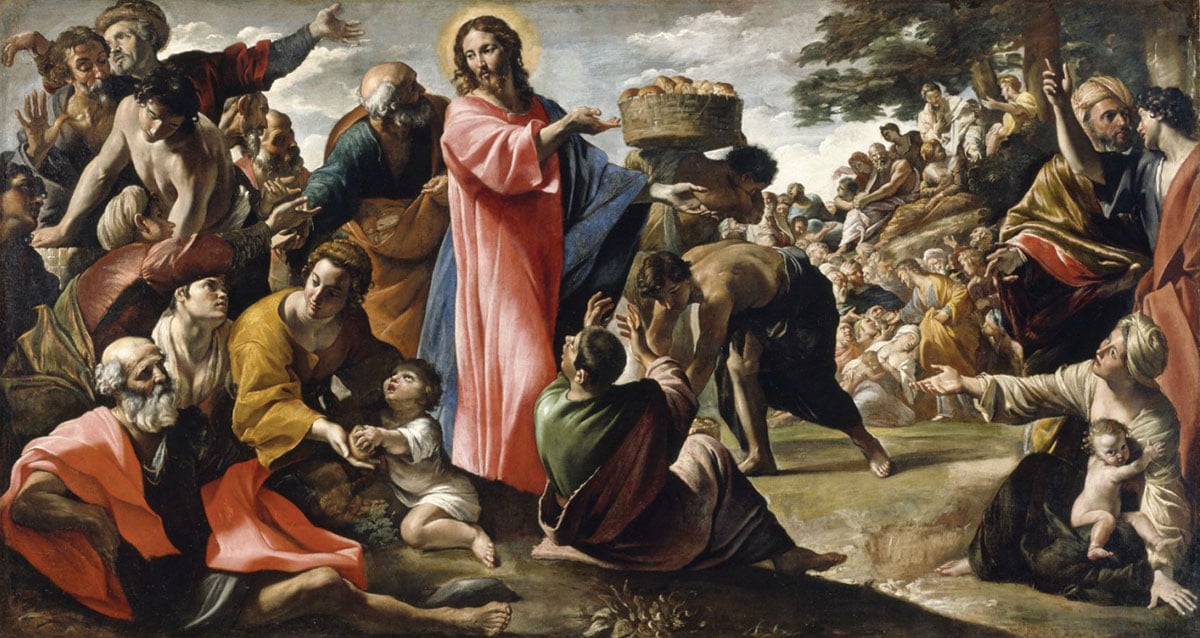
Was Jesus’s feeding of 5,000 people with five loaves of bread and two fish a miracle, or was it instead a demonstration of the evolutionary principle of reciprocity? If the former, the story loses credibility and relevance. Worse, it provides a plausible defense for inaction: “I’m no Jesus.” If the latter, however, it expresses an important truth worth further discernment in evaluating potential action.
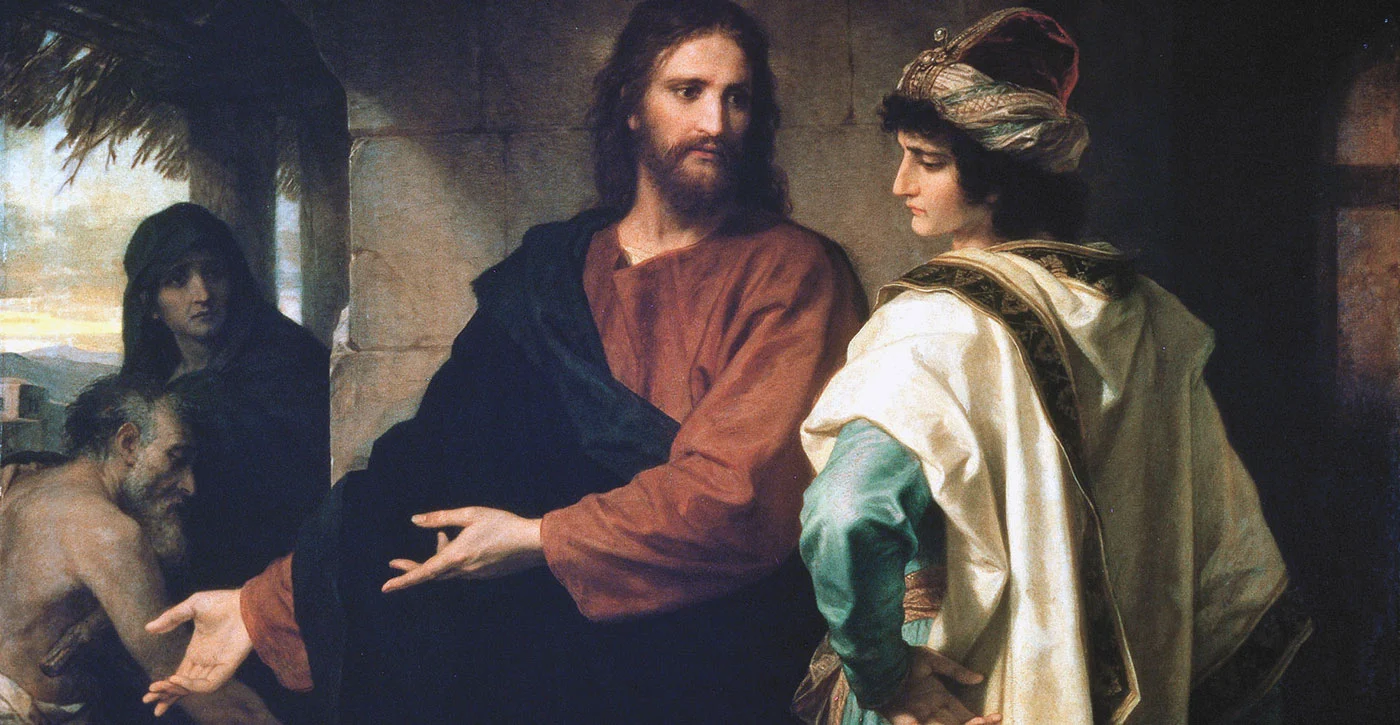
Were the stories of the rich young ruler and of the widow’s mite examples of the value of sacrifice? Or were they illustrations of a radical new economic model that could potentially reform capitalism, with results comparable to those described in Acts 2:42–47 (NIV):
They devoted themselves to the apostles’ teaching and to fellowship, to the breaking of bread and to prayer. Everyone was filled with awe at the many wonders and signs performed by the apostles. All the believers were together and had everything in common. They sold property and possessions to give to anyone who had need. Every day they continued to meet together in the temple courts. They broke bread in their homes and ate together with glad and sincere hearts, praising God and enjoying the favor of all the people. And the Lord added to their number daily those who were being saved.
The following is from Acts 4:32–35 (NIV):
All the believers were one in heart and mind. No one claimed that any of their possessions was their own, but they shared everything they had. With great power the apostles continued to testify to the resurrection of the Lord Jesus. And God’s grace was so powerfully at work in them all that there were no needy persons among them. For from time to time those who owned land or houses sold them, brought the money from the sales and put it at the apostles’ feet, and it was distributed to anyone as he had need.
Much of today’s political unrest is caused by income inequality and political polarization about economic issues. Capitalism seems to be working less for the benefit of the poor and more for the benefit of the rich. Economic profit increasingly takes priority over human need. Fewer businesses honor the Rotarian motto “Service above self. He profits most who serves best.”
A return to the biblical stories of Jesus might shed new light on old problems: offer solutions made possible by new technologies, such as artificial intelligence. The times are ripe for Quakers and other faith communities to remix their historical stories, applying them to the ulcers of war, starvation, loss, deprivation, and homelessness.
Jesus’s teachings might have been his attempt to describe a different economic system: a system based on provision through human relationships, rather than based solely on economic self-interest. He said, “Take no thought about what you shall eat or what you shall wear.” Might that be interpreted as “don’t worry about those things”? Might he have been suggesting that we have no control over the events of our lives; whether we are born into a rich family or a poor family; whether we experience good or bad fortune. In all things, therefore, he might be saying that we should not worry about what we can’t control. Instead we should trust that our needs will be met, like the “birds of the air” or the “lilies of the field.”
Instead of worrying about how our needs are to be met, we should focus on what action our Inner Light is guiding us to take. If misfortune happens, we will respond quickly and positively to restore those in need. We should cultivate relationships because we are all in this together: “All for one and one for all.”
We should not lay up treasure for ourselves on earth (capitalism) in order to protect ourselves from misfortune. That won’t work: it can be lost, spoiled, stolen, or simply be insufficient. Rather we should place our treasure in heaven (for example, human relationships) where others can create a GoFundMe to address the emergency confronting us. That is how the people described in the passages from Acts lived. That was the reported source of their joy and abundance. That was “heaven.”
Could Jesus’s instruction to the rich young ruler have been an assessment that what the young man lacked was purpose and joy? He was bored. He was just asking, “Is this it?” Perhaps Jesus was suggesting a possible solution: that he add some risk by selling all of his possessions and giving the money to the poor. That would give him a purpose (to feed himself). At the same time, it would give him the experience of joy inherent in the act of giving. In turn, the poor might find a way to reciprocate (see loaves and fishes above). At least, they would spread his story through succeeding generations, thus giving him a form of the “eternal life” he sought.
His suggestion might have been made not as an order, as the apostles misunderstood, but as pointing to the path of joy and meaning he sought, leaving it up to the young man to decide.
Quakers have an appropriate—even excellent—methodology for our time: an inward search in the company of other seekers. They offer an appropriate relationship to the sources of Truth: a diligent and objective search, with respect and an open mind but not with worship for any source.
Quakers have an appropriate—even excellent—methodology for our time: an inward search in the company of other seekers. They offer an appropriate relationship to the sources of Truth: a diligent and objective search, with respect and an open mind but not with worship for any source. Such an open and objective search can lead to new insight, meaning, relevance, and applications consistent with new knowledge and understanding of the physical world of which we are a part.
Quakers are not alone in that search. There are other efforts to reform (remix) Christianity in light of its diminishing relevance. What is sometimes called the Emerging Church is an effort to reach others who feel injured or alienated. New resources in that movement can aid our search for new understandings of ancient Truth.
People need to hear what Quakers offer in their remix. Quakers must express and demonstrate what they learn through language and action. Historical traditions should be updated in a manner consistent with current knowledge in order to inform these actions.
In addition to active nonviolent resistance, Quaker words and actions should be offered in culturally diverse groups formed around mutual interests unrelated to politics and committed to respectful conversation (see for example, Braver Angels, an organization dedicated to healing the partisan divide through conversation). In his book The Upswing: How America Came Together a Century Ago and How We Can Do It Again, Robert D. Putnam (a Swarthmore graduate) illustrates that process; a documentary about his books, Join or Die, is available on Netflix.
When we are guided by the Inner Light in a congregate search for Truth and patiently wait for a resonating manifestation of that Truth, way will open. That is what this Quaker believes.

Comments on Friendsjournal.org may be used in the Forum of the print magazine and may be edited for length and clarity.