I have always been Quaker, even before I really knew what that meant. I have been Quaker in my upbringing, but also in my way of being in the world. I am Quaker because of the way I have been living out my values for as long as I can remember. In my household growing up, I learned that God has no hands on Earth but ours. I have tried to take that forward by doing the work that I am called to do and by living my values.
In nursery school, my teachers assigned me to be a toy soldier in the Christmas play. Because I knew that I was a pacifist, I told them that I would not be a soldier. They took the toy soldiers out of the play.
I had always been told that all life is sacred. At four years old, I realized this meant I could no longer eat animals because they too are sacred. I have been vegetarian now for the past 27 years.
When I was in elementary school, we boycotted grapes. The United Farm Workers called for the boycott, and we refused to buy grapes that were sold by companies that were spraying their workers with pesticides. We used this economic power to be in solidarity with the mistreated workers. We also boycotted Coca-Cola because they did business in apartheid South Africa.
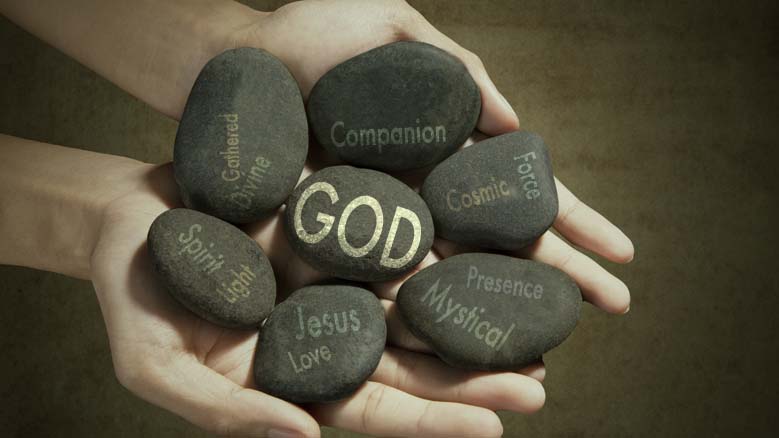
I grew up with the understanding that it is a privilege to have resources— money, time, choices, and opportunities— but that it is also a responsibility to be the steward of those resources. Before I understood the wider implications and the intricate connections in politics and economics, I knew that that still small voice, the inner light, the divine light, God—which to me are all the same—was informing my path and the choices I make along my journey. I have always known that I must be true to myself, listen to that still small voice, and follow my leadings with integrity and trust.
I was Quaker for 27 years and a member of Wellesley Friends Meeting for ten years before I ever came to New England Yearly Meeting Sessions. This is only my fifth year here at Sessions, so despite my deep and lifelong Quaker identity, I am in some ways still a newcomer. Even so, I was immediately taken in by the Young Adult Friends community in the most nurturing and loving way. This has undoubtedly changed my life.
One of the things I have realized recently about being Quaker is that we are all on different paths. We are all called to be different and to do different things. In order to live with integrity, we don’t do someone else’s work.
I have seen how sometimes “being” Quaker means being called to “do” something. Sometimes we are called to act because we are called to live in the world, not of it; we are called to live by example and live our values out loud. Sometimes we are called to action in concert with people who are on another path. I have worked with the Catholic Workers to shut down Guantanamo, but I am not Catholic. We are not the same but have worked lovingly together, side by side.
It has not always been easy for me to work with people who are different. I remember how I used to feel alienated from people who wear those WWJD— What Would Jesus Do—bracelets. However, one day it struck me that the answer to that question is simple: it is always that Jesus would love. What would Jesus do? Jesus would love. And I am totally on board with that. It’s not my vocabulary, it’s not my language, but the sentiment rings true. I know that if we can get to the heart of the matter, then we can find that common ground.
I still struggle to find the balance of being respectful of others’ leadings and paths, but also not betray my own sense of values, of truth, and not buy into cultural relativism and therefore deny the Light that is within all human beings.
When I was little, being Quaker meant that you looked for that of God, for the Light, in everyone, and that it was always in there. It meant you didn’t have to be everyone’s best friend, but that everyone had something good inside them. And I grew up thinking that all Quakers loved everyone else; after all, that’s what Jesus would do. It surprised me how hard it hit me when I realized that there were Quaker organizations with homophobic personnel policies, such as FUM’s policy that defines marriage as between one man and one woman, and operating within the bounds of homophobic government policies. I saw it shake my family to the core when they realized that in the eyes of some with whom we share the name Quaker, their two daughters are not in fact equal. For all my good work, for all the love I have to give and share, why am I somehow less than my sister because her partner is a man and mine is a woman?
I have been on a roller coaster ride trying to hold both the important and much needed work that Friends United Meeting does and the wonderful people who are called to do that work, while I also hold my family who have spent their whole lives trying to live by example and steward their resources of time and money in a way that feels faithful to their values. I feel a little of my heart break as I struggle to hold that work while my parents explain to me how they cannot be a part of something that spreads hate; how they cannot have it done in their name. I understand that.
It comes back to the different paths that we are all on. If we are all truly listening to our leadings and to what we must do, then we are all doing the right thing. In terms of our relationship as individuals and as a yearly meeting in FUM, I have come to think that we need to trust each other to listen to that still small voice and that we must do the work we must do. If God has no hands on Earth but ours, then it is our responsibility to do that work. For some of us, that work is going to Africa and working in an orphanage or helping bring clean water or food. For some of us, that work is putting time and money into organizations here and elsewhere that are working on other aspects of the root causes of poverty: inequality of access to healthcare and education or the prevalence of ignorance, fear, and hate. Just as I cannot ask some of you to stop your work with FUM Friends, I cannot ask others of you to be members—in name or in financial contribution—of a group that does not align with your values. You are all doing God’s work: you are all using your hands but in different ways.
I feel the spiritual grounding of the work that goes on in the FUM missions, and I feel the spiritual grounding of resisting membership in that group. One is not more holy, more spirit-filled, or more honest. They are both the living- out-loud manifestations of doing God’s work. To me, they are both exactly what we are supposed to be doing: we are supposed to be living examples of our values. As Quakers, we have a history of living among non-Quakers and not keeping our beliefs and values to ourselves. We do not tuck ourselves away in the safety of others who are all the same. We live in the world and not of it; we work in a world that needs us to take our values and live them out. To me, there is nothing more spirituallygrounded or Light-filled than living and breathing the testimonies in such a way that you are impelled to be the change you wish to see in the world. This is not political agenda or urgency, but spiritual urgency to act politically. We need to translate our “being” Quaker into “doing” Quaker. It turns out that this can look very different to different people, but I do believe it is all tied together by the spirit-led underpinnings of the Light.
There are many places where I have questions and concerns and where I know that I am still stuck.
I worry what it truly means to tolerate and accept difference in others; where is the line between loving others who are at different points on their own journeys and betraying my own values?
I have nagging concerns that eat away at my sense of peace: Why am I part of a yearly meeting that rejects membership in racist organizations but where racism still rears its hateful head? Why am I part of a yearly meeting that insists on membership in a homophobic organization while denying that homophobia lives among us still?
I worry about why we ally ourselves with groups that promote women and people of color in positions of authority while we also ally ourselves with groups that discriminate against LGBTQ (Lesbian/ Gay/Bisexual/Transgender/Queer) people.
I worry about questioning my own still small voice instead of listening fully and following faithfully what I know to be true and right.
I worry about homophobia, internalized homophobia, questions of white privilege and guilt, and how these struggles can get in the way of my listening to the Light and my leadings.
I wonder if other people have these struggles as well.
Through all of it, I am forever grateful to my loving family and my beautiful Young Adult Friends community for grappling with silent worship but not living silently, for talking about these issues and these struggles together, and for helping each other on our journeys as we crisscross along the way.