



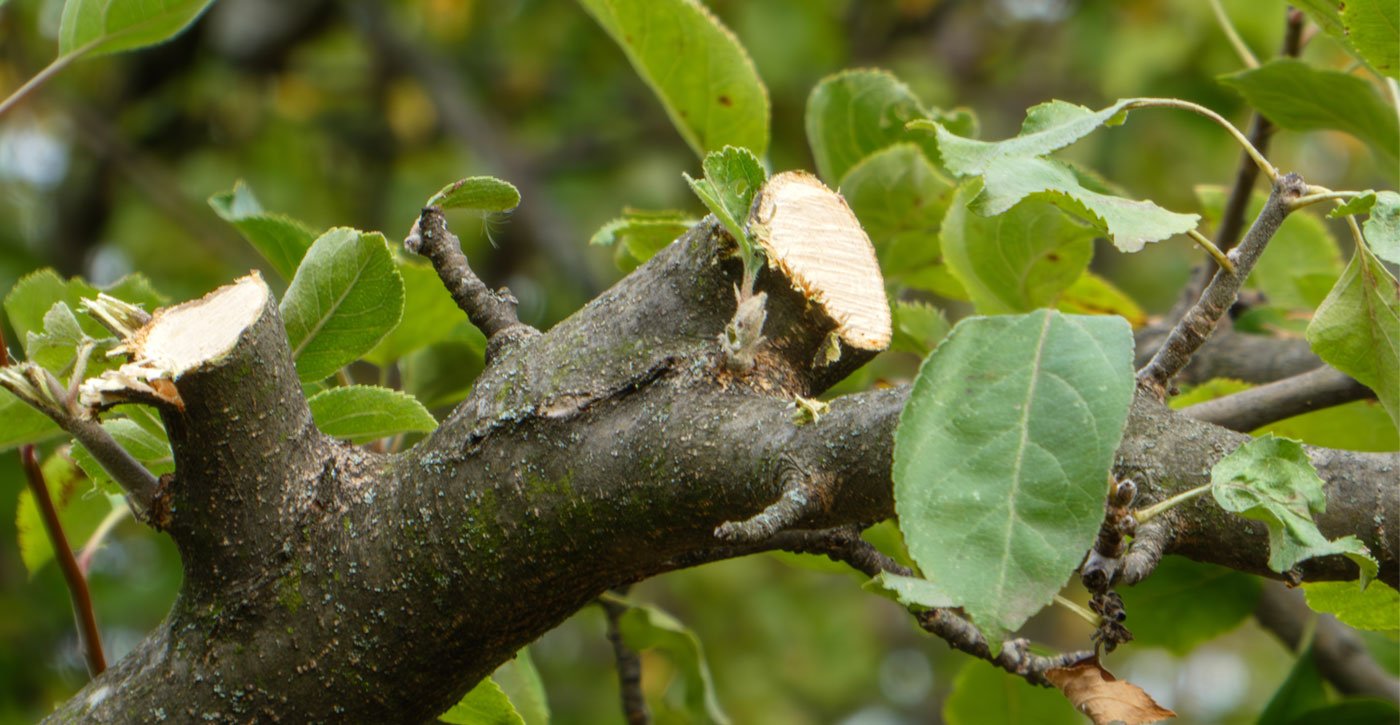
When my wife and I purchased our home in Elkins Park, Pa., back in 1999, she was pleased to discover on the grounds that there was a mature pear tree that we had overlooked in the inspection. As we moved in during late August, the tree was virtually groaning with ripe pears. They were plump and unblemished, but when we picked one to taste, we were disappointed in its bitterness; it seemed as if the flesh was bereft of sugar. All of them were like this.
Puzzled, we consulted an arborist who informed us that the tree had to be pruned in order to bear the kind of fruit we wanted. Skeptical but obedient to his expertise, we did as we were told, and miraculously, after cutting away about a third of the tree, next year’s crop was flush with sweet, ripe pears. The idea of cutting away healthy, thick plant tissue to produce healthier tissue was a strange concept for me, but after 20 years on the property, pruning has become a fall and spring ritual for all of our plants, empirical evidence that less may often mean more.
As children, we produce more connections—synapses—between brain cells than we need. During puberty, the body carries out a kind of neural topiary, cutting away synapses and allowing others to strengthen. As many as half of these brain junctures are cut away by our bodies, resulting in more efficient, sophisticated, and richer cognitive activity. It was once believed that this pruning stopped in our late teens, but it is now accepted that this neural pruning continues into our late 20s and beyond. Quantity is sacrificed for quality, even in the physiological vineyard of the very cells that constitute human consciousness.
I once thought of this sitting in meeting for worship as I was looking at some of the senior members. One couple in particular who were in their late 80s were hale, hearty, and cogent as tax attorneys. They once owned a huge house and raised a family, but in their own words, they consciously pruned back their lives as they reached the age of 70: selling off what seemed unnecessary, perhaps even counterproductive, and moving into a small apartment. Both husband and wife say that the last 20 years of their lives have been the richest they can recall: the spiritual fruit of their lives laced far more heavily with the sweet and subtle scent of self-awareness and connection.
It is hard in our culture to talk about death. Often it is seen as morbid or negative and depressing, and I suspect that this social quieting makes the prospect seem even more terrible and isolating. As I sit in silence and look at the beauty of the elders in our meeting and then glance at the inchoate longings of the children and younger members, I think perhaps that even rich souls must be pruned away to make way for new ideas, new directions, new possibilities. It is the way of things, nothing more.
Viewed in this context, death does not perhaps lose its sting entirely, but it certainly gives us a possible way of understanding that connects us more deeply to the miraculous nature of creation: death and rebirth, its myriad cycles and processes. Death isn’t personal; it’s just a part of the business of life.
We want to hear from you, not an AI! Please be thoughtful and use your own words. Comments on Friendsjournal.org may be used in the Forum of the print magazine and may be edited for length and clarity.