



Acknowledging the Dark Legacy of Quaker-Run Indian Boarding Schools
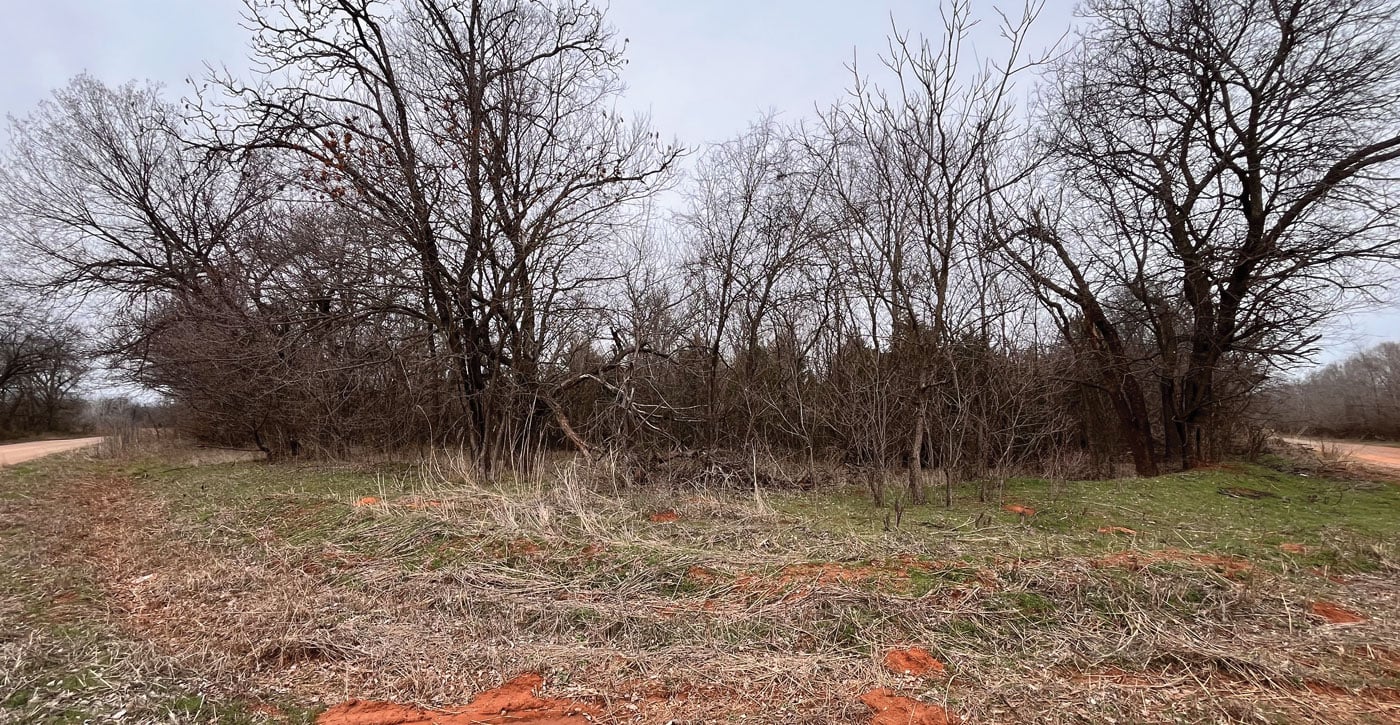
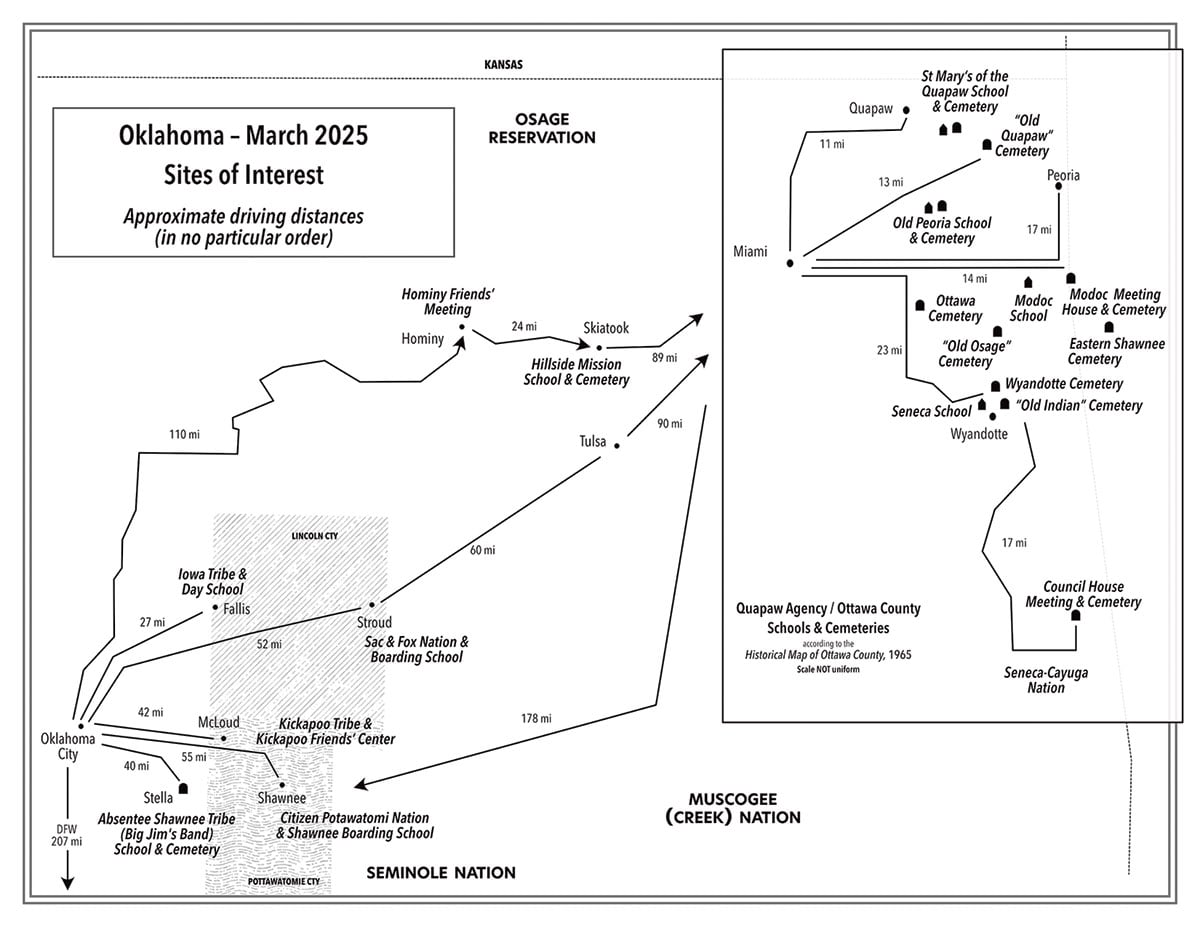
Somewhere in the overgrown field in front of us was the site of a day school established by Indiana Friend Elizabeth Test for the Iowa Tribe. Like other schools we will try to find, we have only vague clues to the exact location: a mark on the map of the area from 1901 overlaid on a modern map to reveal approximate coordinates. We stop at the intersection of two red-clay and gravel roads near the ghost town of Fallis in what is now known as Oklahoma. It seems like this is the best we are going to do.
My wife, Mary, and I get out and pick a spot about ten feet from the roadway to pray. We are here to remember the children who were sent to this school. The goal of these schools was to assimilate Native people and open up the land for settlement and exploitation.
Our ceremony is simple. We settle into silent, waiting worship and offer prayers for healing and repair for the Iowa children, for their families and Tribes, for all of the Indigenous People who have been scarred by the trauma of Indian boarding schools, and for a new relationship between the descendants of the students and the descendants (spiritual and literal) of the teachers and missionaries who ran these schools.
At the urging of an Abenaki friend and teacher, we offer tobacco and water collected from Quincy Bay near our home in Massachusetts. As convinced as I am of the Quaker testimonies about worship, the incorporation of Native practices has come to mean a lot to us. It has become, in the terms of a catechism, “a visible sign of a spiritual reality,” of the interconnectedness of all people and all life.
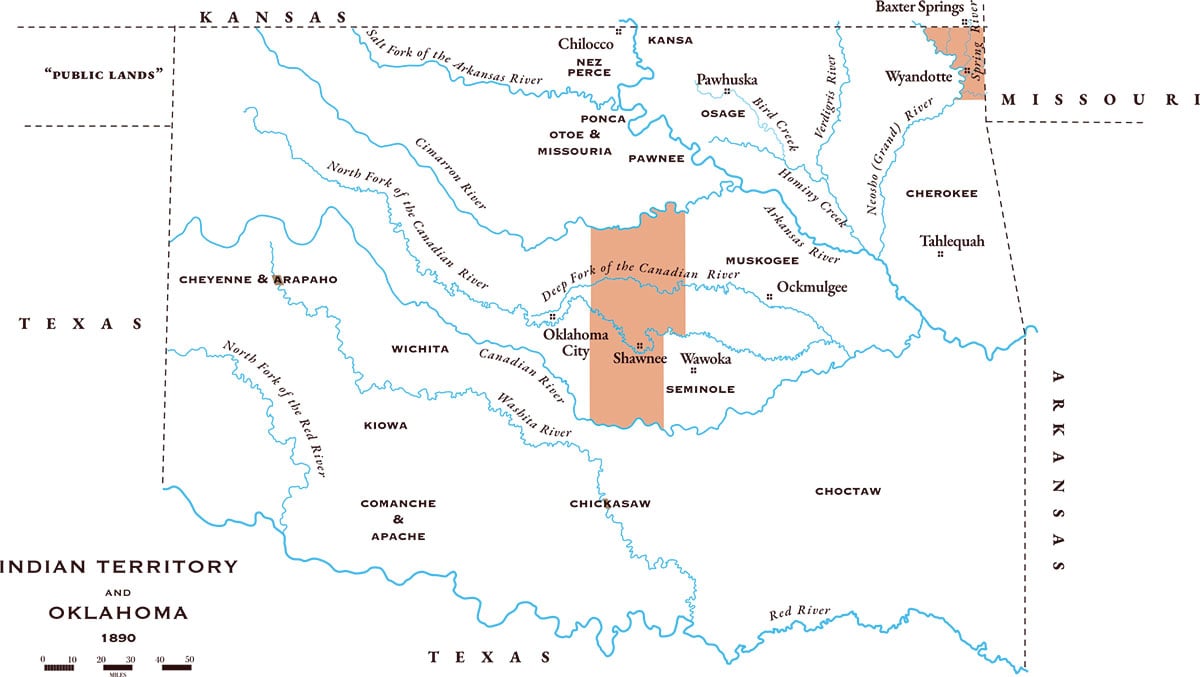
Our visit to the Iowa Nation was the first stop on our 12-day trip through the parts of Indian territory, now Oklahoma, that formed the Quapaw and the Sac and Fox Agencies, home of the Quapaw, Ottawa, Peoria, Miami, Modoc, Eastern Shawnee, Wyandotte, Seneca-Cayuga, Iowa, Sac and Fox, Kickapoo, Absentee Shawnee, and the Citizen Potawatomi Nations. These correspond to Ottawa County in northeast Oklahoma, and Lincoln and Pottawatomie Counties a little southeast of Oklahoma City.
In 2022, New England Yearly Meeting (NEYM) took up the urgent request by Indigenous advocates that all religious denominations examine their roles in the Indian boarding schools. Research conducted by New England Friends—and informed by the foundational work of Paula Palmer of Boulder (Colo.) Meeting and Friends Peace Teams—has shown that NEYM was particularly focused on those two agencies, sending teachers, missionaries, money, supplies, and clothing to support 13 day and boarding schools there.
New England Friends were also deeply involved in the design, advocacy, and implementation of the overall program of cultural erasure and land theft. The contours of that involvement have yet to be adequately studied.
Over the next week-and-a-half, we covered 1,100 miles and visited or tried to visit 11 schools. We also visited the cultural centers of five of the 13 Tribes in those agencies.
Our leading for taking this trip was based on a recommendation approved at NEYM sessions in August 2024: that New England Friends should “explore opening communications towards offering a collective apology and asking what first steps might be taken” to support healing and repair within the Tribes and between the Tribes and New England Quakers.
Mary and I had many transformative experiences, both mundane and profound: spending an hour with a Kickapoo man who welcomed us to the Sac and Fox Cultural Center and shared his experiences growing up as an Indian in a White society; driving through the devastation wrought by the ruthless mining of lead and zinc on Quapaw land; traveling through the sweeping landscape so different from the woodlands and river valleys that were home to many of the 39 Tribes who now call Oklahoma home; being reminded at nearly every stop of the record of broken treaties and promises; and seeing the industry and determination to heal and thrive among the Citizen Potawatomi and the Modoc Peoples.
Most memorable for us were the two occasions we worshiped with largely Indigenous congregations—Kickapoo Friends Center and Hominy (Okla.) Meeting—that were formed more than a century ago, and the extended conversations we had with tribal officials from the Wyandotte and Modoc Nations.
The Kickapoo mission was begun in the 1890s by Elizabeth Test, an indomitable teacher and missionary. Hominy Meeting was established at the request of elders of the Osage Tribe in 1904. We are grateful for their warm welcome and for the powerful worship we were privileged to join.
Meetings with the Wyandotte tribal heritage director and the Modoc tribal cultural preservation officer and their staffs were deeply moving. They talked about preserving and passing on their cultures, revitalizing their languages, and making sure that the full stories of their Tribes are told. All four made clear how central it is to their work that they locate the remains of all the children who died while attending the boarding schools. We shared some of the material NEYM has collected and began to think about ways New England Friends could support the healing that is needed. “It is never too late to begin repair,” Wyandotte Nation’s Sherri Clemons insisted.
The nineteenth-century Quaker missionaries and teachers who answered the call to help educate Native children brought with them the “good news” of God’s unfailing love. They also brought valuable skills—reading, writing, and arithmetic—that would better equip Indigenous People in their negotiations with government and railroad officials, would-be settlers, miners, and land speculators. Always at a disadvantage, Native elders used these tools to negotiate the best deals they could for their people in the face of unrelenting pressure. The extensive exhibit in the Citizen Potawatomi Nation Cultural Center in Shawnee, Oklahoma, documents in detail the efforts of tribal leaders to preserve Native culture and sovereignty.
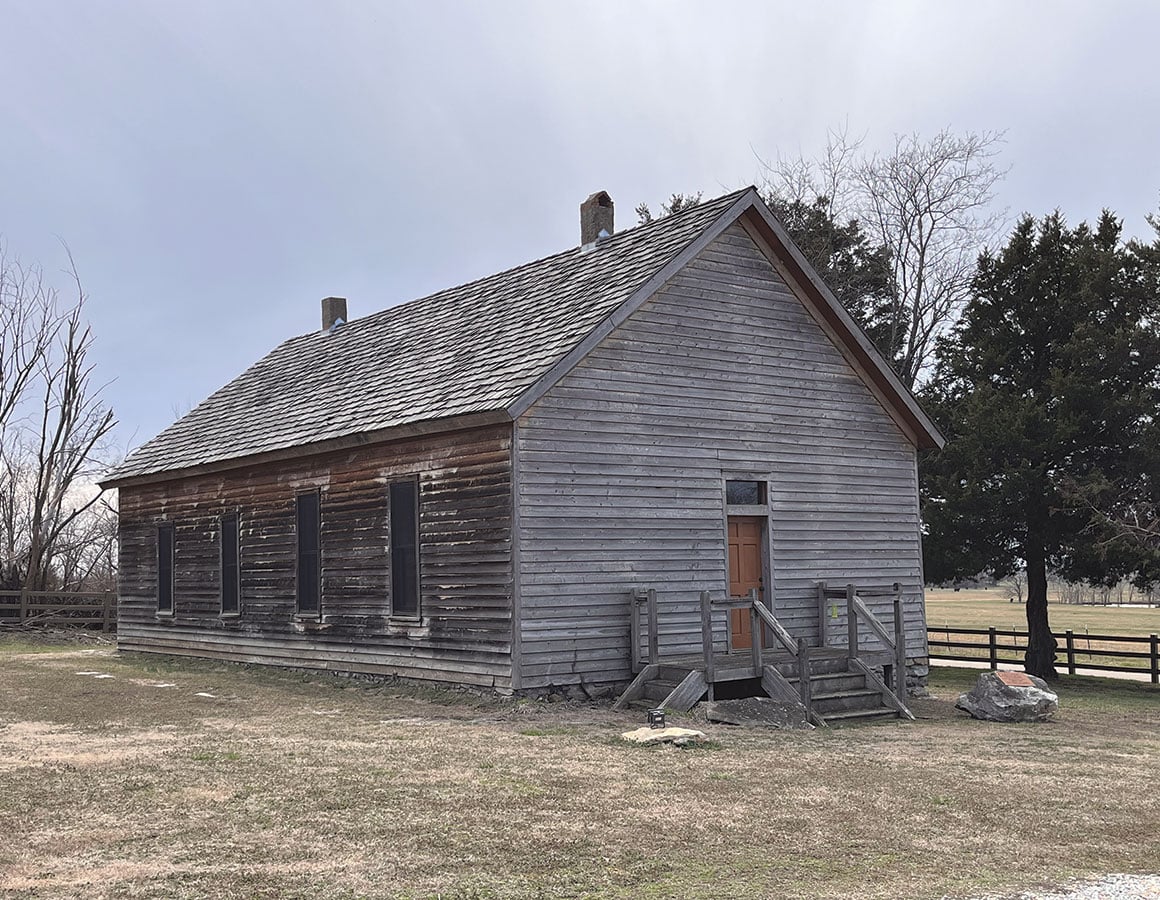
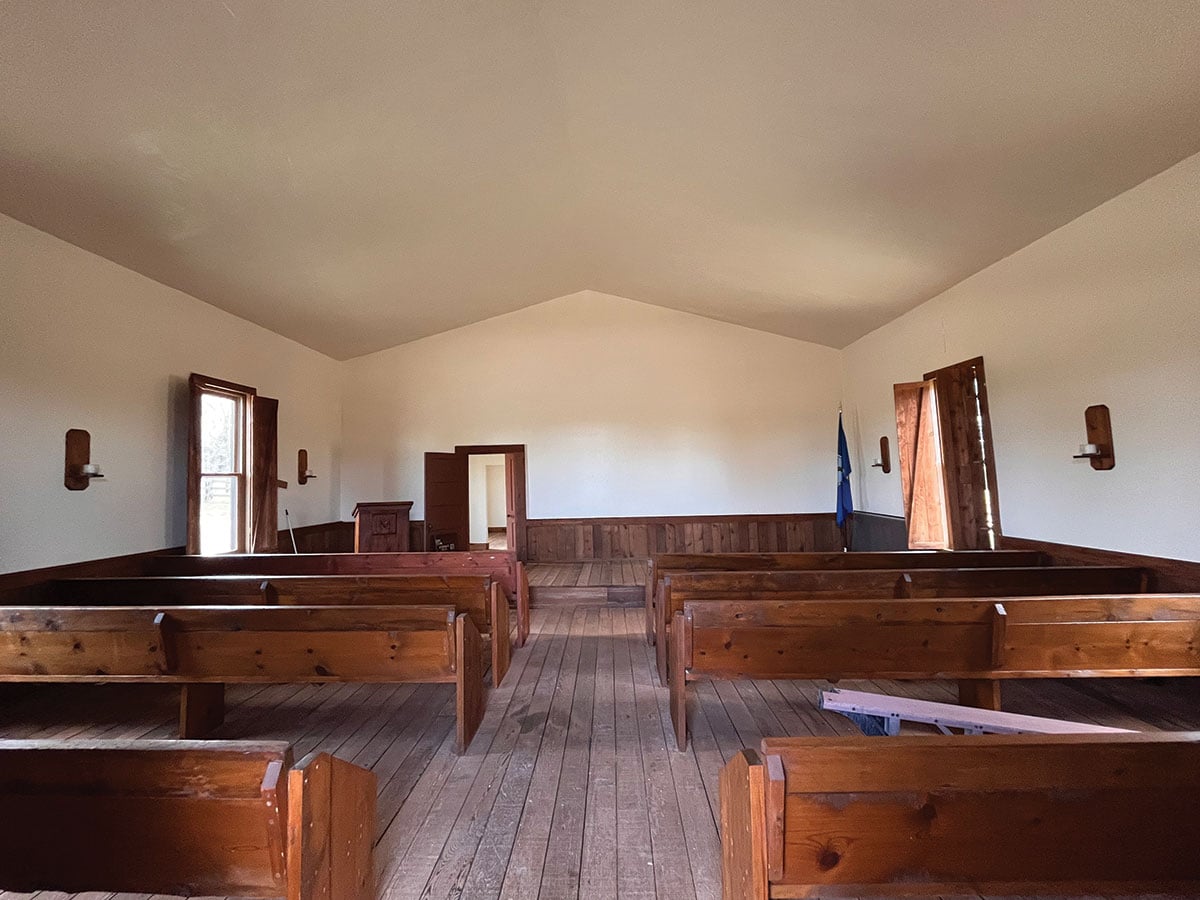
Exterior and interior of the Modoc church in Miami, Oklahoma.
Today, many Indigenous leaders are vocal about what was lost during the boarding school era. The testimonies of countless women and men detail the abuse and neglect in the Indian boarding schools, the shattering of families, and the persistence of trauma. A number of books—scholarly studies and personal memoirs—describe the traumatic rituals of initiation: cutting off braids, replacement of cherished personal items with uniforms and unfamiliar clothing, separation from immediate and extended families and clans, and punishment for using Native languages and participating in traditional practices.
A section of the tribal history displayed in the Cultural Center and Museum for the Wyandotte Nation says:
The place you now stand was once reserved for the indoctrination of little Indian children. The school strived to teach the Indian children to be good white children in an increasingly white community. Hazel Wallace . . . stated in a 1975 interview, “The teachers tried to make white children out of us. We were taught and ordered to forget the old customs and were punished if we spoke our own language.”
Studying the history and impact of the Indian boarding schools and the role that Friends have played in shaping the life of Indigenous People in the United States involves holding multiple, seemingly contradictory realities in mind at the same time: the profound trauma that many Native People attribute to the boarding school era and the past and present embrace of Quakerism and Christianity by many Indigenous People; the clear-eyed assessment by Friends on the Indian committees of the yearly meetings and the Associated Executive Committee of the desperate situation of Indigenous People and their own occupation of land taken from Native People by theft or force; insistent requests by tribal elders and leaders for education for their children and the alienation felt by Indian children who forgot or never learned the languages and dances of their elders or their own sacred names; and gratitude for the boarding schools by some Native People and the outrage of others.
Three reflections have continued to challenge us:
Assimilationist Education
Schools established and operated by Quakers under President Grant’s “peace policy” were important proving grounds for the elements of an assimilationist education. Links between students and their families, cultures, Tribes, and land were stretched or severed. Native languages were suppressed and the physical reminders of home—moccasins, buckskins, blankets—were all thrown away or burned (or kept by teachers and missionaries as souvenirs of a “dying” race). But these early Quaker schools were small and local, and the privations involved paled in comparison to the harsh regimen of the large, off-reservation Indian industrial schools operated by the government or by other religious denominations on contract. One enduring influence of Friends is clearly seen in their vigorous advocacy for the complete erasure of tribal life and identities and the wide-scale theft of Native land.
It is essential for Quakers to account for their conduct with the schools if we are to humbly and candidly engage with the descendants of those who attended places like the Seneca School and the Sac and Fox Agency Boarding School and make good faith offers of reparative action. But it is not enough. We must understand and be accountable for our embrace of what today would have been judged genocidal policies and our willingness to employ coercive practices despite our own history of “sufferings” at the hands of the State.
An Honest Reckoning
Indigenous People tell us that for them the path of healing and repair is long and difficult. The haunting question of what was done with the children is central. Friends can help through an honest reckoning of our past and our role in assimilationist policies and practices, and through sharing our resources: archival, financial, and spiritual. We can make this journey with them, but, as Alaskan Friends have reminded us, Native People are driving and we are in the backseat. Giving up our need for control and for recognition is the only way forward.
Building Ongoing Relationships
Talk of reparations is often reduced to writing checks, which sounds like a transaction. Our experiences and the wisdom of Patti Krawec, author of Becoming Kin, encouraged us to think about the importance of rooting reparative action in ongoing relationships. The course of repair between Alaska Friends Conference and Native Alaskans and between Quakers in Maine and their Penobscot and Passamaquoddy neighbors show how the work of repair is grounded in carefully nurtured, candid, and respectful relationships.
For decades, Friends heard a call to bring what Light they had to uplift embattled Native People. They lamented and protested the greed and violence that had brought such desperate circumstances to the Cherokee, the Shawnee, and many other Indigenous Tribes. For many yearly meetings, concern for Indians displaced and impoverished by the actions of the government and White settlers was on their agendas year after year. But then, as now, our righteous zeal does not prevent us from doing harm, even as we strive to be faithful to whatever Spirit calls us to do.
Was it necessary for their salvation that young children surrender the moccasins beaded for them by their mothers or grandmothers? Did long hair or braids really impair their ability to learn to read or do their sums? Are we sure that love required separating every child from parents? How could Friends, who endured a generation of persecution, who had been imprisoned, beaten, robbed of their possessions, turn around and employ threats and coercion to force parents to send their children away to school? Could we not have brought the gospel in the language of the Quapaw or Shawnee?
In what ways do contemporary Friends confuse the call to be a Light in the world with the norms and habits of the society we inhabit?
Mary and I are feeling led to return to Oklahoma next year to continue building connections there and are exploring ways to support Native People. As we anticipated our trip, we kept our expectations modest: not sure what we might see or who we might be able to talk to. The warmth of our welcome and the openness we experienced have persuaded us that way is opening to join in the work of repair urged by Sherri Clemons.
We welcome your prayers and support, and we urge all Friends to answer the call for candor and accountability.

Nineteenth century Friends were responding honestly to the Light as they understood it, within the cultural context they lived.
We now see their understanding and actions as deeply flawed and hurtful.
What will our descendants say of us 200 years from now?
Is there not a lesson for us in humility here, as we also now insist we know the Light in 21st century culture and events?
“Could we not have brought the gospel in the language of the Quapaw or Shawnee?” While I am not familiar with Friends work among the Shawnee, I do know that The Friends who ministered to the Quapaw, Modoc, Seneca and Wyandotte peoples did NOT work to destroy those languages and indeed employed interpreters to help present the Gospel to those peoples in their own languages. The book Grand River Monthly Meeting by Jeremiah Hubbard affords us a first-hand account of Quaker religious efforts in the northeastern corner of Oklahoma. While there is much to make me cringe, I submit that dwelling only on the negative does not advance the cause of Truth. Yes, we must confess past short-comings, but also acknowledge how Friends sought to counter the hatred and racism of their day. Building right relationships is the only way forward and I am grateful for those promoting this path.
Hello! I came across this article by accident, glad I did! I live in the arkansas/ Oklahoma border. In sulpher springs, there a large GAR cemetary. A while back, I heard that there was about 100 chuodrne buried in that graveyard in a mass grave. Idk tge validity of this statement. How would one even go abiut finding out if thats true?