



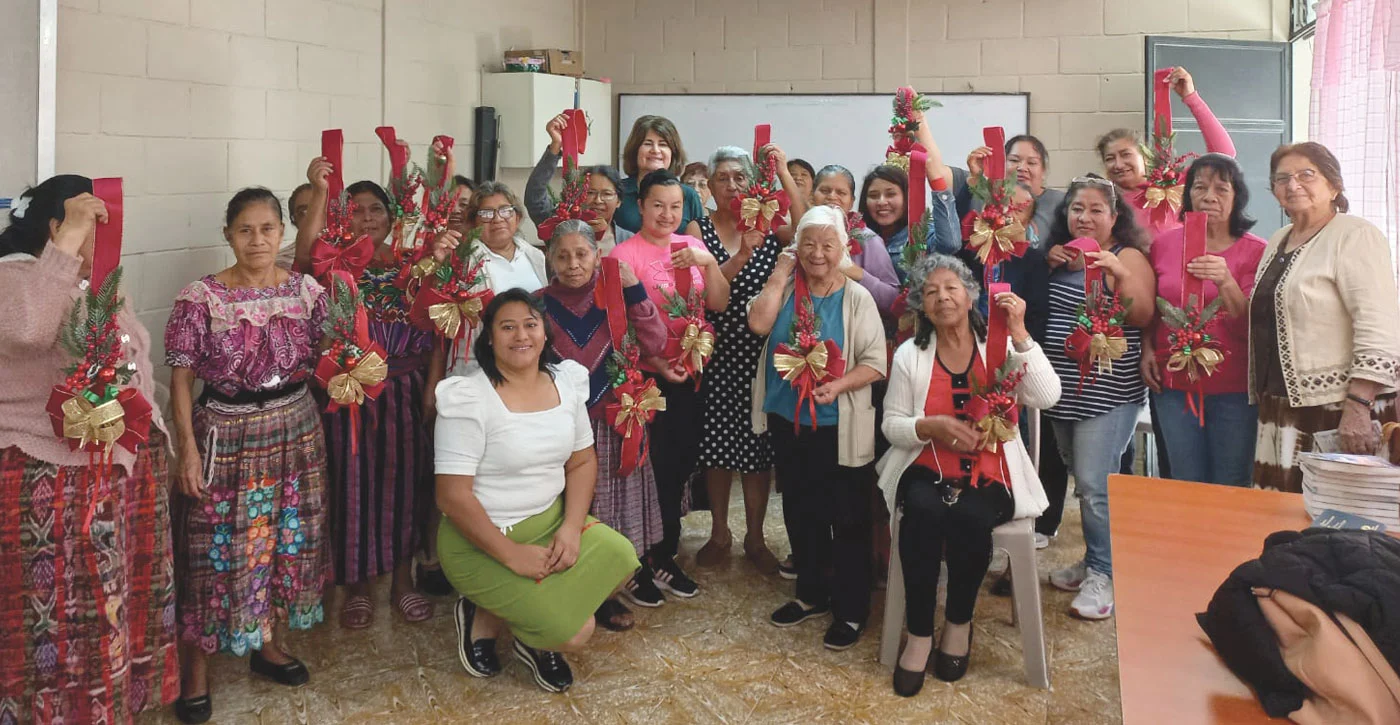
A Women’s Ministry in Guatemala City
When God is the center and compass of our lives, generations may come and go, but that faith will remain alive. The principles that were sown by George Fox and embodied by John Woolman in his daily life have crossed not only centuries but also borders. They continue to be lived out today by Quakers in Guatemala because they were emulated by the Friends missionaries who first brought the gospel to this country over 120 years ago.
The MIAM ministry (Mujeres de la Iglesia Amigos en Apoyo a Mujeres del Sector, translated as Women of the Friends Church Supporting Women in the Community) of Friends Church on 30th Street in Zone 3, Guatemala City, is a ministry in which we work with Indigenous and mestiza women (women of mixed race, especially those of Indigenous and Spanish descent). Through them, we see a reflection of the diversity of our beautiful Guatemala: a pluri-cultural, multiethnic, and multilingual country where the voices of 25 languages and the peoples of the Maya, Xinka, Garífuna, and mestizo (Ladino) communities weave together the social and spiritual complexity of the nation. The sacred worldview of these peoples is one of the challenges faced by MIAM. Amid this diversity and cultural richness, there are still ongoing issues of exclusion and social inequality affecting our Indigenous communities.
Between the beauty of traditions and the pain of exclusion, between ancestral heritage and social stigma, the work of Friends Church on 30th Street has become a living testimony that reflects a central principle of our Quaker spirituality: we do not seek to impose the gospel of Christ but to faithfully bear witness to the Kingdom of God through service; listening; love; and social action, especially where injustice weighs most heavily. As Fox said, “[B]e patterns, be examples in all countries, places, islands, nations, wherever you come, that your carriage and life may preach among all sorts of people, and to them; then you will come to walk cheerfully over the world, answering that of God in every one.” This is what challenges Friends of 30th Street to be agents of transformation.
The MIAM ministry was born in 2017 in the heart of one woman at our monthly meeting. Committed to the gospel, she felt called to share the love of Christ with other women in Zone 3: bringing a message of salvation and hope, restoring lives, and strengthening hearts.
Today, I am privileged to be part of a group of seven women, including the church’s pastor, who serve in the MIAM ministry. We meet on Fridays and receive an average of 25 women from Zone 3 and nearby areas. Many of these women come from Maya communities, such as K’iche’ and Kaqchikel. MIAM is a space where their origins are not suppressed but rather welcomed, heard, and comforted. Many of them speak Mayan languages as their mother tongue and do not speak Spanish well, but even though we do not all speak the same language, we see one another as sisters in Christ.
At MIAM, every week the gospel is lived out through pastoral care and service. Under the principle of Galatians 3:28, no one occupies a higher place, and no one speaks from a position of spiritual privilege.
Christ strengthened and restored the identity of women through the gospel. On one hand, we recognize that these women come with an ancestral worldview, and we believe that the positive aspects of their culture can remain. For example, their spiritual sensitivity is an element that when joined with the gospel becomes part of their identity as Indigenous Christian women. On the other hand, we learn to walk in faith in order to heal their wounds, their loss of historical identity, and to accompany them in their everyday struggles. For instance, due to historical realities such as colonization, many of them struggle to value their language or to reconcile their spirituality with the gospel of Jesus Christ.
The gatherings at MIAM dignify women by providing them with a space for joy and love. Through crafts, painting, threads, fabrics, and prayer, we quietly contemplate how the Light of the Son of God is manifested in their stories, gifts, talents, and dignity. These activities, as well as small income-generating initiatives, give purpose to women who may be discouraged or undervalued as providers. The work, therefore, is not only social but also a testimony of the transformative faith of the gospel according to the women’s capacities and talents. We also offer support through personal counseling and financial assistance whenever they are in need.
Along with this, MIAM provides biblical training through discipleship and Christian counseling with the goal of strengthening spiritual growth through fasting and prayer. This Bible study is done from their perspective and for them; it becomes a place of encounter between them and God. The themes and activities arise from the shared experience of walking alongside them. Christian counseling and home visits reflect a gospel that addresses mental and spiritual health as well as external concerns.
In one of our gatherings, we prayed for a sister who had received a medical diagnosis requiring leg amputation. The community came together in fasting and prayer. Sometime later, she returned with tears of gratitude to God: the medical treatment had worked, and the amputation was no longer necessary. Miracles like this have been experienced in the ministry and remind us that God’s care is holistic—body, mind, and spirit—and that what is shared in MIAM becomes a place of revelation and a living testimony of God’s work.
Walking with these women has changed my worldview: not only by witnessing the power of the gospel to transform lives but also in understanding how God works holistically through the church for the sake of society. Working with Indigenous and mestiza women has led me to recognize the importance of cultural identity, and how the gospel strengthens what is good and restores what only God and the gospel can change. It is not about a distinction between us and the gospel, rather it is about the diversity that the gospel allows for the glory of God.
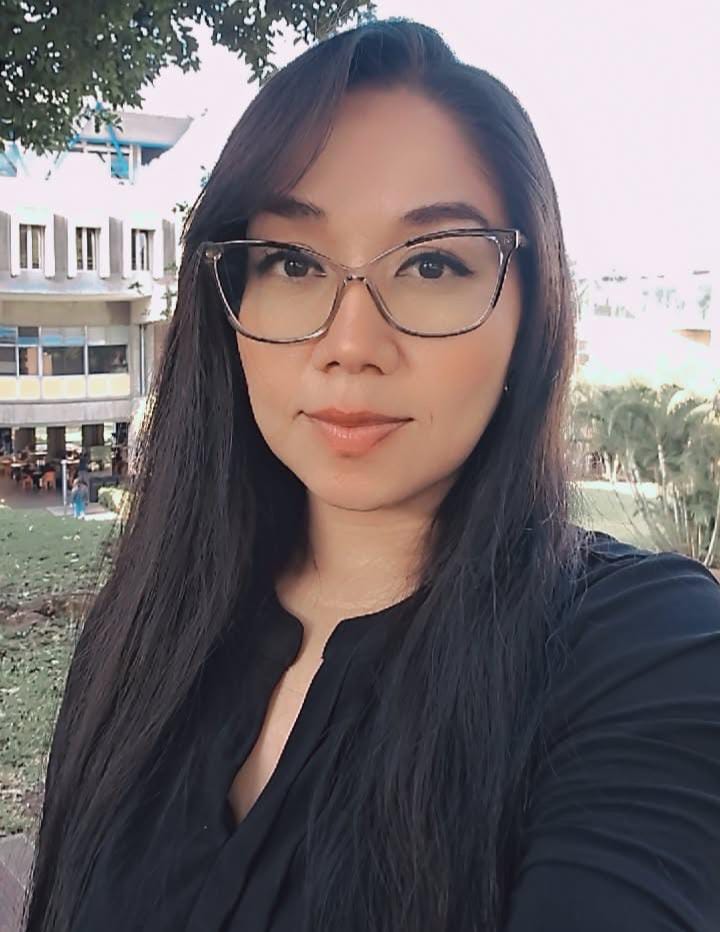
A special space for women in spreading the Gospel of Christ. Thanks very much Ana.