



To understand the work and mission of the Religious Society of Friends in Latin America, it is necessary to go back to the late nineteenth and early twentieth centuries. It was during this period that the foundations of Latin America evangelicalism began to be established.
Colporteurs, agents of Bible societies, traveled rural roads on foot and by mule and horseback carrying Bibles and pamphlets, distributing Protestant literature in territories deeply shaped by Roman Catholicism. Alongside this effort, some historic Protestant churches also became involved, including Friends. Faith missions also emerged, based on the Gospel of Matthew 28:19–20, the so-called Great Commission: “Therefore go and make disciples of all nations . . .”
Arising out of this organized arrival and driven in part by the American Holiness movement, the distinctive features of the Quaker tradition in Central America include social activism, especially in education and compassionate service to marginalized communities; a moderate pacifist emphasis; evangelism; and the theological conviction of the equality of all human beings.
From the very beginning, Friends’ missions in Central America faced significant challenges: the first two missionaries in early 1902 passed away shortly after their arrival! However, what could have ended the mission instead inspired other missionaries, particularly women, to join the work. As a result, Friends’ missions in Latin America were often led by women. In the Northern Triangle, the mission was led by Ruth Esther Smith, better known as Miss Ruth.
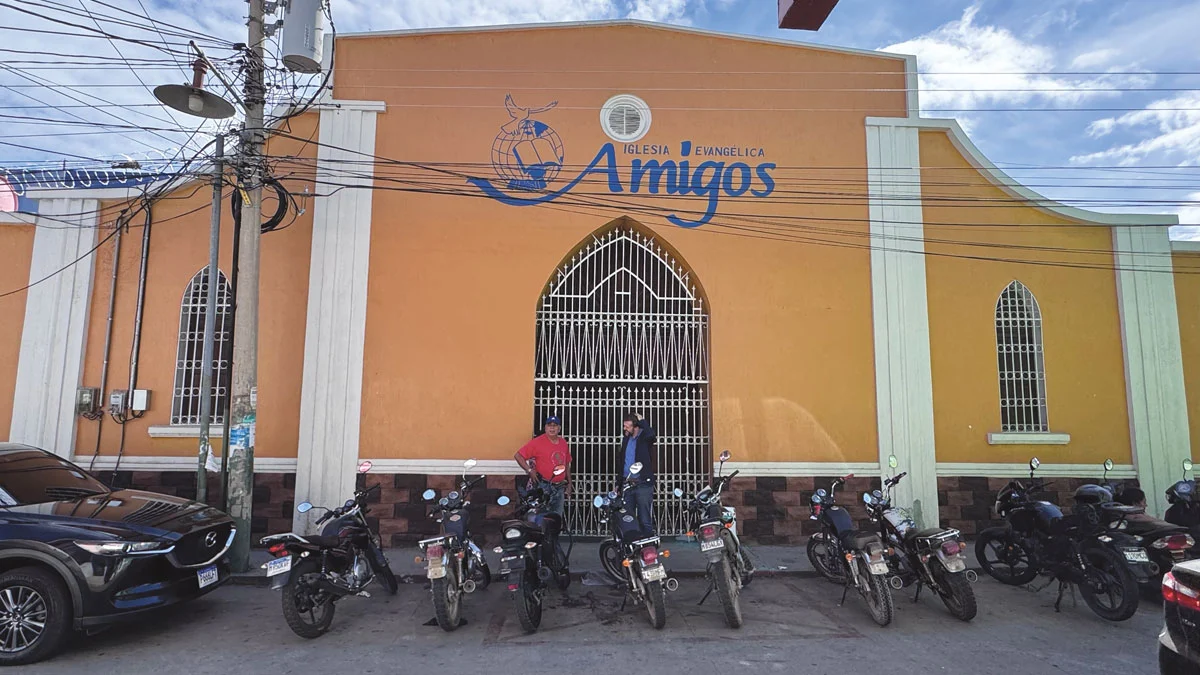
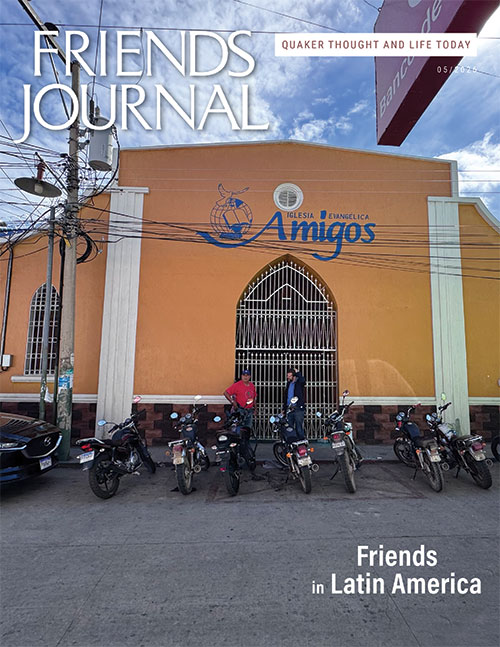
In November of last year, as part of Friends Journal’s new global initiatives, I had the opportunity to visit several cities in Central America where Quakers began to establish themselves in the early twentieth century. During that time, I was able to reflect on the meaning of religion and how we might better understand it, not only by what we believe, but by what it produces in individuals and in the society around them.
More than a historical journey, this experience deeply connected me with myself and with the story of my family. I am a third-generation Quaker in Guatemala, and my maternal grandmother, Florencia Román de Carranza, was one of the founders of the second Friends Church in Morales, Izabal, in the northeastern region of the country.
From a young age, I grew up listening to her stories: accounts of my uncles who traveled to Kenya to serve and connect with other Quakers, memories of the first missionaries who arrived in Central America, and reflections on the importance of peace testimony and social service. Although I was only a child at the time, in the Friends Church I learned something that would shape my life: that women can also be pastors and have a voice and vote, both in monthly or yearly meetings and in society at large.
Many years have passed since those visits to my grandmother’s home and since her passing in 2020, yet this journey reminded me why I now work as Friends Journal’s corresponding editor for Latin America. It also reaffirmed how my goals align with those of the magazine: to invite more Latin American authors to share the Quaker experience from their own contexts and theological perspectives, in order to foster deeper spiritual connection with our readers.
We want to hear from you, not an AI! Please be thoughtful and use your own words. Comments on Friendsjournal.org may be used in the Forum of the print magazine and may be edited for length and clarity.