



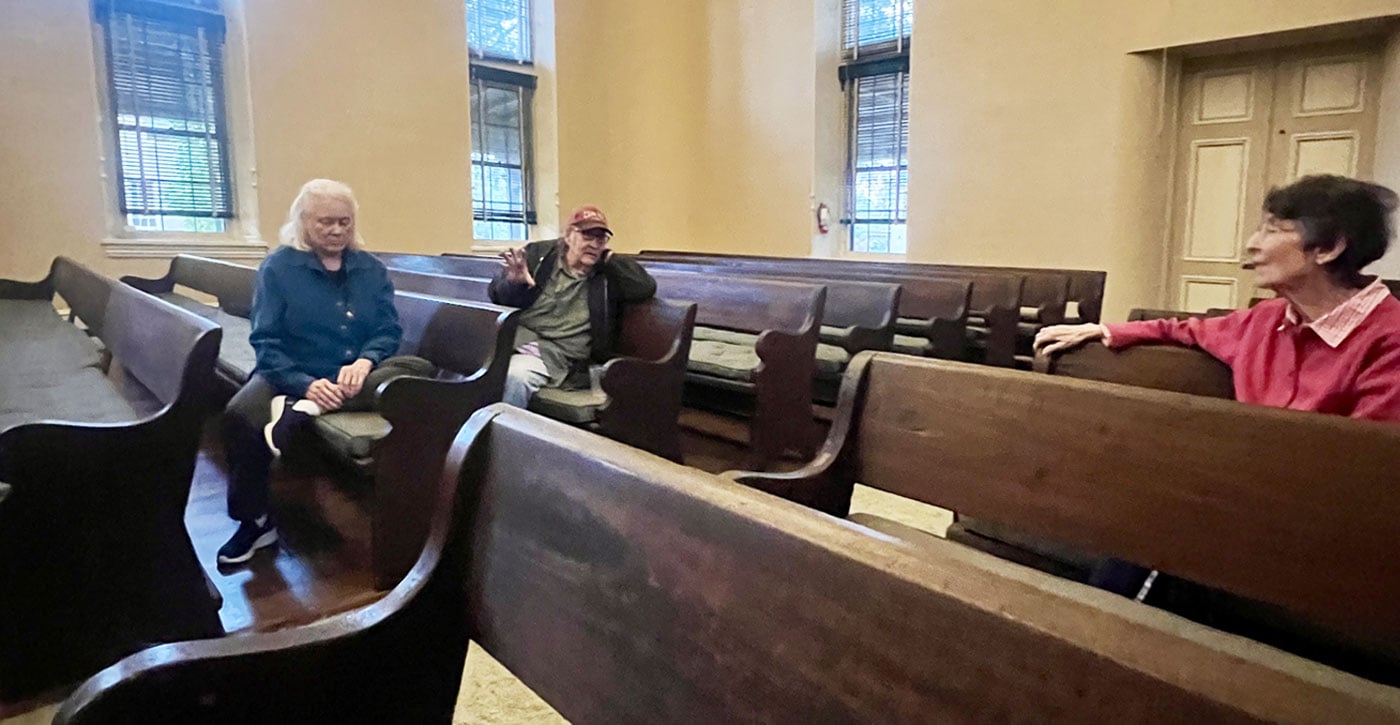
Quaker activist and avid walker Ross Brubeck retraced the steps of a 276-mile May walk from New York City to Washington, D.C., this time to collect the oral histories of Quakers bearing public witness to the peace testimony. Friends have offered a steady commitment to nonviolence throughout the years even when faced with catastrophic events such World War II, the Vietnam War, and the War on Terror, according to Brubeck, who attends Brooklyn (N.Y.) Meeting.
Quaker activists carry historical knowledge and offer hope for a more peaceful future. “I think the evidence speaks that we are headed toward peace,” said Brubeck.
In response to Brubeck’s request, Friends from meetings located along the route of the walk suggested members to appear in the videos. The project will preserve the oral histories of 20 Friends. For the more recent walk, Brubeck packed blister care products, food, bandages, and a mobile production studio.
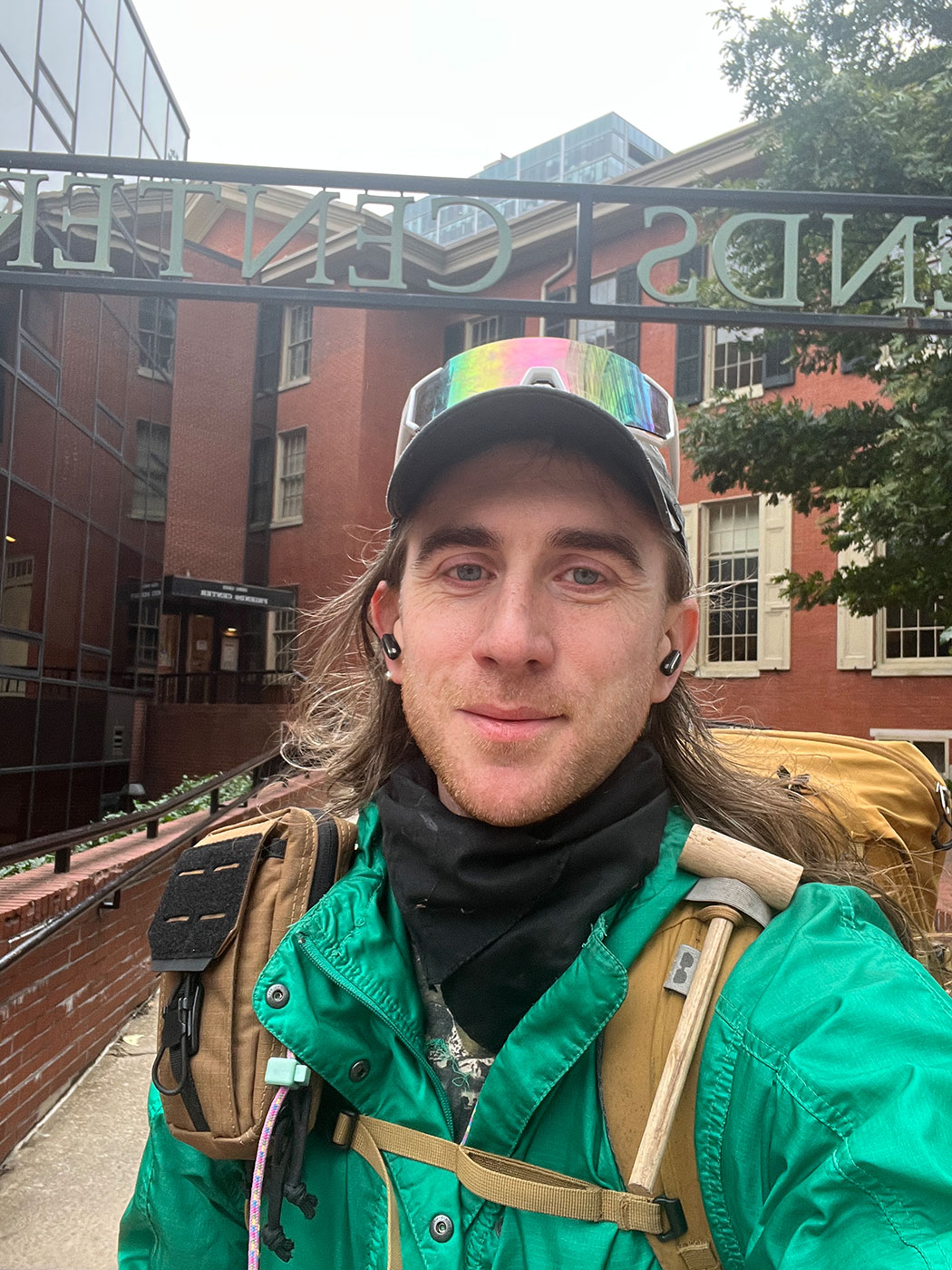
The walk and video projects, called PEACEWARD, concluded on October 24. Videos are being released on the group’s YouTube channel at youtube.com/@walktowashington. It involved Brubeck and a small group of Friends, and built on activist work started on the May journey. From May 4 through May 22, Friends walked from New York City to D.C. to deliver a copy of the original Flushing Remonstrance to members of the U.S. Congress. Freeholders in what is now New York State wrote the document in 1657. The Remonstrance opposed a directive by then Governor Peter Stuyvesant who said residents should not welcome Quakers in the Dutch colony. That walk sought to draw attention to barriers facing immigrants to the United States and to encourage immigration policies that are more welcoming. Walkers also presented legislators with a contemporary version of the Remonstrance which called for accepting immigrants. The previous walk from Brooklyn to D.C. succeeded as an empowering way to respond to a seemingly intractable problem by putting one foot in front of the other, Brubeck explained.
Marae McGhee, of Princeton (N.J.) Meeting, agreed to share with Brubeck her experiences witnessing to the peace testimony, including during the watershed era of the Vietnam War. “A lot of very important laws were passed as a result of the persecution of peace people in the ’60s and ’70s,” said McGhee.
Examples of results of antiwar demonstrations include the 1973 War Powers Act, which limits the power of the president to go to war by requiring that the president discuss with Congress the decision to commit troops, as the Constitution mandates; and affirmation of students’ First Amendment free speech rights in school, as ruled by the Supreme Court in 1969’s Tinker v. Des Moines, a case in which students wished to wear black armbands to protest the Vietnam War.
Conscientious objectors to World War II drove McGhee and her late husband to antiwar marches in D.C. during that time, she recalled.
McGhee remembered a silent vigil in Raleigh, N.C., at which a woman threatened to hit her with an umbrella. Nonviolent resistance training had prepared her to avoid retaliation. Fellow activist Lloyd Tyler, who was much older than McGhee, took two decisive steps to place himself in front of her to take the blow. The woman shook the umbrella and shouted at Tyler before walking away without striking any of the demonstrators. The incident taught McGhee the importance of committing to nonresistance. “It also taught me how a simple act can defuse a situation,” McGhee said.
Inspirations for McGhee’s activism come from Friends she knew in Raleigh (N.C.) Meeting as well as Quakers from Princeton (N.J.) Meeting.
Pacifist Catholic priests Philip and Dan Berrigan were also examples for McGhee. Ann Yasuhara, of Princeton Meeting, who ran a draft counseling service and was a member of Earth Quaker Witness also influenced her activism. McGhee served on Yasuhara’s end-of-life support committee before she passed away in 2014.
McGhee has participated in Prayers for Peace, an antiwar demonstration in Princeton, for two years.
Consistently attending meeting for worship sustains McGhee spiritually and equips her for activism. McGhee also serves on her meeting’s Care and Concern Committee and Worship and Ministry Committee. “I don’t know how anyone can be assured of their ability to change things in a peaceful way without being in the presence of Spirit,” McGhee said.
Phyllis Taylor, a member of Germantown Meeting in Philadelphia, Pa., also shared her story with Brubeck.
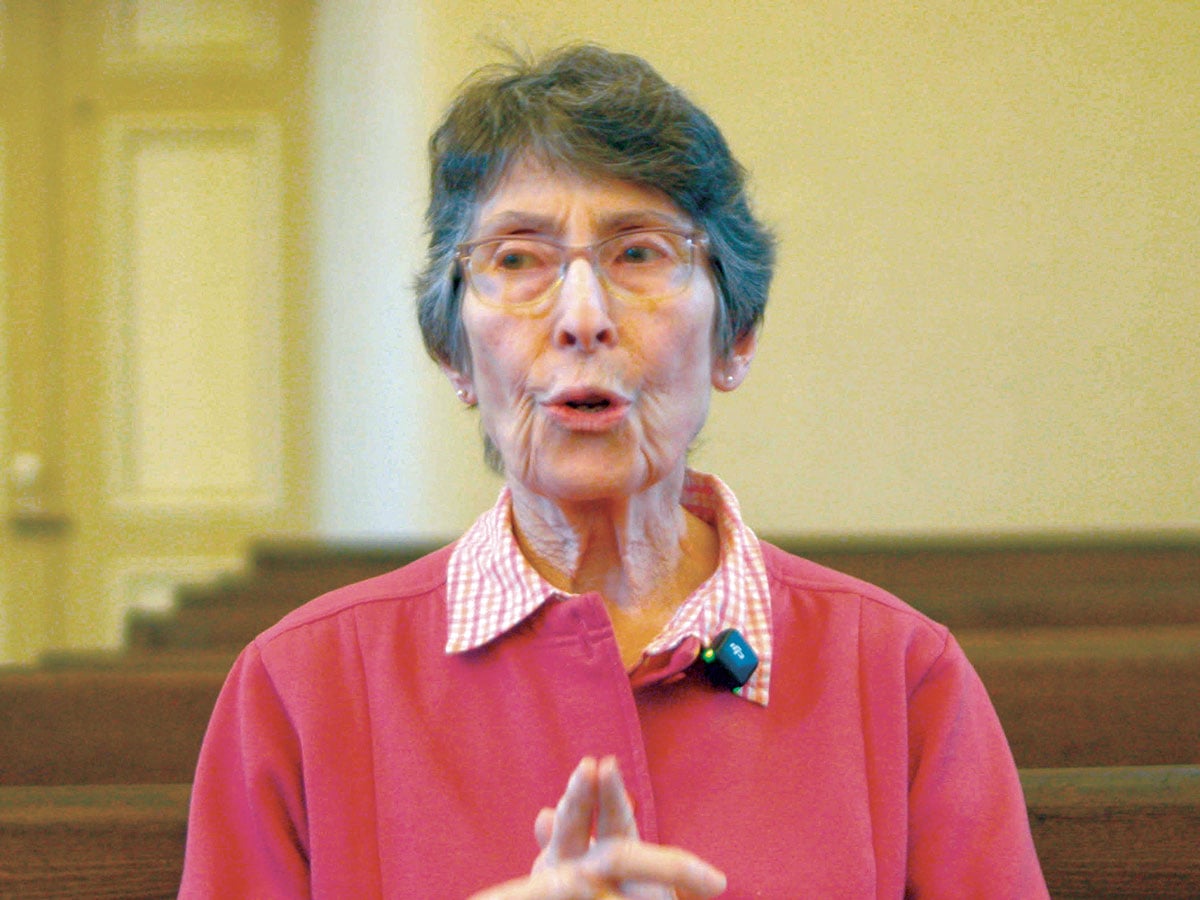
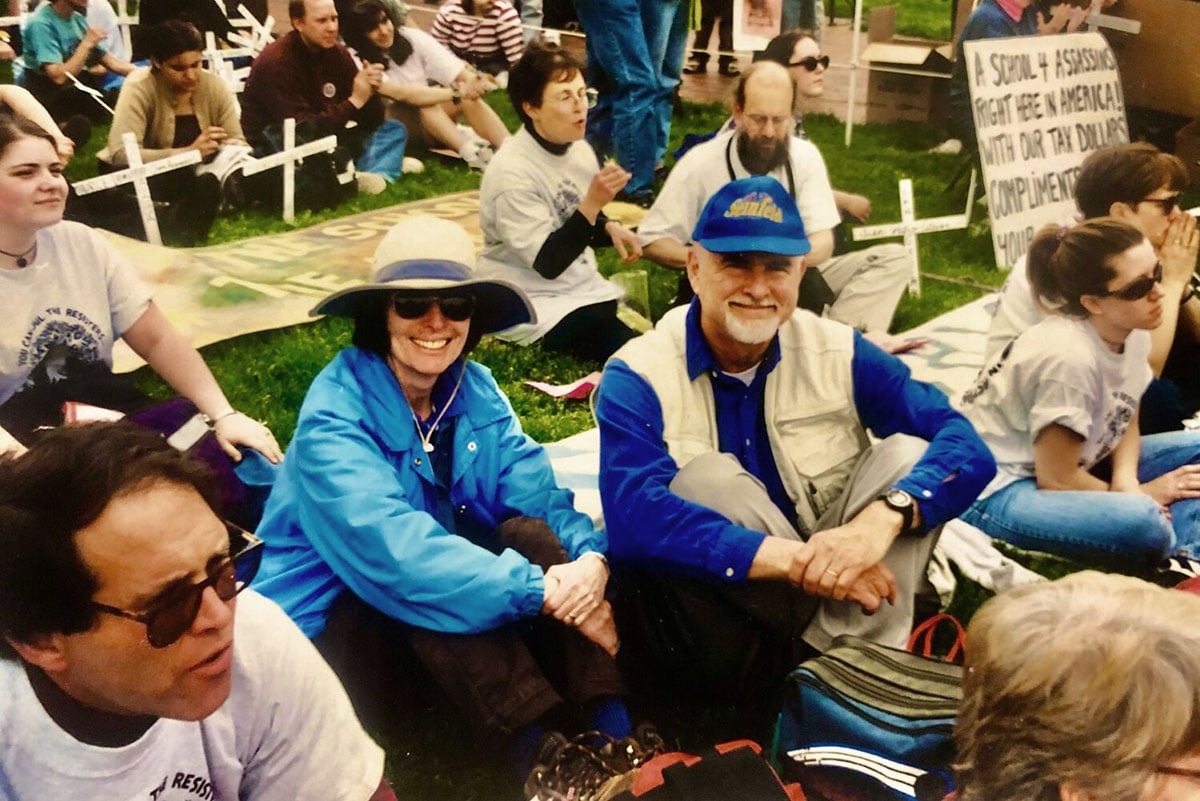
Left: Phyllis Taylor in a still from her video interview for PEACEWARD, 2025. Courtesy of Ross Brubeck. Right: Phyllis and Richard Taylor at a Witness for Peace vigil in Washington, D.C., in the early 1990s. Each of the crosses has the name of someone killed fighting against the right-wing dictatorship in Nicaragua. Photo courtesy of Phyllis Taylor.
Taylor and her late husband, Dick, helped to start Witness for Peace in Nicaragua. The couple’s children convinced them not to travel to Nicaragua at the same time for fear that they would both be killed by landmines. Witness for Peace, which formed in 1983, organized against U.S. support of right-wing rebel group the Contras in Nicaragua, according to the group’s website.
Taylor has served on the board of Amnesty International and has taught healthcare professionals to recognize signs of torture. She has also worked as a hospice nurse.
Taylor noted that as people age in U.S. society, they can fall into “hopelessness, helplessness, and boredom.” To counteract these trends, she volunteers at Wesley Enhanced Living at Stapeley, a senior living community in Philadelphia. She also delivers food to people facing food insecurity. She currently works with incarcerated families as well as crime victims, and also volunteers with New Sanctuary Movement, an immigrant justice group in Philadelphia.
Taylor draws inspiration from a poem called “The Shut-In Freedom Fighter” by Hope Douglas J. Harle-Mould, a United Church of Christ minister. The poem, which is based on fact, tells the story of a woman living with multiple sclerosis who counters her own depression by writing letters advocating the release of a political dissident incarcerated in Indonesia. Ultimately her persistent writing gains his release and he writes to thank her.
“I want to empower people to say, ‘You don’t have to do the dramatic,’” Taylor said. ”I think it’s vital that people don’t give in to despair.”
We want to hear from you, not an AI! Please be thoughtful and use your own words. Comments on Friendsjournal.org may be used in the Forum of the print magazine and may be edited for length and clarity.