



Religion as a social institution plays a critical role in framing, producing, and disseminating public discourse and pedagogy. In relation to issues around human sexuality and gender identity, religion significantly provides the language and scripts for engagement. In this article, I explore African Quakerism and gender identity within a context shaped by missionary Christianity, African cultural values, colonial and postcolonial legal frameworks, and contemporary challenges.
This essay considers the tensions, silences, and theological resources that characterize Quaker engagement with gender identity. These reflections show that the issues of gender identity and diversity can not be understood apart from history, power politics, and lived experiences.
African Quakerism
To begin with, let me make the following observations. First, it has been noted that the highest number of Quakers outside Europe and North America is in Africa, and specifically in Kenya. To this fact, I add that it is women who make up the larger number. In Africa there is a convergence of various Quaker traditions: programmed, unprogrammed, Evangelical, and Conservative. Most meetings in Eastern Africa are programmed or Evangelical and aligned either with Friends United Meeting (FUM), or, if Evangelical, meetings are aligned with Evangelical Friends Church International (EFCI), both headquartered in the United States.
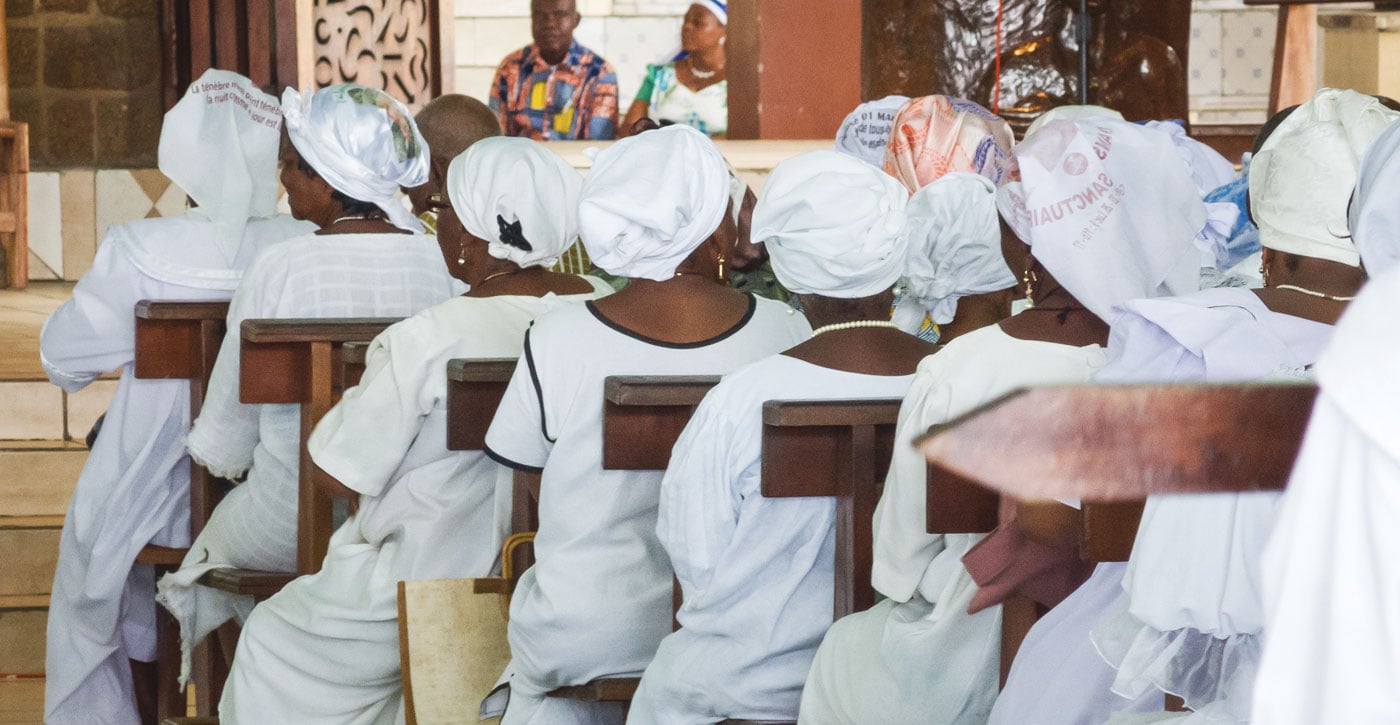
Unprogrammed meetings are found in Southern Africa and in Ghana and Kenya. Programmed meetings in Kenya have services characterized by music and preaching, conferences for different groups that employ evangelical preaching, and women’s monthly national prayers (these are held at the local level but include a monthly national prayer meeting). Women dress up in white for church services and conferences. Another notable thing is that meetings hire pastors who are trained at Friends Theological College in Kaimosi, Kenya, founded by missionaries in 1942 at Lugulu and later moved to Kaimosi.
Friends have historically resisted rigid biblical literalism, emphasizing instead the living guidance of the Spirit in dialogue with Scripture and community. This approach does not resolve disagreements easily, but it creates space for ongoing discernment rather than premature closure.
Historical Roots of Quakerism in Kenya and Eastern Africa
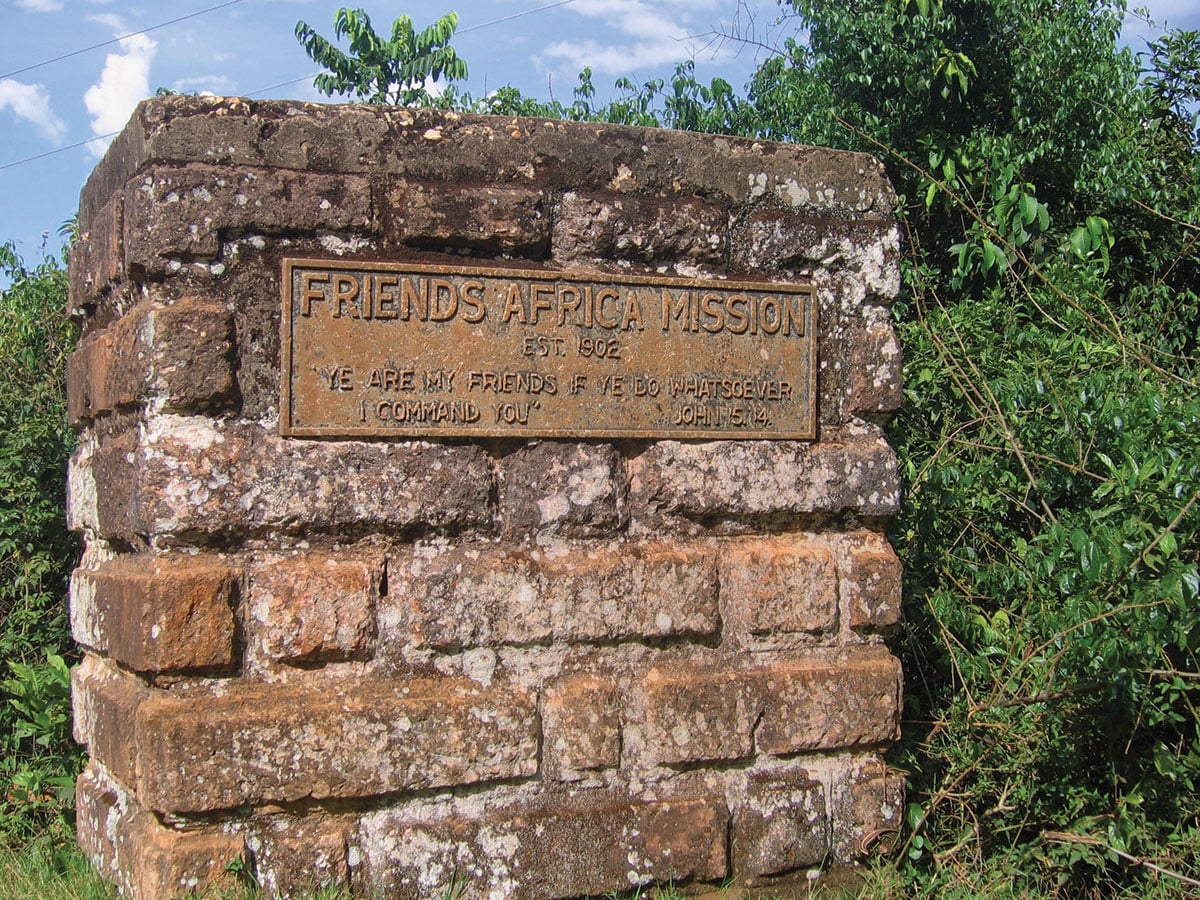
The first Quakers in East Africa settled on the island Pemba in Tanzania, a German colony, and worked with freed people who were coming out of enslavement. They were followed by U.S. missionaries from Indiana who arrived in Kenya, which in 1902 was a British colony. Rwanda, Burundi, and Democratic Republic of the Congo were Belgian colonies, and Uganda was soon to become a British protectorate.
The British colonial government permitted American Quakers Edgar Hole, Willis Hotchkiss, and Arthur Chilson of Friends Africa Industrial Mission to establish a mission station in Kaimosi in Western Kenya. Over the next 60 years, the number of Quakers grew substantially through a four-fold missionary strategy of planting churches, building schools, and starting medical and industrial training facilities.
From the beginning, Quakerism in Kenya emphasized education, moral formation, and community discipline. While Quaker theology carried radical elements—such as women’s leadership and participatory worship—it also transmitted Victorian Christian moral codes concerning sexuality, gender roles, and family life. Colonial governance reinforced these moral codes through legal systems that criminalized gender sexual minorities, a practice that was inherited from the moral framework of colonial and missionary culture and that has continued to shape contemporary Quaker attitudes toward gender identities.
African Quakerism is deeply woven into the social fabric of the society through churches, schools, hospitals, and peacebuilding initiatives. Rooted in the Quaker conviction that there is that of God in everyone, African Friends have long affirmed principles of equality, community, and moral discipline, yet questions of gender identity and sexuality have emerged as one of the most complex and sensitive areas of theological debate and pastoral reflection.
Gender and Equality in Quaker Theology
At the heart of Quaker theology lies the conviction that there is that of God in everyone. This belief historically enabled Friends to challenge gender hierarchies long before many other Christian traditions. Inclusive leadership was the norm, and women preached, prophesied, and led meetings in the earliest Quaker communities, grounding gender equality in spiritual rather than biological terms.
In African Quaker contexts, equality is affirmed in theory; its scope, however, is often limited in practice, revealing an unresolved tension within African Quakerism. While women form most of the membership, and they have strong meetings, their leadership is confined to their meetings, even though the theological school to train pastors, opened in 1942, had a woman among its first students. The church leadership is largely patriarchal with a few token women as presiding clerks and or pastors.
Questions around gender identity and diversity have been largely silenced within Quaker communities in Kenya. Like other Christian traditions, gender identity and diversity is interpreted narrowly as homosexuality or the LGBTQ debate. This subject leads to strong emotion in spaces where governments have criminalized same-sex relations. Discussions on this topic hinge upon several points particular to African culture and interpretations of the Bible. In addition, there is a strong feeling that gender identity and sexuality questions are not African but Western. These three items each lead to reflection and further discussion.
African Cultural Narratives and Gender Identity
In Kenyan and East African Quaker discourse, opposition to diverse gender identities is often framed in cultural terms. Non-normative gender expressions are described as “un-African” or as products of Western moral perspectives. This is the case even though African historians and anthropologists have demonstrated that precolonial African societies exhibited diverse understandings of gender roles, kinship, relationships, and intimacy.
Contemporary hostility toward gender and sexual diversity is deeply shaped by colonial Christian morality and postcolonial nationalism. Religious communities, including Quaker meetings, often carry the burden of defending cultural authenticity against perceived Western influence. This dynamic places Kenyan Quakers in a difficult position as global Quaker bodies increasingly affirm gender and sexual diversity, while local contexts remain silent and socially and legally hostile. This silence does not mean that gender-diverse or queer-identifying Friends are absent, but it is hard to be different and not to conform to the prescribed norms.
The Bible as Norm
Most Quakers in East Africa adhere to the authority of the Bible, and an emphasis is laid on biblical texts about creation, moral order, and sexual norms. The Bible is taken as a living manual from which beliefs, standards of conduct, and ethics are derived. Texts such as Genesis 19:1–19; Leviticus 18:22 and 20:13; Romans 1:26–27; 1 Corinthians 6:9–10; and 1 Timothy 1:10 have been used to stigmatize, condemn, reject, exclude, and discriminate against sexual minorities.
There are some texts such as Genesis 1:26–27 and Galatians 3:28 that promote equality between the sexes, and then there’s Ezekiel 16:46–56 and Luke 10:10–12 on the sin of Sodom. These texts can help us develop an alternative understanding of sexual minorities in the house of God.
While there are multiple empowering narratives of God‘s interventions in human societies—promoting justice, equality, righteousness, and fairness—which we could learn from in order to affirm sexual minorities, some Christians choose to use the Bible to foster stigma, rejection, exclusion, and criminalization. Quaker theology offers a distinct approach to Scripture that is particularly relevant in this context. Friends have historically resisted rigid biblical literalism, emphasizing instead the living guidance of the Spirit in dialogue with Scripture and community. This approach does not resolve disagreements easily, but it creates space for ongoing discernment rather than premature closure. In Kenyan Quaker contexts, such discernment is constrained by history and the readings of the texts.
By drawing on its own practices of listening, discernment, and equality, Kenyan Quakerism may yet offer a distinctive witness—one that is authentically African, deeply Quaker, and attentive to the ongoing work of the Spirit.
Conclusion
Gender identity presents Kenyan and East African Quakerism with a profound theological and pastoral challenge. It exposes tensions between an inherited moral framework and foundational Quaker convictions. It reveals the cost of silence and the difficulty of faithful discernment in the context of fear and constraint, yet it also offers an opportunity for renewed theological reflection rooted in Quaker spirituality and African realities.
Kenyan Quakerism has never been static. It has adapted, resisted, and re-imagined faith across colonial and postcolonial transitions. Its engagement with gender identity will likely be gradual and contested. Nevertheless, by drawing on its own practices of listening, discernment, and equality, Kenyan Quakerism may yet offer a distinctive witness—one that is authentically African, deeply Quaker, and attentive to the ongoing work of the Spirit.
Correction: An earlier version of this article listed Ghana and Kenya as being in West Africa; Ghana is, but Kenya is in East Africa.
You really believe that adhering to Jesus’ statement “at the beginning the Creator ‘made them male and female,’ and said, ‘For this reason a man will leave his father and mother and be united to his wife, and the two will become one flesh’ (Mt.19:4-5) is “rigid biblical literalism”?
Many thanks to the author of this article. It helps me (a transgender Friend from the U.S.) have a more nuanced understanding of this issue and the tensions and complexities within it. In particular, I was struck by the author’s observations about how criminalization of same-sex relationships heightens the emotionality of discussing LGBTQ issues in Kenyan and East African Friends’ contexts, and the description of religious groups having to navigate perceived Western influence and prove authenticity in the wake of colonialism. I feel a deeper empathy and connection with East African Friends from having read this, and am grateful to the author for taking the risk of speaking very directly and publicly to these issues.
Dear Esther,
Thank you for “Wrestling with Gender Identity in African Quakerism,” a piece that feels less like an argument and more like a careful untying of knots—historical, theological, and deeply human.
Your framing of African Quakerism within layers of missionary influence, colonial law, and living culture is especially clarifying. It reminds us that today’s tensions did not appear suddenly; they were stitched over time, thread by thread, into institutions, language, and even what feels “natural.” Naming that history does not dissolve the struggle, but it changes how we hold it—with more honesty, and perhaps more humility.
I was particularly struck by your attention to silence. Not an empty silence, but one shaped by fear, by communal expectations, and by the weight of being seen as “un-African” or “imported.” That tension—between local identity and global Quaker movement—is not easily resolved. Yet you gently challenge the assumption beneath it, pointing out that diversity in gender and identity is not foreign to African histories, even if it has been obscured.
Your return to core Quaker practices—listening, discernment, and the conviction that there is that of God in everyone—feels like opening a window in a room long closed. These are not new tools, but perhaps they have not yet been fully brought to bear on these questions. You suggest, wisely, that the path forward is not quick agreement, but faithful process.
I also appreciate your attention to Scripture, not as a weapon or a fixed code, but as part of a living conversation. The possibility that the same text can be used to exclude or to liberate places a responsibility on the community: not just what we read, but how we read, and with whom we listen.
What lingers most is your sense that Kenyan Quakerism is still becoming. Not fixed, not finished, but in motion—capable of reimagining itself as it has before. That is a hopeful vision, not because it promises ease, but because it trusts in the Spirit’s ongoing work.
Thank you for inviting Friends into a deeper, more patient wrestling—one that may yet lead not only to clarity, but to greater faithfulness.
In friendship,
Jim