



Honoring My Whole Self
All God’s creatures got a place in the choir / Some sing low and some sing higher . . . —song lyrics by Bill Staines, American folk musician and singer-songwriter
In 1956, my mother walked me into the foyer of the kindergarten room. Shelves on the right held dolls and tea cups, and shelves on the left held trains and bulldozers. Mrs. Holmes was greeting the children and mothers as they arrived. I headed straight for the shelves on the left and heard my mother sigh. I turned to see her raising her arms and rolling her eyes, and I heard Mrs. Holmes say, “It’s okay, Mrs. Schutz. Marggie can play with whatever toys she likes.” Clearly my mother had been distressed over my gender nonconforming behavior for some time.
For three years, I donned blue jeans held up by suspenders, a red T-shirt, and a jacket as my daily uniform. But my world was turned upside down in third grade when the principal changed, and Mr. Wylde insisted that I conform to the gender-defined public school dress code. Classmates throughout the years routinely asked me, “Are you a boy or a girl?” My reply was “yes” or “I haven’t decided yet.” I got snarky in adolescence and changed my response to, “What does it matter to you? Do you want to make it with me?”
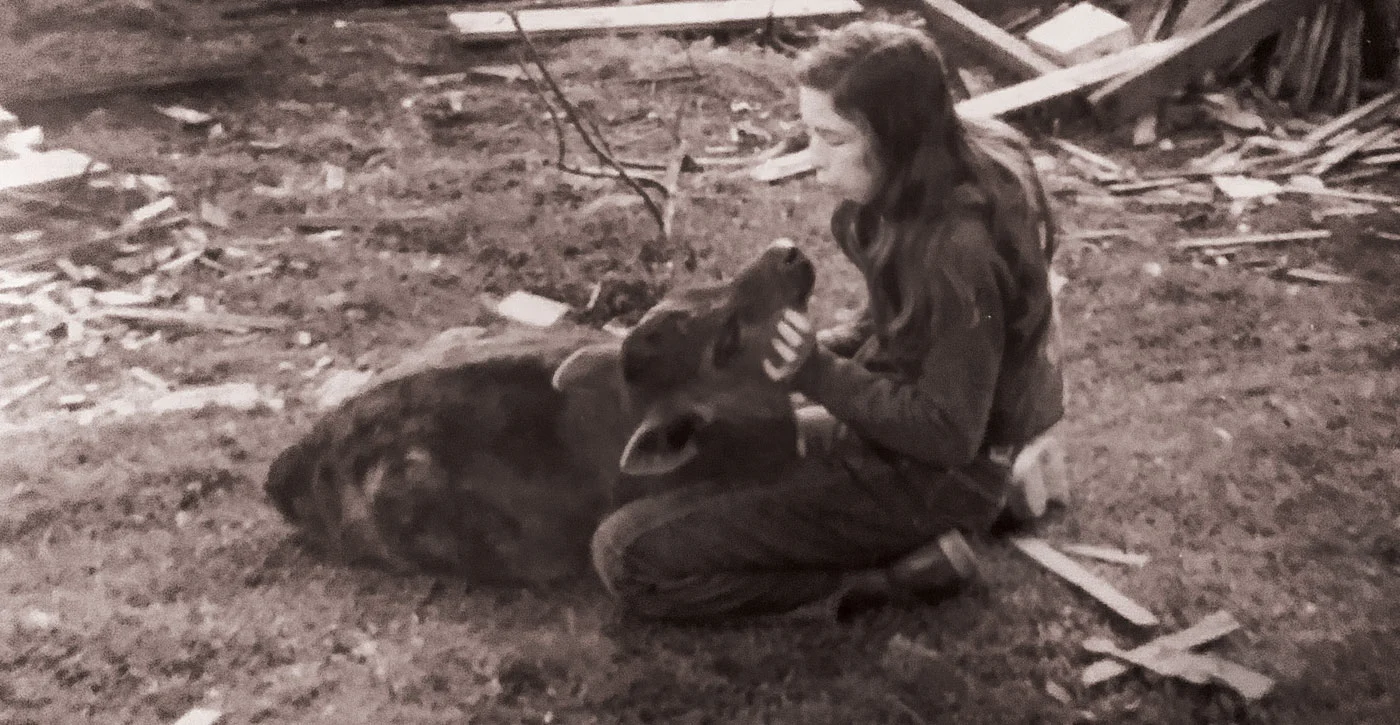
At 13, sitting at the county fair with the steer I had raised, now for sale, I heard the small group of Future Farmers of America behind me daring each other to inquire as to my gender. Not one of them had the courage to ask. At 22, pulling my first car up to the pump for gas, the attendant asked, “What will it be, sir?” I answered, “Fill it with regular, please.” When the change from my payment arrived at the car window, the attendant said, “Thank you, ma’am.”
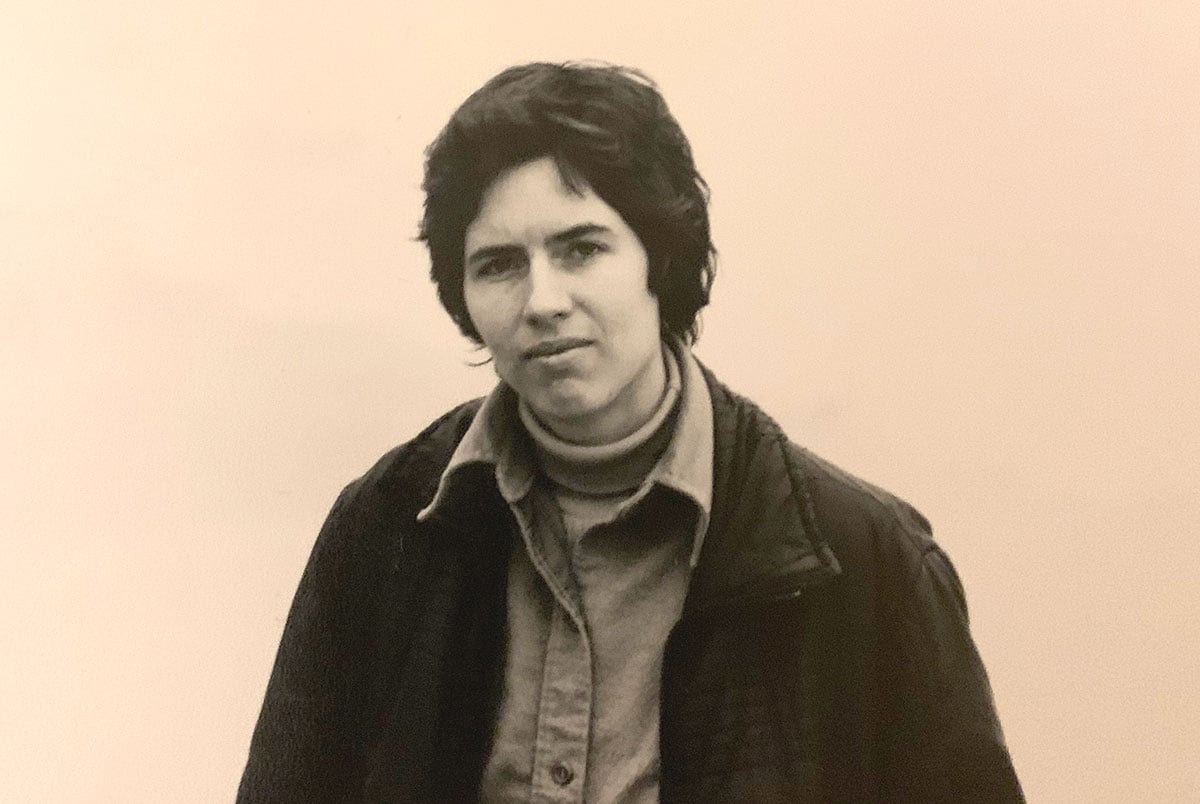
My inner core knew itself, but the culture had offered me no context for my experience of life in the body Godde gave me (the spelling Godde acknowledges and embraces both the masculine and feminine of the Divine). My body held out until age 15, when my first period arrived. When it came, I felt so betrayed; I didn’t menstruate again for a year. When sexual expression emerged, it wasn’t long before others offered the language of “butch lesbian.” Perhaps that was as close a definition of self as was possible in the late ’60s. I lived into it, partnering with women, rebuilding the entire exhaust system of my first car, re-roofing a barn, and plumbing and framing the addition on my parents’ house.
I am grateful to this body for its ability to carry a child, a privilege both I and my then-partner engaged, each bearing a son. We now joyfully grandparent six grandchildren together. One of those grandchildren, age three, asked me when I emerged naked from the shower if I was a girl or a boy. My response was, “It’s confusing; some people aren’t all the way one way or all the way the other.” I have offered that same response to many other children who’ve inquired in the checkout line at the grocery store, in the locker room of the local pool, and in my medical practice.
What might it mean to live in a place of wholeness, where my full self has a home in me and in the wider world?
In these last years, the permission from younger generations to live more fully into my gender fluid identity has been an enormous gift to me. There are days when the male part of me is bigger than the female and other days when they vie about equally for attention from my consciousness. There are lots of days when the whole concept is foreign to me. Mostly I know that I would be so happy to live in a world where gender is irrelevant, where the gender-free fantasy world that I created as a teenager was the reality of our daily lives.
What might it mean to live in a place of wholeness, where my full self has a home in me and in the wider world? Three experiences of the last decade help answer that question. Gender felt irrelevant at a weekend midwinter gathering of FLGBTQC (Friends for Lesbian, Gay, Bisexual, Transgender, and Queer Concerns, a community in North America). Bathrooms were for all genders; sleeping spaces welcomed all genders; we were all human and honored for our unique selves.
In 2017, I was engaged in cleaning the gutters, repairing the gate latch, and unloading cedar shakes from the trunk of the car on a day when my beloved arrived home on her bike. She stopped to appreciate this productivity, and these words emerged from my being: “When I do these kinds of things, call me ‘Mico.’” The name was not one I chose; it was given to me by Godde in that moment, and it has become my name. Even my mother embraced it at the age of 93, a few years after she asked me if a different name from the one she gave me at birth might have served me better.
And most recently, early in 2024, in recognition of the “ouch” I felt each time I heard the pronoun “she,” I joined one of my grandchildren as a “they/them.” This has been very challenging for my family, my friends, those who have known me for many decades, and even those who are fairly new in my life. Perhaps it would be easier with the knowledge that I truly am more than the body Godde gave me. Can you learn to love and honor all the genders that dwell within? There are many, and perhaps that would make it easier to say “they” in reference to your beloved Mico.
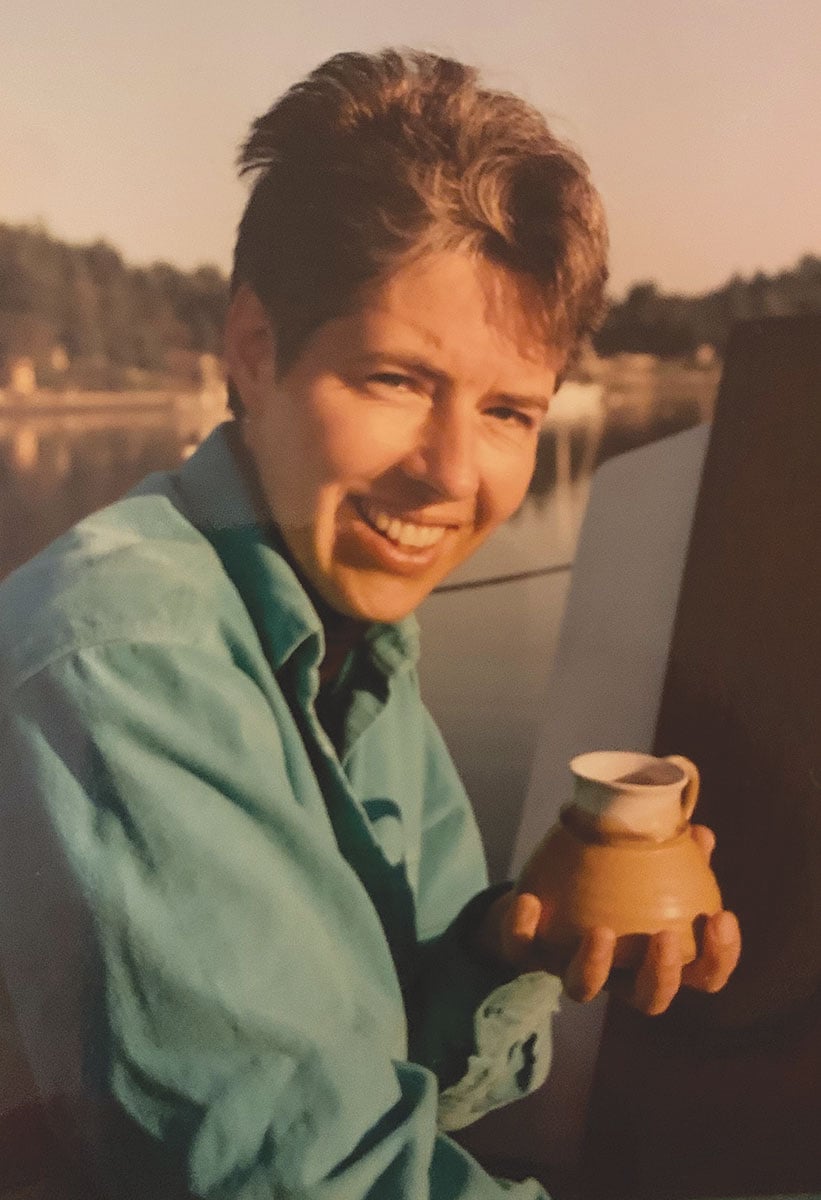
Dreams have been spiritual teachers for Friends throughout the centuries. I was graced with a powerful dream shortly before I made clear to my community my need, through new pronouns, for this public acknowledgement of my gender fluid, gender queer, nonbinary identity.
In the dream I am part of a work party cutting down a couple of trees, making them into firewood-sized pieces and stacking them. We return later after another group has transformed the wood into small chips, and our next job is to transform the chips into some kind of booklet: an instruction booklet. The material is not where we left it before, but I find the site manager, who says it is now down the hill in the coffee shop. He starts to explain what has already happened and what needs to happen next: a mansplaining that I choose to interrupt. I ask him if he could go get the materials and bring them back while I provide instruction and set up the workspace. As he fetches the materials, we head down to another building, but it’s changed since I was there last: a new entry path and a glass door instead of a wooden one. I wonder if my key will no longer open the door. Perhaps I’ll need to ask for a new key. The space I was anticipating using indoors is being used for another purpose at this time, so I decide that we can use a different space to make the booklets.
This dream and others have served as guideposts on my journey. Clearly it will take a work party to make possible the honoring of my full self a reality. It will take a community working together, each participating in their own way. We will instruct each other, but I am in charge of the instruction booklet. The places I have been before in my life are changed and require a new key, but I am now transparent: a glass door into my being, not hidden behind an opaque barrier. Spaces I have occupied before may not be possible to occupy now. Do I need to find new spaces to occupy that can support the being I am and the work I need to do?
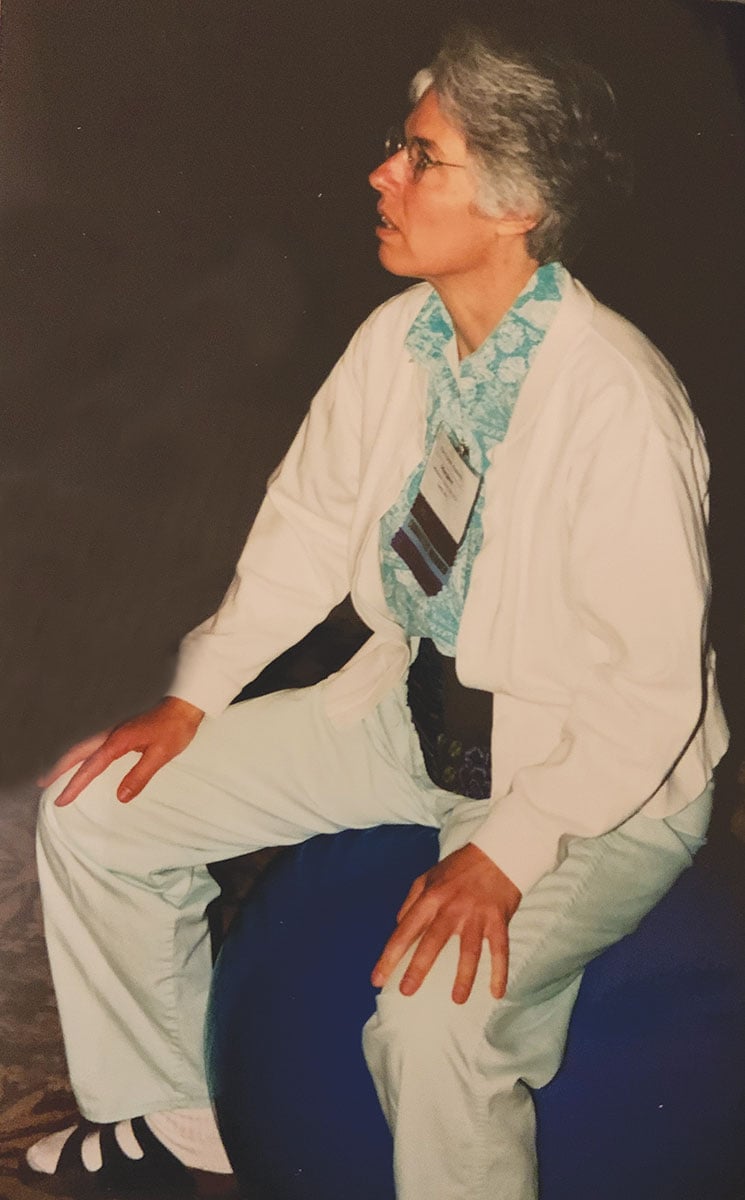
How would I answer the question that came to me so often as a grade-school child, “Are you a boy or a girl?” No longer could I truthfully respond “yes” because I know I am more than one or the other. Nor would I be inclined to say, “I haven’t decided yet,” because gender doesn’t fit neatly into that either/or binary. My truth in this moment is that I am both/and, and I am neither/nor. I need to remain open to continuing revelation for the remainder of my years.
I truly do hope that “All God’s creatures got a place in the choir,” as the song goes. I want to continue to sing with those who have known and loved me: many for many decades. And my gifts to the world will strengthen as my true self can be expressed and honored in the world.
As a middle aged sis-gender, heterosexual male, I have been stretched by the expansion of gender in recent years. However, as a Black man, a lifelong pacifist, an actor, and an empathy professional (healthcare chaplain), I have also walked an unorthodox line through the gender space. I could share a picture of me with my ’80’s hair, earrings and eyeliner back when it seemed that gender was less of a straitjacket culturally in the West. I hope that we have outlived the gender binary. Someone say, “My accountant wants to get started on my taxes because he is worried…” How is the gender of your accountant relevant? Why not “they”? We stuff children into gender boxes BEFORE THEY ARE BORN. It’s the most common question a pregnant person is asked. Boy or girl? Answer: Mico’s “Yes.” (Intersex is a thing too, of course.) And of course, a child of Godde. Thanks for this walk along the path, Mico! I can see a new horizon from this peak.
What a wonderful reflection, Friend Carl. Will we live long enough to to see that day when we truly have outlived the gender binary? Many young ones I know are not bothered by “they” as a singular pronoun. And we all use it frequently in our day to day lives. When we don’t know the person who dropped a nice sweatshirt on the curbstrip we say: “I’m sure they’re missing that lovely hoodie.” Let’s keep walking the path, challenging the assumptions together.
Thank you for “Are You a Girl or a Boy?”—a piece that feels like a long, faithful walk toward wholeness, with each story a footprint that refuses to be erased.
Your childhood scenes stay vivid: the shelves of dolls and bulldozers, the questions from peers, the quiet certainty within you that had no language yet. There’s a kind of spiritual resilience in that—an inner compass that kept pointing true even when the map was missing.
I was especially moved by how you describe your life not as an unfolding. The shift to “Mico,” the embrace of they/them pronouns, the dream of new keys and changing spaces—all of it feels less like reinvention and more like revelation. Not becoming someone else, but becoming more fully yourself.
Your reflections on the body are also deeply tender. You hold it with honesty—both the sense of betrayal and the gratitude. That kind of truth-telling resists simplification. It invites us to move beyond tidy categories into something more spacious, where paradox can breathe.
The question that echoes through your life—“Are you a boy or a girl?”—becomes, in your telling, almost too small for the answer it seeks. Your response now, “both/and, neither/nor,” feels like a widening of the circle rather than a departure from it. It challenges not just how we name gender, but how we imagine identity itself.
What I appreciate most is your insistence that this journey is not solitary. The “work party” in your dream lingers as a gentle but firm truth: it takes community to make room for wholeness. Not passive acceptance, but active participation—learning new language, offering new keys, making new spaces.
Your hope for a world where gender becomes less central, where each person can simply be, carries a quiet, radical beauty. It does not erase difference; it releases it from hierarchy.
Thank you for trusting us with your story, and for continuing to sing—clearly, courageously—in that wide and holy choir.
Dear Mico,
What a pleasure it is to read this deeper history of YOU. I have known you for a number of years through FLGBTQC and lovingly embrace the wonderful, thoughtful, deeply grounded Spirit that is you. Gender is a construct; but you my Friend are REAL in whatever ways you are led to express yourself. Thanks for your friendship and your ongoing witness.
Petra
Mico, as a 30 year old queer I always love to hear from older folks in the queer community. Your experiences resonate with me so deeply. It is reassuring to see that, though many things have changed (both for the better and the worse), the core experience of being a queer kid outside the binary is nothing new. I vividly remember retreating to my room after my first period showed up and crying for an hour, feeling like I had been betrayed by my body and nothing would be the same again. I also remember, later that year, feeling a burst of joy when I was dressed up in a suit for some occasion and a stranger called me ‘Sir.’ I have since embraced the lack of binary and do my best to live without it, but those years of feeling pulled in every direction still stick with me. Thank you for sharing.