



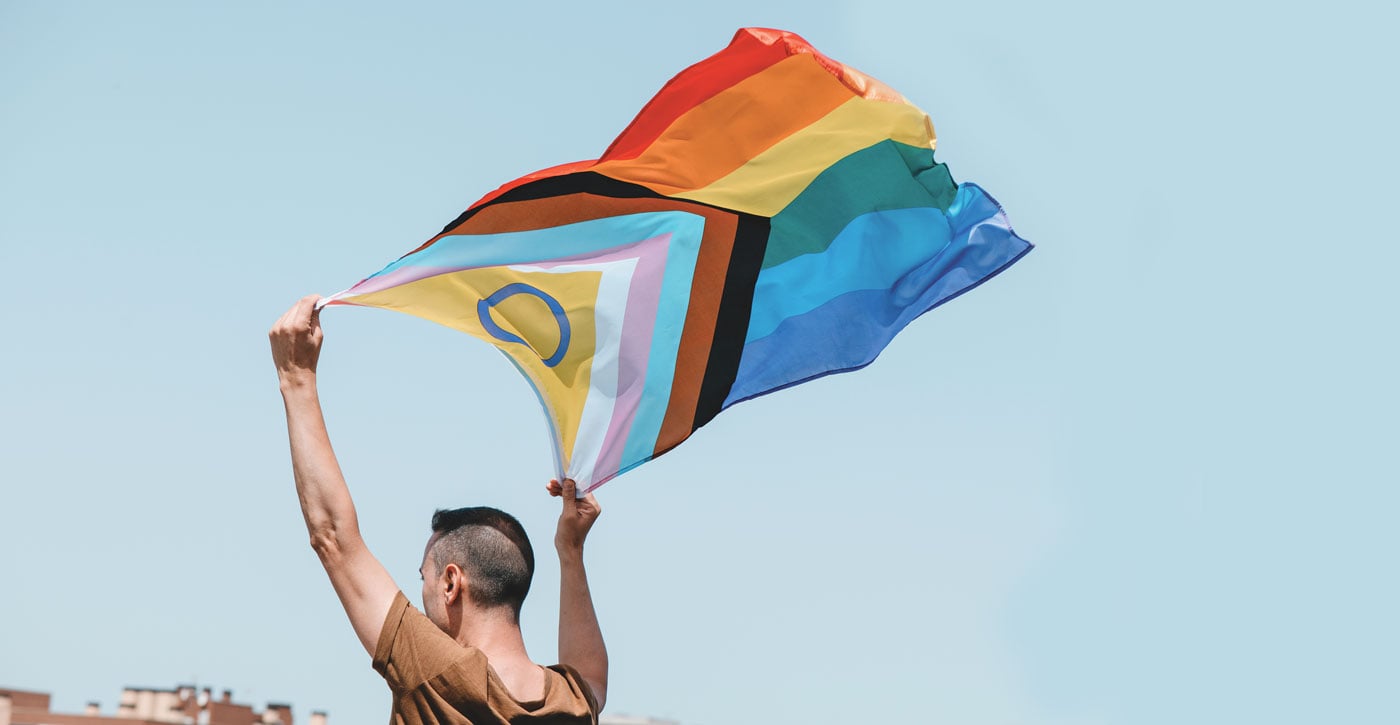
Lives of Trans, Nonbinary, and Intersex Friends
The Quaker testimony of integrity calls us not only to speak the truth but to live it, even when that truth is complex, embodied, or unsettling. We understand integrity not only as truthfulness but as wholeness and authenticity. It is about living openly in the Light, even when that means defying social expectations or resisting unjust laws. For transgender, nonbinary, or intersex Friends, the journey toward truth has often required courage in the face of misunderstanding, silence, and sometimes violence. But it has also revealed the presence of Spirit in the most intimate and transformative ways. This article offers stories of Friends who have lived their truths with integrity.
When Integrity Demands Transition: Petra Doan
In the January 2002 issue of Friends Journal, Petra Doan wrote candidly about how the Quaker testimony of integrity helped her understand her transition not just as personal truth but as spiritual obedience. As she put it, “I was comfortable with the basic truthfulness part, but it was in authenticity that I suddenly felt completely hollow.”
For Doan, the moment of recognizing that God was present in her journey toward gender authenticity was also a moment of clearness. “Indeed,” she wrote, “in following it in spite of my fears and tears, I was taking a first step in understanding the obedience part of integrity.” Her Friends meeting offered a clearness committee to walk with her as she tested this leading. It was not a theoretical process. It was flesh and Spirit at once.
Being Ourselves with God and Community: Chloe Schwenke, Ted Heck, and Kody Hersh
Chloe Schwenke, in a widely viewed QuakerSpeak interview, described the necessity of community support. “Changing gender is not something I could have done alone,” she said. “Very early on, it was clear to me that the people who were going to help me were my Quaker meeting.” Schwenke’s journey, marked by courage and interdependence, reveals how Friends can embody loving accompaniment.
Ted Heck, coauthor of this article, also shared his story in a QuakerSpeak video, reflecting on a minute passed by his meeting that is deliberately welcoming to transgender people: “I wouldn’t have thought it would have mattered that much. But once we were actually talking about it in the meeting, I realized that it actually did matter.” That conversation was more than symbolic; it was an affirmation of Heck’s spiritual place in the community.
Kody Hersh speaks openly about the spiritual depth of human embodiment. In “A Gospel of Quaker Sexuality” from the May 2016 issue of Friends Journal, he writes, “Our capacity for pleasure is part of our humanity, a gift from God. Sexual pleasure is part of that gift. Humans were created for love . . . familial love, spiritual love, the love of deep friendship, romantic love.” For Hersh, the spiritual invitation is to act in all forms of love with compassion. His words echo the Quaker belief that there is no division between body and Spirit, between truth and grace.
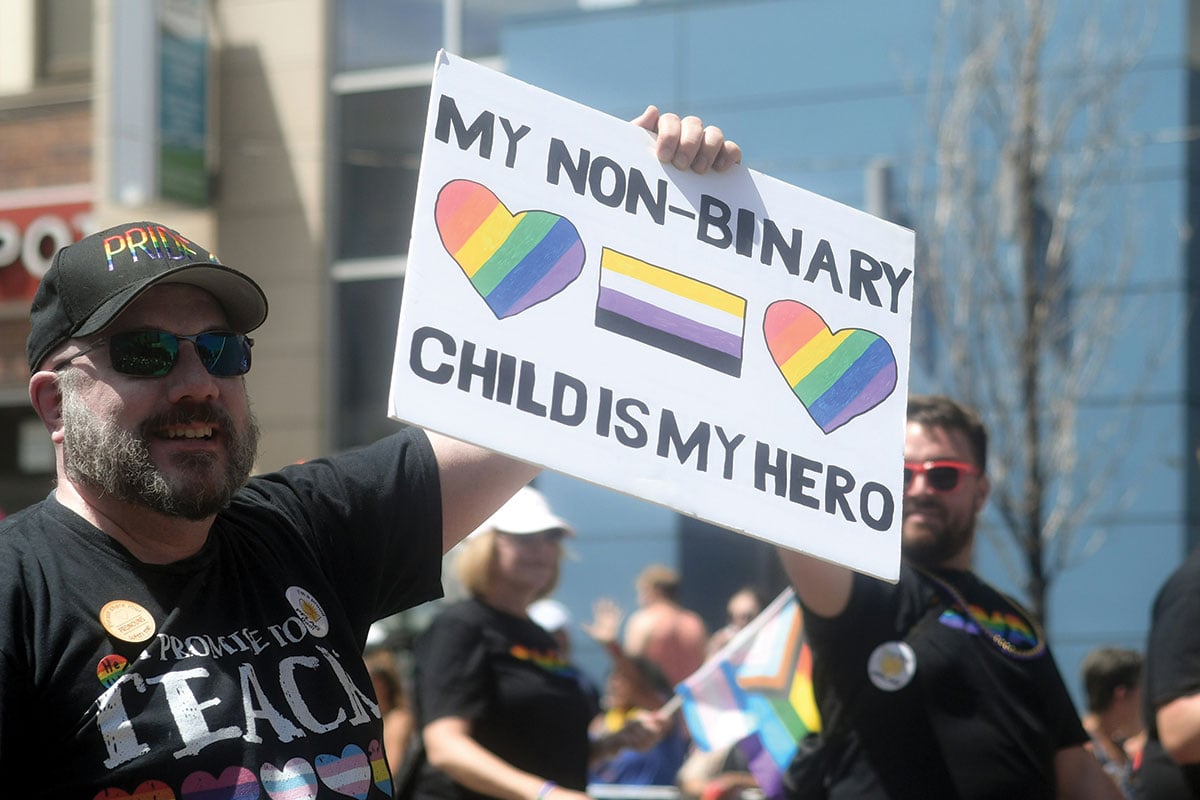
Six Friends Who Lived Their Truths with Courage
Clara Ione Cox (1879–1940) was born into an affluent White family in High Point, North Carolina. She turned away from privilege to follow a leading toward justice. A graduate of Guilford College, she became a civic organizer and Friends church pastor. She worked closely with the Commission on Interracial Cooperation, advocated for Black education, spoke out against lynching, and served as a moral voice for racial equity in the Jim Crow era South.
Cox was also intersex, born with ambiguous genitalia. In her hometown, people used the slang term “morphodite” (an alternate form of the outdated term “hermaphrodite”), and according to local oral histories, her intersex identity was accepted with quiet casualness. Brenda Haworth, a local historian, told The Guilfordian in 2024, “Everybody knew. They were very casual about it. It was just like saying she had brown hair.” This quiet knowing coexisted with a powerful public witness: Cox gave away her salary to support students and led from a place of spiritual generosity. Her life offers a model of how being fully oneself can deepen ministry.
Sally Gross (1953–2014) was born with ambiguous genitalia to a Jewish family in South Africa and was assigned male at birth and given a male name. As a young adult, Gross became a Catholic priest and also an anti-apartheid activist. In the 1980s, she joined the African National Congress and wrote publicly against apartheid, for which she was stripped of her citizenship. In the early 1990s, when she returned to post-apartheid South Africa, Gross publicly claimed the truth of her intersex birth: a moment of personal clarity that brought institutional exclusion. For claiming the intersex to which she was born, the Catholic Church defrocked her from the priesthood. She soon found refuge in the Quaker faith.
In these same years, she helped establish Intersex South Africa and worked with the government to amend an anti-discrimination law in 2005 to include intersex protections: a major legal milestone. Her 2013 paper “Not in God’s Image: Intersex, Social Death and Infanticide,” presented at a theology conference organized by the University of Manchester, laid bare the stakes of being invisible. Gross lived her truth publicly with humility and courage, and she showed us what integrity looks like when it is hard-won. A three-minute video about her called “Sally Gross, Founder and Director of Intersex South Africa” can be viewed on YouTube.
Arthur Noel Kincaid (1942–2022), a Westtown School graduate, transitioned in England before his fifth class reunion in 1964. A scholar, dancer, and historian, Kincaid earned degrees from Columbia, Tufts, and Oxford, and eventually became a British citizen. He was an expert on Thomas More, Shakespeare, and early Quaker history. Kincaid lived quietly as a transgender man, sharing his identity only with close friends and fellow Quakers. His scholarship was meticulous, as seen in his 1979 edited volume of George Buc’s seventeenth-century The History of King Richard the Third. Kincaid’s book The Cradle of Quakerism: Exploring Quaker Roots in Northwest England from 2011 shows the same deep spiritual and historical grounding. Kincaid’s life reminds us that some ministries unfold through study, writing, and a life of faithfulness lived with discretion.
Jason A. Cromwell (b. 1952), an anthropologist and early pioneer of transgender studies, transitioned in his early 20s and cofounded Seattle, Washington’s Ingersoll Gender Center in 1977. He was a member of University Friends Meeting in Seattle and married his wife, Bonnie, under the care of the meeting in 1986, after previously having married in a civil ceremony in Spokane in 1973. Cromwell’s book Transmen and FTMs: Identities, Bodies, Genders, and Sexualities (1999) broke academic ground by centering transmasculine voices. He was also a fabric artist and a parent. Appearing on a nationally televised Geraldo show in 1988, he brought visibility to trans men when few were willing to do so. His quiet courage, steady scholarship, and public witness show the many ways integrity can manifest.
miriam berg (b. 1934) has been a Quaker since 1964 and is a longtime member of Berkeley (Calif.) Meeting. berg is a polymath: musician, composer, folk dancer, Bible scholar, and computer programmer. She transitioned in the late 1970s, having already served as meeting clerk. Her transition only deepened her service, and she later served as clerk once again. berg authored The Story of Yeshua (1990), a gospel-based biography of Jesus, and The Refutation of John (1979), which offers a radical reinterpretation of Scripture. Her life reflects a seamless integration of faith, scholarship, and activism. Her website, folksongcollector.com, continues her decades-long work of cultural preservation. Her witness lives in pixels, pages, memory, and grandparenting.
Roberta E. Dickinson (1916–1982) was born in Richmond, Indiana, into a family of Quaker lineage. Dickinson studied architecture at the University of Southern California and briefly studied with Frank Lloyd Wright. Her faith deepened through peace activism, leading her to sculpture and war-tax resistance during the Vietnam War. At 60, Dickinson transitioned. In 1977, Friends Journal published a notice of her gender transition in a “Sex Change” section of its Milestones column—a historic first. That same year she spoke with Terry Gross on the radio program Fresh Air, urging support for trans youth. An excerpt from the interview can be heard in the Fresh Air online archive. Her watercolor self-portraits from this time documenting her transition as a testimony to truth, are now archived at Philadelphia’s William Way LGBT Community Center. Dickinson made her life, her art, and her faith inseparable.
Living the Testimony of Integrity in Community
The Quaker tradition has always trusted that the Spirit is not bound by societal expectations. Our history is full of Friends who were led to truths their communities initially resisted: from women’s preaching in worship to the abolition of enslavement by Quakers. The testimonies emerged not from doctrine but from lived encounters with the Divine. When these Friends describe gender transition as spiritual obedience, they are speaking the language of Quaker faith.
These Friends followed inward leadings toward wholeness, often at great personal cost: unemployment, loss of familial relationships, threats of violence, or feeling invisible to communities where they thought they could embrace their whole self. Their stories demonstrate how gender identity and spiritual identity are not separate realms. And while the costs have been real, so too have been the gifts of living undivided.
Too often, trans, nonbinary, and intersex Friends have to claim their truths despite their meetings, not because of them. Even our effort to welcome requires ongoing discernment. Esther Leidolf, an intersex Friend from Beacon Hill Meeting in Boston, Massachusetts, reminded us in the Friends Journal Forum in February 2020 that “having a gender identity is a privilege so basic that many cisgender people don’t yet understand that they have it.” Even the act of sharing one’s pronouns can mean very different things to different people. True integrity means continuing to listen to those whose experiences challenge our frameworks of inclusion.
In the face of widespread fear and misinformation, we must keep listening. In the face of violence, we must keep loving. And in the face of invisibility, we must keep naming the truth that each body, each journey, each Friend is a dwelling place for the Divine.
The Work of Accompaniment
To provide the healthiest community for their members, meetings need to struggle with the testimony of integrity living into the Light. I (Ted) have seen people who are members of meetings that have passed minutes supporting trans and gender diverse people go on to misgender fellow attenders. I have seen the pain on their faces that come as a result. This happened in recent years to Friends identifying as nonbinary, who made known to the community that their pronouns are something other than traditional binary pronouns (he/him/his or she/her/hers).
Friends seem to believe, and sometimes argue, that they have learned all they need to about different gender identities (We wrote that minute so everything’s great). They act as if wrapping their brains around different pronouns for people who are “maybe just going through a phase” is not important to them.
Another source of alienation for transgender, nonbinary, and intersex Friends is the level of trauma that many of us are experiencing as a result of elected officials and policymakers scapegoating our communities and taking away access to basic rights. Last January, my spouse and I (Ted) went to a Quaker event, still reeling from the election and the numerous restrictive executive orders that had just come out. Another person came in with an exuberant “Happy New Year! How are you all doing?” I wasn’t able to answer coherently. I didn’t know how to explain how I was feeling to someone who appeared to be so unaware of how dire the current situation was for me and for people I cared deeply about. When meetings do accompany and affirm, Spirit moves with renewed strength.
Welcoming All Friends with Integrity
Quaker communities today are increasingly recognizing the spiritual gifts of transgender, nonbinary, and intersex people. Baltimore Yearly Meeting has published a brochure with suggested guidelines for welcoming Friends across the gender spectrum. They include using pronouns respectively, creating safe and affirming spaces, making restrooms inclusive, inviting trans and nonbinary Friends into full participation, and committing to ongoing education about issues facing the trans and nonbinary community.
These are not political acts; they are spiritual ones. They are expressions of integrity in Quaker community.
Becoming the Testimony
The lives we have shared here are not marginal to the Religious Society of Friends. In honoring them, we are invited to see the testimony of integrity not only as a form of honesty but as a long-standing path to wholeness for individuals and for communities.
In the face of widespread fear and misinformation, we must keep listening. In the face of violence, we must keep loving. And in the face of invisibility, we must keep naming the truth that each body, each journey, each Friend is a dwelling place for the Divine.
On Erasure: The Ones Who Aren’t Here
In recent decades, societal hostility toward transgender people has taken the lives of two young adults from Quaker families: Andrea Joanna Waddell, a philosopher and poet from Brighton, England, who was murdered at age 29 on October 15, 2009; and Joy Elizabeth Sitler, a musician and composer from Knightstown, Indiana, who died by suicide at age 30 on September 27, 2025. Friends have long turned to song when words alone are insufficient. John Calvi’s song “The Ones Who Aren’t Here” names the fragile threshold between love and loss:
The hugs and the tears
when they show you their hearts,
and some never speak again.
Every pot off the wheel
can’t bear the kiln.
Every love can’t bear the pain.
Calvi’s words simply tell the truth that not every life can endure unrelenting heat. Violence takes many forms: some external, some internalized. When authentic lived truth is treated as controversy rather than testimony, the strain for some becomes unbearable. The losses we name here are not isolated Quaker tragedies. Violence and the threat of violence is all too common in the lives of transgender, nonbinary, and intersex people. International Transgender Day of Remembrance annually held on November 20 is one way that trans communities have found to cope with these losses and remember the individuals beyond the ways in which they were victimized. In the same way, Intersex Day of Remembrance is November 8 each year.
Thank you, friends, for this moving witness to the enduring presence of Trans & Gender Non-Conforming Friends deep into Quaker history. Our Queer family reaches back into the past, even before the words we use to identify our experiences were invented — and we will be here long after the political movement that demonizes us has been forgotten. We have been led by spirit to know ourselves radically — and neither spirit or this knowledge may be extinguished.
Thank you for this issue embracing the welcome of all Friends, our family! My child grew up in welcoming and affirming meetings. As a non binary, gender fluid person they are thriving. They are also keenly aware that
“Violence and the threat of violence is all too common in the lives of transgender, nonbinary, and intersex people.”
Welcoming and affirming Meetings are important Friends. Still tumore is asked of us. This very day, March 19, 2026, Tennessee HB 754 has advanced in their legislature. This bill would require a registry so that data on for ALL trans people to be collected and made public. Please Friends join together to organize and mobilize now to stop this Tennessee bill and build a state legislature watch for each of your state legislatures. Our allyship is critically important.
The issues of sexual and gender identity have been very divisive in many religious communities. Adopting inclusion and acceptance has challenged many meetings and lead to division and disharmony, but Quaker testimony has always been to do what we believe is right today and not what we thought was right yesterday. With new knowledge and an open mind can come understanding and it is understanding that is a core component of love. It is the lack of understanding that results in fear.
Integrity must begin within oneself. Learning and accepting who you are, embracing the result and its consequences is the only way to stay true to yourself. Without that inner integrity, one loses all connection with oneself. This is terrifically damaging. We often speak of being in a closet, but for many it’s more of a dungeon.
SHOUT!
They told us we were sick, they claimed we were perverted
They beat us and jailed us and the drove us from employment
They called in God and Ministers to defame and abuse us
They said we made bad choices and that we could change
They promised that we could become just like them.
We said go to hell.
We stood and we marched and we made riot when we had to
We yelled and we sued and we ran in elections for decades
We took to the streets, we went to school and we taught
Our pride never failed us and we always knew who we were
We always had faith that we could change this weary world
We made a difference.
Now you tell us all over again how bad and wrong we are
You place us last in line with a huge multitude of the marginalized
You promise us that our struggle has been for nothing
You maintain that our pain and our loss and our lives mean nothing
You do all this because you fear us and our truth
We will never go away.
Dear Ophelis, Jeanne Marie, and Emily,
Thank you for your thoughtful and deeply felt responses to “Living Truth with Integrity.” Each of you brings a distinct and needed voice.
Ophelis, your sense of a spiritual lineage that stretches across time offers steady hope. It reminds us that this work is not new, nor is it fleeting.
Jeanne Marie, your words hold both tenderness and urgency. The love you express alongside the real risks facing trans, nonbinary, and intersex people reflects a truth many are carrying. Your call to continued action is heard.
Emily, your reflection on integrity beginning within speaks clearly to the cost of denial and the power of understanding. You name both harm and possibility with honesty.
I’m grateful for how each of you extends this conversation into lived faith.
I also warmly invite you to the Quaker Trans Day of Visibility Hybrid Gathering on March 29, 2026 (9:30 AM–5:30 PM), in Swarthmore, PA and online. Friends will gather for worship, music, and facilitated conversations with authors from the March Friends Journal issue and trans and nonbinary moderators—centered on listening and shared discernment.
Co-hosted by Swarthmore Friends Meeting, Swarthmore College Department of Peace and Conflict Studies, Philadelphia Yearly Meeting, Baltimore Yearly Meeting, Friends Journal, and Pendle Hill.
The event is free. All are welcome. Register at qtdov.com.
It would be a gift to continue this conversation together—in worship and shared presence.
In gratitude,
Jim