



From its beginning, Christianity has been diverse. It was born in the encounter and tension of different worlds and cultures: Greek, Roman, and Jewish. In the midst of this diversity, Christianity has always been universal in two senses: on the one hand, as a faith open to any culture, and on the other, as an ethical vision capable of affirming and redeeming cultural traditions. In other words, the universality of the gospel should not be confused with homogeneity.
The gospel is presented as a way of life that restores the dignity of peoples and reconciles them with God. Faith and the gospel of Christ do not erase cultures intrinsically, but neither do they remain silent about their aspects: they engage them in dialogue, discern what is life-giving, and reject everything that produces exclusion, oppression, and dehumanization. The relationship between Christianity and Indigenous cultures, for example, goes beyond good intentions; it requires humility, receptive dialogue, and a commitment to ongoing self-criticism in order to truly understand and recognize all cultures.
In the history of Latin America, this encounter has been marked by constant ambivalence. Historically, the proclamation of the gospel advanced alongside processes of colonization and cultural coercion, leaving wounds that still affect the lives and spirituality of Latin American peoples today. From this perspective, the encounter between Christianity and Indigenous peoples should not be one of substitution or opposition but rather an open dialogue in which the gospel is presented as a path to reconciliation, recognizing the dignity of different peoples.
In the Holy Scriptures, humanity is diverse. Cultural, ethnic, and linguistic diversity among peoples is not denied. On the contrary, Scripture affirms the existence of diverse peoples, languages, and nations shaped by their historical journeys that are marked by conflict, oppression, suffering, and resistance. In the New Testament, the apostle Paul states that God “has made from one blood every nation of humankind to live on all the face of the earth” (Acts 17:26, New International Version). Paul makes this statement in Athens at the Areopagus, in a context marked by cultural and religious diversity, before an audience that believed in different gods and before the power structures of Athens. Paul does not propose cultural uniformity. Rather, he subverts the established order and affirms the value of every human being by declaring that we all share the same origin in God, and with it, the same dignity. The diversity of peoples is part of God’s own creation.
An example of this is Revelation 7:9, which echoes the promise to Abraham in Genesis 12:3: a multitude made up of people “from every nation, tribe, people, and language” stands before God. This means that unity in the Kingdom of God is not monocultural; instead, each people’s identity is preserved and reconciled with God.
The figure of Abraham himself is situated before the formation of the people of Israel: that is, before circumcision. In Romans 4, when Paul refers to Abraham’s faith, he focuses on the Genesis narrative prior to circumcision. All peoples would be blessed through the faith of one man with a particular cultural tradition from Ur of the Chaldeans. This is not to suggest any anti-Jewish stance but rather to recognize the inclusion of all cultures within the faith of Abraham. Likewise, faith in Christ Jesus is presented universally in John 1:12: “Yet to all who received him, to those who believe in his name, he gave the right to become children of God” (NIV).
At the same time, Scripture firmly challenges unjust hierarchies that harm the most vulnerable (Isaiah 1:17; 10:1–2). Therefore, speaking about Indigenous peoples is not only a cultural or racial issue but also a biblical imperative of Christian spirituality. Among other biblical passages, one key text emerges for understanding the plurality of peoples and the ontological dignity that gives value to each individual: Galatians 3:28.
Paul expresses it this way: in Christ, ethnic and social distinctions do not define human worth. “There is neither Jew nor Gentile, neither slave nor free, nor is there male and female, for you are all one in Christ Jesus” (NIV). Paul does not deny cultural differences or our roots. Rather, he challenges any hierarchy built upon them. In the Son of God, human dignity does not depend on culture, ethnicity, language, or gender, but on God’s grace extended to all humanity.
For Quakers, following Christ has never meant merely professing a faith, but reflecting, in daily life, the character of the Son of God in human relationships, in service, and in the way the divine presence is recognized in every person.
Within this same framework, I want to speak from the theology and history of my denomination, the Religious Society of Friends. For Quakers, Galatians 3:28 is not an abstract truth but a lived testimony of what we call the Inner Light, a principle that shapes community life, mission, and relationships with others. For Friends, living the gospel is not merely about bearing the Christian label or emphasizing a particular religion but about reflecting the character of Christ through consistency between what is professed and what is practiced in daily life, treating our neighbors with dignity, without racial distinction.
Since the seventeenth century, this principle has led Quakers to affirm with courage and faithfulness that the presence of God is not limited to a single ethnicity, culture, or institutional structure. In the words of George Fox: “there is that of God in everyone.” In Quaker spirituality, the Inner Light is not merely an idea on paper but the heart of a faith that calls us to live out equality among peoples and to recognize their dignity regardless of their origins. Far from being an abstract concept, it is a radical Quaker principle: the testimony that God is near to all and that God communicates with ordinary people regardless of their context or culture. This leads us to approach others with respect for their background and worldview, not as the sole bearers of truth but with reverence and humility, recognizing that God is already present in their lives.
This vision is embodied in the life of John Woolman. He confronted the inconsistency of those who professed the gospel while Native peoples were being stripped of both their land and their dignity. Fox’s spiritual insight comes to life in Woolman’s social action: throughout his journeys, Woolman visited Native American communities, lived among them, and sought relationships grounded in respect and equality. He taught that God shows no partiality and that there is something of God in every person.
Throughout this journey, it becomes clear that the shared dignity of all peoples before God, affirmed in the Scriptures, lived in the experience of the early church, and reaffirmed in Quaker tradition and spirituality, did not remain an abstract idea, but became a practical principle embodied in history. The conviction that the presence of God is not limited to cultures, ethnicities, or human structures shaped the lives of men and women who understood the gospel as a continual call to coherence between faith and practice.
This spirituality, proclaimed through the witness of George Fox and visible in the life of John Woolman, crossed generations and borders and reached Latin America in the early twentieth century through missionary Friends, among them Willis R. Hoover, who understood that proclaiming Christ meant approaching people with humility and respect. In Guatemala, this testimony was established by Quaker missionary teams who settled especially in the eastern region of the country, in areas such as Chiquimula, where they founded schools, educational initiatives, and community media, laying the foundations of a Quaker presence committed to service, education, and community life in contexts of social vulnerability.
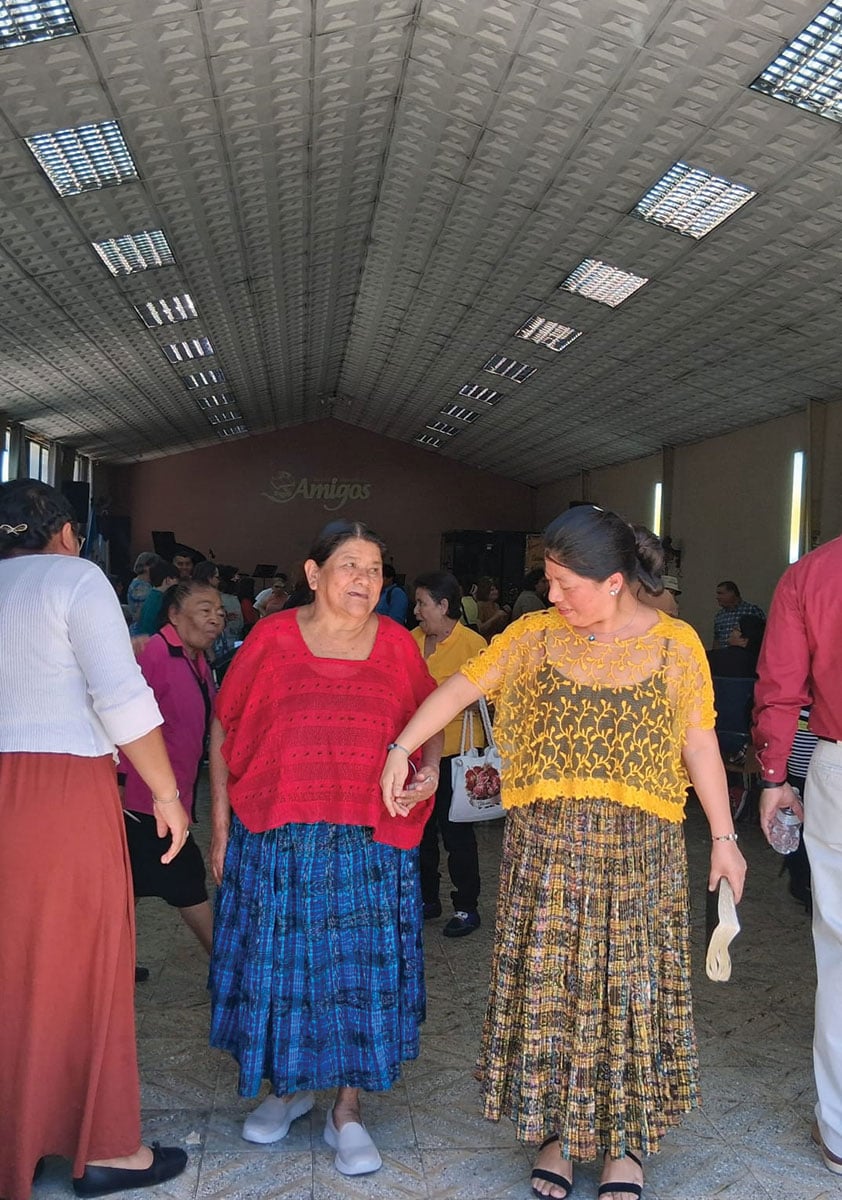
It is this historical and spiritual continuity that leads us from the witness of the first Friends to the witness of a concrete community in the present. This heritage is made alive today in the Friends church located on 30th Street, Zone 3, in Guatemala City. Situated in a region historically marked by social marginalization and its proximity to the Zone 3 landfill, one of the least advantaged areas of the city, this community demonstrates that these principles remain alive. Approaching 68 years of presence in the neighborhood and gathering an average of 113 to 120 people, its ministries, service to others, and coexistence among diverse cultural realities make visible a truly embodied spirituality. There, diversity is embraced as part of God’s creative purpose; dignity is recognized as a non-negotiable value; and the gospel is lived daily as a path of reconciliation between God and humanity. In this quiet and constant testimony, it becomes clear that, for Quakers, following Christ has never meant merely professing a faith, but reflecting, in daily life, the character of the Son of God in human relationships, in service, and in the way the Divine Presence is recognized in every person.
In light of Galatians 3:28, this experience is understood not as the result of a human effort toward equality, but as the transforming work of the Holy Spirit of God, who leads the community to recognize that, in Christ, there are no hierarchies that define the value of persons. For Quakers, this guidance of the Spirit sustains community life, directs service, and shapes daily relationships. Thus, more than preserving a historical tradition, Quaker spirituality continues to be a living testimony of men and women who seek, in the simplicity of everyday life, to reflect the character of the Son of God, recognizing His presence in each person and living the gospel as a real path of reconciliation, dignity, and peace among peoples.

We want to hear from you, not an AI! Please be thoughtful and use your own words. Comments on Friendsjournal.org may be used in the Forum of the print magazine and may be edited for length and clarity.