



Acting from Love in Contexts of Violence and Exclusion
The Beginning of a Journey That Never Ends
In 1927, a group of four Quakers—among them a woman—from American Friends Service Committee (AFSC) undertook an expedition to Nicaragua in the midst of a conflict marked by U.S. military intervention. That same year Augusto C. Sandino, a liberal revolutionary military leader, took up arms in opposition to the Pact of Espino Negro, a pact that consolidated the U.S. military presence in Nicaraguan territory and changed the political direction of the country.
The Quakers traveled to Nicaragua with the goal of mediating between Sandino and U.S. military forces, seeking the withdrawal of those forces so that further loss of life could be avoided. They were unable to establish direct dialogue with Sandino (who fought from 1927 to 1933), although they did manage to connect with close members of his family. The main obstacles came from U.S. diplomatic and military representatives, who told them that their intervention would “only cause more problems.” The Quaker group concluded that the longer the United States remained in Nicaragua, the more complicated the political situation would become. Thus begins the history of AFSC in Latin America.
Nearly 100 years have passed since that first incursion into the region, and AFSC continues to struggle against U.S. interventionism: dreaming of and building peace that is motivated by hope for a more just and equitable world. This hope is inspired by the belief that love can transform both people and unjust systems.
We Make the Path by Walking
AFSC’s work in the region has been diverse, both in terms of geography and in the issues addressed. The organization has worked in Colombia, Ecuador, Chile, Peru, Brazil, Argentina, Costa Rica, Nicaragua, El Salvador, Honduras, Guatemala, Mexico, Cuba, and Haiti and has made significant contributions at different moments in history. Since 1939, these efforts have included the creation of clinics, vaccination and health campaigns, construction of schools, and promotion of agricultural projects.
In complex contexts, AFSC has shown versatility in its adaptations and contributions to transformation. In the past, for example, we worked with young people involved in gangs (maras) and other violent groups in Colombia, Peru, Mexico, Nicaragua, El Salvador, and Guatemala. With them, we created spaces for dialogue, mediation, conscientious objection, restorative justice, and other activity oriented toward peace.
Our approach has contributed to leadership development, community organization, and the strengthening of networks both within countries and at the regional level. For example, AFSC played a key role in Colombia in the creation of the Coalition Against the Use of Children and Youth in the Armed Conflict and in establishing an inter-institutional committee against aerial fumigations that harmed women’s health. Between 1996 and 2001, we also supported networks of Indigenous and Afrodescendant peoples to ensure effective participation in the World Conference Against Racism. Faithful to our origins, we supported Central Americans who were affected by Hurricane Mitch, as well as by armed conflicts; contributed to strengthening civil society to oppose U.S. interference in the region; and promoted the creation of networks of migrants, internally displaced persons, and refugees. At the same time, the information generated through our field presence became vital input for movements in the United States that opposed wars which were promoted by that country.
As this brief overview shows, AFSC has always stood alongside communities, social movements, youth, and women for their right to live in peace while recognizing their diversity and the Divine Light in every person. To do so, AFSC has challenged the colonialist policies of the U.S. government through quiet diplomacy and, more importantly, by building trust that is based on respect and the conviction that our knowledge is incomplete. We invest in strengthening leadership and grassroots movements that are rooted in lived experience, operating with conviction and without seeking prominence. These values and roots keep us grounded and continue to inspire our work today.
Peace Is Possible Only If There Is Social Justice
The current Latin American context is marked by growing inequality and various forms of violence that disproportionately affect those who have historically been excluded from having a political voice: children, women, Indigenous peoples, Afrodescendant populations, migrants, people of diverse sexual identities, people with disabilities, and others.
Social gaps are deepened by the extraction of natural resources and knowledge, organized crime, militarization of public security, externalization of borders, labor exploitation, concentration of wealth, privatization of public services (health and education), populism, and the weakening of democratic institutions.
AFSC has committed to addressing some of these systems of exclusion. In Guatemala and El Salvador, we accompany communities and women’s collectives in their struggles for self-determination and access to rights.
Since 2023 in Petén, Guatemala, we have supported multicultural communities in strengthening local leadership, so people can remain on their lands; stop evictions and criminalization; and have their development models recognized, which are based on conservation practices. In the words of Cándido, a community member, our support has been key to their struggle with and recognition by the Guatemalan state.
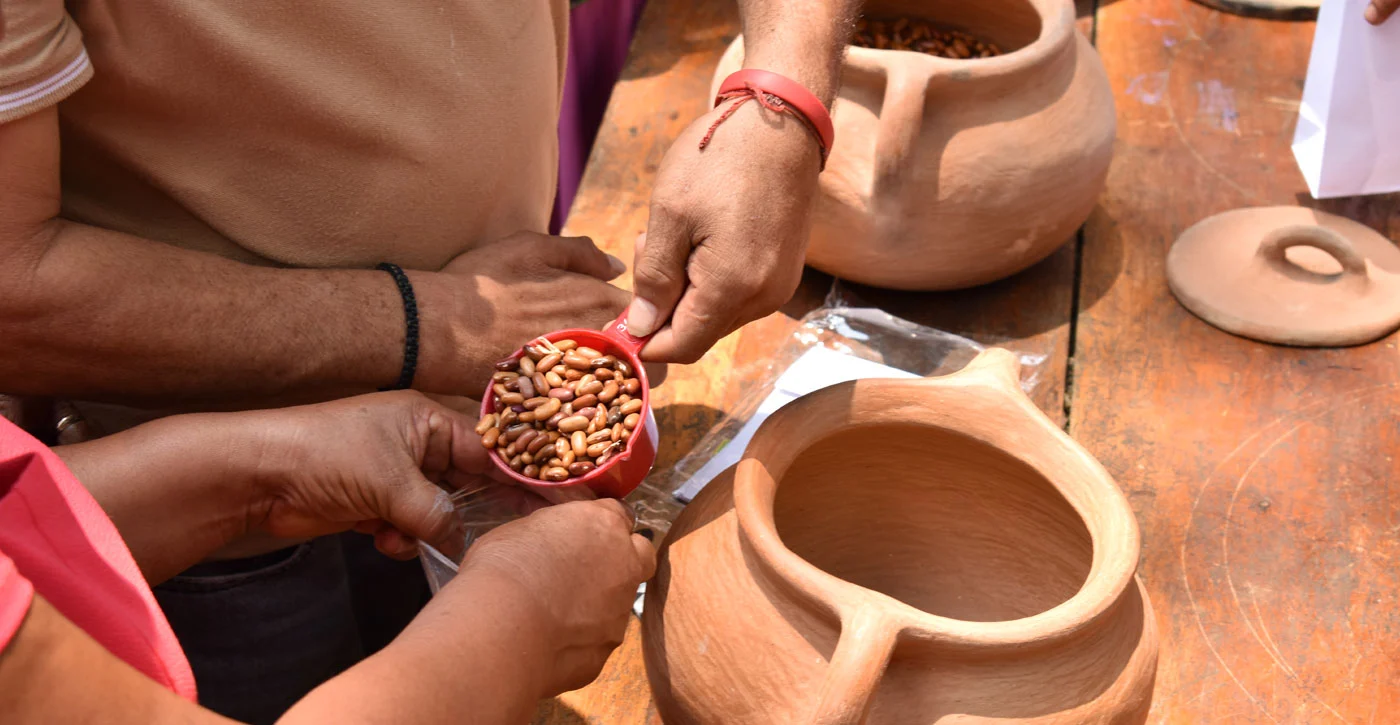
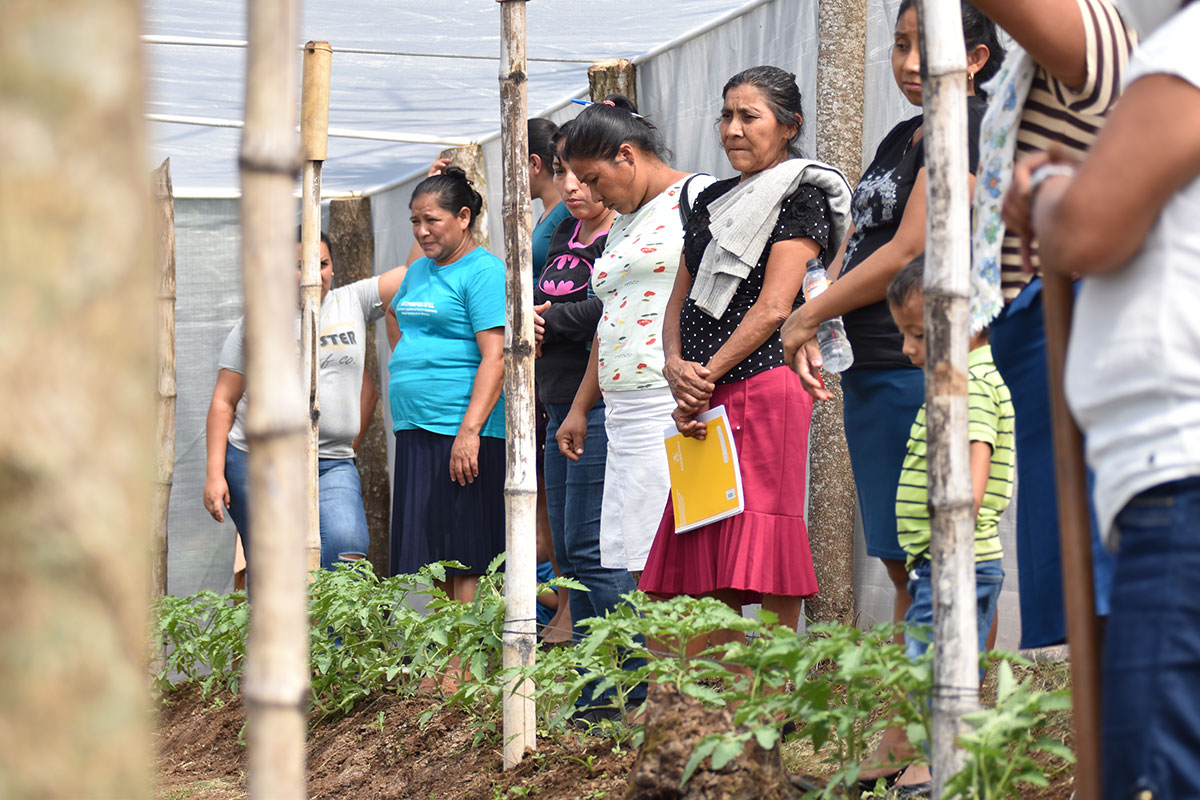
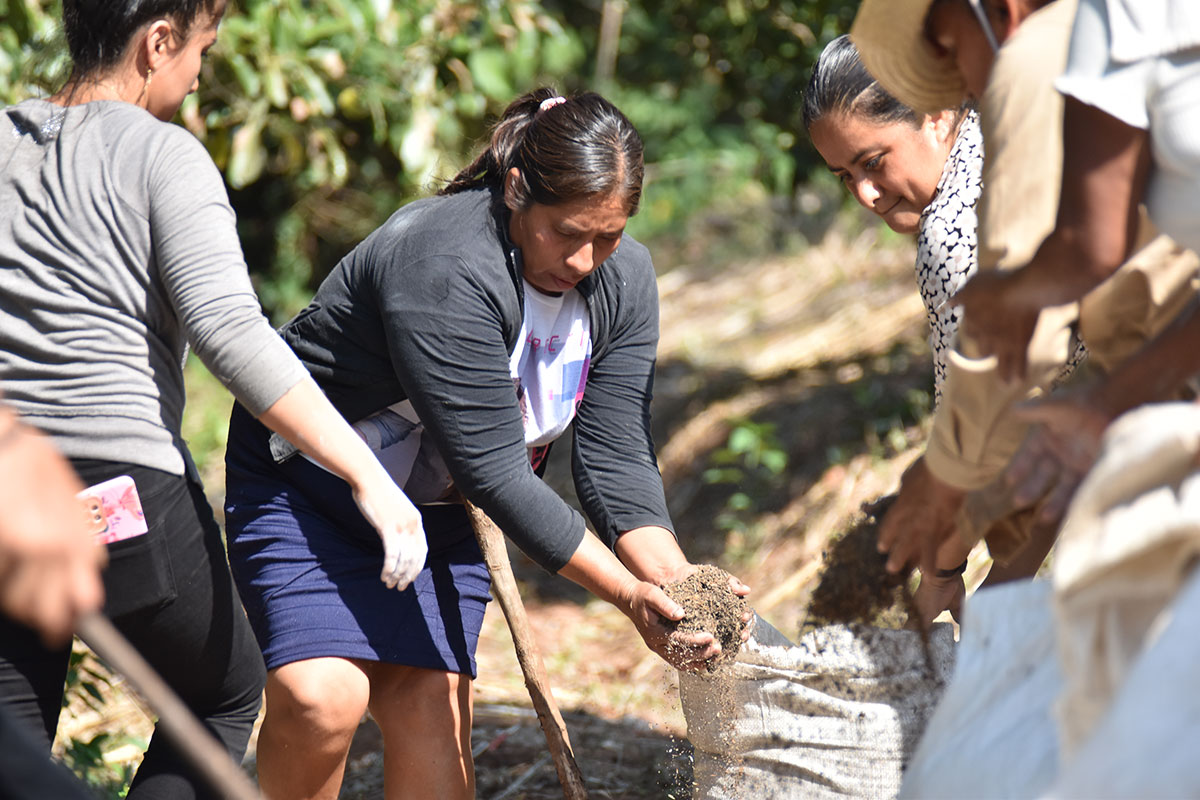
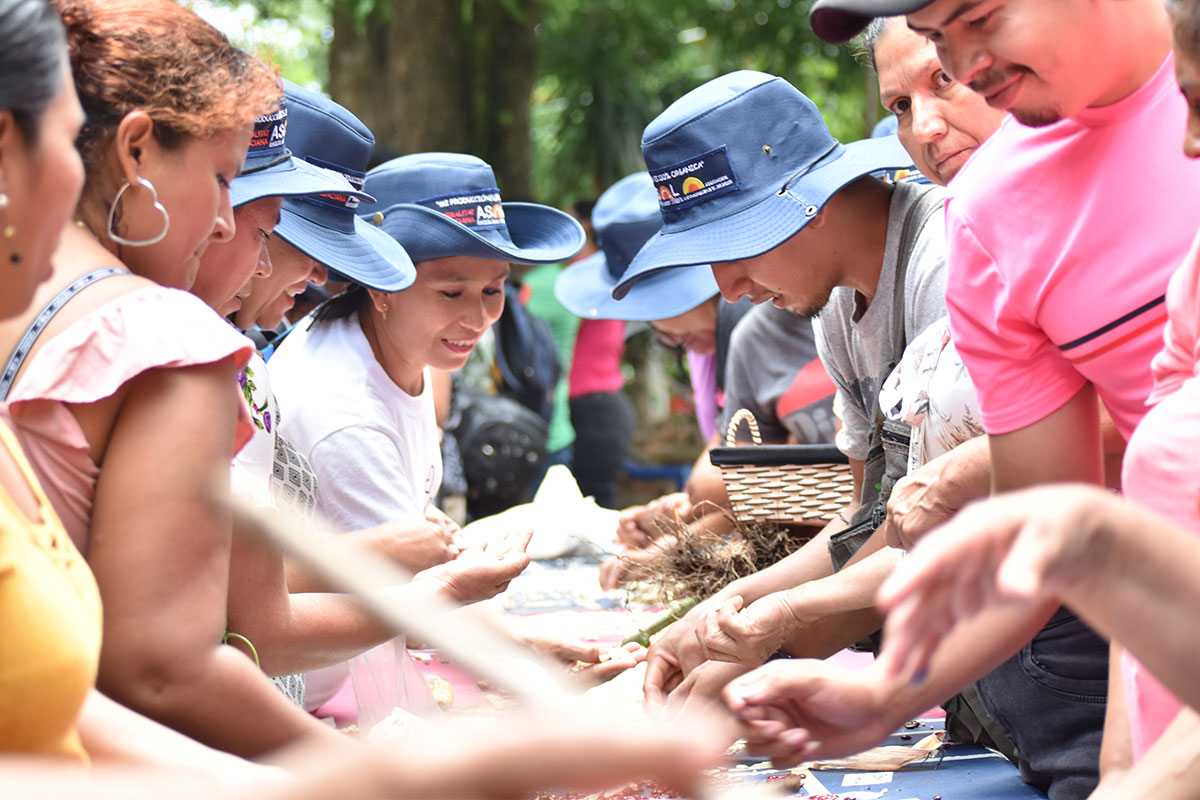
In Morazán and Sonsonate, El Salvador, hundreds of women have participated in training on agroecological practices, which has enabled them to produce their own food and generate income, thus contributing to food sovereignty and women’s autonomy.
Community savings funds have also been promoted, allowing women to access small loans to sustain their enterprises. At the same time, these women participate in leadership and human rights training processes. All of this is done in partnership with the Asociación Nuevo Amanecer de El Salvador (ANADES). In the last three years, the work has expanded from two to 15 communities and reaches more than 450 people, most of them women.
Numbers Matter, but Stories Say More
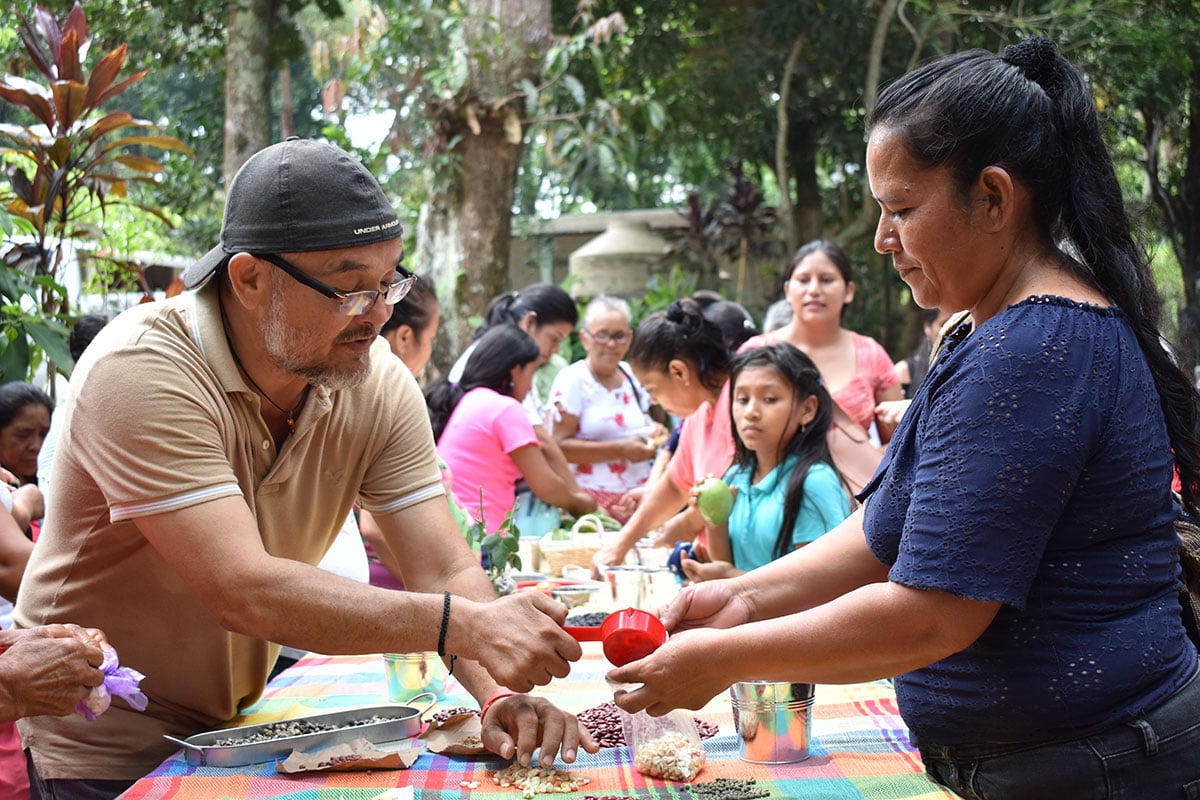
Isabel Munguía is a 48-year-old farmer who lives in Palo Verde (San Julián, Sonsonate) with her husband and daughter and is widely recognized for her community leadership. Isabel is part of a women’s collective, a community savings and credit fund, and a cooperative. In her daily life, she grows vegetables, cares for her apiary, preserves native seeds, and applies agroecological practices to confront climate change. One of the challenges she faces is water scarcity, which affects her production and family economy.
Since 2022, she has participated in processes supported by AFSC and ANADES, which has strengthened her political formation and tools for defending rights. Together with other women, she has built organizational and economic spaces that provide accessible credit and promote collective production, even sharing her land with others. As she says: “Today I feel like an empowered woman . . . now we decide about our income and our lives.” Her experience shows how community organization expands the exercise of rights and builds dignified alternatives for life in the territory.
Migration Justice: Dignity in Motion
At AFSC, we firmly believe that people on the move have the right to decide where to live and to have access to rights and dignity. This basic principle is systematically violated in the current context. It is necessary to strengthen systems of national and international assistance and protection, as well as to confront cruel policies and practices that dehumanize people in forced migration.
To this end, AFSC works alongside organizations and shelters in Mexico, Guatemala, and El Salvador. In Guatemala, a Learning Community on return migration was created with eight local organizations to promote exchange of practices and strengthen capacities for comprehensive reintegration.
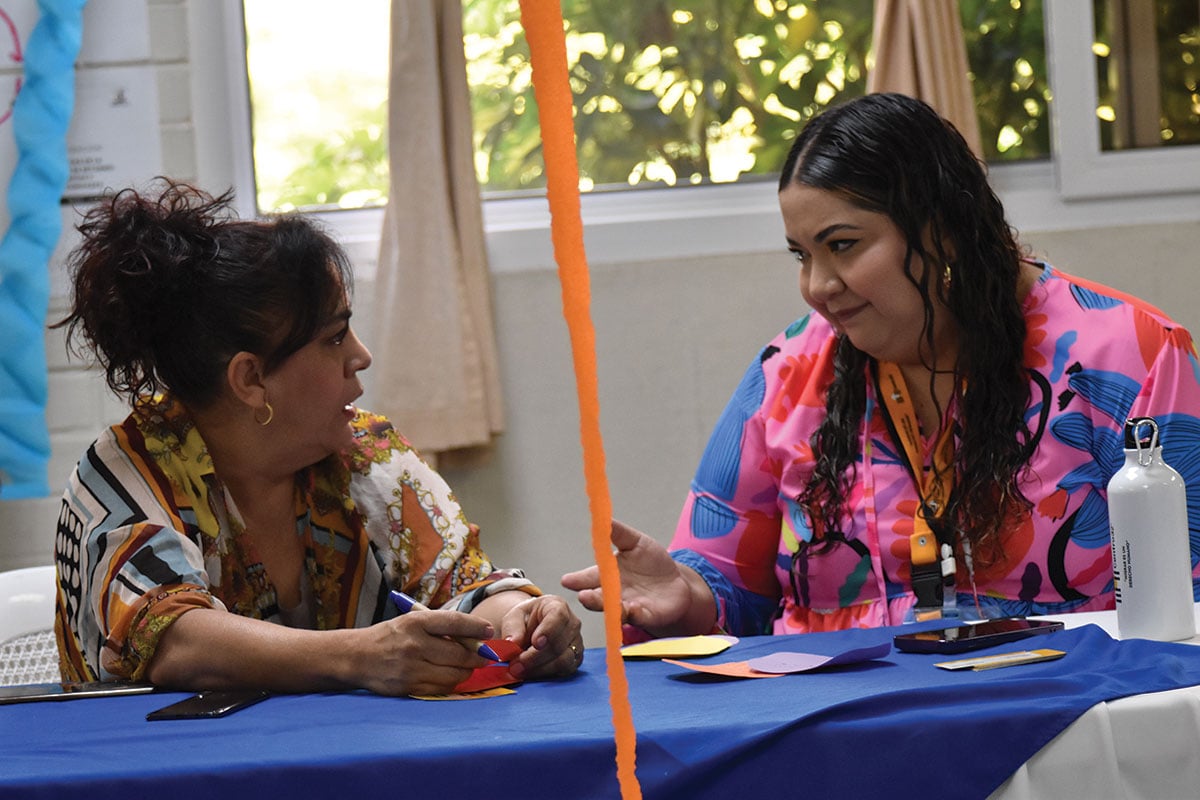
In El Salvador, in partnership with the Center for Integration of Migrant Workers (CIMITRA), we are supporting the formation of committees of returned persons and the creation of the first national network of returned persons. We aim to equip them with tools to reintegrate into communities, strengthen leadership, and lead their own advocacy for rights.
In Tijuana, Mexico, AFSC has led the creation of the Network for the Defense and Comprehensive Care of Migrants (REDAIM), the first network that brings together shelters and local organizations to define a shared advocacy agenda, which is focused on humanitarian assistance, economic inclusion, and access to protection systems.
The Flight of the Hummingbird: Holding on to Hope
AFSC seeks to transform systems of oppression while also honoring its tradition of acting when communities’ lives and integrity are threatened in emergencies.
In January 2025, Donald Trump began his second term as president of the United States. His administration implemented military, economic, and migration policies with severe consequences for the United States and the world. Latin America has been particularly affected, especially regarding the expulsion of people in migration contexts.
According to the U.S. Department of Homeland Security, as of October 27, 2025, more than two million foreign nationals had left the United States: 527,000 through deportation and 1.6 million through “self-deportation,” due to threats of detention and sanctions. As a result, more people are returning to Mesoamerica in vulnerable conditions. In 2025 alone, more than 151,000 Mexican nationals were deported.
In response, AFSC created the Hummingbird Action Plan to address these humanitarian needs through three pillars: assist and protect, document, and advocate.
Implemented in Mexico, Guatemala, El Salvador, and Costa Rica in 2025, in partnership with 13 organizations, the plan provided humanitarian aid, psychosocial support, and rights information to 3,228 people. AFSC also interviewed 364 individuals. One testimony reads:
In El Paso, Texas I stayed three days. After that they took me out in handcuffs, hands, feet, waist, everything. They put me on a plane . . . when it landed it said McAllen, Texas, and I was detained there nine more days . . . the treatment was bad . . . because you are a migrant you cannot speak or they beat you. The food was also bad. They beat a Venezuelan in front of me. . . . I ate and slept on the floor.
This testimony is not isolated; it reveals patterns of cruelty and their impact. Yet there are also stories of humanity and solidarity that restore hope. A CIMITRA worker shared that providing items like backpacks and shirts has a profound impact: beyond material aid, they are perceived as signs of humanity, closeness, and care.
Quaker solidarity also had a vital impact in Costa Rica, where AFSC supported the Monteverde Friends Association in welcoming six families from Armenia, Russia, Afghanistan, and Azerbaijan. They were received by people who did not speak their language but recognized their dignity through love.
Conviction Without Protagonism
AFSC has walked for nearly a century in Latin America alongside those who have been historically excluded but struggling for their rights. We have done so by building bridges, strengthening voices, and working toward peace with equality and justice.
Despite challenges, we remain faithful to Quaker values: acting from love, recognizing the humanity in every person, and affirming that peace is only real when there is social justice. We continue to believe that another future is possible, and we continue working to make it real.
We want to hear from you, not an AI! Please be thoughtful and use your own words. Comments on Friendsjournal.org may be used in the Forum of the print magazine and may be edited for length and clarity.