




Although the peace testimony has historically been one of the great distinguishing features of Quakers, it does not have a rigid definition or a single form of expression. It is a dynamic testimony that embodies a diversity of expressions according to the context in which it is practiced.
This multifaceted expression of the peace testimony is entirely consistent with the Quaker belief in the presence of “that of God in every person,” which moves individuals to practice peace according to their individuality, culture, theological system, or any other particular form of expression that characterizes them. One thing is certain: regardless of time, geography, culture, or other variables, Quakerism has always been characterized by its promoters of peace.
In his book The Faith and Practice of the Quakers, Rufus Jones offers a historical and geographical journey ranging from George Fox and the early Quakers in England to more contemporary times across various geographical latitudes. Throughout this journey, Jones recounts how different Quaker individuals and communities have practiced peace across time and space. As Jones points out, the beginning of the Quaker peace testimony can be traced back to George Fox in seventeenth-century England.
Although there is no evidence demonstrating that Fox was influenced in his understanding of peace by earlier predecessors who had adopted similar positions, such as the Waldensians or Erasmus of Rotterdam, there is evidence that this influence came from his deep study of the New Testament, as was also the case with Erasmus. There is also considerable evidence of the way Fox began to reflect his convictions in his daily life. For example, he was once offered the position of captain in the army, which he rejected, saying that he had entered into the covenant of peace that stands against all war and violence: the Life in the Spirit. Fox did not systematize his thought regarding peace, nor was he interested in formulating rules or prohibitions for his followers. Each person could follow one’s own Light.
Another example of the multifaceted expression of the peace testimony in different settings can be found in the famous 1918 painting None Shall Make Them Afraid by James Doyle Penrose. It is set in the year 1777, during the American Revolutionary War. The British recruited Native Americans to attack White settlers in the Hudson Valley, most of whom fled to safety. The Quakers, disregarding the imminent danger, decided to remain in their homes and continue their lives as usual. During a Sunday meeting of the Friends Meeting in Easton, New York, a group of Native warriors arrived. Instead of being afraid, the Quakers invited them to join the worship service and brought food to share with them. When the Indigenous people left, they placed a white feather on the door to tell others that the Quakers were a peaceful people.
Likewise, we can see the dynamic nature of the Quaker peace testimony exemplified in the divine revelation that Quakers from various contexts experienced during the mid-nineteenth century. This revelation compelled them to extend the influence of the peace testimony beyond personal practice or exclusive Quaker circles and into the wider world.
Jones mentions that following this awakening, Quakers became present in various settings of conflict throughout Europe and North America: in parliaments, workplaces, and every social sphere in which Quakers were present. Thus they became internationally known as social activists working for peace.
This multifaceted expression of the peace testimony is entirely consistent with the Quaker belief in the presence of “that of God in every person,” which moves individuals to practice peace according to their individuality, culture, theological system, or any other particular form of expression that characterizes them.
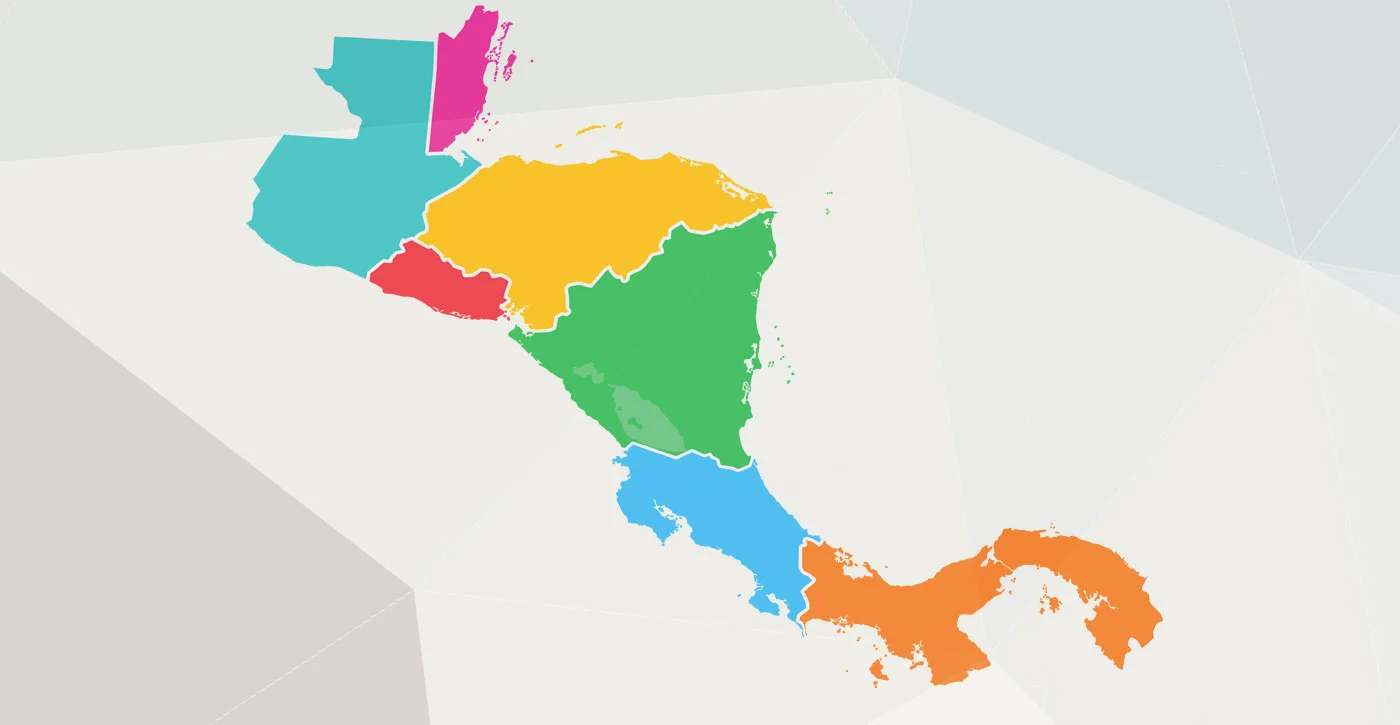
I find it vitally important to communicate this historical background of the Quaker peace testimony, because during the approximately 20 years of my involvement with Quakers of Central America, Guatemala, Honduras, El Salvador, and Nicaragua, I acquired very little knowledge about it. Maudiel Arévalo and Emma de Vichez, prominent Central American Quaker leaders for approximately 50 years, agree that such knowledge is very limited within the liturgical life in this area, and that the little knowledge that does exist is, for the most part, usually imparted to leaders who receive some particular form of theological training.
Maudiel, Emma, and several other Central American leaders interviewed for this article also agree that most of the knowledge they have regarding the Quaker peace testimony concerns George Fox and the early Quakers. Although they have some limited knowledge of the social activism around peace by Quakers throughout the world, it is not a subject that they teach in their congregations.
This reality within the Central American Quaker context leads me to ask the following questions: Given that the social activism of contemporary Quakerism in matters of peace is not the primary source of knowledge about peace for Central American Quakers, how then is peace practiced in their context, and what is the source of revelation for these expressions? What are the social dynamics or other specific factors that influence the expressions of peace practiced by Central American Quakers?
To understand the practice of the peace testimony within Central American Quakerism, it is necessary to understand the social and historical context in which it has developed since its arrival at the beginning of the twentieth century. Central America was characterized by machismo, persecution of the gospel, sexual immorality, addiction, extreme poverty, and other challenges. The magnitude of the difficulties that Quakerism faced in communicating its message of love, peace, and hope was immense but so too was the courage of the missionaries in their strategies and efforts to spread the gospel.
The first evangelical Quaker missionaries sent by California Yearly Meeting stated in correspondence that they were attacked with great hatred by Catholics who viewed them as a threat. On one occasion a priest threw the Bible from the hands of a colporteur who was preaching, struck another, and succeeded in having him taken to prison by the priest’s drunken devotees. Among other challenging situations involving some form of violence, the missionaries reported drunk men beating women, children being emotionally affected by witnessing marital problems caused by adultery, and mothers asking missionaries to take their daughters away so that they would not witness so much sexual immorality.
The missionaries’ response to such situations of violence was gentleness, kindness, love, and mercy. Like George Fox and the early Quakers, they understood that theirs was not a struggle against people (against the flesh), but a spiritual struggle. They persisted in prayer and in sharing the Bible’s message of love, and they began to see how God worked by breaking yokes and bonds: without the need for sophisticated human strategies but solely through the power of the Spirit.
Moving forward to the Central American context from the 1970s onward, the challenges had changed. There were now civil wars, insecurity caused by gangs, class differences, and other difficulties. Although there was still a small presence of North American Quaker missionaries, Central American yearly meetings had already become autonomous, and the vast majority of the work of proclamation was carried out by local pastors and leaders. The American missionaries had planted a good seed and provided a good example to follow. Now local leaders had to continue the task through the power of the Spirit in order to confront enormous challenges.
Maudiel Arévalo shares that in 1980, El Salvador was in the midst of its civil war while he was completing his final year of biblical and ministerial training at Berea Friends Seminary (Seminario Amigos Berea), located in Chiquimula, Guatemala. Despite the dangers of war, Maudiel traveled to El Salvador to preach the gospel as part of his ministerial training. On one occasion, while returning from sharing the gospel on a radio program, he was captured by guerrilla fighters who mistook him for a military officer. As they threatened to kill him, Maudiel silently prayed, entrusting himself to God. Suddenly, the sound of an approaching vehicle was heard, and the guerrillas, believing that it was the military, fled, leaving Maudiel free and physically unharmed.
There are many other stories that reflect how Central American workers, even in the midst of intense hostility and danger, proclaimed the gospel of peace through the power of the Spirit, and lived lives deeply shaped by prayer and fasting. In this way, they broke many spiritual yokes of evil in the name of God.
In attempting to answer the questions raised earlier—and after gaining a general understanding of the Central American context—I find significant similarities between Central American Quakerism and the early Quakers. One of the greatest similarities is that their primary source of revelation concerning their expressions of peace was the Bible. We must remember that the evangelical Quaker missionaries who arrived in Central America were greatly influenced by the American Holiness Movement and considered biblical preparation indispensable before going to the mission field. Therefore, just as they received biblical training in seminaries and Bible colleges, they replicated this model in Central America.
Beginning with the American missionaries and later extending to local workers, we can also appreciate their responses to violent situations in ways that were also deeply biblical, much like those of the early Quakers: “But I say to you, love your enemies, bless those who curse you, do good to those who hate you, and pray for those who mistreat you and persecute you.” (Matt 5:43–44 [NRSV], from the Sermon on the Mount).
One of the greatest similarities [between Central American Quakerism and the early Quakers] is that their primary source of revelation concerning their expressions of peace was the Bible. We must remember that the evangelical Quaker missionaries who arrived in Central America were greatly influenced by the American Holiness Movement and considered biblical preparation indispensable before going to the mission field.
The different social contexts in which these diverse expressions of Quaker peace developed (in my opinion and based on my conversations with my interviewees) logically explain why contemporary Central American Quakerism has expressions so different from Western Quakerism. For example, European and North American Quakerism largely emerged and developed in a social environment characterized by political influence, economic prosperity, and access to high levels of education. This naturally helps explain why these communities now have access to political influence and social activism.
Central American Quakerism, on the other hand, developed not within circles of social and political influence but among communities oppressed by such structures. As a result, even today there remains a certain resistance and aversion toward those spheres. This does not mean that one expression is better than the other. Rather, according to the context in which each Quaker community developed, Quakers found the best ways to embody their identity and express their ideals of peace.
I consider that politics, academic circles, and social activism are not inherently bad. On the contrary, they can be instruments for good. Therefore, I do not believe that a position of total rejection is the best approach for Central American Quakerism. My interviewees believe that Central American Quakerism could indeed open itself to new spaces in which to express its commitment to peace, whether these be politics, social activism, or other areas.
Given the limited knowledge on the matter and in recognition of the significant development that Western Quakers have achieved in this area, I truly believe that Central American Quakerism would be willing to establish a dialogue in order to learn from the richness of Western Quakerism. At the same time, I believe that Central American Quakerism has valuable contributions to offer Quakerism around the world. I see dialogue between these Quaker communities would be highly beneficial, and it is my hope that steps will be taken to turn this ideal into a reality.

We want to hear from you, not an AI! Please be thoughtful and use your own words. Comments on Friendsjournal.org may be used in the Forum of the print magazine and may be edited for length and clarity.