




Coming Together to Protect Our Immigrant Neighbors
As Friends facing current events, we may struggle with what our response should be as we confront the enormity of the pain in our world. How do we open ourselves to discernment that might lead to action in our community? Are we examining our answers about the steps we are taking as individuals and as Quaker meetings to ensure justice for those in our communities? Our work should not end with declarations of good intentions. As my meeting discerned our role in protecting immigrants in our area, we looked to the bravery of early Quakers who stood up for their beliefs. Those Friends can be an inspiration to us now: models of discernment in their obedience to Divine Guidance, allowing us to live out our testimonies.
Throughout his journal, eighteenth-century Friend John Woolman spoke candidly of struggling to overcome his fears when he felt led to act, yet he lived dedicated and obedient to his faith in order to affect his world. Here are his words:
Where people are sincerely devoted to follow Christ, and dwell under the influence of his Holy Spirit, their stability and firmness, through a Divine blessing, is at times like dew on the tender plants around them, and the weightiness of their spirits secretly works on the minds of others.
To find a sense of grounding in the Spirit, our first step is to slow down, quiet ourselves, and make ourselves ready to receive. Woolman writes:
With prayers and tears I besought the Lord for his assistance, and He, in loving-kindness, gave me a resigned heart.
This quiet reflection can come not only in the meetinghouse. While working in his orchard, our new member Nate Crew received the message that would become our “Minute of Intent to Protect [Immigrants]”. As a brand-new Quaker, he did not yet fully understand the activity of creating Quaker minutes, which indicated this declaration of faith was a true exercise in obedience, as Divine Guidance formulated every word and then guided him to bring it forward to the meeting. The words that Nate brought to us were only adjusted in minor areas, and then we were in unity to adopt this as a minute. The ease of spirit with which this occurred felt grounded. Yet, with that adoption, we had to face our various levels of comfort or discomfort regarding the proposed actions. The tolerance for risk varies widely within the meeting, and we acknowledged the need for this variation to be held tenderly by all.
Fayetteville Friends Minute of Intent to Protect
As human beings we are all children of God and recognize that among us are many dear friends, family, neighbors, coworkers and others who are immigrants in this country or otherwise marginalized. Some of us have achieved citizenship, some have green cards, some have visas, some are in pending status or similar legal limbo, and others still lack official documentation. Often, this variety of circumstances exist within a family, and the resulting vulnerabilities can be very real, complex, and difficult.
As faith communities inspired by a common sense of divine standards in goodness and compassion, we join in publicly stating our intent to peacefully yet determinedly defend the defenseless and vulnerable in their need. In all morally upright and ethically sound matters we will continue as faithful Americans to cooperate with our government and receive all government agents in goodwill; however, if a case arises of persecution, oppression, or forcible removal of immigrant populations from among us, we will weigh human authority against our leadings to submit to Divine Authority regarding disgraces against the humanity of those in our community. As and when the situation calls for action, we will readily provide shelter, cover, aid and advocacy for our beleaguered neighbors.
We earnestly hope that such a preemptive posture as represented by this minute may prove unnecessary. Yet behind our hopes and prayers, and even as we operate from a general stance of political neutrality, we yet agree to stand ready together to physically assist those persons who may seek our help, to facilitate legal assistance as far as possible, to persistently petition legislators, to send delegations and speak with key government officials, and/or to publicly denounce inhumane government policies which would aim to tear apart immigrant families or inappropriately harass harmless people. We hereby state our intent to take these and similar peaceful actions as such needs may arise.
Remembering that we are all flawed and oft-mistaken human beings, we take this stand not from a spirit of pride or conflict, but in a soul-searching hope for an American future of harmony, peace on earth, and goodwill toward everyone.
We take seriously an elder’s advice we received some years back to examine carefully our motivations when contemplating publishing a minute. What actual actions will lead from it? Are we merely posturing or “virtue signaling” when we minute? As a very small meeting, we must also carefully weigh any commitment to action, because we simply do not have the ability to manage an overload of promises.
Our initial outreach consisted of mailing over 850 paper copies of the minute to places of worship in the five counties that surround us. We had originally pictured our role as providing sanctuary to immigrants. As we began to receive signatures from a wide variety of faith organizations, however, we discerned that our actual role was to be a public face of this movement and to protect the identities of our signers and others doing the work. We had to reconcile ourselves to this change in vision, but we moved forward in obedience.
John Woolman wrote about his struggle to heed Divine Guidance when it differed from how he thought he should act:
One day, being under a strong exercise of spirit, I stood up and said some words in a meeting; but not keeping close to Divine opening, I said more than was required of me. And I was taught to watch the pure opening, and to take heed lest, while standing to speak, my own will should get uppermost, and cause me to utter words from worldly wisdom, and depart from the channel of the true gospel ministry.
We moved forward to embrace our public-facing role and sent the minute nationwide. In all of our correspondence, we emphasized that even if the receivers did not feel led to sign onto it, we welcomed a response to our email in which we might hear how the Spirit was moving among people across the country and learn how the work was progressing with them. This alleviation of our isolation helped diminish our discouragement at the enormity of the task; it can help all of us to hear about successes.
The minute was sent to local newspapers, published in Western Friend, and hand-delivered to the office of Senator Thom Tillis. Nate shared his testimony in the Friends Committee on North Carolina Legislation newsletter and spoke in front of the Fayetteville offices of state representatives. The clerk of the meeting spoke about our work on a nationwide Quaker call.
At times, we have faced comments from those who do not share our feelings of compassion for our immigrant neighbors, friends, and family. John Woolman also recognized that what he was proclaiming was not always going to be warmly embraced by the community in which he lived. He often felt he had to brace himself to speak against slavery to those he encountered who were holding people in enslavement. He said:
Acting contrary to present outward interest, from a motive of Divine love and in regard to truth and righteousness, and thereby incurring the resentments of people, opens the way to a treasure better than silver, and to a friendship exceeding the friendship of men.
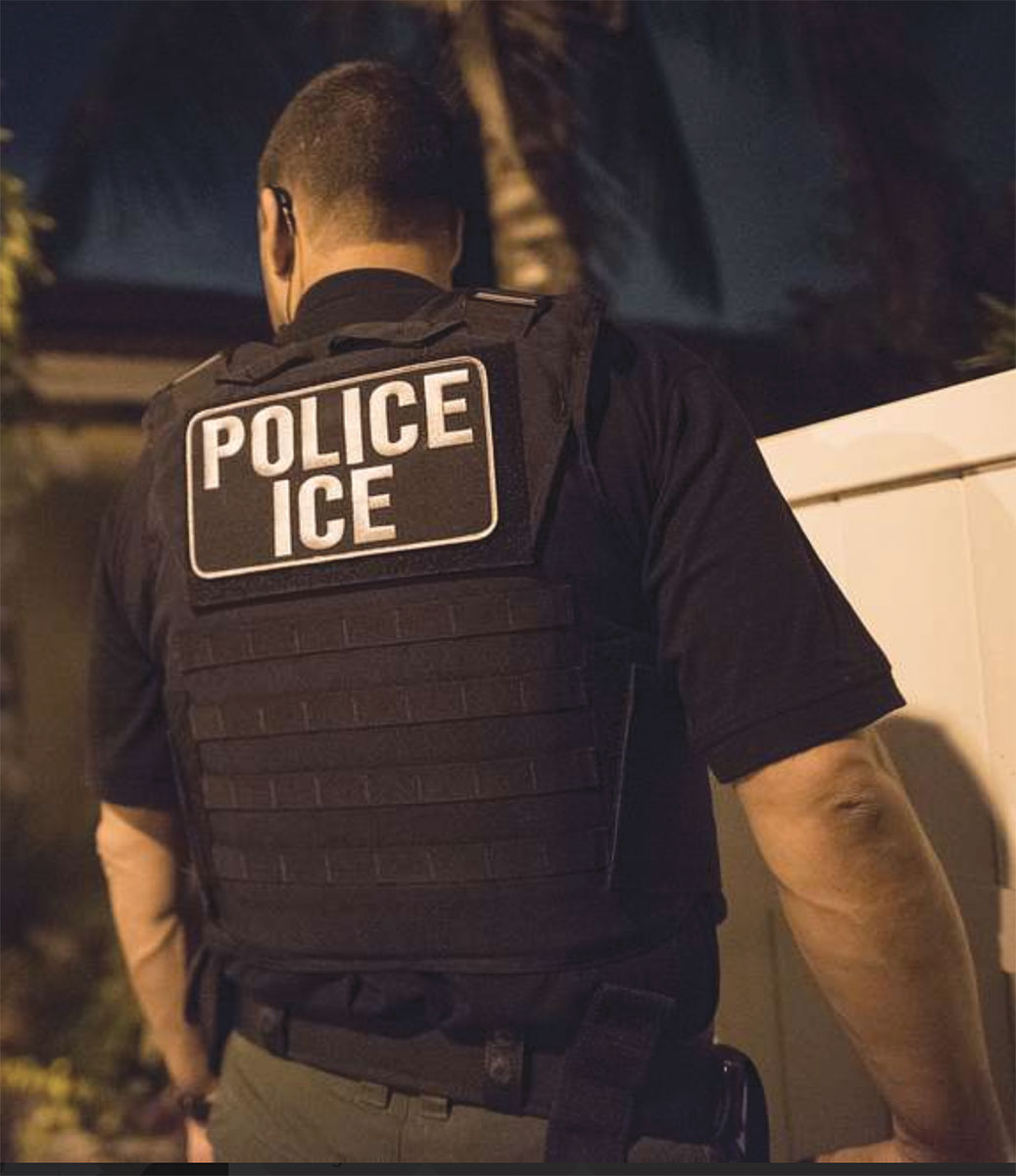
Our work has led to community partnerships that have invigorated our meeting and enriched our understanding of God moving among people of many faiths (or of no faith practice at all). Early on, we hosted a workshop with our local Organizing Against Racism group to discuss the current situation in our area and to develop strategies for safety and security protocols. Our training work has been assisted and facilitated primarily by Siembra NC, an organization focused on grassroots defense of immigrants, workers, and communities.
Our workshops have covered protocols for participating in ICE (Immigration and Customs Enforcement) watch programs, strategies for approaching workplaces to ask for commitments to Fourth Amendment protections (“the right of the people to be secure in their persons, houses, papers, and effects, against unreasonable searches and seizures” without a warrant based on probable cause a crime has been committed), and coaching for the development of local activism networks. We have partnered with a local United Methodist Church to bring these training sessions to our community, and Nate has also hosted these training sessions in his rural county.
By joining with other organizations, our small meeting has been able to amplify our work. As we face the prospect of going out with these partners into action, the words of Woolman speak to us:
Traveling up and down of late, I have had renewed evidences that to be faithful to the Lord, and content with his will concerning me, is a most necessary and useful lesson for me to be learning; looking less at the effects of my labor than at the pure motions and reality of the concern, as it arises from heavenly love.
Woolman was frequently reluctant to follow the call to speak out, and he struggled with this feeling of fear. Sometimes it takes a deep breath and a leap of faith to be obedient to our calling. Willingness to publicly proclaim our beliefs may strike fear in some of our hearts, but we are reminded that Woolman states,
I saw at this time that if I was honest in declaring that which truth opened in me, I could not please all men; and I labored to be content in the way of my duty, however disagreeable to my own inclination.
As my meeting discerned our role in protecting immigrants in our area, we looked to the bravery of early Quakers who stood up for their beliefs. Those Friends can be an inspiration to us now: models of discernment in their obedience to Divine Guidance, allowing us to live out our testimonies.
Immigration and Customs Enforcement presence in North Carolina has steadily increased in 2025 and 2026, with larger operations centering around Charlotte and the Triangle area. In 2025, over 3,000 arrests occurred, rates that doubled from 2024. We may feel waves of great discouragement at these reports and a weariness at the enormity of the task laid before us: our energy to do the work coming in and out like the tide, ebbing at times and flowing at others.
It is in these moments of physical, spiritual, and emotional exhaustion that we must not only practice self-care and ensure periods of rest but also periods of spiritual nourishment and restoration. Woolman writes:
In this journey, I may say in general, we were sometimes in much weakness, and labored under discouragements, and at other times, through the renewed manifestations of Divine love, we had seasons of refreshment wherein the power of truth prevailed.
As we face the fears of our community and the feeling of the unknown, be encouraged that our service can take many forms, and that each one of us has a role to play. Here is a final word from John Woolman:
From the steady opposition which faithful Friends in early times made to wrong things when approved, they were hated and persecuted by men living in the spirit of this world, and suffering with firmness, they were made a blessing to the church, and the work prospered.
By opening our hearts to Divine Guidance, we may end up following a path that we did not anticipate. May our work prosper.
We want to hear from you, not an AI! Please be thoughtful and use your own words. Comments on Friendsjournal.org may be used in the Forum of the print magazine and may be edited for length and clarity.