



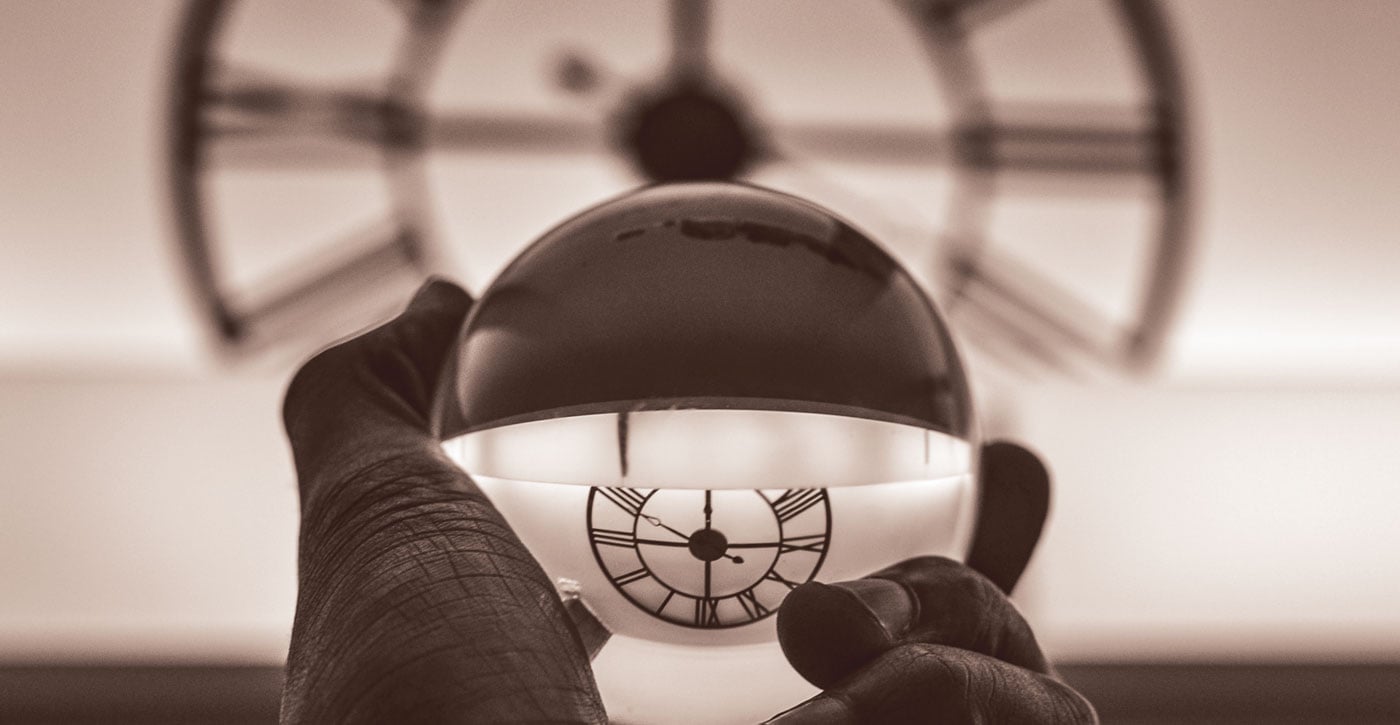
Learning to Live in the 200-Year Present
Giving in to a moment’s scrolling shows yet again the futility of the effort. The source, verifiable. The facts, brutal. A great wrong done to the undeserving by the powerful. A now-ingrained feeling of helplessness. Because the post comes from a longtime friend, it needs time to respond with a “caring” emoji and the simple phrase: “Ugh. We live in the worst timeline.” Some days later, I notice someone has shared mutual sympathy with my comment and replied, even more concisely, with the exhortation: “Restore the timeline!”
“Restoring the timeline” is a motif that fills every element of popular culture: from books to television to movies to anime to political cartoons to tragic pleas for sympathy online. It has become a shorthand way of expressing a kind of dissipated and enervated withdrawal from the struggle. A mishmash of string theory, quantum mechanics, and the speculations of countless creative artists over several centuries, it conveys the notion that our world today exists on one of many (perhaps infinite) timelines pervading our social chatter. Embedded within this notion is a kind of positivist assumption: This is it? Is this the best timeline available? Did we get penalized somewhere back along the way? Are you sure we didn’t take that left turn at Albuquerque?
If this is—as I wrote in my moment of despair—us living in the worst possible timeline, then we can make “Restore the Timeline” a mantra, a motto, a call to action. What we do today is the foundational task for restoration of a better tomorrow.
It’s hardly a new idea. Sir Thomas More wrote Utopia in 1516, and even Newt Gingrich, former speaker of the U.S. House of Representatives, wrote an alternative timeline into the plot of his novel 1945 (co-written by William R. Forstchen in 1995). You may have your own personal favorite of this broad genre. My current front-runner is Robert Sobel’s For Want of a Nail, a “rediscovered” history book from 1973 that recalls how the American rebels lost their brief and violent revolution against the British Empire. The counterfactual story has devotees in every genre and even boasts its own prize, the Sideways Award. That said, the ability to alter either one’s personal or societal timeline is—as the talking heads say—having a bit of a moment right now.
The clichéd story has varied little since Mark Twain’s A Connecticut Yankee in King Arthur’s Court. An errant time traveler, whether by accident or design, transgresses in some fashion, minor or major, thereby shattering the very world from which the traveler comes. Ray Bradbury’s short story “A Sound of Thunder” lays out the quandary succinctly and helped establish the notion of the “butterfly effect.”
A veritable pantheon of authors struggle with the various conundrums which appear as soon as one dips an imaginative toe into the waters of temporal anomalies, which are in equal parts murky and tantalizing. Psychologists like Matthew Schneider-Mayerson have delved into why we engage in “what ifs” so urgently.
On the one hand, it’s a matter of contrast: sure, we won, goes the thinking, but what if we could have won without the deaths of so many innocents? On the other hand, there’s the inference that everything that someone does matters. The road the famous person took matters; therefore it would matter if she had taken a different one. But that also means that everything that we do matters, as well.

That promptly ensnares us in Marianne Williamson’s poem (made famous by Nelson Mandela), that “Our deepest fear is not that we are inadequate. Our deepest fear is that we are powerful beyond measure. It is our light, not our darkness, that most frightens us.” Psychologically, we want the power to change history; spiritually, we fear the power to change history. But we in Quaker society have lived in the truth that not only can we change history, we are history made manifest, each and every day. Why treat “restoring the timeline” not as a trope of science fiction or a curiosity for those fascinated by quantum mechanics but instead as a very real and sacred opportunity for all of us?
Quaker faith has always been about restoration. The history of the Religious Society of Friends has been 375 years of restorative faith in action. The efforts of the early Quakers centered around a struggle to seek and find the original intent of the teachings of Jesus. In a 2018 article in Quaker Religious Thought, Paul Anderson went back to look at the struggles of early Quakers who suffered because they hoped to restore Jesus’s original teachings, amplifying the accuracy of William Penn’s description of the Quaker project as “primitive Christianity revived.” The line between “revival” and “restoration” is fairly narrow. “Revive the timeline” might not scan as well as “restore” it, but we should at least draw support from the idea that we walk in the path Mary Dyer and others have already trod.
Closer to our own timeline is the mind of Elise Boulding and her “200-year present.” Its most basic form is the recognition of our own position in time: we can reach back into a world of 100 years ago by means of the oldest person around us in our lives, and we can also project forward our thoughts to the potential 100 years yet to come for the youngest baby born in our present-day. Stretching our lives out into a wingspan of two centuries, Boulding argues, fundamentally changes our perspective and provides us with an obligation and humility that help us move forward with each and every decision we make.
It is a well-worn meme that points out our ready acceptance of the domino effect, in which our future changes irrevocably through minor actions in the past, as well as our stubborn refusal to acknowledge our power to alter the future through minor actions in the present. Our 200-year present, though, shows us the route that allows us to bypass that refusal and draw the necessary strength to gird ourselves for the efforts required to restore the timeline.
Despair is cancerous and heavy with the weight of self-fulfilling prophecy. The ubiquity of present-day communication media accelerates a person’s ability to absorb or deflect the onslaught of injuries done to others around us. If this is—as I wrote in my moment of despair—us living in the worst possible timeline, then we can make “Restore the Timeline” a mantra, a motto, a call to action. What we do today is the foundational task for restoration of a better tomorrow.
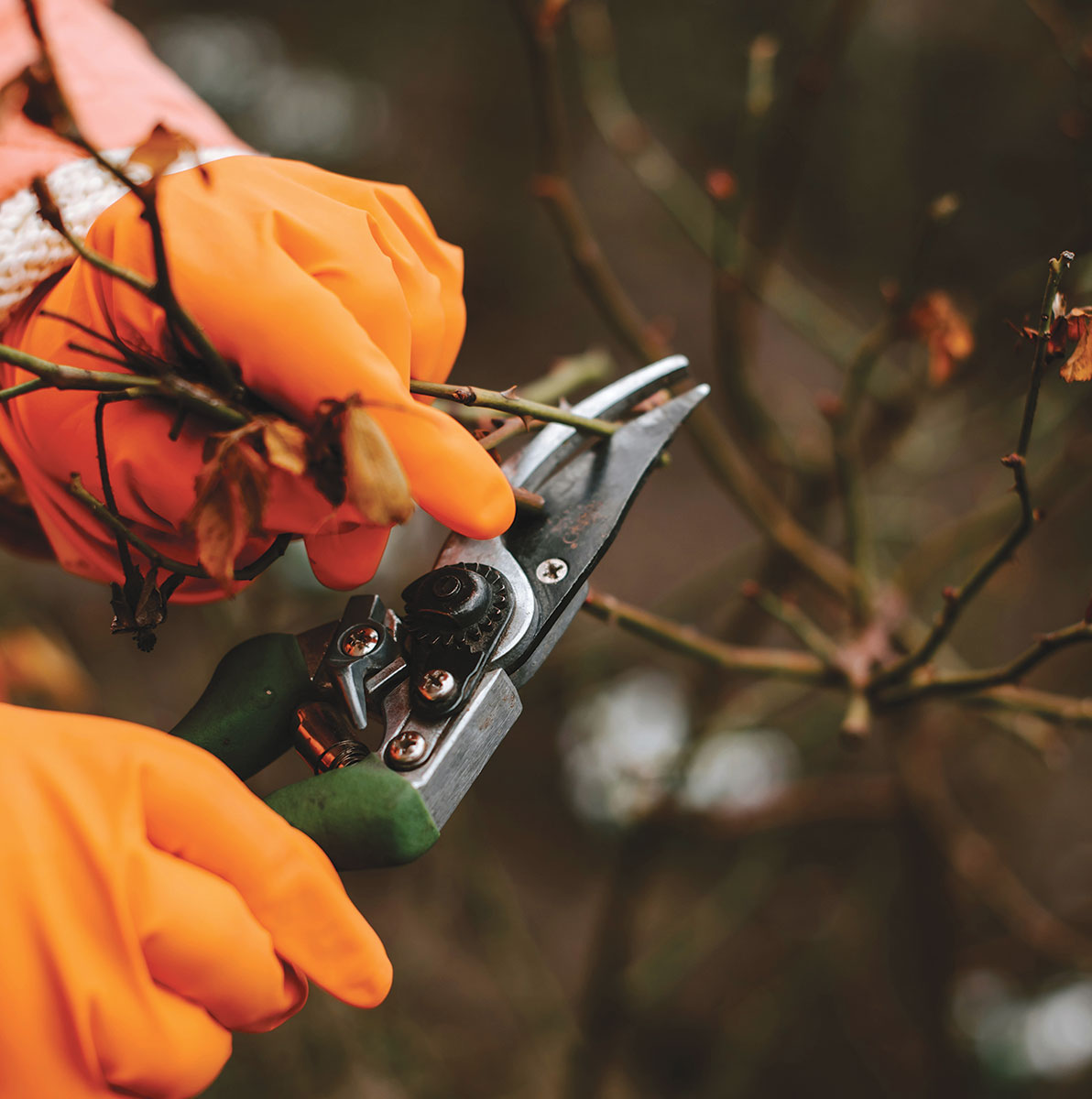
How liberating that simple shift of consciousness becomes! Restoration can be as simple as it is profound. Everyone who has ever pruned a forgotten fruit tree to spur its growth understands the power of restoration. Anyone who has crawled under a 1964 Dodge pickup to replace a worn-out U-joint grasps its importance. All of us who have sewn a button back on, repaired a torn seam, or sanded down and repainted a beloved piece of furniture know experientially the satisfaction of restorative work.
How liberating that simple shift of consciousness becomes! Restoration can be as simple as it is profound. Everyone who has ever pruned a forgotten fruit tree to spur its growth understands the power of restoration.
How much more satisfying will it be when we make our own contributions to the repair of the world as it might be! It is no simple act of quixotic madness to advocate for political reform, but it is a time-traveling adventurer’s dream. Teaching others to build a more peaceful world is not spitting in the wind. Rather, it is the work of improving on L. Sprague de Camp’s protagonist Martin Padway, the time-travelling would-be world builder in Lest Darkness Fall from 1939. In the place of throwing up one’s arms and shouting “whatever” like some variation on “the Dude” Lebowski, reimagine yourself as a Quakerly isekai-jin (異世界, “person from another world”) on an adventure to find sense in a place you find has lost its senses entirely.
You have restored, first and foremost, your own sense of membership in a greater struggle: the reconnection to the collective revival of an unrealized but surely improved world. You may not succeed now, but you have stepped into the stream of your own 200-year present.
In California and Oregon, we have witnessed the ability of many laboring souls to restore the flow of the Klamath River. It was a generational effort in the twentieth century to restrict its flow and massively damage the ecological pathways which led to and from that river. Just so, it has been a generational effort to allow the river to run once more to the sea. Boulding’s 200-year present continues. It never ceases. Neither should we.
We want to hear from you, not an AI! Please be thoughtful and use your own words. Comments on Friendsjournal.org may be used in the Forum of the print magazine and may be edited for length and clarity.