



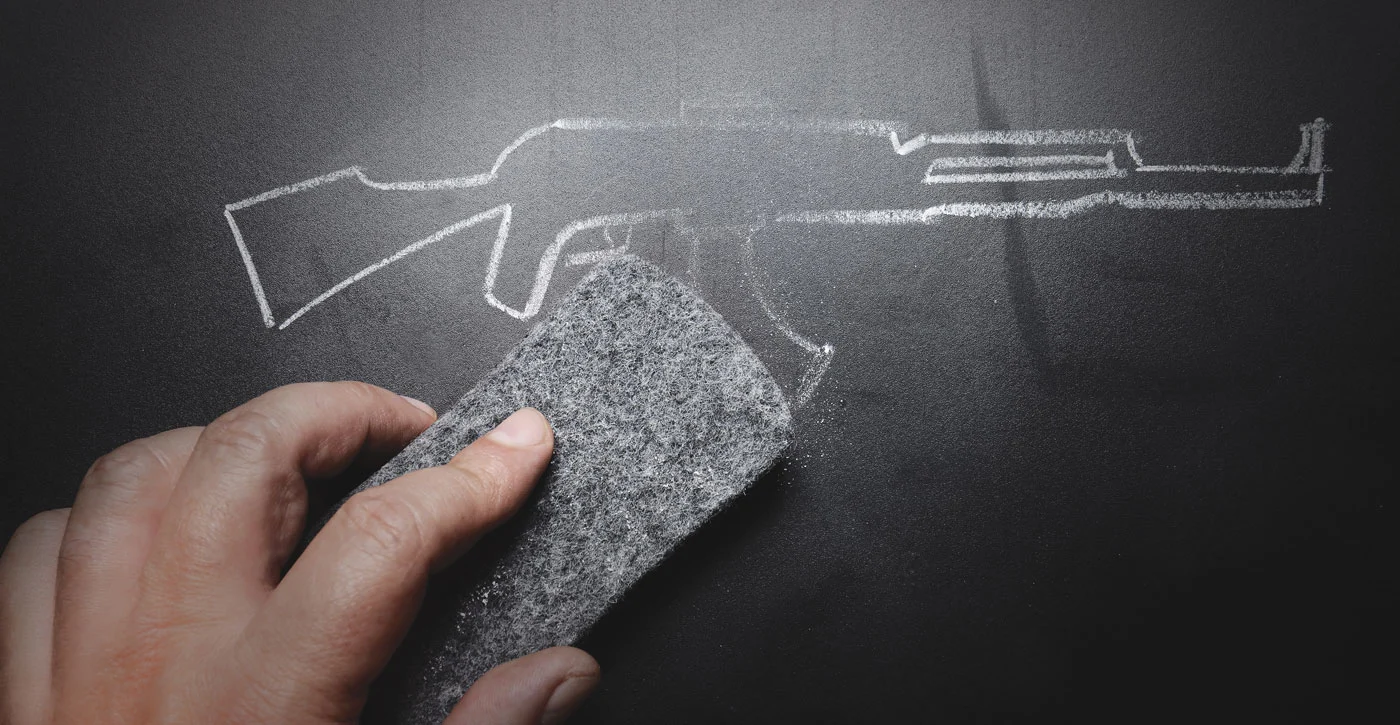
On Conscientious Objection to a World of Violence
We live in this world, but we don’t act like its people or fight our battles with the weapons of this world. Instead, we use God’s power that can destroy fortresses. (2 Corinthians 10:3–4, Contemporary English Version [CEV])
Standing by for years in expectant waiting for the Inner Light to again clearly speak about conscientious objection to war had been a frustrating activity. I knew my beliefs, but I didn’t know how to say them with impact. The world speaks loudly about the inevitability and utility of war and violence, about who is worthy of life (and who is not), and then, action is taken and blood is spilled. Our Quaker community’s silence speaks just as clearly. The world continues to speak loudly, but today so does the Inner Light, and it burns.
The mystical antiwar clarity of my early twenties came into focus during a third-person experience of coming off of a firing range—accuracy improved (lethality improving)—a surrounding voice asked, “What are you doing here?” The voice has been almost nonexistent in the years since. Equally rare was the overwhelming feeling of confusion, followed by chilling clarity, which struck me at the U.S. Army’s Ranger School. As I stared at the words “Front toward enemy” on a dummy claymore mine, I heard that voice ask a simple question: “Who is the enemy?” I knew Jesus had already answered that question, so who was leading me?
Shortly after this experience and a hard conversation with a buddy who fought in Iraq (killed as enlisted infantry, but don’t ask and don’t tell), I unpacked my rucksack, pulled out that same mine, stood before my squad (who had selected me to kick off our first mission at Camp Darby) and let them know, “I don’t believe what I am doing here. Good luck.” These were simple words which made my intentions known but lacked clearness.
You have heard that it was said, “You shall love your neighbor and hate your enemy.” But I say to you, love your enemies, bless those who curse you, do good to those who hate you, and pray for those who spitefully use you and persecute you. (Matthew 5:43–44, New King James Version [NKJV]).
A confession that I lacked the capacity to kill, tears of relief, a place to sleep under a shed, hard boot kicks in my sleeping bag as my conscience and I rested, screaming, a debate about the war in Iraq and Afghanistan that left me pinned against a wall with spit and fingers flying, a drive out into the middle of the woods to “pick up trash” where there was none, sleeping next to a bunkmate who told me he joined to kill. The full aftermath is a protective blur. There was a phone call: “You have ruined your life,” and another phone call, “I love you. Let’s figure this out.” Both spoken in Truth, out of love (and fear). My life wasn’t ruined, but I haven’t yet figured it out. Seeking has no end.
I have only written the mostly positive version of this story before. I chose to feel support and respect from many “antiwar” soldiers in training (and training others) to kill, so why focus on the negatives? They were friends, some of them good friends. The challenges weren’t remotely close to the soul-wounding burdens that so many soldiers, veterans, their families, and even a far greater number of civilians across cultures carry today because of our collective infatuation with waging war. My time in the army was blessedly short, and although I was discharged as a conscientious objector, I left feeling neither like a veteran nor a person of peace; both groups remind me of this today, intentionally or not. It is a small weight I carry. I am neither angry enough, nor peaceful enough, nor aware enough, nor careful enough.
Time moved on, and my family and my role as a public school teacher became my identity. I had a peaceful purpose and was able to work in the Light every day with my students, families, school community, and in the larger field of education. There would be no unpacking of my rucksack this time and I am still teaching after many years.
Is this the clearness you were seeking? Are you still distracted by what is happening in our world? Is the bigger question still: when is death, violence, war, and blood acceptable? When will the Light sanction hate? Violence is a vicious cycle; where will we be in ten years, let alone a century?
Violence stalking
About midnight Paul and Silas were praying and singing praises to God, while the other prisoners listened. Suddenly a strong earthquake shook the jail to its foundations. The doors opened, and the chains fell from all the prisoners. (Acts 16:25–26 [CEV]).
I feel convicted that I have had other mystical experiences beyond those moments in the army. I vividly remember watching my wife and life partner give birth to our three boys and feeling the kind of indescribable joy that reaches that level of hearing the Divine. With the birth of our middle son, her quickening contractions stopped for four days when the 2015 Baltimore Uprising peaked. He wasn’t ready for the violence in this world, and yet, he showed up. He emerged en caul, still seeking protection. Little did he know that I had to call down the hall for the doctors, who were distracted by what was going on outside in the city. We brought him out of the hospital into a world of violence: Humvees flanked the entryway; guards held larger guns than usual, at least for our country; and the smell of a burned East Baltimore lingered in the air. He is the gentlest of our sons.
Violence lurking
I have trouble recalling other mystical experiences with clarity beyond the birth of my kids. But there is one other experience that I recall that is outside of life or death and is mystically clear. It came with a wordless song that recently revisited my life like an earthquake.
After another difficult day of teaching and leading in a school in East Baltimore (a part of the city that is forgotten and abandoned, and where I started my teaching career in earnest and stayed for eight hard years), I lay down on my kids’ bedroom floor with the room swirling and my heart racing. It was never lost on me that if you were a Black male in this neighborhood, you were statistically more likely to be killed on your own streets than on the streets of Iraq at the height of that war. The effects of that fact were felt and seen, and the students wouldn’t let you forget. You could never forget it: the school pulsed with this suffering and pain.
The fights, the knives, the guns, the golf clubs, the screaming, rape, soothing and destructive intoxicants, mothers who gave a damn taking their kid into the bathroom to make their expectations felt, beating footsteps of a chase, locked down, being dragged into a back office away from a threat of murder, helicopters whirling above, a marker cap stuck in a child’s head: blood—how the f— does that even happen!
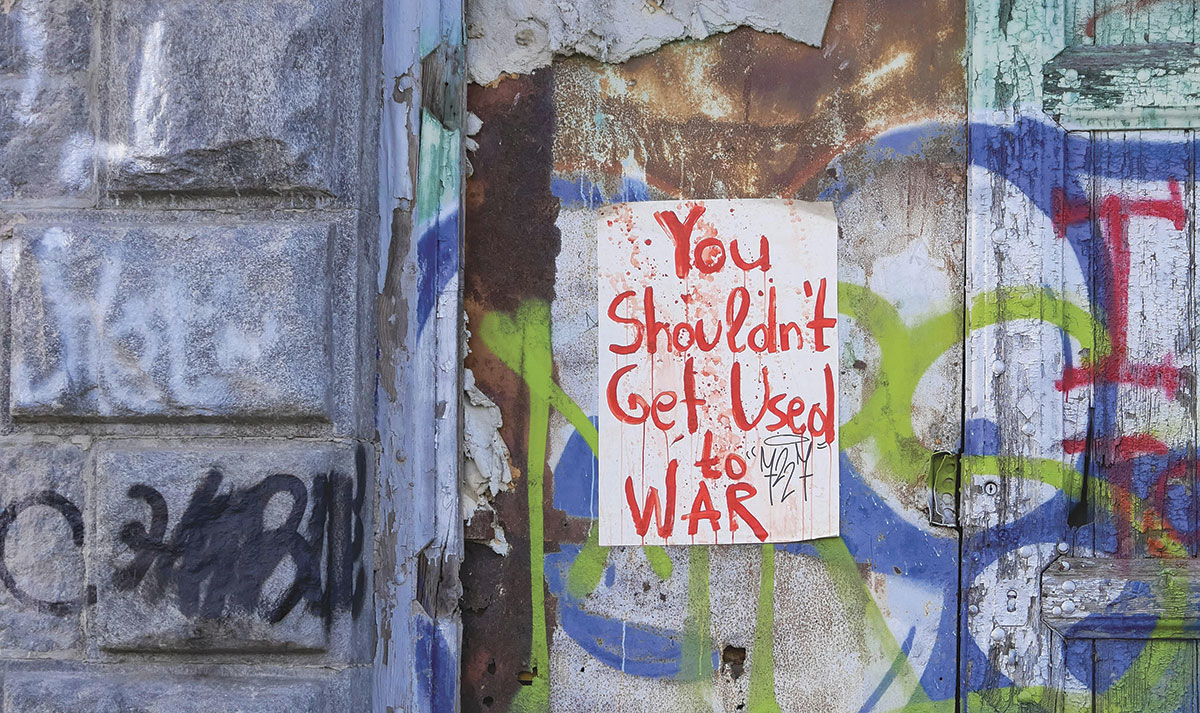
Violence controlling
That same school was on the state of Maryland’s “persistently dangerous list” a decade after I left: violence is a vicious cycle. Names of previous students murdered on my city streets have no grand memorials or myths paying homage to their sacrifice. They were nice, rambunctious boys. I have only told the mostly positive version of this story before.
How does any of this happen?
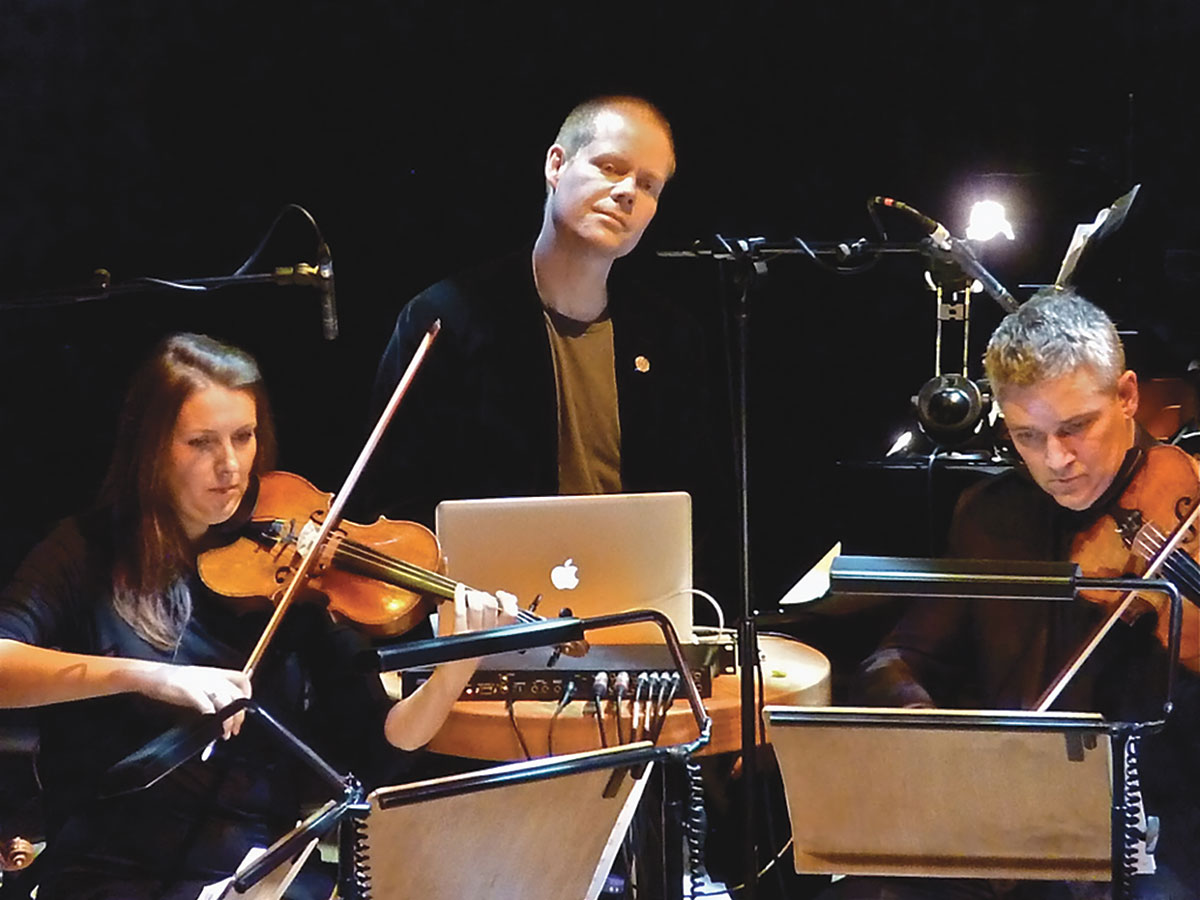
With the room spinning and my heart racing, I heard that mystical voice return with a command to be a better father. The emotional demands of the job were leaving too little of me for my two (now three) nice, rambunctious boys. Playing in the background was “On the Nature of Daylight,” a piece that is unforgettable and emotionally unforgiving during trying times; it’s from Max Richter’s The Blue Notebooks, an introspective classical album that is often on repeat in our household and which helped bring release after exhausting days in East Baltimore. That music is playing now as I write. A few hours ago, it spoke with explicit force that reached my soul. I had never heard it so loud before.
Why am I writing this while the world is burning? Global warfare is reaching levels not seen since World War II, and it will need “my kids.” Germany and Japan are rebuilding their militaries and will need “their kids.” Why must I defend conscientious objection and convince good people of the evils of war and violence? Do they really need to see all the mangled bodies of children because a strike wasn’t surgical enough? Will “your kids” be pulling the trigger, defending the action, or cleaning up the mess? Violence lurking, stalking, and controlling: how many times do we need to hear the same version of death and war to understand the viciousness and inhumanity?
Would it help if we saw it, smelled it? Does it smell like birth, except with man’s most toxic contributions: sweat, s—, blood, body parts, explosions, fire, smoke, suffocating toxins, burning radiation, flesh-ripping machines, ruin. It cannot be sanitized nor cleaned up like birth; it is infectious. It spreads and the bits get stuck everywhere and in everything. Even a gentle scrubbing releases more blood. It stains and pollutes all living things. It rots.
Is this the clearness you were seeking? Are you still distracted by what is happening in our world? Is the bigger question still: when is death, violence, war, and blood acceptable? When will the Light sanction hate? Violence is a vicious cycle; where will we be in ten years, let alone a century?
Put your sword away. Anyone who lives by fighting will die by fighting. (Matthew 26:52 [CEV]).
I still try to be a good dad, a good teacher, and a good Quaker and Christian who follows the Light to combat the darkness, and tonight, I learned something personally profound and felt the release of another chain. There are many more, some forever earthly permanent. There will be a door opening but no walking out of prison yet.
Ask and it will be given to you; seek and you will find; knock and the door will be opened to you. For everyone who asks receives; the one who seeks finds; and to the one who knocks, the door will be opened. (Matt 7:7–8, New International Version [NIV]).
This is the time to take risks, seek, wrestle, and tell our untold stories. Explore those internal rooms with devotion, in the pursuit of ending war, violence, and suffering. Show up, or we will continue onward in the darkness. Speak a little more loudly; increase the cadence; make an invitation, and get the Light burning brighter for all to see.
My older boys and I are going to see Max Richter perform here in Baltimore. As I took time to learn more about the performance (and took a break from another round of edits on Stony Run Meeting’s webpage on conscientious objection, itself a mystical work inspired by the concern of a young Friend and the encouragement of an older one, both Friend and Mennonite), I learned that The Blue Notebooks by Max Richter, the album that accompanied that Divine voice almost a decade ago and that demanded I be a better father, was composed as an antiwar protest album. For decades I’ve unknowingly listened to Max Richter lament war and violence and now my boys and I will get to hear him “sing” his lamentations in person while a Light for peace burns undeniably within again. It will be an evening of sad praise.
For we do not wrestle against flesh and blood, but against principalities, against powers, against the rulers of the darkness of this age, against spiritual hosts of wickedness in the heavenly places. (Ephesians 6:12 [NKVJ]).
Sometimes others can make sense of our work and identity by hearing a story that needs telling. In his diaries, Franz Kafka, whose work informed Richter’s The Blue Notebooks, writes, “Everyone carries a room about inside him. This fact can even be proved by means of the sense of hearing.” There are rooms inside us all that demand exploring.
Light is hidden in drawers, cupboards, and closets. It was put there in childhood and youth for safekeeping, sometimes in panicked haste and then forgotten. Open them all. The cross-cutting Light will illuminate other hiding places; open them now. This is the time to take risks, seek, wrestle, and tell our untold stories. Explore those internal rooms with devotion, in the pursuit of ending war, violence, and suffering. Show up, or we will continue onward in the darkness. Speak a little more loudly; increase the cadence; make an invitation, and get the Light burning brighter for all to see.
Neither do men light a candle, and put it under a bushel, but on a candlestick; and it giveth light unto all that are in the house. (Matthew 5:15, King James Version [KJV]).
We are all in the same house, being destroyed. Let us steward the cause to abolish war with the same zeal of abolishing the evils of slavery. We must sing our laments together, in unison for our children, their children, and all children of God. We can only walk out together.
It seems all too easy to accept the way things are rather than work and pray for the way things should be.
I found this a powerful call to my conscience. I am 81 and do not feel that I do enough to show the Light or hold up a candle in the darkness. We may not do news worthy deeds but if enough of us shine a light where we are, the light travels out and signals to others to join too.
I learnt a song when 6 years old which spoke to me then and still does:
“Jesus bids me shine with a clear, pure light
Like a little candle burning in the night.
In this world of darkness, we must shine:
You in your small corner and I in mine. “
This article cuts through all of the war propaganda and points one, like a compass, in the direction of compassion and righteousness – an
internal realignment.
I posted this comment on this article on the Friends Journal facebook page.
Michael Snow
·
It feels like a wasted task in our barren world of social media comments to spend an hour pouring over this beautiful piece expressing existential angst over “Warfare” and “Conscientious Objection.”…We shared the same convictions, Andrew in Ranger school, myself in The Basic School of the Marines, knowing “Jesus had already answered.”…And we share this concern: “The world speaks loudly…Our Quaker communities’ silence speaks just as loudly”…Andrew sees the need and encourages individual responsibility to “Show up…speak a little more loudly…” let the Light shine….What we lack is our Corporate responsibility to be the light of the world, to “make disciples…teaching them to obey all the I I have commanded you” (Matthew 28:19,20)….As I noted in the Sermon linked above, I grew up in a church 40 miles from the center of the Mennonite churches in South Dakota, not knowing that there were Christians in this world who refused to go to war. https://www.youtube.com/live/kxblPys94DA?t=2270sG