



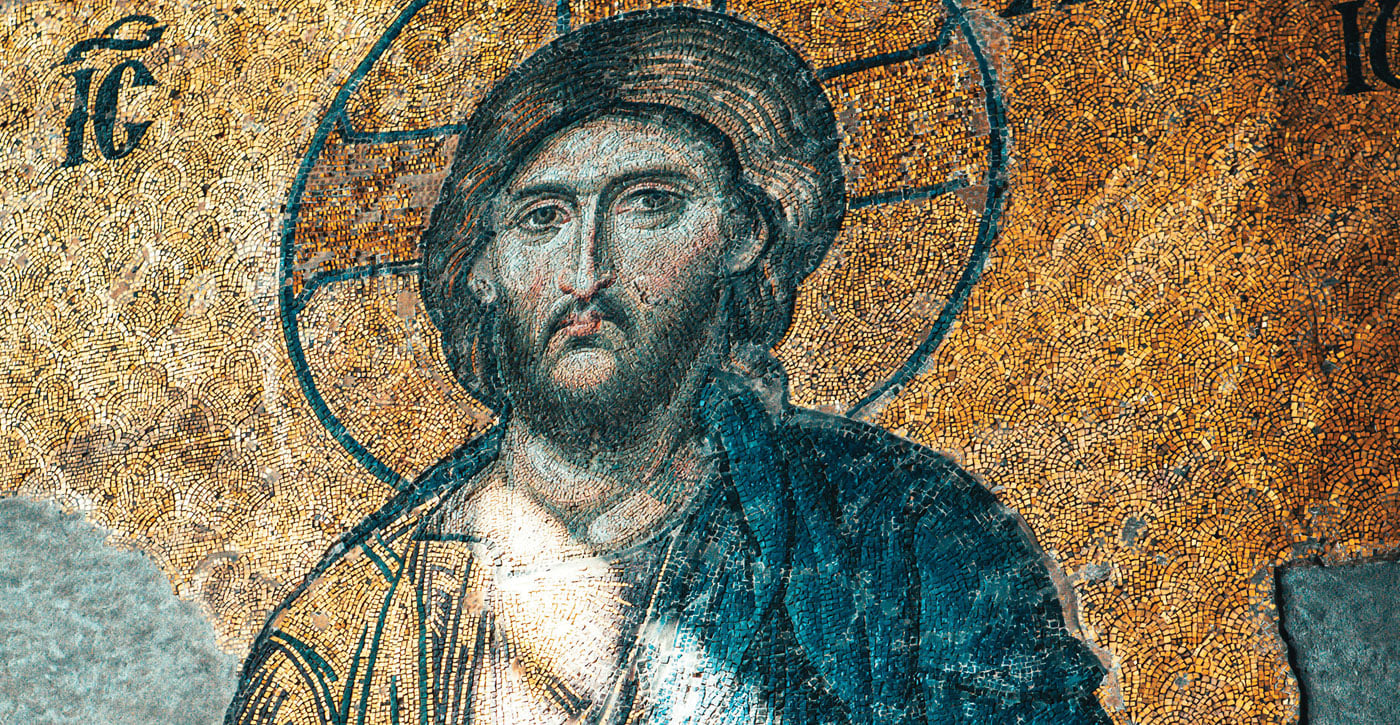
The Resurrection and the Life of Jesus
The remarkable African American biblical scholar and activist Obery Hendricks Jr. writes, in The Politics of Jesus:
The quest for social justice is actually the most fundamental ethic of the entire biblical tradition. . . . I take the unequivocal stand that the biblical social justice tradition is so humane and powerful that if Christendom was ever to take it seriously, humanity would be infinitely better off. It is to this tradition that my work and my life is dedicated.
In my own experience, the Jesus I encounter in the Scriptures, within me, and as the Light within all of us is this Teacher of Love. He is the one that Martin Luther King Jr. called “an extremist for love.” When a group of religious leaders wrote a newspaper editorial addressed to King calling him an extremist and saying that he should be more compliant and patient, and less radical, he replied in his famous “Letter from Birmingham Jail”:
Was not Jesus an extremist for love: “Love your enemies, bless them that curse you, do good to them that hate you, and pray for them which despitefully use you, and persecute you.” Was not Amos an extremist for justice: “Let justice roll down like waters and righteousness like an ever flowing stream.” Was not Paul an extremist for the Christian gospel: “I bear in my body the marks of the Lord Jesus.” Was not Martin Luther an extremist: “Here I stand; I cannot do otherwise, so help me God.” And John Bunyan: “I will stay in jail to the end of my days before I make a butchery of my conscience.” And Abraham Lincoln: “This nation cannot survive half slave and half free.” And Thomas Jefferson: “We hold these truths to be self-evident, that all men are created equal. . . .” So the question is not whether we will be extremists, but what kind of extremists we will be. Will we be extremists for hate or for love? Will we be extremists for the preservation of injustice or for the extension of justice? In that dramatic scene on Calvary’s hill three men were crucified. We must never forget that all three were crucified for the same crime—the crime of extremism. Two were extremists for immorality, and thus fell below their environment. The other, Jesus Christ, was an extremist for love, truth and goodness, and thereby rose above his environment. Perhaps the South, the nation and the world are in dire need of creative extremists.
We need more extremists for love today! And especially now, in this time, and that is why finding the real Jesus in us and among us is so important. He calls us all to be “extremists for love.” That is the center of his message and the reason it is called good news!
This is the “resurrection and the life” he calls us to: not some fake pie-in-the-sky man-made belief system that claims it can get us into heaven but the real call toward transformation of our hearts in the present moment and time. He calls us to abandon the fake news that is driving us to destruction by building walls between us, separating us from seeing and experiencing God’s love for ourselves and our neighbors.
One of my favorite original skits is called “The Reluctant Patient.” It is about a patient (modern Quakerism) that is in denial about its spiritual decline. In the second act, the doctor (God) tells the patient (modern Quakerism) the bad news about their condition:
Your tests have uncovered a lot of buildup (in your arteries) from hurt and misunderstandings in the past. There is also a very large hardened area of fear and denial that is further constricting the blood flow to your heart. Frankly, due to the many precipitating factors, we really do not know how much surgery will be needed until we can open you up and get a good look inside. Are you willing to be opened?
The patient expresses a real reluctance to believe the diagnosis and a preference to continue things as they are. The doctor insists on moving forward and recommends “our experienced surgical team headed by “Dr. Jesus, the Christ.” This causes an immediate negative response. The patient challenges the doctor’s referral by pointing out the narrow-mindedness and judgmental qualities of many people who claim to have been operated on by this surgeon. The doctor agrees with the patient’s assessment and laments how much this is true but reassures the patient that the real work of Dr. Christ and his team is to “open up the constricted areas, not make them narrower.”
The doctor strongly urges the patient toward this experience:
The way forward toward a new heart and all the newness of life that you long for is to recognize that you cannot fix this yourself. You cannot keep self-medicating the symptoms. You need the help of a Power greater than your own to bring about these essential changes within you. Face the facts and make the right choice! Choose Life!”
This dialogue has deep roots in my own experience of searching for the real Jesus among all the fake news that impacted my life in so many negative ways. The fake news that I experienced in my life closed me up, made me critical toward others, and insisted that I judge them. It put everything into small, walled compartments built to keep others out. The real news continues to open my understanding and heart towards others and helps me to search for ways to learn and to grow toward the Light that comes in. This is how I know it’s true!
My mother was a Holocaust survivor. She said that she did not believe in God because an all-powerful God would not have allowed such cruelty, hatred, and mass killing to occur. God would have intervened. I never argued this with her; she had suffered enough and had lived through the nightmare of what happens when humanity loses its way and travels down a tragic path. History shows us that when we become obsessed with wealth and power, we find that all our compassion, caring, and even our humanity (our ability to love) is destroyed. When we become driven by resentment, bitterness, and obsessed with revenge, we become cold and unfeeling toward others, especially those we have learned to hate. These are dangerous places for us to go, and they never turn out well.
Jesus lived in a time of great cruelty and persecution. In the Sermon on the Mount, he calls us in a completely different direction. He warns us of the dangers of following the paths of greed and hatred and calls us to learn his way of love. Even in the midst of being tortured himself, he still calls out for forgiveness, compassion, and caring for the “least of these” among us (Matt. 23). Ultimately there is freedom and new life found in God’s love and forgiveness, a greater freedom than we can ever find without them. This is the real good news and the truth I find in the resurrection story.
In contrast, the fake news about Jesus is a dangerous perversion of Christianity into an apocalyptic nightmare of death and destruction. It falsely connects Jesus’s return to all this evil, persecution, and hatred gone amok. To me, this fake news is nothing short of selling our souls. It allows us to continue to follow our worst and most selfish inclinations by claiming that this is all part of God’s plan! The devastating outcomes of following this fake news (wars, racism, climate crisis, the Holocaust) offer further proof of its ungodly destructive nature. This is a devilish distortion of Jesus’s basic teachings and true vision of God’s selfless love.
Let me be absolutely clear: when we give up on Jesus’s vision of loving one another, we can have nothing more to do with him (Matt. 7:21–23). This was and is his primary mission, and if we don’t see this and come to know this as our Guiding Light, we cannot call ourselves followers of Christ.

I have been hooked on an Irish home renovation series called Room to Improve. In this series, a gifted young architect is brought in to help different families and people with renovating their homes. The homes that need renovating are often quite similar. They are old buildings with small, compartmentalized interiors and little access to the outside spaces. There is very little sense of how the rooms fit together and often not enough space for family and friends to gather together. They were built simply to keep the elements out and to keep the people warm before there was proper insulation and central heating.
The architect is always approaching the renovations by looking for more ways to bring natural light into the spaces. He does this by proposing to take down many of the interior walls (non-supporting) to open up space for gatherings, and to bring the outside natural spaces into the design. The result each time is quite amazing, as the new spaces seem to not only bring new light and life into the homes but lift the spirits of the people as well. This has been my experience when I call in the Master Architect to renovate my house: my heart. God’s work—as I can best describe it—is to bring in the Light and open the spaces up, not build more walls! We need our hearts opened and renovated in our meetings and communities of faith so that we can learn God’s way of love and find the strength to walk in it and live in it together, here and now.
This is the “resurrection and the life” he calls us to: not some fake pie-in-the-sky man-made belief system that claims it can get us into heaven but the real call toward transformation of our hearts in the present moment and time. He calls us to abandon the fake news that is driving us to destruction by building walls between us, separating us from seeing and experiencing God’s love for ourselves and our neighbors. Jesus calls us to come away from the powers that seek to control, distort, and suppress our love for humanity, and to find the Living Guide to show us how we might walk in the way he walked. The resurrection message is primarily about coming out of hatred and into this power.

We want to hear from you, not an AI! Please be thoughtful and use your own words. Comments on Friendsjournal.org may be used in the Forum of the print magazine and may be edited for length and clarity.