



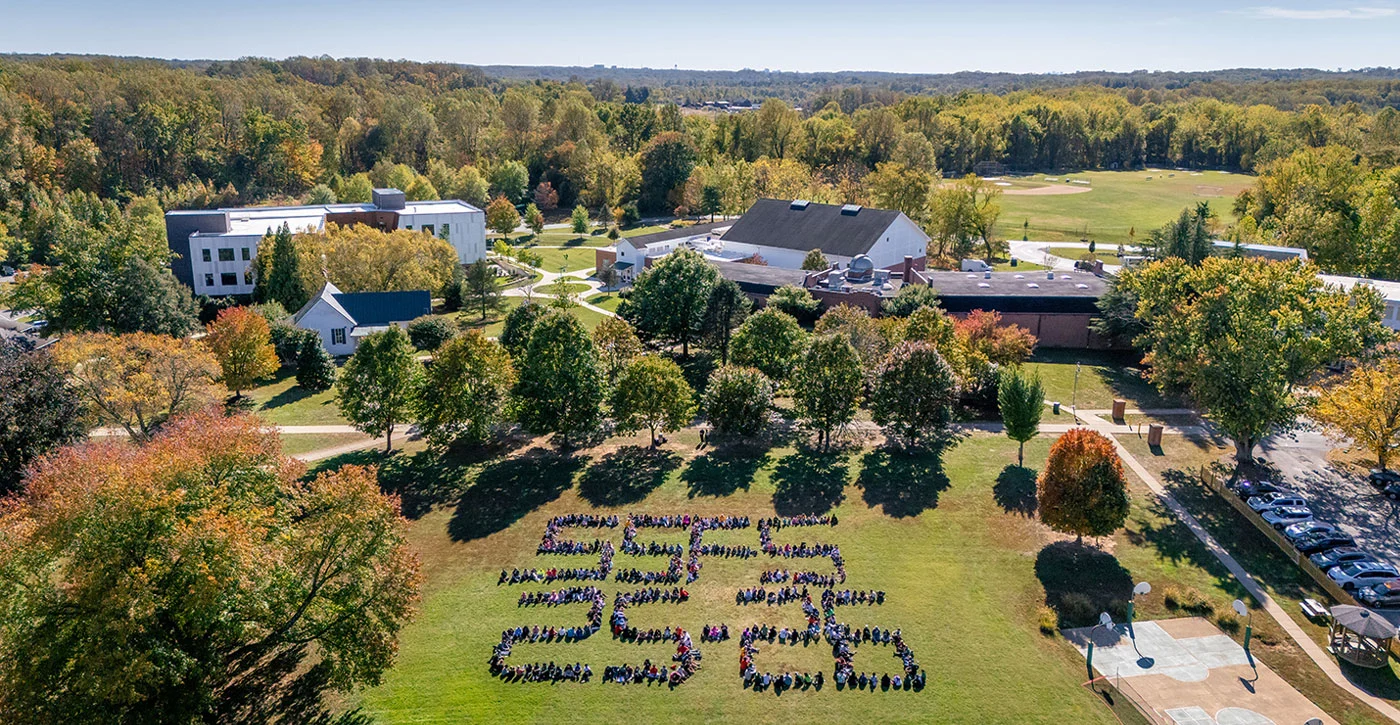
Students Excel After Alumni Fundraising Effort Secures Reopening
Citing financial problems, the Board of Trustees of Sandy Spring Friends School announced on April 14, 2025, that the school would close at the end of the 2024-2025 academic year, according to a written account provided by Margaret Rosser, director of marketing and communications for the school. Heather Jackson-Peña and Nick Shank, alumni of the 65-year-old Quaker school initiated a networking and fundraising campaign to save their alma mater. The school is about 18 miles from Washington, D.C., and 30 miles outside of Baltimore, Md.
An alum pledged $5 million; 80 percent of donations were from individuals connected to the school contributing less than $1,000 per person, according to the written account. Some pledges were part of donors’ estate planning. The Ruppert Foundation also agreed to back the pledges in full. The Ruppert Foundation is a family philanthropy in the D.C. area that supports educational initiatives, according to the foundation’s website.
The school’s board of trustees announced that the school had to close because they wanted to avoid a situation in which they could not make payroll and seniors would not graduate, according to Tom Gibian, retired head of school and current clerk of the board of trustees for the school. The decision was the least bad of all the undesirable options available, Gibian explained.
News of the school’s closure shocked Jackson-Peña and Shank, both graduates in the class of 2000. Grief for the potential loss of their alma mater motivated them to advocate for saving the school, they explained in a recent interview.
“You’d regret for the rest of your life not trying, or at least I would,” said Jackson-Peña.
Jackson-Peña posted about the closing in an alumni Facebook group and received an overwhelming number of direct messages from members wanting to help save the school. She was on a biking and camping trip with her family and stopped at an overlook to create a Google form to organize supporters. The previous year the area had no cell phone service but a cell tower had recently been installed, which she considered an example of way opening because it enabled her to promptly learn of the closing and organize a response.
Shank came to Sandy Spring Friends School after having attended a Catholic school. He credits the Quaker education with forming him and has returned to the school annually since graduation.
“I really found myself there,” Shank said.
Alumni and others organized and donated to save the school because they believe strongly in the importance of a Friends school’s education, culture, and outcomes, Gibian explained. Gibian considered the widespread support an affirmation of community and spirituality.
“There are thousands of people who feel the same way I do. It felt like, ‘Oh, the Spirit is real,’” Gibian said.
An audit, which had not happened in the previous two years, revealed inadequate financial reserves as well as “translucence”—a lack of transparency—in bookkeeping, according to Gibian. Audits of a school’s finances should happen annually.
Some donors offered seven-figure contributions that they had intended to be part of their estates, according to Gibian. They needed assurance that the school would pull out of its financial straits.
The board was reformulated to include ten trustees, rather than its previous 23 members, Gibian explained.
The school’s fiscal woes were widespread. In addition to accounting problems, the HVAC systems in three buildings required costly repairs, according to Gibian.
Members of the development staff lost touch with donors during the COVID-19 pandemic; alumni giving declined by half, according to Savannah Renehan, director of institutional advancement at the school.
Thirty percent of parents of students at the school are government employees, many of whom lost their jobs, Renehan explained.
The Department of Government Efficiency (DOGE), an entity President Donald Trump created by executive order after taking office in January 2025, cut approximately 271,000 federal jobs during the first ten months of that year, according to the Cato Institute, a Libertarian think tank.
Stock market volatility, due to Trump-administration tariffs also impacted the finances of students’ households, according to the written account.
The school’s boarding program had fewer than 30 students and was operating at a loss as federal immigration policies led to visa problems for international students, according to the written account provided by Rosser.
When the school announced that it would reopen for the 2025-2026 academic year, approximately 368 students were enrolled, Renehan noted.
Student achievements in the 2025-2026 school year highlight the school’s resurgence, faculty members observed.
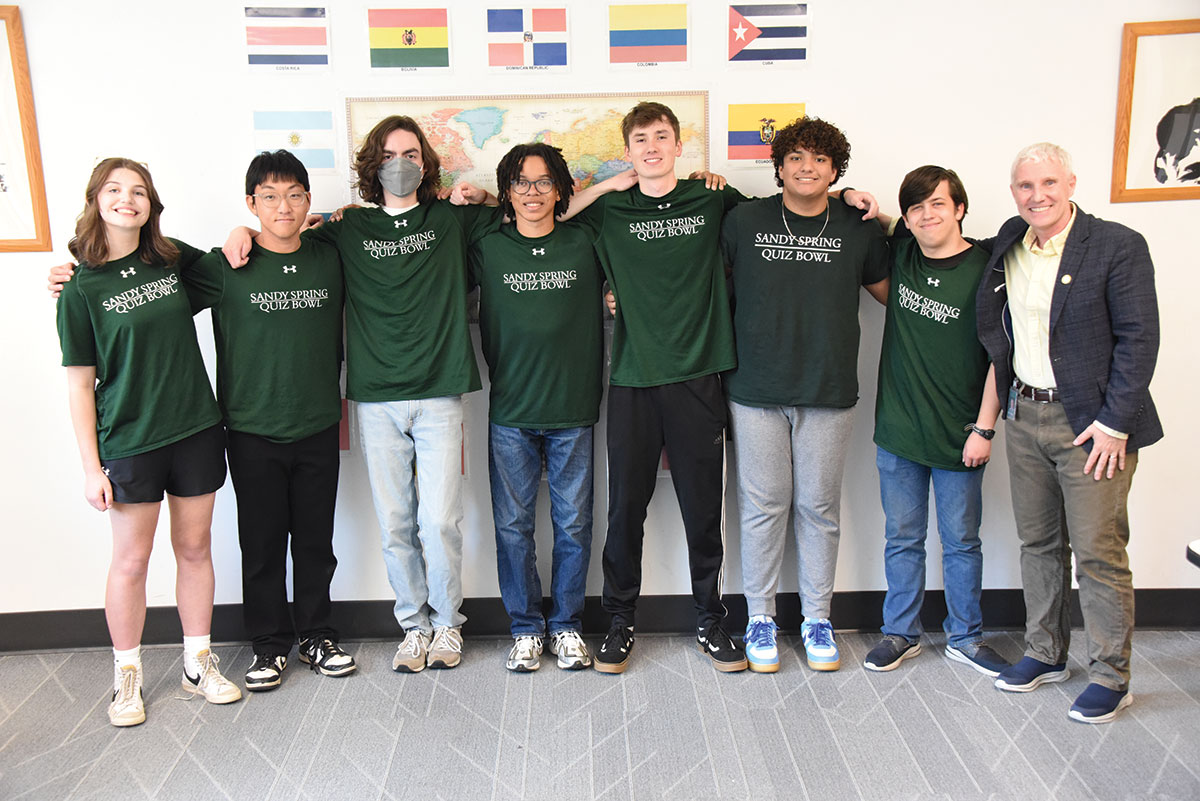
The Quiz Bowl team won the championship in the Montgomery Academic Beltway League (MABL), Quiz Bowl coach Eduardo Polon noted.
“We are by far the smallest school in the MABL,” Polon said. Polon is also the global languages department chair, Spanish teacher, and senior passion projects coordinator.
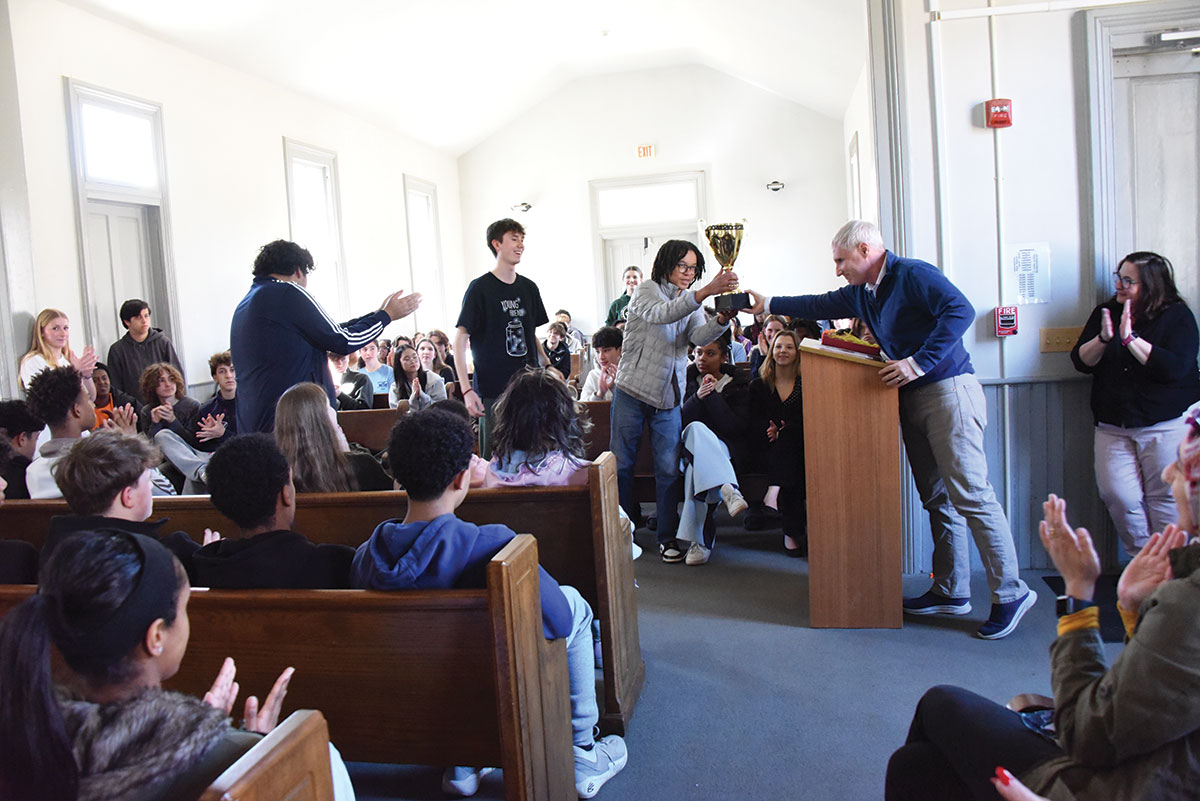
In addition to the excitement of being champions, regular involvement in Quiz Bowl develops students’ character. Through participating in Quiz Bowl, students learn to collaborate, practice selflessness, nurture togetherness, and act as ambassadors for their schools, according to Polon. They learn to win humbly and lose gracefully. The team practices Quaker values by not vilifying the teams they are competing against. Quiz Bowl team members practice courage when competing with other teams.
“It hurts to lose and it’s wonderful to win,” Polon said.

Student athletes also captured championship titles in the 2025-2026 school year, according to athletic director Sal Benitez. The girls middle school volleyball team, the boys varsity basketball team, and the boys varsity soccer team won championships this year.
When the school closure was announced, students and staff experienced a lot of anxiety about students losing the experience of participating on sports teams, according to Benitez.
Student achievements reflect the school’s resilience.
“What was accomplished became symbolic. It felt like a metaphor for the school itself,” Polon said.

We want to hear from you, not an AI! Please be thoughtful and use your own words. Comments on Friendsjournal.org may be used in the Forum of the print magazine and may be edited for length and clarity.