



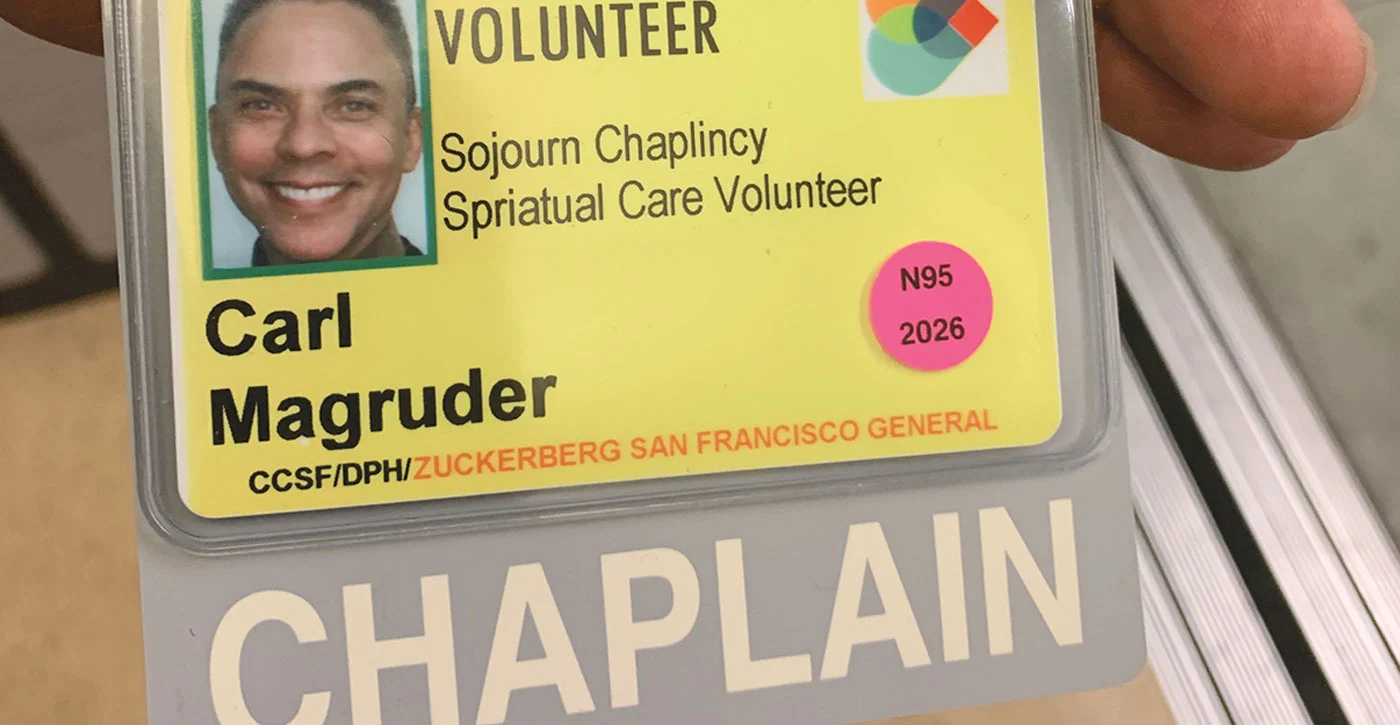
Relearning My Role as a Hospital Chaplain
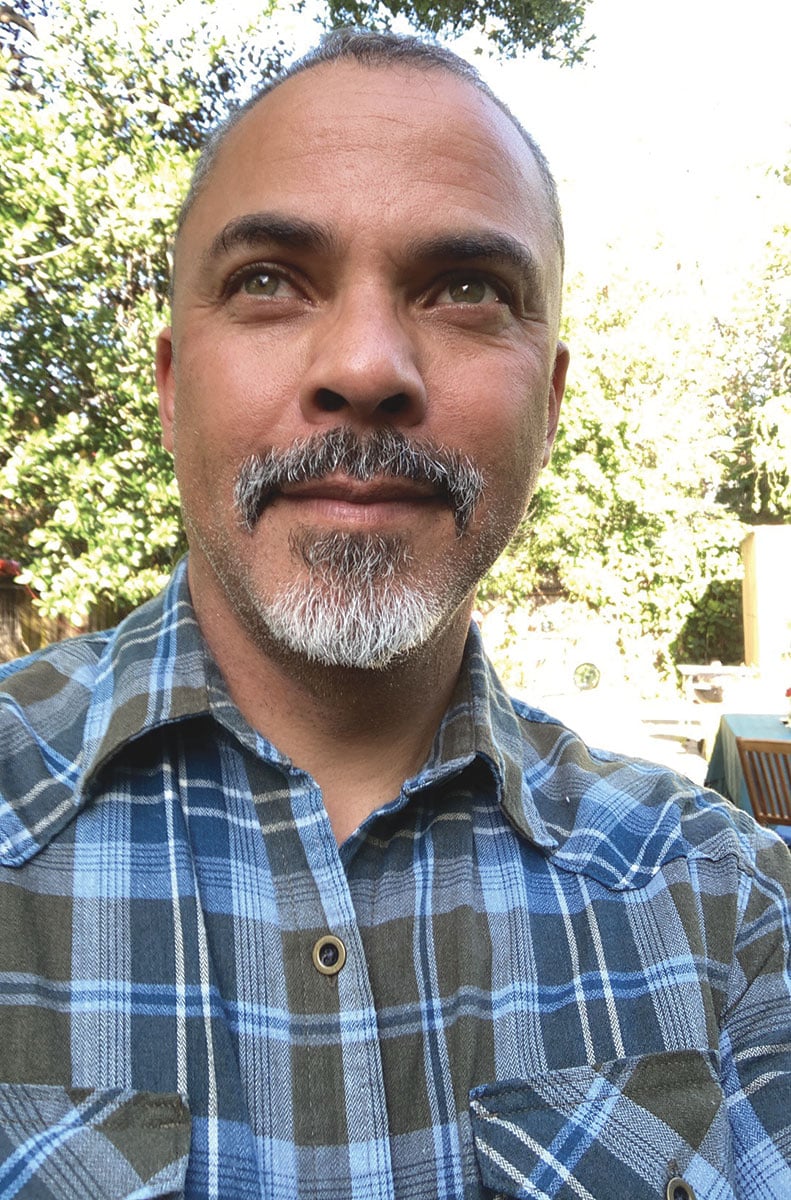
The little palliative care team at San Francisco General Hospital meets in an afterthought of a medical office: windowless and about the size of a walk-in closet on the sixth floor of the “new” hospital that was built 11 years ago. (A hospital was first built on this site in 1862, and then rebuilt in brick after the 1906 earthquake.) Nobody serves in palliative care by accident; we have all chosen this work. On a typical Wednesday, we are Diane, social worker; Lauren, a nurse; Freddie, the staff chaplain; Hedieh, our doctor; and me, the former palliative care chaplain who is now shadowing that position as I rebuild my memory of this work following a STBI (severe traumatic brain injury) caused by a bad motorcycle wreck two and half years ago.
We are gathered to go over our list of around eight palliative care patients. Time after time, to people for whom the word “palliative” carries no weight or meaning, my competent and caring colleagues describe palliative care obscurely as “an extra layer of support.” The word palliative comes from the Latin pallium, meaning “cloak.” We are here medically to cloak the pain, nausea, and physical suffering of those at the end of life. We are really there, however, to uncloak a conversation about death and dying.
The team spends most of its time and energy on medical minutia, but the truth is that if patients have made their way through the maze of haphazard medical referrals to our list of care recipients, they are most likely no longer very medically complex—they are dying.
At a bedside in the ICU, we meet our first patient of the day, and I begin to sink down as I have done in worship since I was a kid. I have to sink down under the storm. There will be a maelstrom of words, some of which will have meaning that I should attend to. Most of them are medical, pharmacological, or relating to options for care.
Americans like to think that we have the best healthcare system on earth. It is certainly better than most, though that’s still a distressingly low bar in 2026. When it comes to palliative care, however, the real star of the show at a public hospital like San Francisco General isn’t medical care—it’s the social worker. Our social worker, Diane, is a competent, fashionable, graciously polite woman who speaks English, Mandarin, and Cantonese. When I watch her work, however, I imagine a little guy with a pencil-thin mustache, slicked back hair, shiny shoes, and a fancy pin-striped suit. Social worker Diane is what the mafia would call a “fixer.”
If you are sick unto death in the public hospital, there is a good chance that you need some serious medications, a hospital bed, a first-floor or elevator-served one-room apartment to live in, bedside care, etc. Diane leans into the patient—smooths the imagined mustache with dextrous fingers—and starts: “Well, shucks, I gotta tell ya, buddy; this one’s a doozy! Lucky for you, I know a guy who knows a guy, so I’ll make some calls, and I think I can get ya all set up. . . .”
As I sink down in the spiritual water that fills the room, I can see the light bouncing on the ripples and waves up at the surface. I settle on the sandy bottom, and breathe deeply. I’m listening. In the midst of medical options and placement possibilities, a little cat pads up next to my imagination on the sand. She rubs her head against my arm, and I scratch her under her chin. It is the third time that the care and lodging plan has been pushed off-course by the dying man’s mention of “my cat.”
I test it. Am I supposed to bring it up? It’s hard to know, because it would be a bit out of place, and my old, practiced methods of discernment aren’t reliable post-TBI. I test it again. The cat makes a little purring sound and rubs against my knee. I take a deep breath, and kick up to the surface to lob Diane a soft pitch.
“What I’m hearing is that Clarence really wants to be with his cat, and to know that his cat will be okay,” I say with a smile at the man in the hospital bed. “Diane, I know that there are often companion dogs in the hospital, but what about a cat?”
There is a stillness in the space. I worry that I’m out of bounds—again. And then there are looks and nods. Diane hooks her thumbs behind her wide lapels. “I can’t promise ya anyt’ing, but I’ll see what I c’n do. . . .”
Two days later, my TBI brain has forgotten all about this episode. Chaplain Keisuke phones me as I’m riding the commuter train. He doesn’t call me socially, so I pick up, despite the noise. I agree to call back when I’ve disembarked and can hear. Keisuke, a Japanese American Buddhist chaplain, is at bedside with Clarence, and I’m on video phone (in my grubby T-shirt and day-off overalls). There is a request for prayer with Chaplain Carl. Would I oblige? The camera pans from Keisuke’s face to Clarence’s exhausted one. But wait a minute—what was that black blob on the bed?
It’s Clarence’s cat, Smoke. Undisturbed by the sounds and smells of the hospital, Smoke is just glad to be with his person, curled nose to tail, and apparently asleep. Clarence strokes the cat with a serene smile on his face.
“It’s good to see you, Clarence,” I say to the phone, “and an honor to meet Smoke. What should we pray about this afternoon?”
“I’m just so grateful,” Clarence says. “God is good. I’m not afraid no more. Can we pray ’bout that?”
Of course, he’s offered his prayer already, but I’m honored to join in.
Spirit of Love and Light, God, we are grateful to be together today, Clarence, Smoke, Chaplains Keisuke and Carl. We remember that the word “heal” is related to the word “whole,” and even as Clarence approaches his time, he is unafraid and made whole by your divine love and the love of his cat, Smoke. We trust in you, and we thank you for your love and grace. We ask that Clarence have an easy journey, knowing that his friend Tatum will look after his cat. Peace, peace, peace is our prayer. Amen.
Clarence went the next day, so that his housing puzzle never needed to be solved, though fixer Diane had it all in hand. Praise be.
We want to hear from you, not an AI! Please be thoughtful and use your own words. Comments on Friendsjournal.org may be used in the Forum of the print magazine and may be edited for length and clarity.