



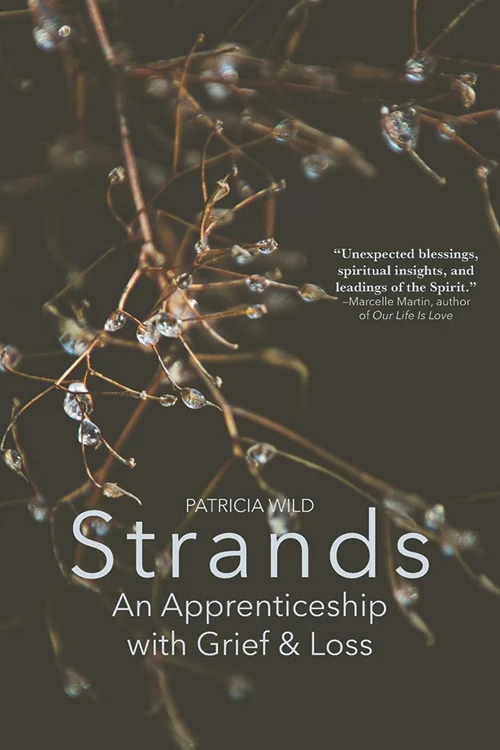
Strands: An Apprenticeship with Grief and Loss AND Ecology of Grief: A Mother’s Witness
Reviewed by Barbara Birch
April 1, 2026
By Patricia Wild. Barclay Press, 2025. 238 pages. $24/paperback.
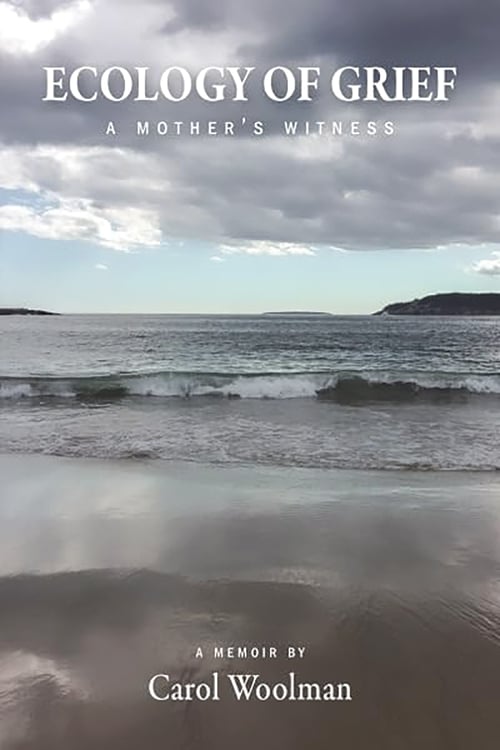
By Carol Woolman. Maine Authors Publishing, 2025. 263 pages. $24.95/paperback.
Last year saw the release of two memoirs by Quaker women that deal with the very human and oftentimes spiritual experience of grief.
Writing Strands: An Apprenticeship with Grief and Loss during the COVID lockdown and afterward, Patricia Wild, a veteran Quaker writer and teacher living in Massachusetts, looks back on how she dealt with the deaths of her parents: her father in 2010 and her mother in 2018. Through family stories and life experiences, Wild explores different situations and themes of her grief and rage. One personal theme is her own uncontrollable anger and how it masks the sadness that she sometimes feels welling up inside her. Indeed, in the beginning pages, she writes that she used her anger “like crackling, long-burning, robust logs” to sustain the creativity in her work.
At the recommendation of both her yoga teacher and her spiritual advisor, Wild “dutifully” read Francis Weller’s The Wild Edge of Sorrow: Rituals of Renewal and the Sacred Work of Grief. It became her “workbook,” her “handbook” as she began what Weller calls “an apprenticeship with sorrow.” Wild references quotes and wisdom from Weller and other writers like Rufus Jones and Thomas Moore throughout the book. In the Nurturing Faithfulness Group she belongs to, she confessed that the apprenticeship was “beginning to feel like a leading”: the time had arrived for her to explore her pattern of masking sorrow with rage.
This leading developed into an urge to unpack unacknowledged transgenerational trauma in her family. For Wild, the apprenticeship was guided by a “benevolent, generous, radiant—and genderless—Spirit.” Spirit led her to explore other kinds of sorrow and grief evoked by societal traumas of the pandemic days and beyond, those such as genocide, racism, and climate change.
Wild was looking for a metaphor to contain and organize the story of her apprenticeship in sorrow, grief, and anger. One day while contemplating “what material is sadness?” she recalled a family trip decades ago to a local history museum in Yates County, N.Y., where she first learned about Victorian hair wreaths, a form of handiwork that grieving nineteenth-century women created from the hair of deceased loved ones. A wreath is a fitting metaphor because it symbolizes the cycle of life, as well as remembrance of the past, present-day continuity, and future renewal. Victorian-era women embellished their hair wreaths with little keepsakes and trinkets, and in much the same way, Wild’s memoir is woven from disparate and diverse “strands of different hues and textures” she’s collected over the years.
Wild and I are contemporary in age, so I found myself resonating with her memories of family car trips, school mishaps and hurts, parental mysteries, and participation in social movements like the Sanctuary Movement.
In Ecology of Grief: A Mother’s Witness, Carol Woolman, a longtime Quaker and retired psychotherapist living in Maine, has written a love letter to and about her youngest son, Mark Horner, who was murdered 26 years ago. She puts into words the immense devastation of losing a beloved child to gun violence and describes the aftermath, the long years when she was forced to learn how to survive and even thrive again.
To be honest, I procrastinated about starting this book because the loss of a child is every mother’s worst nightmare. Once I opened it, however, I found that it offered a lot more than I expected. Woolman’s despair over the continued gun violence in the United States was her impetus for sharing her emotional and spiritual journey. She wanted to write the book that she “looked for and didn’t find when Mark was killed,” and in this book, she offers readers a “witness of grief through many lenses, including joy and adventure, mystery and meaning.”
I am grateful for the many stories, activities, and resources in this Friend’s unvarnished look at loss and grief. There is a detailed biography of her son and her own moving memories with charming illustrations and family photos. She includes various letters to the editor and suggestions for healing and trauma work. In an especially touching anecdote, Woolman described attending a conference in 2001 where she participated in a tree-planting ritual that led her to begin to find a path toward forgiveness. During the ceremony, shortly after she memorialized her son Mark, she was led to remember his murderer (who had killed himself after fatally shooting Mark) as well. After participating in this ceremony and taking advantage of other support, she wrote that the conference “helped me grow up and learn to comfort myself, to take in what I missed, to appropriate for myself so I don’t go through the rest of my life with a cannonball through my chest.”
If you are seeking accompaniment and guidance through unbearable grief and pain, Ecology of Grief by Carol Woolman makes it clear that you are not alone. And I recommend Strands by Patricia Wild for its honest portrayal and acknowledgement of the full spectrum of human emotions, some of which often remain hidden among Friends.
Barbara Birch is a member of Strawberry Creek Meeting in Emeryville, Calif., and a board member at Ben Lomond Quaker Center. She facilitates workshops on lectio divinaat Friends General Conference and Woodbrooke. She is the author of Lectio Divina: Revelation and Prophecyin the Quaker Quicks series.
We want to hear from you, not an AI! Please be thoughtful and use your own words. Comments on Friendsjournal.org may be used in the Forum of the print magazine and may be edited for length and clarity.