



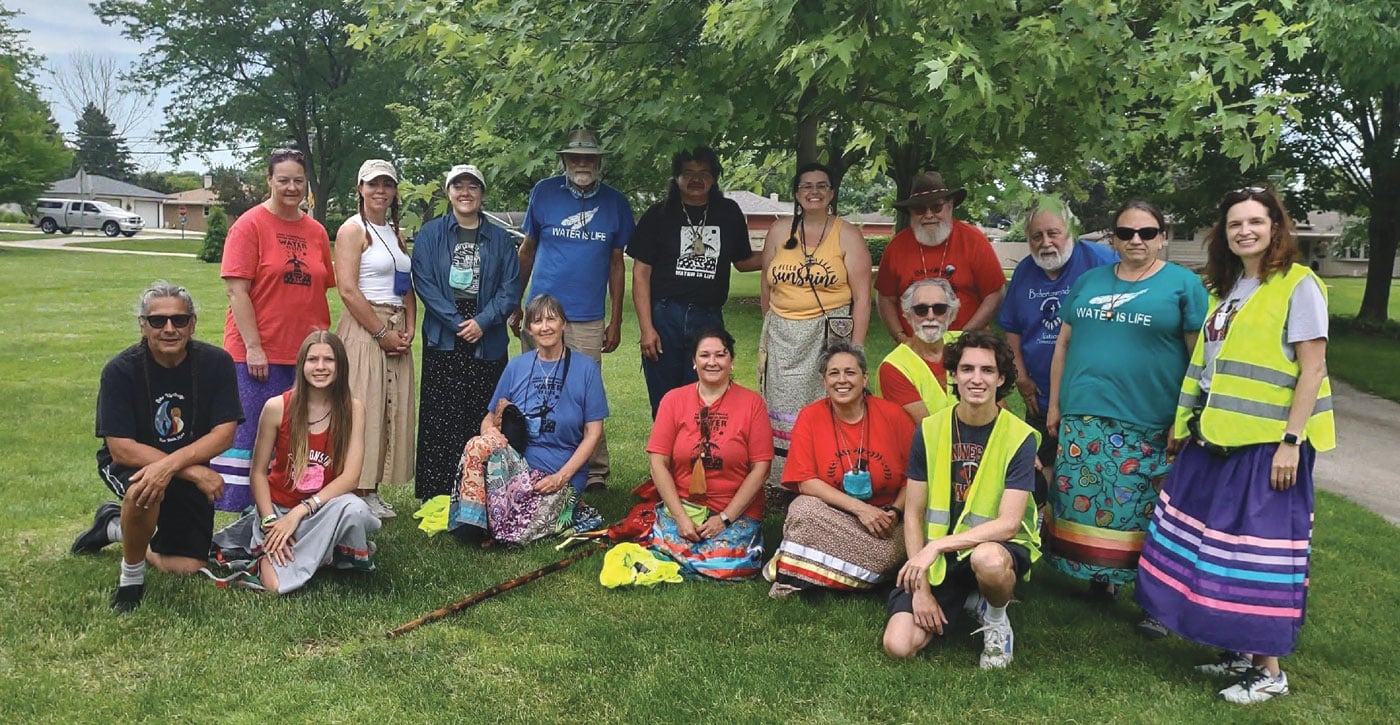
Joining an Indian Nation’s Efforts to Regain Recognition
At the first county board meeting I ever attended, I was intrigued to hear a request from the Brothertown Indian Nation (BIN) asking the Fond du Lac County Board to support their petition for federal recognition.
Here’s a confession: Until that night, I did not know there was a tribe based in our county! This was particularly discomfiting to me because for several years, I had been doing occasional “Roots of Injustice, Seeds of Change” workshops with Friends Peace Teams’ Toward Right Relationship with Native Peoples program. My several efforts to research local Native history—part of the workshop preparation process—had failed to turn up the tribe nearest to me. It was the first of several humbling lessons that revealed both the incompleteness of the most accessible resources on the subject and the inadequacy of my efforts and attention.
So I gave myself the task of learning enough about the Brothertown to write an article about them and their federal restoration efforts. It would be part of a series on county affairs that I was writing for the local paper as a newly minted county board supervisor.
The Brothertown are descendants of the residents of seven tribal villages in Connecticut, Rhode Island, and New York. The seven original tribes were decimated by the diseases, famines, and wars that accompanied European settlement.
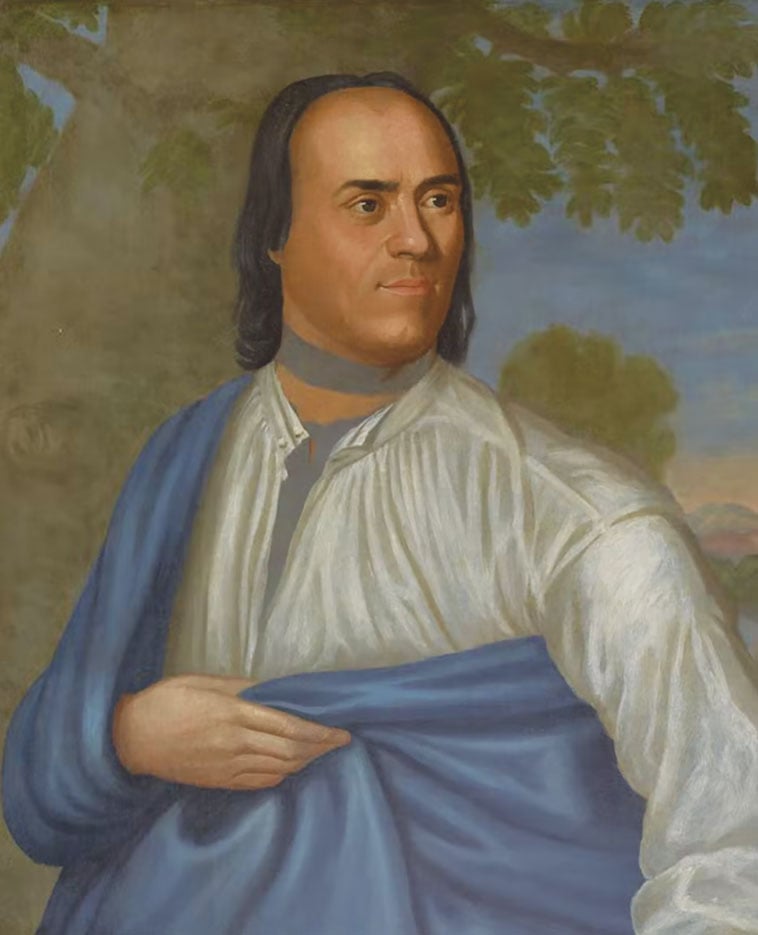
Missionaries gathered survivors together, and many of the young men and women attended a mission boarding school. These villages eventually came together under the leadership of several men including Samson Occom, an extraordinary Mohegan man: multilingual; intellectual; and a writer, statesman, advocate, and in-demand preacher. Occom traveled and spoke all over the Northeast and England, where he successfully raised large sums of money for an Indian school. His patrons included King George and the Earl of Dartmouth. However, upon his return, his former mentor and teacher instead used the funds Occom had raised to create Dartmouth College.
Here’s another confession: I spent my childhood summers in Vermont, just across the river from Dartmouth. Simply by virtue of living there, I had free access to a computer lab (as a child in the early 1970s!), rich cultural opportunities, and all the privileges that go along with being embedded in an Ivy League college community. I was shocked and discomfited to realize that the institution which enriched my summers had been built with funds effectively stolen from a school planned for Native children. Dartmouth—to be fair—has since taken some steps in the right direction: initiating in the 1970s a program to recruit and support Native students, and returning the personal papers of Samson Occom to the Mohegan Tribe in a 2022 ceremony that was attended by representatives of the Brothertown Indian Nation.
Back to the history: the seven tribes came together and formed the Brothertown Indian Nation. They settled among the Oneida people in New York State in 1784. However, illegal land dispossession by the state and private speculators ultimately forced both tribes to move to Wisconsin, where the Brothertown arrived in 1832. Ongoing treaty disputes seemed to be resolved with the creation of a reservation on the eastern shore of Lake Winnebago. However, the Brothertown were soon told they would have to move yet again—the fifth time in 60 years—this time to Kansas.
They decided to try a different strategy. They petitioned the U.S. federal government for individual land allotments and U.S. citizenship, seeing that those who had these things were not repeatedly uprooted. An act of Congress granted both in 1839, making the Brothertown possibly the first Native Americans to receive citizenship. However, the tribe paid a high and unexpected price for this. They lost their status as a federally recognized tribe and the U.S. government only allotted part of the reservation to individual Brothertown members, selling the rest to White settlers. Third, the imposition of poorly understood property taxes on their individual land allotments meant that in subsequent decades tribal members lost most of their remaining land to tax liens and foreclosures.
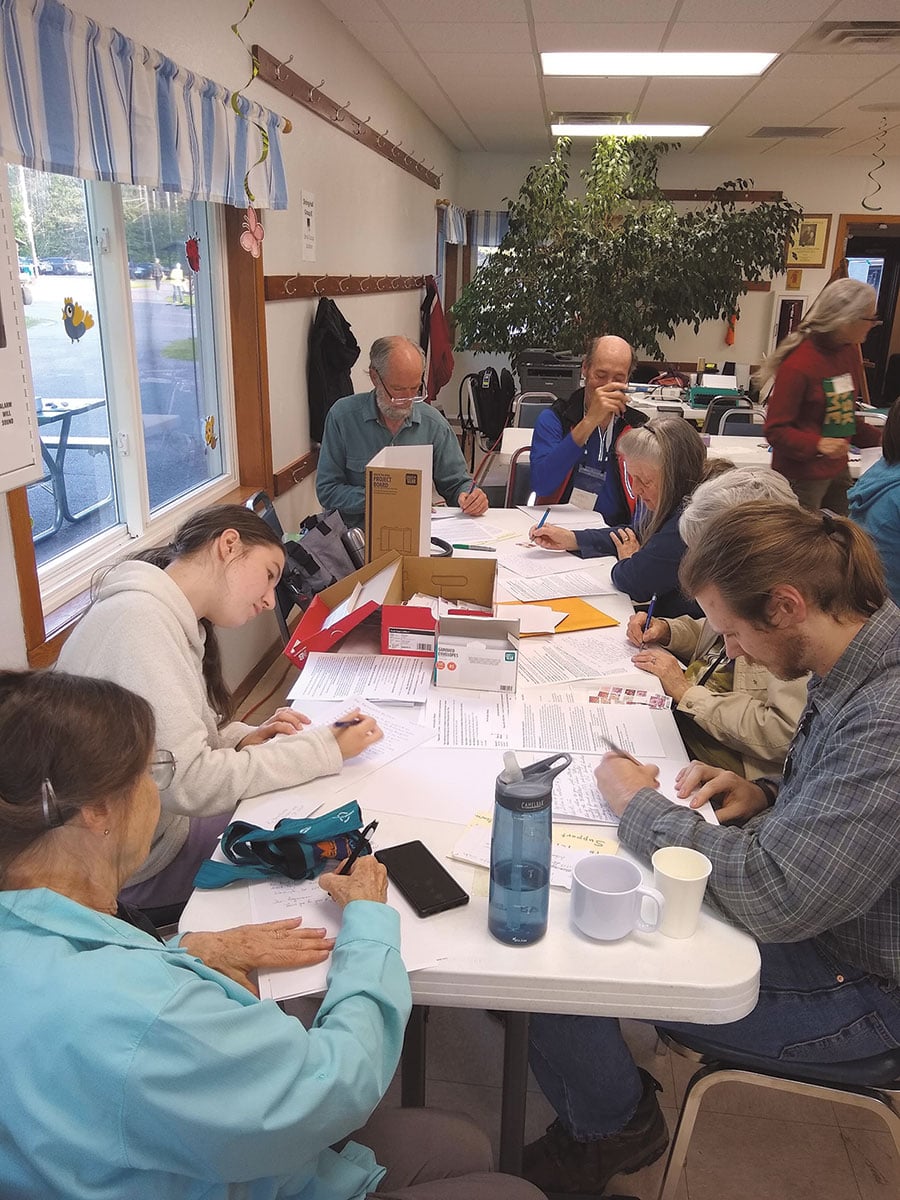
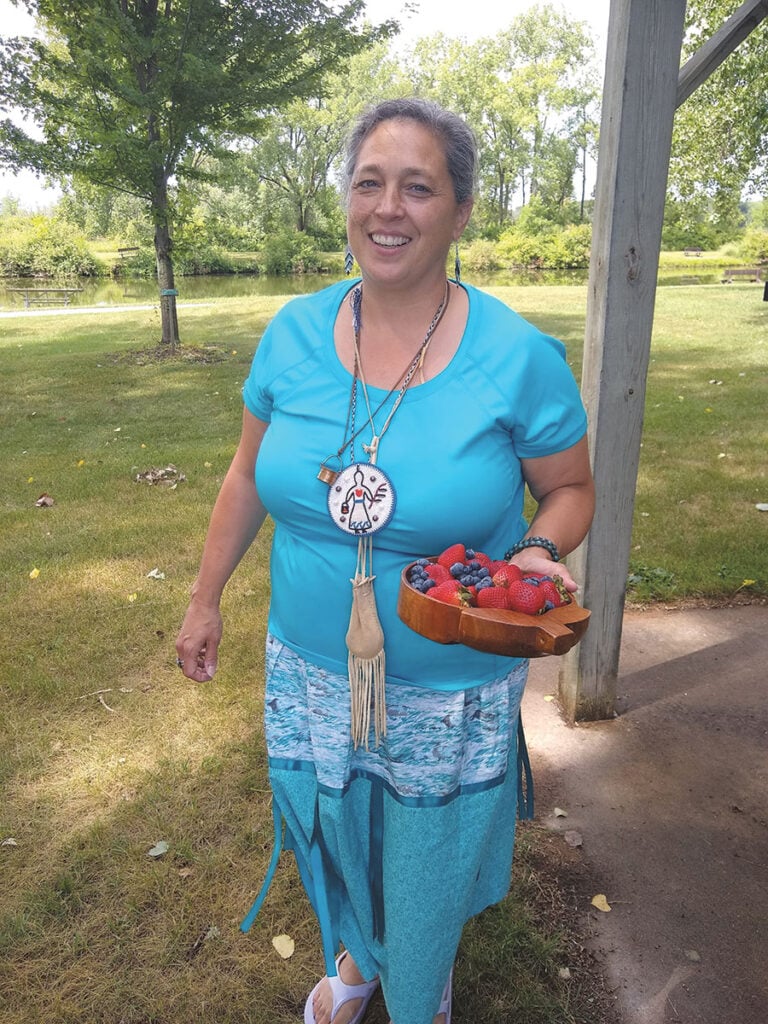
Left: Participants of Northern Yearly Meeting session writing letters in support of federal recognition for the Brothertown. Right: Tribal vice-chair Jessica Ryan ready to share berries as part of a ceremony before a workshop on the wild rice project.
Today, the tribe leases a community center with a museum and gift shop in the city of Fond du Lac, Wisconsin, near the shore of Lake Winnebago. They recently acquired a cultural center: a large, converted one-room schoolhouse, in the town of Brothertown, with meeting, workshop, and outdoor space and a beautiful view of Lake Winnebago. The cultural center now hosts an annual culture camp. This year campers crafted a dugout canoe using traditional methods. Recently a wedding and traditional ceremonies were held at the center, including one in which four young women—future leaders of the BIN—were given their Indian names. The tribe is thrilled to be doing all this—for the first time in 240 years—on land that was part of its original reservation.
The Brothertown have been trying to restore federal recognition since the 1970s, providing extensive documentation of their 240 years of existence and ongoing activity as a tribe. In 2012, the Department of the Interior determined that since the 1839 act of Congress terminated federal recognition of the tribe, only an act of Congress could restore it. Getting Congress to take action on behalf of the Brothertown is a much more challenging process than other tribes have faced in regaining recognition.
We now, of course, recognize that the idea that one could not be both Indian and a U.S. citizen is ridiculous. Native Americans were all granted citizenship in 1924, and they did not have to give up their tribal identity in return. But the fact that the Brothertown lost federal tribal recognition because of an idea that we now know is wrong—and which we more or less rectified with the 1924 Indian Citizenship Act—has changed nothing for BIN. They still have to climb the mountain of getting an act of Congress to formally ratify what we already know. The baleful influences of decisions taken two centuries ago are still very much with us. As they say, the past isn’t over; it isn’t even past. These realizations weigh heavily on my soul.
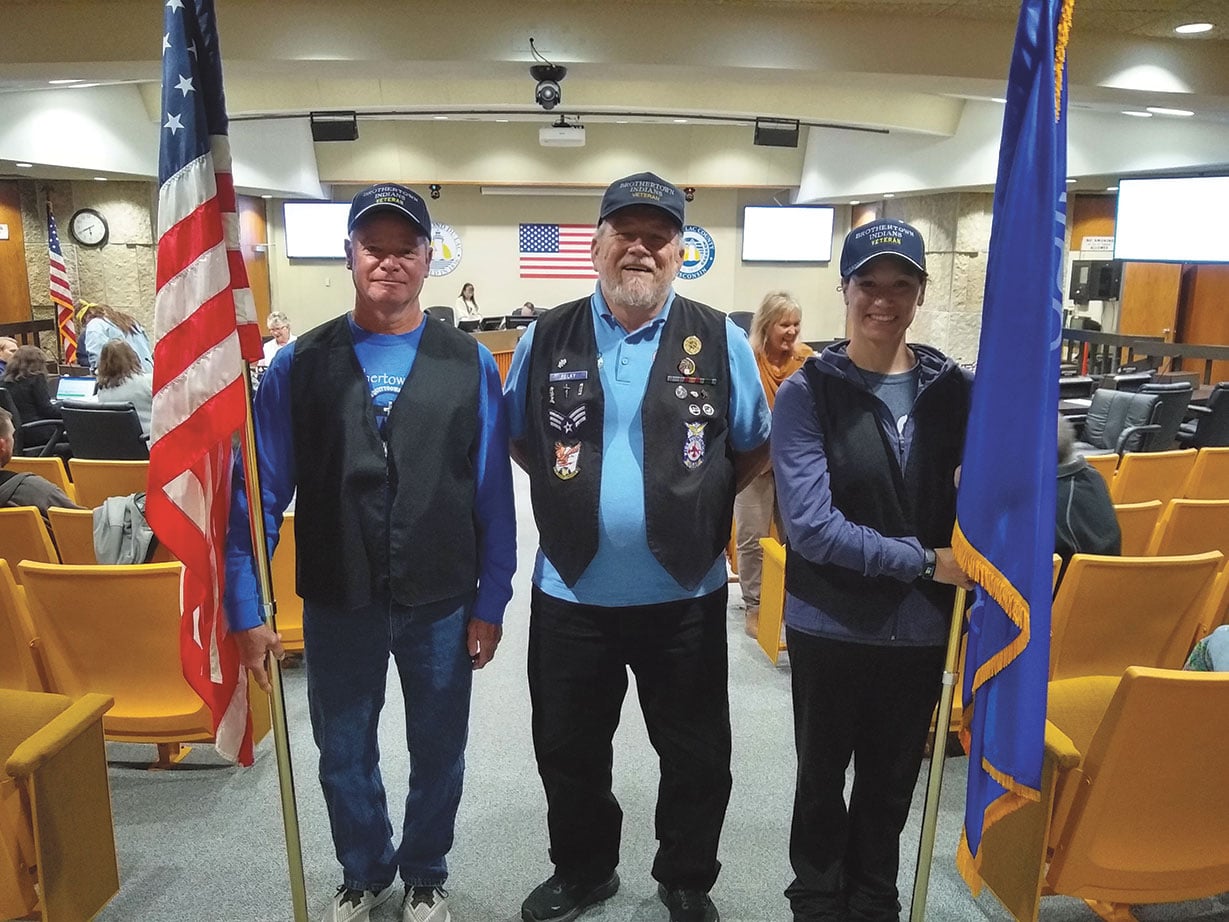
As I learned more about the tribe, I wanted to help raise awareness of their existence and projects wherever I could. One of my first ideas was to invite the Brothertown veterans to “do the colors” (bring the flags to the front of the council chambers) at the start of our monthly county board meeting. Each month a veteran or 4-H group does this. Several Brothertown veterans enthusiastically agreed, and we set a date. They wondered if they might have a drummer accompany their short procession and planting of the flags and if they could bring the BIN flag. I asked to bring a brief informational flyer for the supervisors to educate them further about the tribe.
The leadership didn’t accept these suggestions. Oh no! Red flags—not the kind we wanted! What I had thought were simply extra bonuses—drumming in council chambers and the Brothertown flag (how cool is that?)—were seen as militant tribal self-assertion rather than a solemn and respectful reflection of Brothertown patriotism. Never mind that every powwow begins with the veterans marching in with the colors. Never mind that Native Americans have served disproportionately in every war. Never mind that no one I know conducts a ceremony with more conviction. The word came back: No drums, no tribal flag, no flyers. I confess I wanted to fight this, but the tribe said no; this was not the place to spend political capital. They needed every bit of it elsewhere. They were a lot more gracious about it than I felt. It still rankles that the board felt threatened by four Brothertown veterans with a drum.
Another place I wanted to raise awareness was among Friends, particularly within Northern Yearly Meeting. I offered to do a land acknowledgement by focusing on BIN at an upcoming meeting, and ended by asking if we could sign their petition for restoring federal recognition. The answer was yes! Interest was not initially deep or wide, but we did get a number of signatures and started the conversation among Wisconsin and Minnesota Friends.
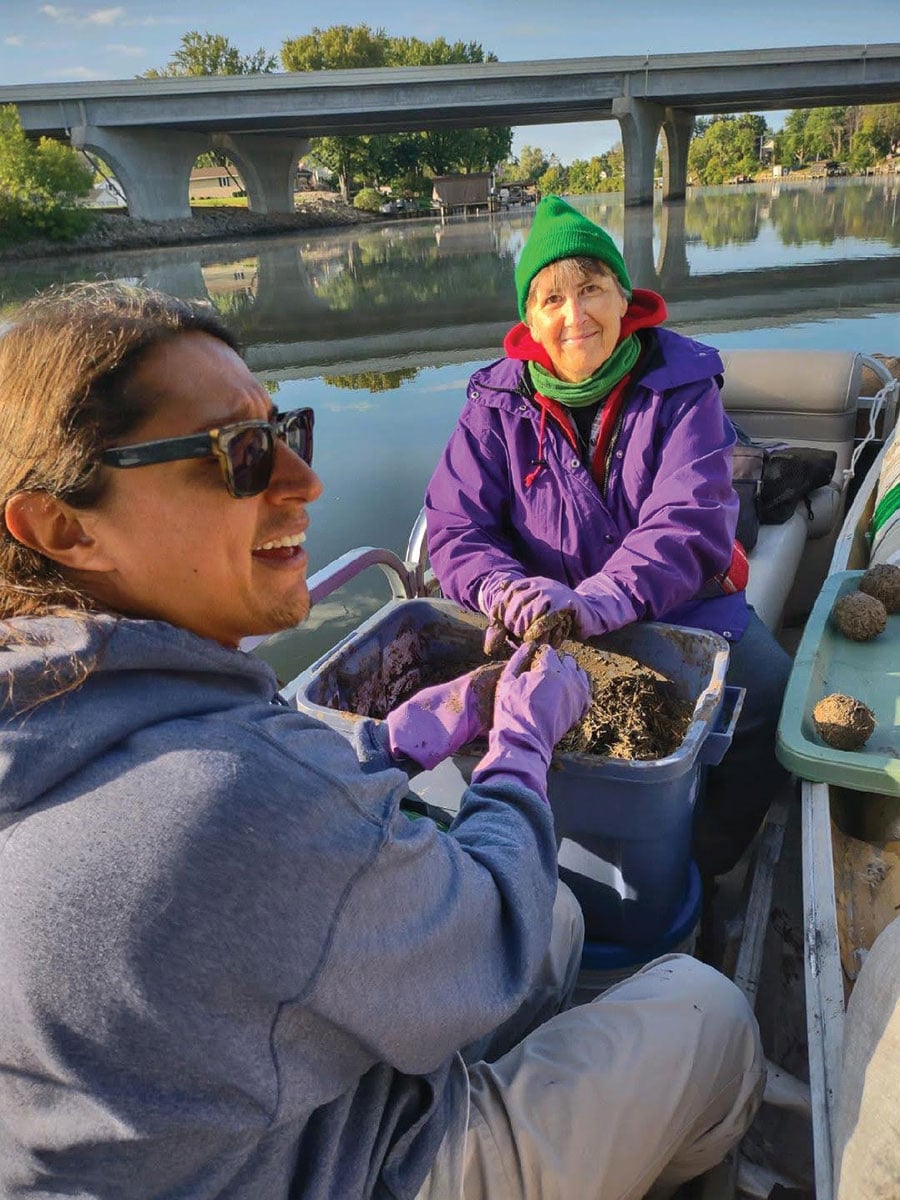
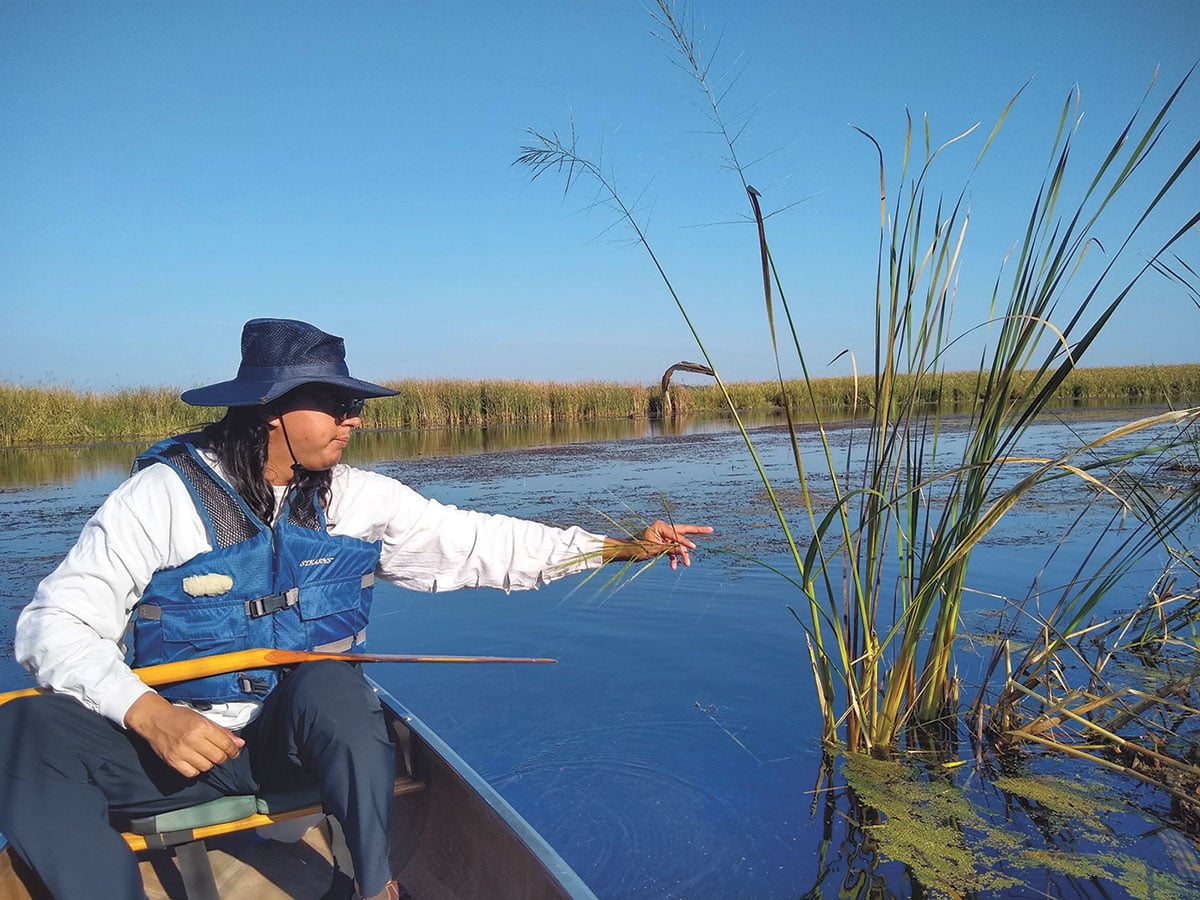
I started writing for BIN on various events and issues, and was invited to an educational event on a wild rice restoration project the tribe was spearheading. Riding pontoon boats, canoes, and kayaks all over the Lake Winnebago waterways to check out wild rice and its possible habitat opened up a whole new world for me.
I loved that every action taken on the water began with an offering to the river or lake: a pinch of tobacco, a sachet of herbs, or smudging. Both the humans and the water received gifts, which acknowledged and celebrated our interdependence.
I loved the values of Native science: that we raise up Indigenous knowledge, as well as the needs, interests, values, and cultural practices of the tribe; that there is deep respect and reverence for the object of study as well as curiosity; that we embody reciprocity, giving as well as receiving from the waterways and their inhabitants; and that there is no “us” (we are scientists, the rest of you stand back!) and “them” (rice, muskrats, river). Instead there is a “we,” a living social and biotic community with a shared past and a shared future.
I loved that we “listen to the manoomin” (the Menominee name for wild rice) and what it can tell us about where it likes to grow; how northern and southern species interact; how relationships with other species help or hinder the prospering of either species; and how human activity affects the manoomin.
After getting involved in wild rice restoration I did another land and water acknowledgement for Northern Yearly Meeting (how could we have left out water?!). I gave a presentation, raising up the manoomin project and ended by saying:
We can—always and everywhere—give thanks for the lands and waters that sustain us. We can offer prayers and appreciation for those who stewarded these lands and waters before us. And we can seek right relationship with the land, the water, and our Native American neighbors today.
Friends told me they were truly moved by this acknowledgement: it took us to a deeper place, it was not perfunctory, and it challenged us.
The next step for me was participating in the tribe’s annual Water Walk: a ceremonial circling of Lake Winnebago, which is about 50 miles around. The walk takes place over three days, involving teams that leapfrog one another in quarter-mile segments. The short individual hops allow a broad range of people to participate: another Native value. It’s more important that all can participate rather than that any one person stand out by walking far. It’s important that the walk celebrates and strengthens the human community as well as our relationship with the lake.
My partner for the day was tasked with, among other things, keeping me safe. Only women carry the copper water bucket, and we may not look back, put the bucket down, or stop moving. The men walk behind us carrying the staff, looking out for traffic, and telling us where to walk to be safe. My partner taught me the song that accompanies the walk, and we sang it almost continuously on our segments of the walk.
This song and the ceremonial discipline of the Water Walk went deeper into my heart than I could have anticipated. The day after the Water Walk, I attended a packed and highly contentious hearing in a neighboring county about a proposed non-metallic mine with potential impacts on Green Lake, Wisconsin’s deepest natural inland lake. There had been some political skullduggery leading up to the hearing; the science was complicated and sometimes contradictory; and the politics were fraught. I was surrounded by upset neighbors, angry defenders and opponents of the mine, lawyers, and embattled county board supervisors. But all the while, I felt like I was sitting in a cocoon of calm and love. The song played continuously in my head and filled my heart with compassion for all these people and our damaged, struggling, but still beautiful and living lake. I can’t explain it, but I felt kinship with everyone and everything. I don’t know that I’ve ever experienced a ceremonial act reshaping my heart like that.
During the last year, several members of Northern Yearly Meeting have taken an initiative to support the Brothertown’s efforts at federal recognition. They have collected signatures; contacted congressional representatives; and, at our most recent annual session, set up a letter writing table with background information. By the end of the weekend, we had nearly 70 personal handwritten letters for the Wisconsin and Minnesota congressional delegations! These Friends also spearheaded the effort to write a formal minute in support of federal recognition, which was enthusiastically approved by the yearly meeting.
There is a long road ahead for federal recognition; the work will likely take years. The wild rice restoration project—heartbreakingly— recently had a large federal grant rescinded. But I and many yearly meeting Friends are excited to have something concrete to do with this local Indian nation. We are feeling our way forward toward right relationship, we hope, with Native Peoples.
More information on the tribe is available at brothertownindians.org.

We want to hear from you, not an AI! Please be thoughtful and use your own words. Comments on Friendsjournal.org may be used in the Forum of the print magazine and may be edited for length and clarity.