



Byberry Meeting, a small Quaker congregation in Northeast Philadelphia, Pa., has joined a partnership with the Preservation Alliance for Greater Philadelphia to promote historic sites along the Poquessing Creek Trail, meeting members explained.
The four sites along the Poquessing Trail of History include a representation of the house where Benjamin Rush was born. Rush was a Philadelphia doctor who signed the Declaration of Independence. A Lenni Lenape memorial and the Byberry Township African American Burial Ground are two other sites on the trail. Byberry Meeting created the burial ground in 1780 for free and formerly enslaved Black people who lived in Byberry, as well as for other people of color. The African American Burial Ground is in Benjamin Rush State Park a few blocks from the meetinghouse. The meeting also has a different burial ground on its own property. Black abolitionists Robert Purvis and Harriet Forten Purvis established Byberry Hall, the final site on the trail, as a space for public debate about ending slavery, according to the Byberry Meeting website.

The trail could become an important destination for those interested in local stories of the past, according to Dave Nepley, clerk of Byberry Meeting.
“We’re trying to bring history to Northeast Philadelphia,” said Mary Ellen McNish, president of the trustees of Byberry Meeting.
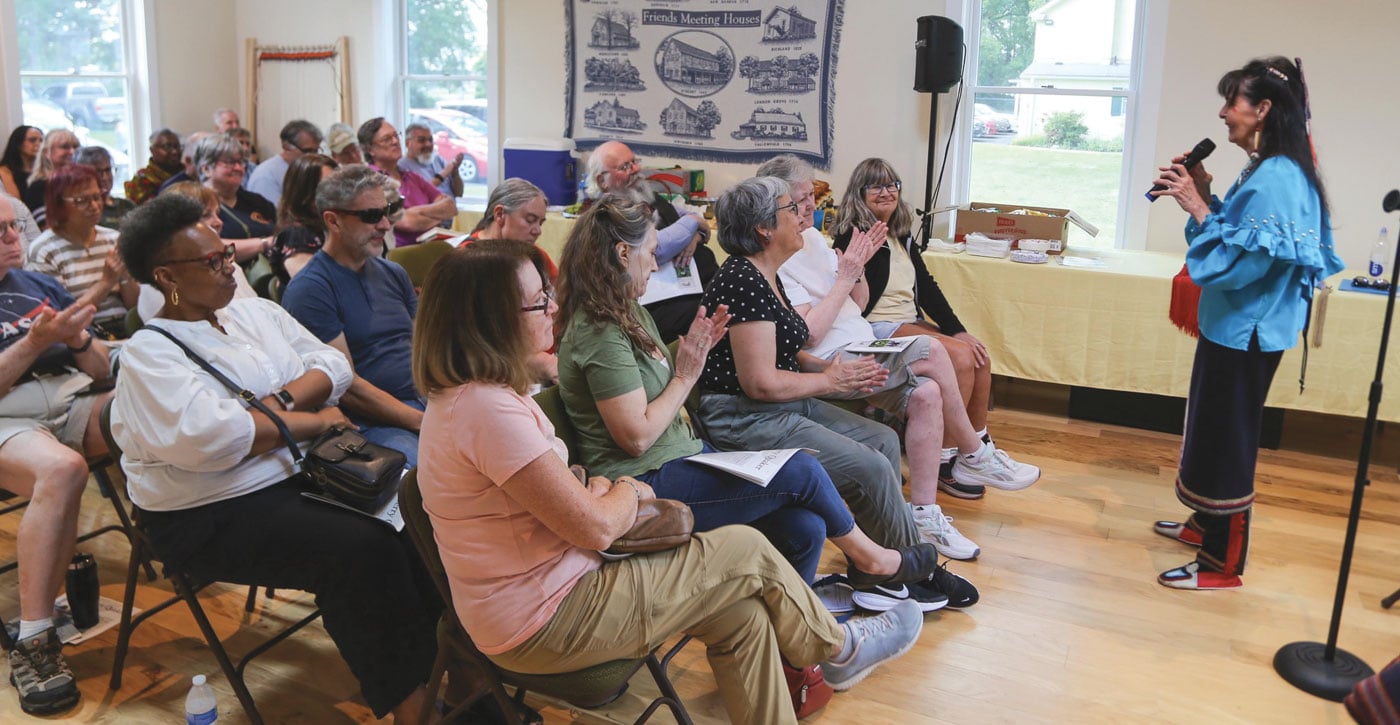
The group has already hosted three public events since the trail’s debut in June 2025. In September, the meetinghouse hosted Living Connections: Lenape Storytelling. Two women from what is now the Delaware Tribe talked about their lives, shared songs, and offered cultural education, McNish noted. The Lenni Lenape people lived in the region of what is now Byberry for millennia before Europeans arrived in the 1600s, according to the Poquessing Trail of History website. After the presentation, community members strolled the banks of the Poquessing Creek to see the bridges and other scenery.
An event last November focused on what books from the Byberry Library Robert Purvis had read, including volumes on farming and geography.
Four people interred in Byberry Meeting’s burial ground signed a petition against the Fugitive Slave Act, according to McNish. An October 18 event took place 175 years to the day after a meeting gathered in Byberry Hall to oppose the Fugitive Slave Act. The 2025 event included lantern making followed by a walk with the lanterns.
“We had a candlelight procession to our burial ground honoring [them] and we laid flowers at the graves of those who signed a petition against the Fugitive Slave Act,” said McNish.
Congress passed the Fugitive Slave Act of 1850 which stated that enslaved people seeking freedom in states in which slavery was illegal could be returned to bondage without court proceedings, according to the National Park Service. The legislation also called for $1,000 fines and six-month jail terms for people caught trying to help freedom seekers escape enslavement.

Byberry Meeting has about 15 members and a five-acre property with four historic buildings: the meetinghouse, a schoolhouse, carriage sheds, and Byberry Hall. Grant funding for historical preservation is key, McNish and Nepley explained.
Meeting members Nepley, McNish, Kate Cowing, and Mike Doyle wrote a grant proposal to the Pennsylvania State Historic Preservation Office. Cowing is the preservation architect of Byberry Meeting. Doyle is the community engagement coordinator for the meeting. They received two grants from the Historic Preservation Office, which include 50/50 matching funds. One grant funded a master plan for the property and buildings. The other paid for initial renovations to Byberry Hall. They also received $50,000 from the Local Share Account of the Pennsylvania Department of Community and Economic Development to continue work on Byberry Hall. The meeting has also received two congregational revitalization grants from the Thomas H. and Mary Williams Shoemaker Fund.
The meetinghouse previously had no running water and no bathrooms. In 2018 construction began on an addition to the meetinghouse. In 2023, members had a grand opening of the new addition, which featured two bathrooms. The current Byberry Meetinghouse was built in 1808. The meeting was founded in 1683, according to McNish.
Attracting members of the public to visit historic sites could increase the number of members and attenders at the meeting. Recently the meeting has welcomed one new member and five new attenders, McNish noted.
In 2024, seven events brought 200 people to the property. In 2025, eleven events attracted 400 people to the property. Even if the events do not yield new members, they are important to the community, according to Nepley.
“As Quakers it’s not always about the outcomes; it’s about the actions and the witness itself,” said Nepley.
We want to hear from you, not an AI! Please be thoughtful and use your own words. Comments on Friendsjournal.org may be used in the Forum of the print magazine and may be edited for length and clarity.