




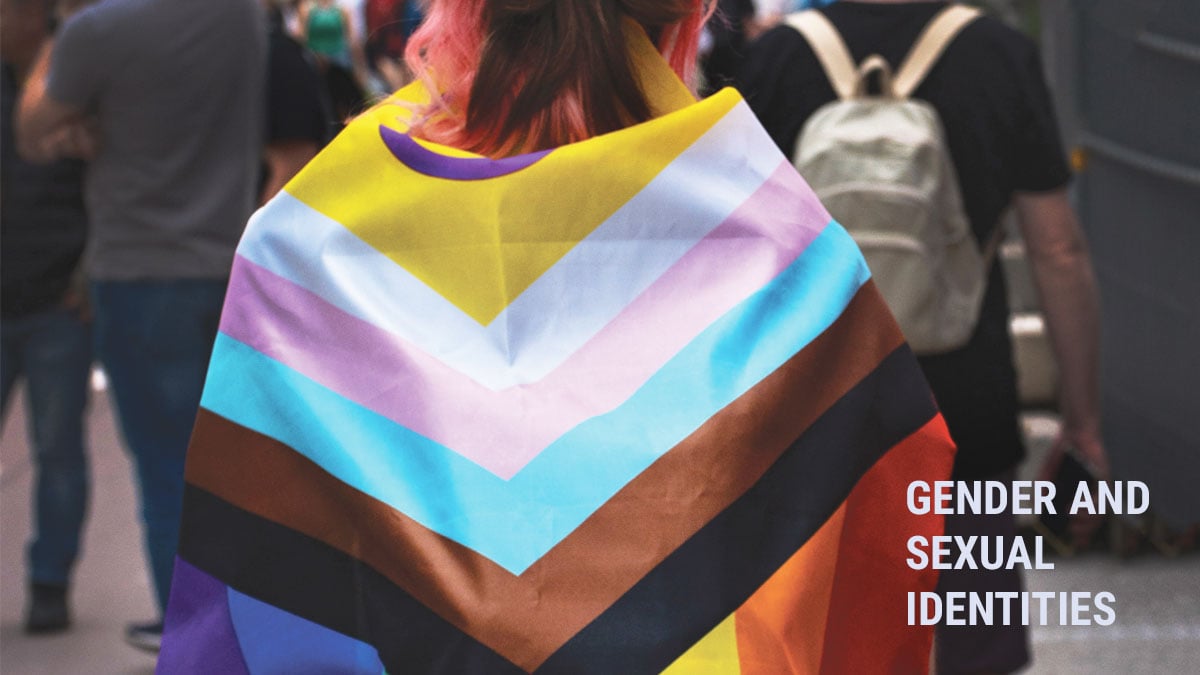
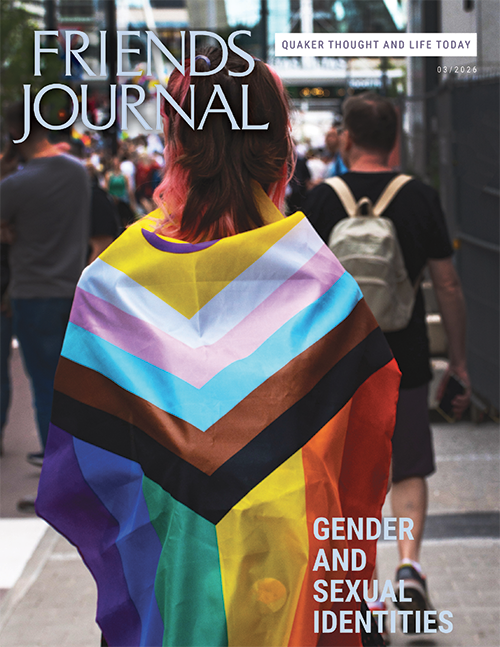
This is not the first time that Friends Journal has done an issue on gender and sexuality. While we mix up the official theme titles a bit, it’s a topic we return to every few years. Who people love and how they identify continues to be a source of joy for the individual but also tension and controversy for the community, as yearly meetings continue to break up over these issues. How do we accept people for who they are and how do we support them in self-discovery?
Michelle Downey starts off the issue talking about the “vibrational difference between being tolerated and being treasured.” Her article got me thinking about how we can realign our meetings to be more focused on relationships and more supportive of everyone who walks through our doors, however they identify.
An overview of gender identity among African Friends comes from Esther Mumbo. There, the challenges of inclusivity get caught up in efforts to untangle from decolonialism. Draconian laws in some countries make for an even more difficult situation for supportive African Friends.
I was surprised and charmed to read the story of Mico Sorrel. In “Are You a Girl or a Boy?,” Mico shares a life’s worth of stories of not fitting into prescribed gender roles. They write: “In these last years, the permission from younger generations to live more fully into my gender fluid identity has been an enormous gift to me.”
That younger generation’s acceptance perplexed many of their elders. I appreciate the tenderness and vulnerability of Judith Fetterley, whose commitment to 1970s-style radical feminism made it hard to understand the cultural changes afoot. But curiosity prevailed, and Judith started listening to stories, in which she heard “a depth of longing I could relate to.” That familiarity softened her heart.
In 2002, Petra Doan shared the story of her transition in this magazine in a well-remembered article. She returns again to focus on how her Quaker community supported her discernment through a clearness committee process—which she playfully redubs a queerness committee. Reading it struck me how underutilized this tool is.
Ted Heck and Jim Fussell give both a present-day and historical overview of the lives of trans, nonbinary, and intersex Friends. Much of the more recent documentation comes from Friends Journal and our partner QuakerSpeak.com interviews, but they have also uncovered histories going back to the early-twentieth century.
Continuing with history, Brian T. Blackmore introduces us to the remarkable but largely forgotten life of Josiah P. Marvel and the ominous sounding Civilian Readjustment Committee he helped lead. Starting in 1946, the committee helped New York City gay men charged with “degenerate disorderly conduct” avoid jail time and was a stepping stone to eventual de-stigmatation.
I am grateful that both our religious society and wider culture have developed a greater understanding of the diversity of gender expressions. I appreciate an expanded vocabulary with which to include people. (Only ten years ago the singular “they” was still cautioned against in the Friends Journal style guide!) Change can be confusing and bewildering, but open conversations between Friends one-on-one and in settings like a clearness committee can help us understand one another in our longing to be known and loved.
Thank you for your articles about trans folks. As a grandmother with two such loved ones…. one a teenager and one an adult, I found your compassionate guidance very helpful.