




Why Quakers Need Gospel Ministers
Expectant waiting worship relies on two critical motions to truly work: First, Friends open their hearts to the Living Spirit, recognizing our deep shared dependence on God. As more and more of those present do this, there is a sense of being knit together with each other and with the Love at the heart of all things. If this happens, we refer to our worship as gathered or covered. Second, as hearts become so knit together by a power greater than our own, some Friends may be led to offer words, vocal prayer, or song guided by the Light working in their hearts, rather than by their own thoughts or ideas. Friends refer to this as Spirit-guided vocal ministry.
So What Is Gospel Ministry?
Gospel ministry is an old Quaker term, little used or understood among modern Friends. The classic text on this is the traveling minister Samuel Bownas’s 1750 book, A Description of the Qualifications Necessary to a Gospel Minister. It does not refer to vocal ministry about the Bible, though the messages of early gospel ministers often were woven around biblical themes. The word gospel literally means good news, but gospel ministry does not refer to evangelism per se—though again, early ministers often took their message to non-Friends.
Brian Drayton has written an invaluable twenty-first-century reworking of Bownas’s ideas for modern Quaker readers called On Living with a Concern for Gospel Ministry. He writes:
Gospel ministry is service whose goal is to encourage, support, push, or invite people to seek and respond to the guidance, teaching, and activity of that Light and Life at work in all, right now. . . . A concern for the ministry is a calling to be intentionally available to put our experience of the divine Light and Life at the disposal of others, for their refreshment and encouragement.
He describes the many functions that such vocal ministry can bring into our meetings for worship. It can be convicting, helping Friends face and overcome blocks in their faith journey. It can encourage and offer comfort. It can connect our personal experiences to Quaker tradition and Scripture. And it can set social and political events in spiritual context, pointing towards greater faithfulness in prophetic witness in the world.
As hearts become so knit together by a power greater than our own, some Friends may be led to offer words, vocal prayer, or song guided by the Light working in their hearts, rather than by their own thoughts or ideas. Friends refer to this as Spirit-guided vocal ministry.
The Impact of Gospel Ministers Among First Friends
The Children of the Light (as early Quakers called themselves) grew rapidly in number, springing from their powerful shared experiential relationship with God. Francis Howgill, the Seeker leader who joined Friends after Fox’s sermon to one thousand Seekers on Firbank Fell, wrote in 1672:
The Kingdom of Heaven did gather us and catch us all, as in a net, and his heavenly power at one time drew many hundreds to land. We came to know a place to stand in and what to wait in; and the Lord appeared daily to us, to our astonishment, amazement and great admiration, insomuch that we often said one unto another with great joy of heart: “What, is the Kingdom of God come to be with men?”
This new Quaker movement grew so rapidly in its early years that some feared it would become the dominant form of Christianity in England. The movement played a major role in establishing religious freedom in the British Isles and the United States; in advancing the role of women in faith communities and in the world; in developing a radically new form of worship; and in building a wider understanding of principles like truth, simplicity, and peace.
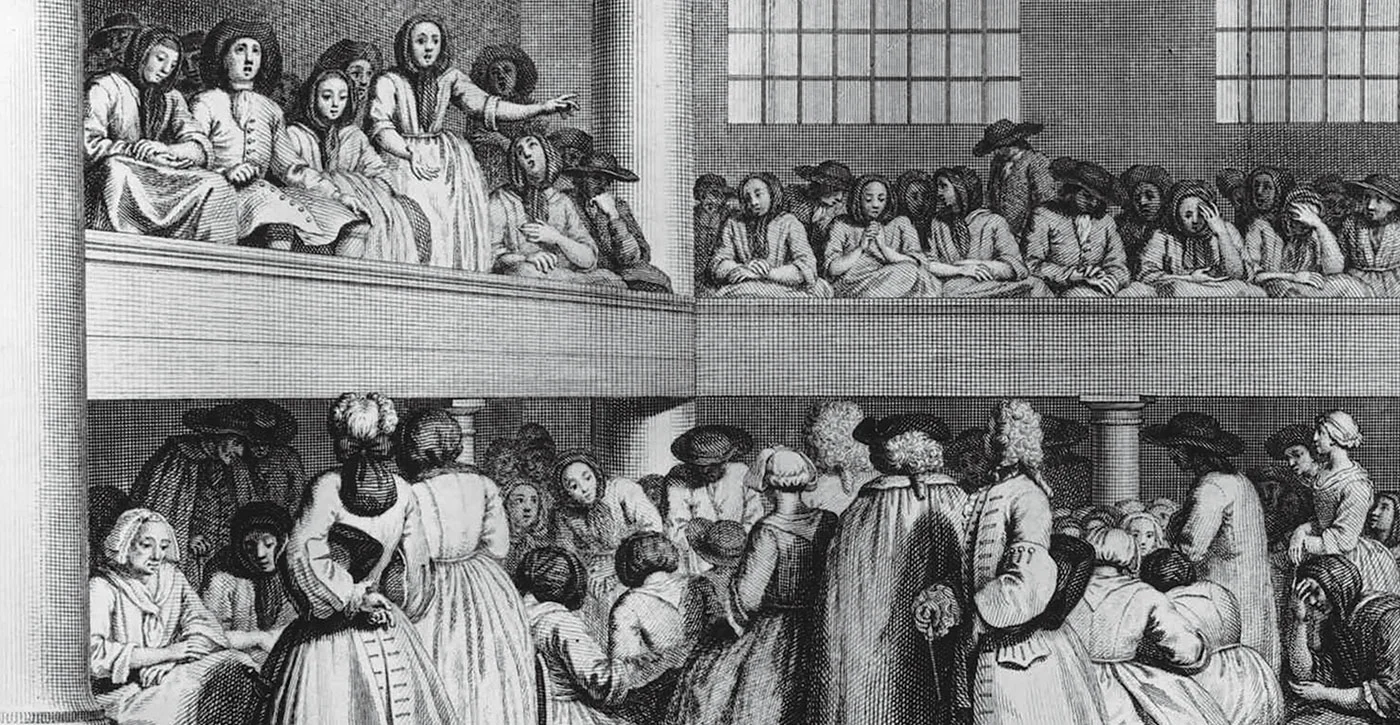
This movement grew largely through the travels and work of a group of enormously gifted preachers known as the “Valiant Sixty,” a number of whom were women. They preached extemporaneously under the guidance of the Holy Spirit, spoke with passion and deep authenticity, and had a strong desire to spread what they had encountered with those outside their own faith community.
A Little Modern History of the Quality of Worship in Our Meetings
In the decades following the end of World War II, there was huge growth of new Liberal Quaker meetings across the United States, often in college towns like Madison, Chapel Hill, and Ann Arbor, and in other places where unprogrammed meetings never existed before.
When I first encountered deeply gathered worship and powerful vocal ministry at Young Friends of North America gatherings in the late ‘60s, I felt I had been raised on a very watered-down version of Quaker faith. Those new meetings springing up had lots of life, community, and devotion to Quaker values like peace, but they often had few members with a deep knowledge of Quaker roots and core practices. Years after it was written, I read a report by Kenneth Boulding (who was clerk of the Ministry and Worship Committee in the meeting I grew up in) in which he lamented the lack of spiritual depth of worship and vocal ministry in our meeting.
During a session on gathered worship in the Quaker studies program of Philadelphia Yearly Meeting, several Friends of many years asked what gathered worship was—feeling they had never experienced this. Although this stunned me, I was not really surprised, as many meetings that I had visited over the years felt shallow with spoken words that seemed to spring from the thoughts of the Friend offering them rather than the Holy Spirit.
Interestingly, many Liberal yearly meetings in this period had a query in their books of discipline on vocal ministry that asked “Is the vocal ministry exercised under the divine leading of the Holy Spirit without pre-arrangement and in the simplicity and sincerity of truth?” (or used similar words). I was appalled when I learned that Philadelphia Yearly Meeting had removed this query from its 1997 revision. When I asked a member of the revision committee for the reason, I was told that Friends felt the query encouraged a judgmental attitude towards those offering vocal ministry.
I’ve seen something important happening among our meetings, however, over the past few decades. As I visited many meetings over this period, I have encountered a growing deepening of worship. I have also met growing numbers of Friends who “get” what gathered worship is and have a strong desire to nurture this in their meetings.
How did this happen? Friends like Bill Taber, Sandra Cronk, Deborah Fisch, and Lloyd Lee Wilson have carried a deep-lived understanding of 350 years of Quaker practice and a capacity to communicate this to Friends unfamiliar with it. Programs like Quaker Studies Programs, School of the Spirit, Pendle Hill, and the Traveling Ministries Program of Friends General Conference introduced countless Friends to a deeper understanding of core Quaker practices like waiting worship. All this has borne rich fruit.
But I’ve encountered much less motivation to nurture gifts of vocal ministry springing from God. In fact, I believe there is great ambivalence among Liberal Friends about even attempting this.
A Major Change in Our Way of Nurturing Worship
In the early eighteenth century, meetings began to officially recognize those with the gift of Spirit-guided vocal ministry, along with elders gifted in identifying Friends with such ministry and holding them accountable in the exercise of these gifts. Ministers and elders met together regularly at the monthly, quarterly, and yearly meeting levels. Ministers and elders listened regularly to the ministers’ service in their local meeting and so were able to give each minister concrete advice on a regular basis. Because ministers frequently traveled to other meetings, Friends also had the opportunity to hear ministers from beyond their own meetings and to offer them feedback on their service at quarterly and yearly meetings of ministers and elders.
By the mid-twentieth century, however, most unprogrammed meetings abolished formal recognition of gifts of vocal ministry and eldership. Outside of the three small Conservative yearly meetings, meetings of ministers and elders were replaced by worship and ministry committees with members serving fixed terms. This left a gap in our system: although it supports the precious testimony that the Spirit can move anyone to offer ministry, it overlooks the insight that some Friends have a particular, long-standing concern or leading to this service, and that this requires its own kinds of discipline, nurture, and oversight. Although these committees feel responsibility for the depth and quality of worship, they do not—in my experience—actively nurture Friends who might be led to carry ongoing gifts of God-guided vocal ministry within the meeting. In fact for a variety of reasons Liberal Friends are afraid to do this!
Why Are Liberal Meetings Scared to Nurture Gospel Ministry?
First, Friends value the equality among all in the meeting. There is deep reluctance among us to do anything that could be perceived as elevating some Friends in the meeting above others. This is understandable, but in 1 Corinthians 12, Paul offers a powerful response to this, explaining that all gifts that serve the community are of equal value:
Now there are varieties of gifts but the same Spirit, and there are varieties of services but the same Lord, and there are varieties of activities, but it is the same God who activates all of them in everyone. (New Revised Standard Version).
Second, there is widespread and justified concern among us about worldly authority, often based on status such as gender, race, age, wealth, or formal education.
As the Quaker teacher and writer Paul Lacey often pointed out, worldly authority is very different from spiritual authority. (And the earlier Paul, the Apostle, also exhorts us to be not conformed to the patterns of this world.) Liberal Friends’ fear of worldly authority infecting us has led to a strong allergy against many forms of leadership and authority in our meetings and organizations. Lacey describes the alternative form of leadership practiced by the early Church and Friends: “The servant-leader serves only one master, the truth which is from God. . . . The servants of truth must search for it diligently and stand under its authority.”
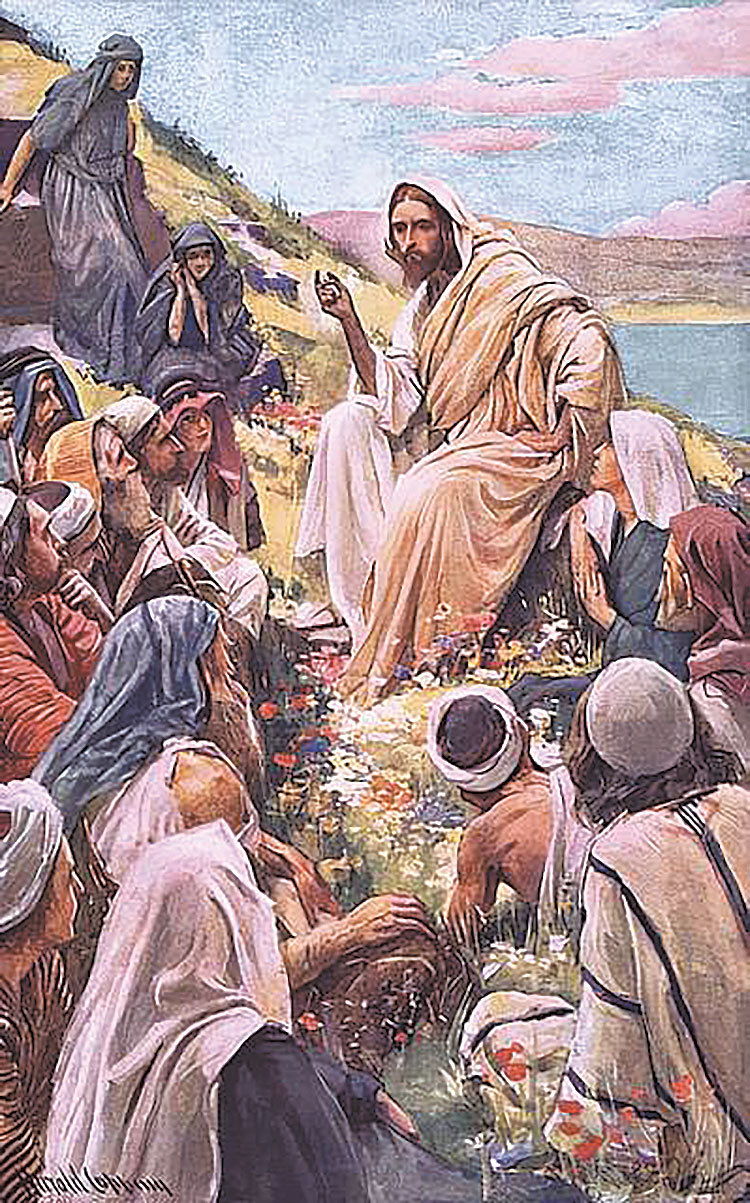
In Matthew 7:29, the crowds listening to Jesus minister the Sermon on the Mount said that he “spoke with authority—not as the scribes.” Francis Howgill echoed those words when he said of Fox’s Firbank Fell sermon that Fox, too, spoke with authority and not as the scribes.
Bownas and Drayton both believe that a minister’s messages will only land deeply in worship if they experience them as authentically consistent with the faithfulness of the minister’s life. The faithful life of ministers gives their messages spiritual authority.
Thom Jeavons addressed this in his 1983 talk “On Exercise of Authority in Ministry”:
To faithfully make this witness to authentic spiritual authority and to fruitfully exercise our callings to ministry, preparing God’s people for service and building up the body of Christ, we must strive to abide in the life and power of God from which any authority for ministry must come.
If we are able to help new gospel ministers discover their calling to this work and find new ways to nurture their gifts and hold them accountable to faithful exercise of them, we could in time see large numbers of deeply gifted gospel ministers working among us once again.
Being Led to Carry a Concern for Gospel Ministry Over Time
The third barrier to Liberal Friends supporting vocal ministry is our belief that God may call on any person in worship to offer faithful vocal service at any given time. Robert Barclay addressed this in his 10th Proposition “On Worship” in his 1676 Apology for the True Christian Divinity (from a modernized version):
If we are talking about liberty to speak or prophesy by the Spirit, I say that everyone may do that when they are moved to do so . . . but we do believe and affirm that some are more particularly called to the work of the ministry and therefore are fitted of the Lord for that purpose, whose work is more constantly and particularly to instruct, admonish, oversee, and watch over their brethren.
Drayton describes well what it means to carry a concern over time: to allow it to inform one’s whole life and the way one relates to others in one’s community:
It has been part of our experience from the beginnings of our movement that for some people, the vocal ministry becomes a concern, which is carried for some length of time, possibly for life, and that the presence of such Friends concerned for the Gospel ministry is a vital element nourishing the faithfulness of the whole body. . . . The vocal ministry . . . can itself become a concern for some people, sustained for years or for life. If you are such a person, then the concern becomes an integral part of your spiritual path, for as long as the concern remains with you; it is a path of learning, of service, of consecration, of collaboration, of humility, of listening. As with all long-term concerns, you can learn better and better to be faithful to the concern, consonant with your gifts and openings. You will learn to know your authentic kind of service, your voice, and your limits.
Meeting Support for Ministries
In recent decades, there has been an increased willingness among many Liberal meetings to recognize gifts of ministry, such as a calling to chaplaincy, prison visitation, adult religious education, peacemaking, or racial justice. It is quite unusual, however, for meetings to recognize or actively support an ongoing call to vocal ministry that builds up the life of the meeting.
It is very unlikely that Liberal meetings will revive formal recording of ministers or recognition of elders. But being formally recorded is certainly not a requirement to carry a concern for this in one’s life. The issue is what new forms of support can be developed in our meetings to support these gifts and to replace the earlier practice of having meetings of ministers and elders.
The key questions are these: (1) How can the meeting help those being called to this work to recognize they may have a real gift in this area? (2) How can the meeting help the gospel minister to be faithful in exercising this gift, especially within the life of the local meeting? This will take imagination and deep discernment of God’s guidance for us in this important task.
What Spirit-guided Gospel Ministers Could Bring to Our Quaker Movement
If we hope to rediscover the depth and power of early Friends and to bring a prophetic voice to the huge challenges of the world today, we cannot do so by supporting only one of the two key motions that make God-filled and God-directed waiting worship deep and powerful. But if we are able to help new gospel ministers discover their calling to this work and find new ways to nurture their gifts and hold them accountable to faithful exercise of them, we could in time see large numbers of deeply gifted gospel ministers working among us once again.
If this happens I believe it would do a number of things. It would spur far-reaching revival among unprogrammed Friends. It would bring more people to Friends (and perhaps even help our children find sufficient life in our meetings to remain Friends!). Finally, it would provide Friends with a deep understanding of prophetic Quakerism, hope, resilience, and the ability to bring transforming witness to the huge challenges facing our world today
In the same talk quoted above, Thom Jeavons describes what could happen among us:
Wouldn’t it be refreshing to be amazed, as the multitudes were [in response to Jesus’s preaching], by finding persons [in our meetings] speaking “with authority,” with authentic spiritual authority?
May we be so amazed!
References / Resources:
Samuel Bownas, A Description of the Qualifications Necessary for a Gospel Minister. Includes an introduction by William Taber.
Brian Drayton, On Living with a Concern for Gospel Ministry
William Taber, Vocal Ministry: The Inward Motion and the Razor’s Edge
Paul Lacey, The Authority of Our Meetings is in the Power of God
Thom Jeavons, On the Exercise of Authority in Ministry

From a Quaker family; Symonds Creek Meeting, Pasquotank County, North Carolina. Graduated from The University of North Carolina, Chapel Hill first Saturday, 1968. The next Saturday, I married my wife at the Friend’s Meeting, Virginia Beach. You never forget what you saw and learned in meeting.
Thank you, Peter, for this ministry. I share your concern. In fact, Pendle Hill just published my pamphlet on this subject. I’ve been thinking and writing about this for some time. But only in the past year, for the first time in forty years as a Friend, have I felt an ongoing call to vocal ministry, and it’s been somewhat harrowing, even though I’ve been thinking, writing, and obsessing about this for decades.
Self-doubt: am I really called? Social anxiety: what will my meeting think about my speaking relatively frequently? Spiritual dread: who will have my back? If I step through the traces or run past my guide, will some elder help me get back on the path? Where’s the support? Where’s the oversight?
I’ve already been through a time of serious doubt, in which the underlying prophetic stream from which I’ve been drawing my strength seems too distant to trust. Has the call been rescinded? How would I know?
Without a settled and robust culture of eldership for vocal ministry, we ministers are left bereft. It’s not right. We need our meetings’ support, and our meetings need ministers who are being supported—and corrected, when necessary. Who in our meetings is paying proactive attention to emerging ministers and at least asking them what’s going on and what they can do to support their discernment and faithfulness.?
Thank you, Peter, for this marvelous article. I also enjoyed re-reading today after many years the article by Diane Randall and Debbie Humphries which FJ published electronically this week. I am delighted to see the renewed interest in nurturing vocal ministry among unprogrammed Friends. One of the difficulties is that many, perhaps most, liberal Friends either do not know, or are actively in denial about, some key historical truths. First, that Friends historically did have an institution of recorded ministry with its own structures and disciplines. Second, that this was one component of a three-part ministry of elders, ministers, and overseers meant explicitly to reflect the three orders of ministry that later Christians discerned in the New Testament churches: in Greek, Presbyteroi, diakonoi, and episkopoi, in which they eye can detect the later English terms preabyter, deacon, and bishop (an Anglicization of the Greek episkopos, visible in the English word episcopal). Of course Friends understood these offices very differently from other churches, who likewise had dramatical differences among themselves. Third, British and American liberal Friends actively abolished the institution of recorded ministry. (Why, and whether deliberately or through neglect, and whether with good reason are subjects for another time.) Recording ministers is a deep and rich Quaker tradition, not a recent and alien intrusion. Fourth, until the twentieth century, Quakers never believed that all Friends were ministers. Rather they believed that God could *choose* any Friend at any time to exercise ministry, whether for a moment, a season, or a lifetime. Ministry was believed to be the gift of God alone, by God’s will alone, by God’s choice alone. The job of Meetings was first and foremost not to stand in God’s way by excluding any category of persons (such as women or children or the illiterate) from the exercise of that gift. If those historical truths were recognized, I believe we would have an excellent basis on which to decide whether and how to rebuild a rich, accountable, inspired public vocal ministry as a key component of our worship that avoids the very real temptations of “hireling” ministry based on human will and inclination rather than divine calling.
Dramatic, not dramatical. Clumsy thumbsy.
This article truly spoke to my condition. (Personal note: I attend a Hicksite Meeting, but I’ve always found my heart and beliefs to be more Wilburite in nature.) While I understand the reasons behind no longer acknowledging recorded ministers or elders – Blood-Patterson describes it as reluctance “to do anything that could be perceived as elevating some Friends…above others” – I agree with the author that we are also preventing certain Friends from fully exercising their spiritual gifts.
It might be difficult to restore Recorded Ministers and Elders in certain Meetings, but I agree with the author that it could deepen the worship experience and allow Friends to explore and use gifts that they might not have even known that they possessed.
We go as we are lead