



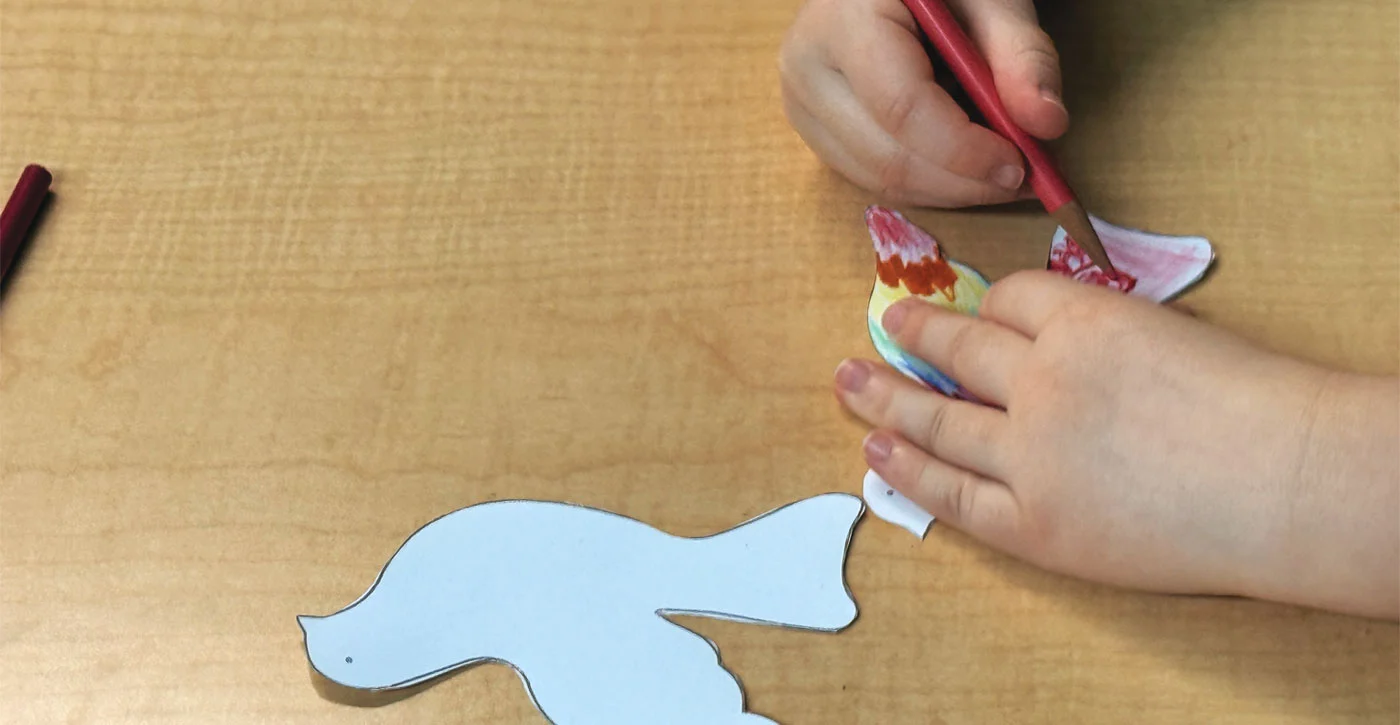
The Ministry of Religious Education
Religious education has always been public ministry. After Pentecost, Jesus’s disciples became apostles; those who had been his students became teachers and the early church’s foremost religious educators. Seventeenth-century Friends traveled in the ministry, sharing an emergent faith and developing practices. The nineteenth-century invention of First-day school moved formation outside the home, where family worship was experiential learning, and placed religious education in the public community of the meeting. Friends who step outside the meetingroom while the adult community is in worship in order to attend to the younger generations’ spiritual formation are public ministers.
Our children and youth are not works in progress to help us get to some other place in the future that is better. Their presence in the present creates an opportunity for formation that can shape the future, and this reality should be part of our witness today. I yearn for a concern about younger generations to be woven across all our other interests and ministries, and for there to be greater support for those Friends called to religious education service.
When we write about Quakers and Bible study, where is the discussion about how to explore these stories with children? When we talk about outreach and developing Quaker identity, do we consider children? When we share our work for peace, justice, and witness in the world, how do we include children in both teaching about the past and inviting participation today? Religious education holds all of this: exploring sacred texts; understanding the past to live into the present and future; and experiential learning about faith and practice. It is both teaching and accompaniment, content and spiritual nurture.
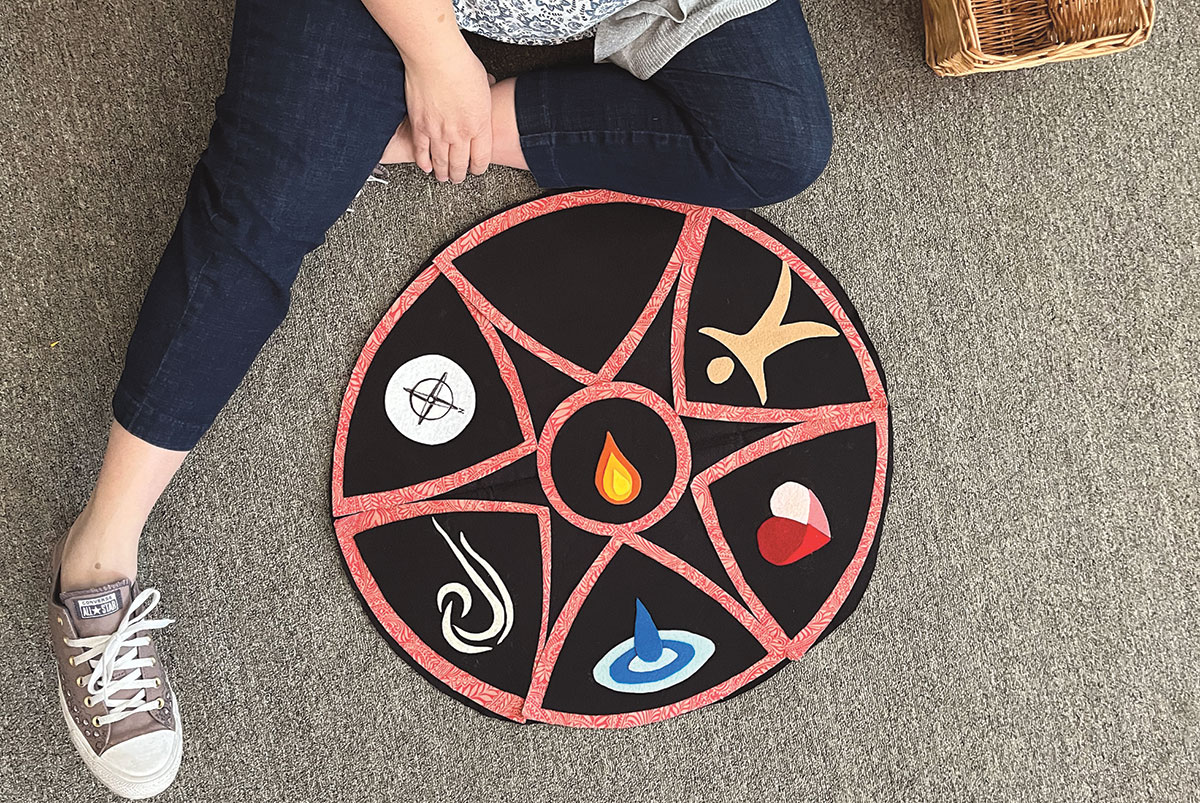
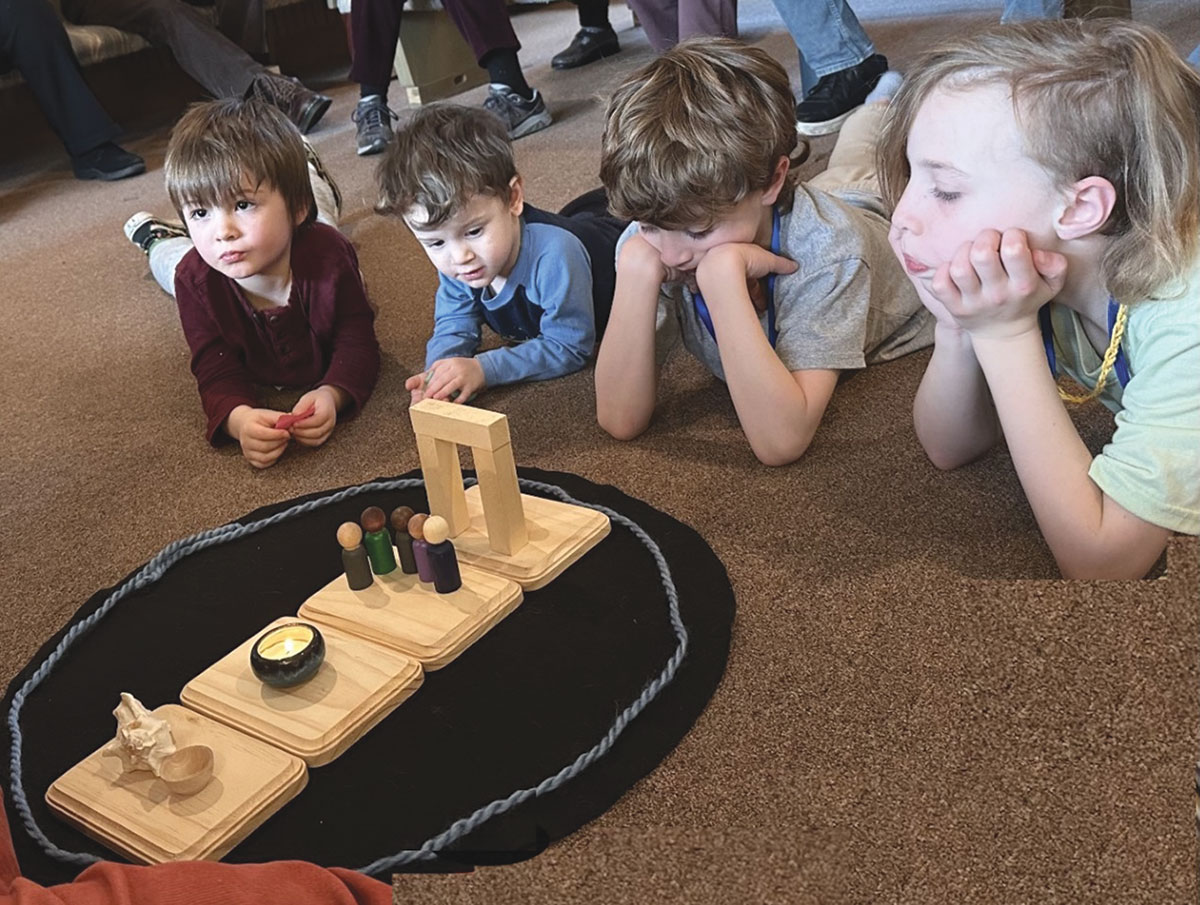
Left: Materials for the Faith & Play story, “Images of God” shared at West Chester (Pa.) Friends School. Photo by Nancy Hiro. Right: The Faith & Play story, “Four Doors to Meeting for Worship” being shared at Wicomico River Meeting in Salisbury, Md. Photo by Susan Claggett.
It took me a long time to call religious education my ministry. Teaching was my chosen vocation. Early in that work, I developed a Quakerism course for middle school in Friends schools. Students from diverse religious backgrounds shared their spiritual lives—including their many questions—and ignited my curiosity about spiritual formation. After my children were born, this curiosity became an imperative, alongside becoming involved in religious education in our meeting. As I began to travel among Friends in service to religious education, something shifted. I began to see that this path was not a consequence of being a teacher but where God was calling me.
Listening alongside my children and the children in my meeting, becoming a Godly Play storyteller, developing Faith & Play stories, and co-founding the Quaker Religious Education Collaborative were intersections of pedagogy and theology that called me to explore and share how we nurture children’s spiritual lives. My identity as a teacher continued, but my focus is on nurturing spiritual lives and religious formation. It is practical in its scope, but Spirit gives it shape.
Attending seminary was another opening. Religious education as a topic was the weakest link in my seminary courses—this is not uncommon—but it was in that community that the path beneath my feet became firmer. Despite my concerns about not having as clear a vocational reason to be there as did my pastor and chaplain colleagues, I was accepted and respected by my classmates.
Quakers asked me: “Why would a Quaker go to seminary?” My United Church of Christ, Unitarian, Presbyterian, Baptist, and Lutheran classmates, however, welcomed my Quaker perspective. I would raise my hand in class and someone would say to the instructor, “She’s going to talk about children!” A professor shared with me her own realization that she is “a pastoral teacher” (rather than “a minister who teaches”), and another part of the path fell into place for me.
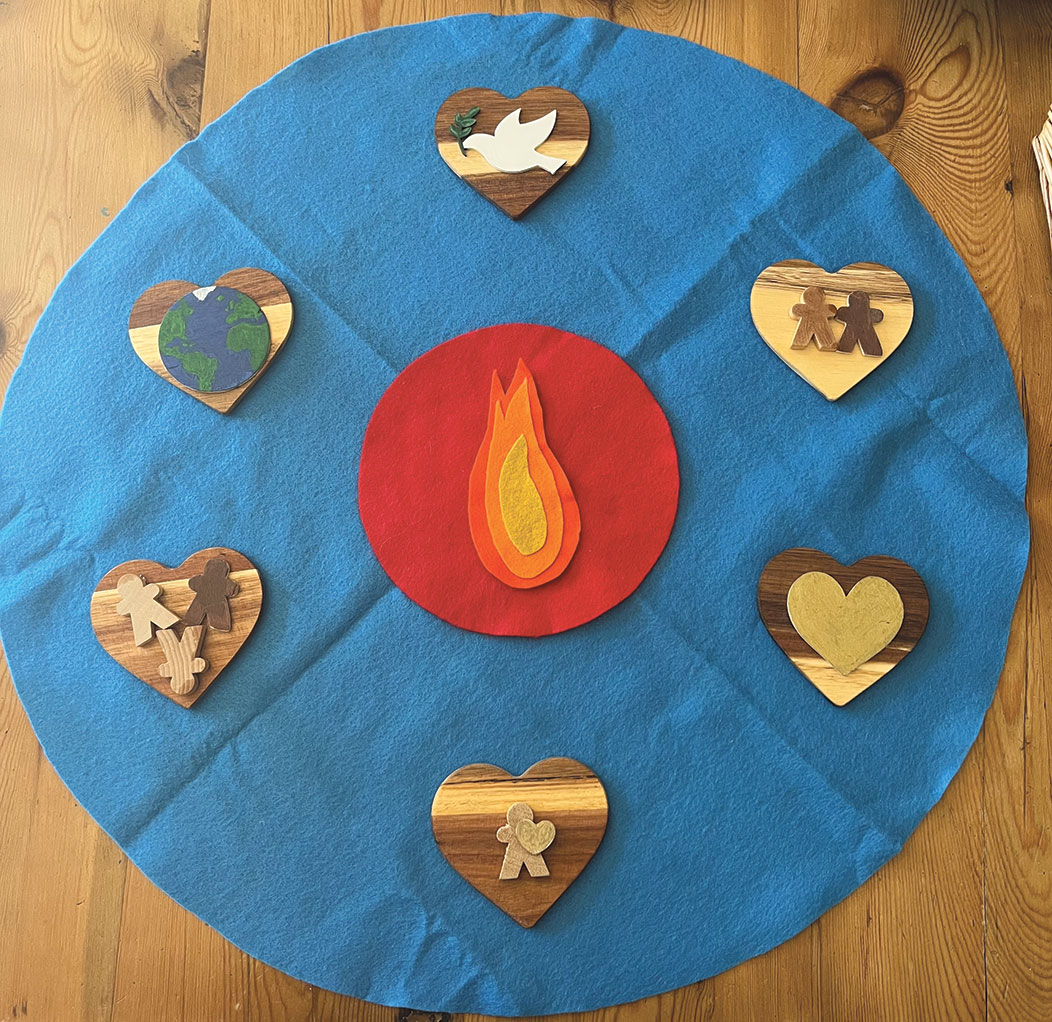
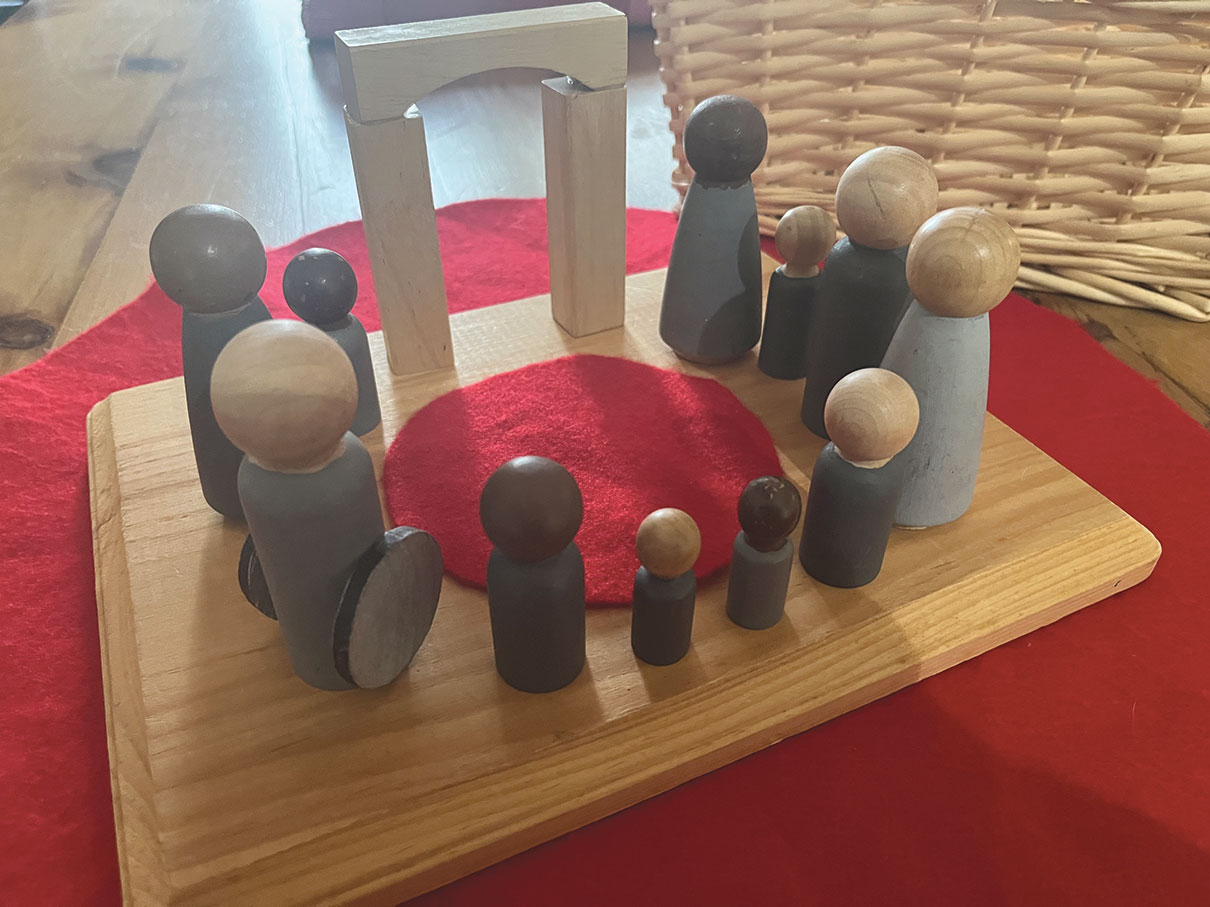
Left: Materials for the Faith & Play story, “Love’s Way”. Photo by Melinda Wenner Bradley. Right: the Faith & Play story “Prayer and Friends Meeting for Worship.” Photo by Melinda Wenner Bradley.
I’ve been blessed to be supported and guided by mentors who were religious education curriculum creators, staff for Quaker organizations, and colleagues in teaching and ministry. They represent all kinds of people from across different branches of Quakerism. It is a common trope that religious education is the work of mothers and retired teachers (usually women), and too often, it’s a truism that people who are parents are asked to “do the children’s program” for their own children. People who are parenting also need their own spiritual lives nurtured. Interestingly, in the last three years, there has been an increase in men attending the Faith & Play/Godly Play training that I offer. A participant recently reflected that alongside his learning, the part of the training experience that was most important for him was the attention to his own spiritual well-being: as an individual who is a parent but not only a parent.
Today, these are the spaces where I share this ministry most often: with adults, facilitating workshops, and training for Friends (and other faiths) that explore how we support the spiritual lives of young people. In those spaces, teaching and providing pastoral care often overlap. There is accompaniment in any classroom, and during Godly Play and Faith & Play training in particular, I am constantly listening for the balance between the needs of individuals and the group, as a minister does in any faith community.
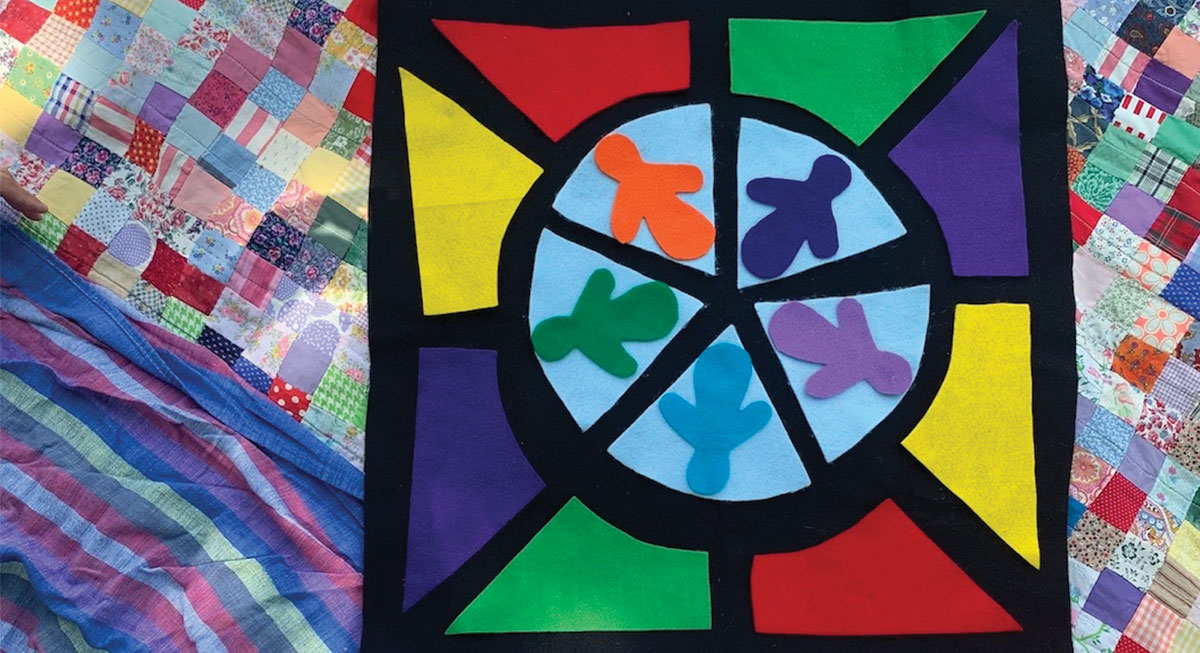
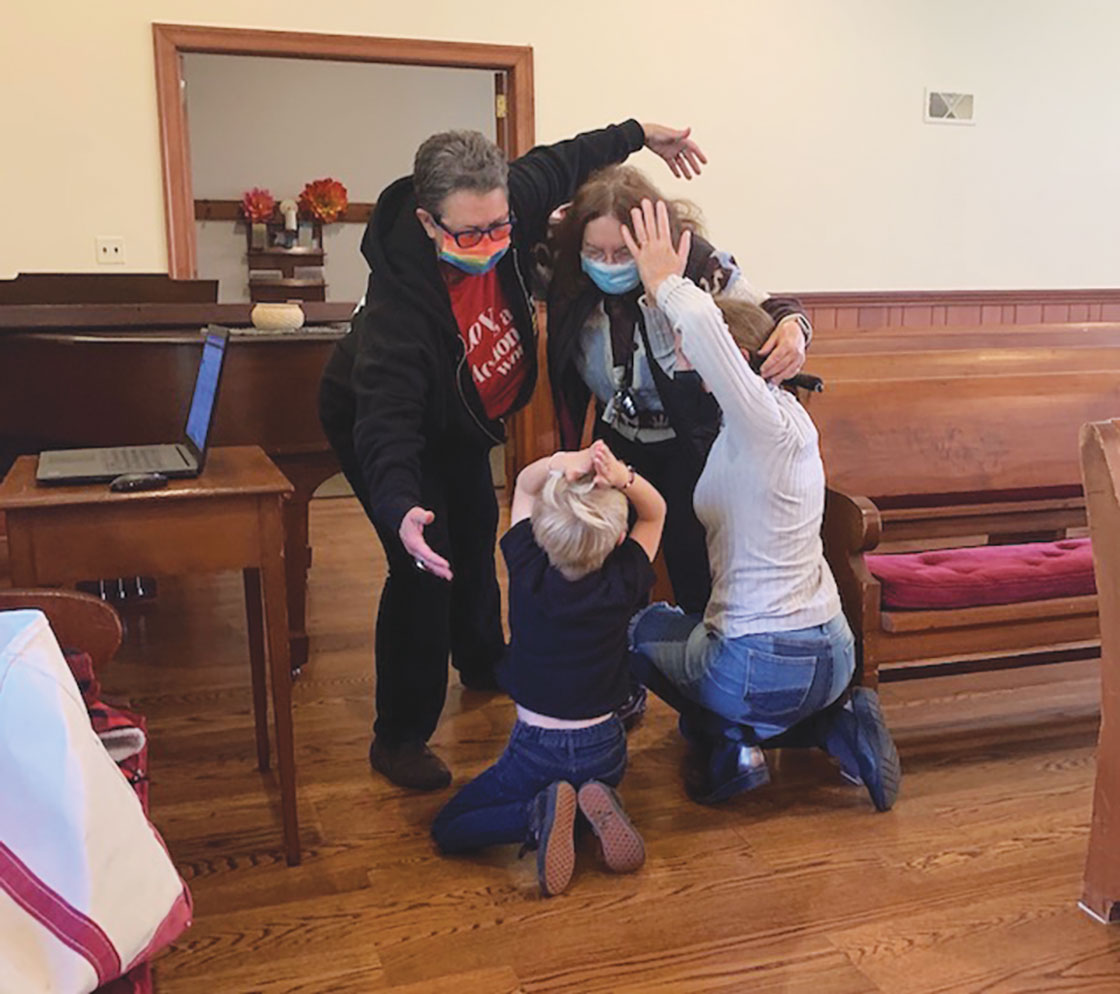
Left: The Faith & Play story, “Gifts” being shared at Quaker House, Chautauqua Institution. Photo by Melinda Wenner Bradley. Right: Friends at Kennett Meeting in Kennett Square, Pa., making a pose to represent meeting for worship during an intergenerational workshop. Photo by Melinda Wenner Bradley.
Friends called to the ministry of religious education need ways to explore if serving in this area is their ministry. When I say to a group of Friends who support the religious education programs in their meetings, “Your service is ministry,” I can feel something shift for them.
My local meeting recorded a minute of religious service for me that includes naming gifts. They wrote “The gifts of teaching and pastoral care that Melinda brings to this work are both gifts she has been given by Spirit,” and said the meeting has “witnessed the growth of her gifts and her faithfulness.” The affirmation encourages a deeper exploration of where I am being called and acknowledges the responsibility of oversight for the ministry. A meeting might also create a “minute of religious service” for the group of people serving their children’s program. The idea (borrowed and adapted from Albany [N.Y.] Meeting) is that if you are “away” from worship to be in a religious education space, you are providing ministry and should be supported.
Friends care about preparing people for service and witness: clerking workshops, preparation and support for activism and social justice work, and collaborative spaces to address climate change and also racism all exist. How can we expand and deepen the support for religious educators in our meetings?
Recently, Philadelphia Yearly Meeting offered a full-day, all-ages gathering focused on religious education called “Learning for Life.” Topics included deepening worship, integrating youth into the life of the meeting, intergenerational worship, and ministry skill building. The Quaker Religious Education Collaborative, the only Friends organization solely dedicated to this topic, offers resources (an online library and monthly e-news) and Conversation Circles (free, online discussion groups) to support lifelong spiritual formation across all ages. Playing in the Light workshops offered by Faith & Play Stories are opportunities to both learn how to facilitate an approach to religious education and explore in a community of practice how we nurture spiritual formation and support for families in our meetings.
There are broader opportunities for collaboration, too. Having learned from experiences in my meeting, I also suggest that a meeting’s religious education and care and counsel committees meet together a few times a year. The pastoral care of children—which begins with pastoral care for their primary caregivers—can be held by Friends on these committees together. When we silo committees and their areas of responsibility and focus, we stifle the possibility of collaboration and new openings. Planning intergenerational worship is not only the work of the children’s committee but also the worship and ministry committee. Property committees can support creating prepared spaces for children; peace and social concerns can plan for multigenerational witness.
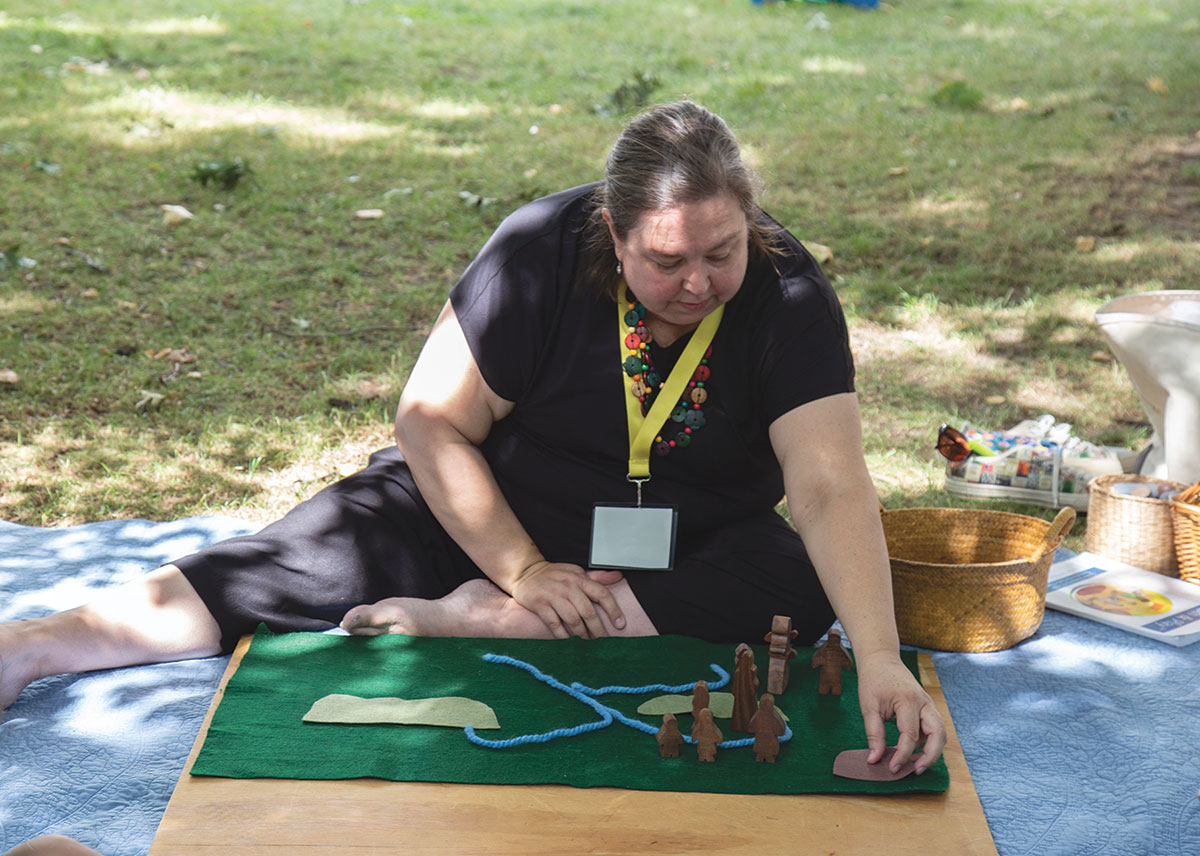
“How do you feel the Light inside you?” A child recently asked this during a wondering session after a Faith & Play story presentation at a Friends school. After acknowledging that it was a big question and that there is no one answer, I wondered with them if they have ever felt such powerful love that they just had to give someone a hug? They had, and with that example, we moved on. For me, I feel the presence of Spirit when I am in the flow of reciprocal listening and sharing that is teaching. It happens sitting in a circle with children and wondering about a story. It happens in a circle of adults while learning about how to share those stories and create a spiritual community with children.
The religious education and nurture of young people in our meeting communities is a ministry that is frequently overlooked. Centering the needs of children and their families is vital to both the present and future of faith communities, and the needs of families are changing. How could engaging the kind of authentic welcome of children modeled by Jesus and others support Friends to release our uncertainty about the future? Is it possible that doors to change will open when we embrace the transformational practices of being an all-ages worshiping community? What if those called to accompany our children and youth through religious education programs were held in the deep care of the meeting community: naming their gifts, anchoring their service, and lifting up their ministry as Spirit-led?
We want to hear from you, not an AI! Please be thoughtful and use your own words. Comments on Friendsjournal.org may be used in the Forum of the print magazine and may be edited for length and clarity.