




Reflections in Three Movements
There is no such thing as an empty space or an empty time. There is always something to see, something to hear. In fact, try as we may to make a silence, we cannot.
—John Cage, “Lecture on Nothing” (1950)
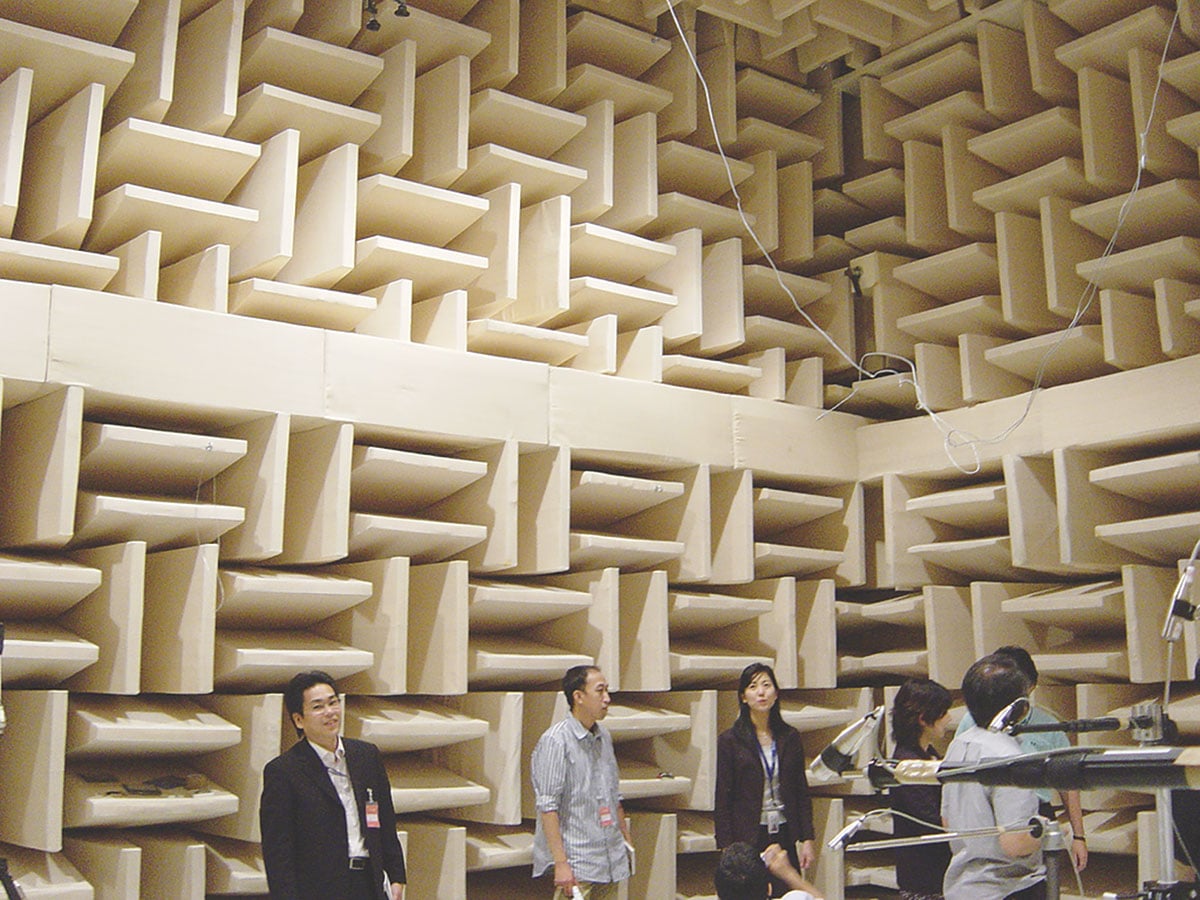
If it’s quiet you’re after—out-and-out quiet, borderline scary quiet—head to East 25th Street in Minneapolis, Minnesota. That’s where you’ll find the quietest room in the world. Spend time in the Orfield Anechoic Chamber, and you’ll hear your heart pound, lungs flex, and blood rush. Most folks can stand it for about 45 minutes, tops.
However, I’m writing about silence, not quiet. Quieting is an activity: something we do. We can quiet ourselves, but we can’t do silence. Quiet can prepare us for it, but silence is always a gift, never an achievement. When silence and a person find each other, it’s time for gratitude, wonder, and humble exploration. Silence reveals itself as a mysterious, even holy Presence, what Quakers hesitantly call “of God.”
Either by grace or temperament, silence first grabbed me when I was in high school. I used to hide in the back of our rowdy study hall: dodging menacing spitballs and courageously resisting the herd instinct to roam the halls with friends. Safely seated in that back row, I pushed my pesky algebra homework aside and read books like Mysticism by Evelyn Underhill and Seeds of Contemplation and other books by the American spiritual writer Thomas Merton.
But silence is a demanding and unpredictable companion. One moment it comes easily, while moments later it’s an exasperating, exhausting drudgery. We gently learn to welcome both experiences, slowly noticing how they jointly teach us without words. Yet our relationship with silence is often tentative, guarded, and ambiguous: we welcome it and resist it at the same time.
A Silence Assessment
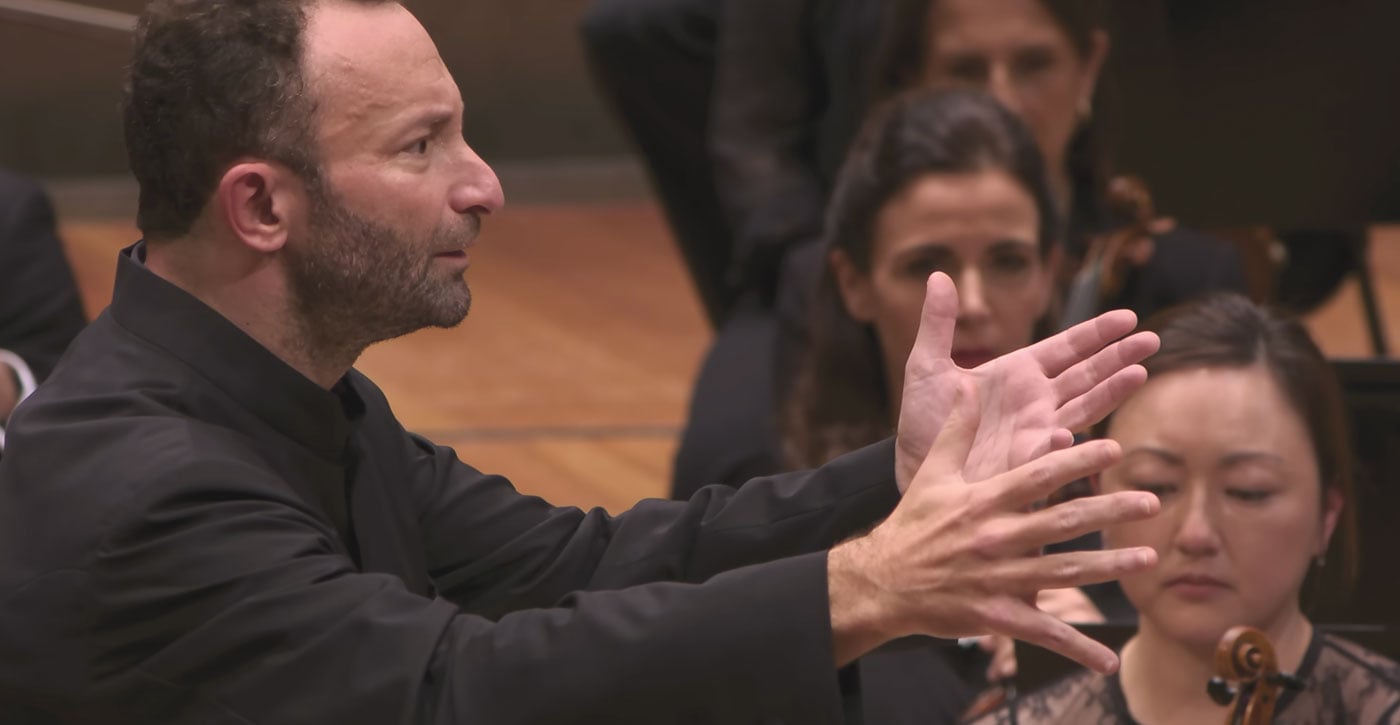
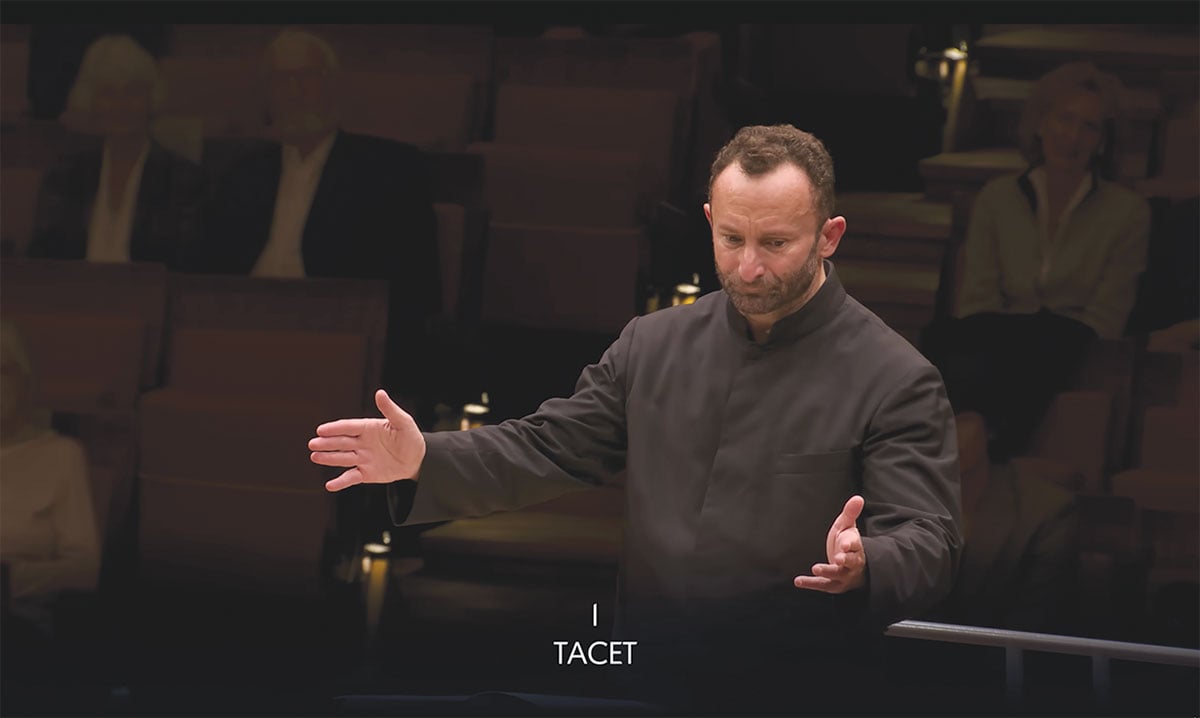
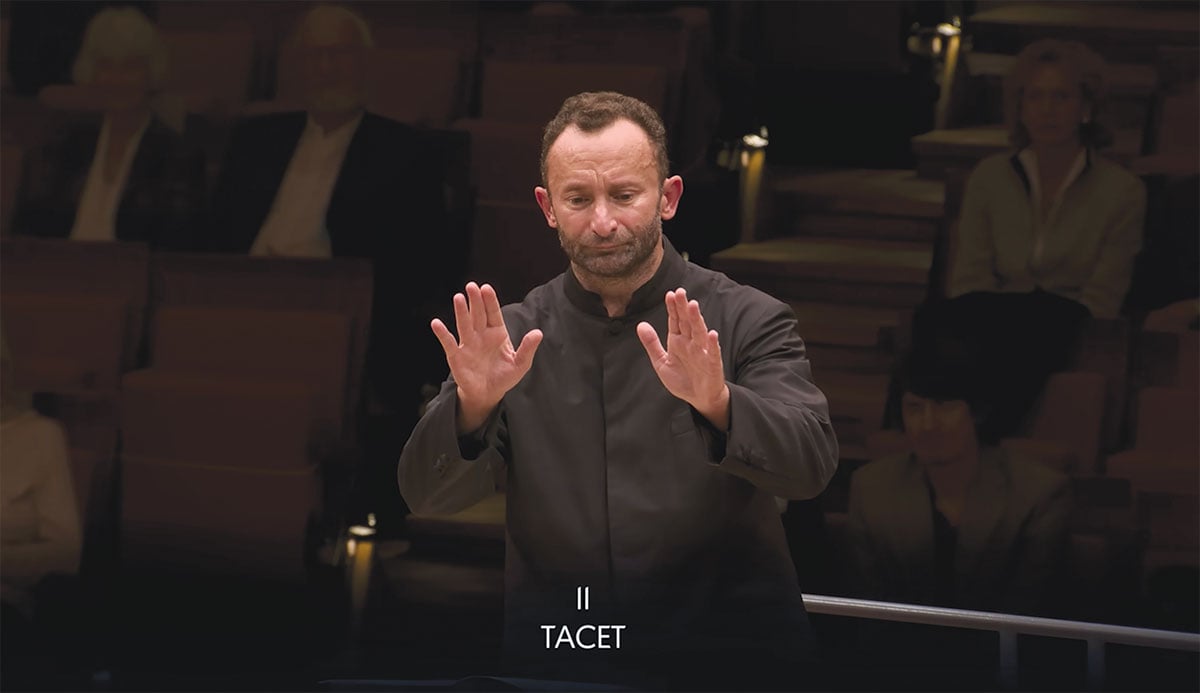
The twentieth-century American musician John Cage was a champion of silence. In his view, silence is always full, never empty: we just need to open our eyes to see and our ears to hear what silence brings our way. One of Cage’s most well-known compositions is 4’33”, a piece in which he asked performers to not play anything for that period of time. I especially enjoy a 2020 performance by the Philharmonie Berlin, conducted by Kirill Petrenko.
As an experiment, listen to a performance of Cage’s piece, keeping track of your immediate reactions and longer-term reflections. Don’t panic; it’s less than five minutes long. The music’s complete score has three instructions:
Movement I, Tacet
Movement II, Tacet
Movement III, Tacet
Tacet is a musical instruction for an instrument to stay silent. What were your reactions? Confused? Impatient? Waiting for something to happen? Did you check to see if your device’s sound was on? Did you think it was a joke? Did any surprises or insights sneak up on you as you listened? Did you laugh or at least smile? Did you get angry? Did it wrestle your default expectations to the ground?
While I needed to cherish the silence and return to it each day, it was a grace in my life rather than a way of life. I needed to return to managing and teaching. Rather than living a different kind of life, I was being led to live and work differently.
Tacet I: Silence for the Sake of More Silence
I lived in the immersive silence of a Trappist monastery for a year. For Trappist monks and nuns, silence is not occasional practice but a way of life, a pervasive atmosphere in which their search for God takes root and grows. The monks told me a secret: silence is God’s first language.
I went to the monastery for a number of reasons. Work was overly demanding, and I worried about losing my soul in compulsive velocity, scrutinized productivity, and idle chatter. Anxious to rekindle my ties to silence, I wanted to explore what the Spanish Catholic priest Raimon Panikkar calls the “monk archetype,” an instinct for cleansing and challenging silence: a gut instinct in all of us, not just monastics.
Western monasticism started in an isolated cave in the Italian mountains. Benedict of Nursia took silent refuge there to seek God alone. Soon other monastics begged him to start a monastery where he could teach them how to live alone together in what Benedict described as a “school of divine service” in his groundbreaking Rule for Monasteries.
Monastic life revolves around three activities: praying the psalms communally several times a day; doing lectio divina, or meditative reading of Scripture; and engaging in simple manual labor designed to rest the mind and free the heart. When I was in the monastery, we began each day by praying psalms together at 3:15 a.m. and concluded every day at 7:30 p.m. by alternately reading Psalms 4 and 91. The psalms give voice to the full range of human emotions, and an older monk once whispered to me, “Pray them every day for 30 years, and they’ll start praying you rather than the other way around.” For work I washed cheese, packed fruitcakes, and worked in the laundry. I also had weekly meetings with my director.
The relentless sameness of the daily schedule actively picks at egoism and attachments to pleasure rather than joy, optimism rather than hope. I marveled at monks who lived for years in the monastery; most were warm-hearted and gentle, simple yet not simplistic, peaceful, and eminently practical.
I began to notice how silence was leading me. For monastics, silence is completed in more silence. I loved monastic living, but I gradually began to see that while I needed to cherish the silence and return to it each day, it was a grace in my life rather than a way of life. I needed to return to managing and teaching. Rather than living a different kind of life, I was being led to live and work differently.
What did I take with me when I left the experiment with monastic silence? The monastery taught me to cherish the dark hours before dawn, and I still get up before 4:00 a.m. each day to let silence pray in me as I wait for the dawn. Monastics live according to a rule—Benedict’s Rule for Monasteries, for example—and designing a personal Rule of Life impels one to be faithful to spiritual practice rather than spiritual thinking alone. It also keeps us accountable.
I’m amazed at how often Quakers tell me they’re going to spend time in a monastery, evidence that the “monk archetype” is alive and well in all spiritual traditions. Monasteries are known for their inclusive hospitality, and most monasteries today welcome people for shorter retreats or extended stays. Both Trappist monks and nuns have such programs as do many other monastic communities.
I started practicing the Examen each day: a short daily regular pause to honestly take stock of where my desires and activity took me that day, paying attention to what I’m paying attention to.
Tacet II: Silence for the Sake of Discernment
Ten years after my monastic experiment, I wanted to take stock to see if I was still on what Dante called a “straightforward pathway.” Neither undergoing a depressive demand nor a midlife crisis, I sensed I’d marched in place for too long. I needed to find a “school of discernment” to help me become more discriminating about what I paid attention to each day.
Discernment comes down to seeing things for what they are, not the way I’d like them to be. My unconscious attachments to excessive or restrictive ways of thinking and living keep me captive, something the poet William Blake once described as “mind-forged manacles.” It’s all about interior freedom or, as Jung suggested, not walking in shoes that are too tight.
After talking with a trusted advisor, I decided to make a 30-day silent retreat based on the Spiritual Exercises of the Spaniard Ignatius of Loyola (Ignatius), who, like Benedict, lived in a cave for a time where silence was his teacher.
Years later, he organized what he learned in the cave so that others could learn from his experience. The result was a small book of retreat directions called the Spiritual Exercises. In its original form, the silent retreat was done over 30 days, under the watchful eyes of a director: a companion skilled in silence, prayer, and discernment.
My director was a blind Jesuit priest. Instead of living in a silent monastery, I made the retreat in a busy Jesuit community made up of professors, pastors, and students in the heart of a city. I lived in a guest room and ate my meals at a separate table.
Trappists are monastic contemplatives, while those formed in Ignatian spirituality are called “contemplatives in action.” As a result, Ignatian silence, prayer, and discernment is completed in service rather than in monastic-like silence. It’s a spirituality of chastened ambition, designed for those who want to do “great things for God.” The Exercises are structured to help a person find and embrace what is traditionally called the “will of God,” or perhaps better, learning to practice resurrection by being fully alive. Discernment helps us see which of our desires take us toward and which take us away from what is “of God.”
I took a couple of things with me from my experience of the Exercises. I learned to read Bible stories imaginatively, putting myself in the story, watching what Jesus did, and looking for clues about how to be with and for others. I also started practicing the Examen each day: a short daily regular pause to honestly take stock of where my desires and activity took me that day—what I described earlier as paying attention to what I’m paying attention to. I also began meeting with a spiritual director to help me discern and to keep me accountable.
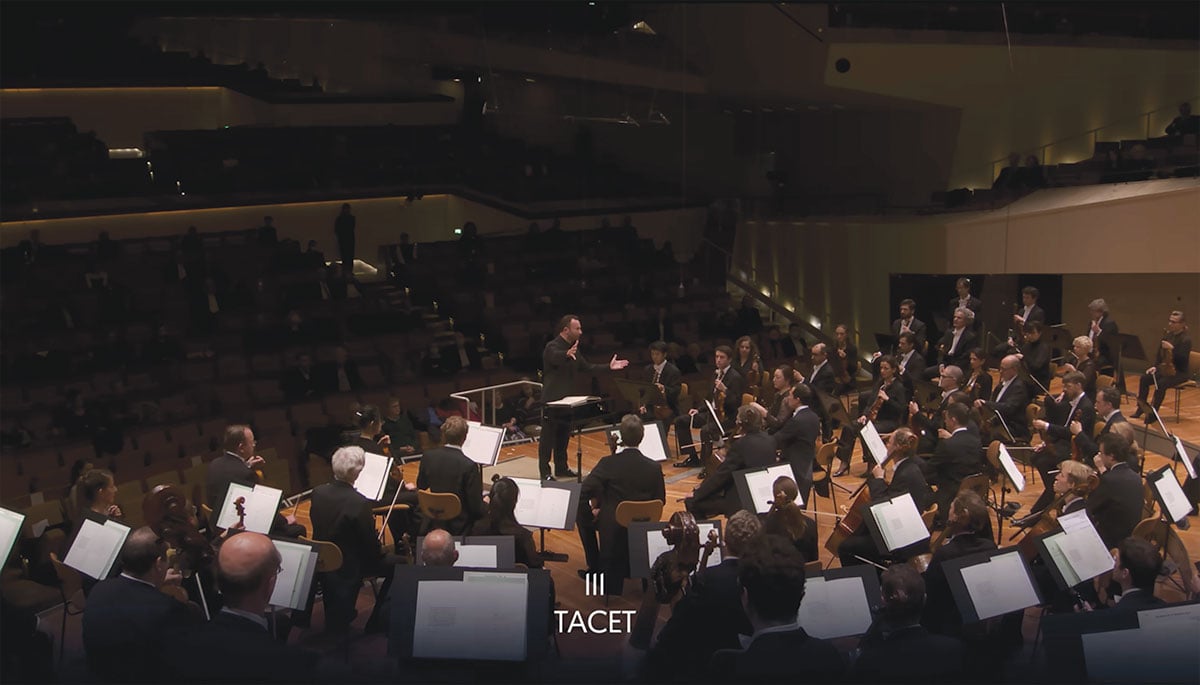
Silence works like punctuation: without pauses words run together a make little sense. Without pauses in music, we just hear noise.
Tacet III: Silence for the Sake of Truthful Witness
I felt a kinship with Quakers before I ever met one or stepped into a meetinghouse. Something told me I’d find like-minded people among Quakers. And I did. That’s why I’ve attended meetings for worship for 20 years. The silence in meetings does more than promote spiritual growth; it looks to be completed in service and advocacy.
Rather than a one-off experiment in silence, Quaker worship has become a regular experience of silence. Not only have I found kinship in meetings, but meetings are a spiritual home for me and also keep me grounded in community. Spiritual growth is often imagined as going inward to meet silence and that of God. But this inward movement needs to find the outward path back into the heart of the human community. The genius of Quakerism is that it sees no artificial separations between contemplation and action, silence and speech, and personal growth and social involvement.
Interestingly, theologians have written about the similarities between the Quaker and Ignatian methods of communal discernment. Analogously, monastics discern and make decisions in communal gatherings called “chapters.” Benedict suggested seeking input from younger monastics when the chapter considers a decision.
An elderly Benedictine monk once told me that their community was listening to Rex Amber’s book The Quaker Way, which was read during their silent dinners. “It feels so much like ‘home’ to many of us,” he told me. I’ve also been amazed at how many Quakers have told me they planned to do the Spiritual Exercises to deepen their spiritual vision and practice. Different paths into silence, but each path similarly leads to experiences of the leadings of Holy Mystery living at the heart of the world.
My experiments with silence have led me from seeking completion in the contemplative life and moved me more in the direction of being contemplative in action and the Quaker version of silence for the sake of truthful service. Strangely and quite unexpectedly, my three experiments with silence, while different, all attest to the inner unity of our common quest for growth and service. Silence works like punctuation: without pauses words run together and make little sense. Without pauses in music, we just hear noise.
Finale
At the beginning of the Exercises, Ignatius cautions that “[i]t is not in an abundance of knowledge that the soul is satisfied, but, rather, in the interior sense and taste of spiritual things.” Ignatius wrote this over 100 years before George Fox’s birth, but I’m convinced Fox would find spiritual companionship in Ignatius’s words: ideas inform, but interior experiences of the heart can change us, even transform us.
It’s important to see how often in gospel stories that Jesus slips away from the crowds and his disciples to spend silent time alone in the mountains. It was an opportunity for Jesus to be alone with silence, to reach into the living heart of silence for consolation and for peaceful resolve. In a sense, it was a chance for Jesus to practice the Examen: assess if his activities are in line with his mission. In the mornings, he returns to the human community ready to keep teaching, telling stories, and healing.
Let me close with a final example. The most intimate moment of my 30-day retreat came toward the end when I found that words failed me, and I spent time instead leafing through art books depicting scenes from Christ’s life. I came across a picture of Jesus, towel around his waist, washing his disciples’ feet. I began to “sense and taste” the startling inner realization that Christians worship a God who washes feet.
I feel that interior sense just as powerfully 30 years later. In that image, silence and service embrace: a fitting summary of all my experiments. It’s letting silence grab us, startle us, really, that seems to enliven and cast light on the paths of all spiritual traditions.

Well written. Thank you!
What a beautiful, thought-provoking piece! Please write more about your experiences and your spirituality.
I have used a short, simplified version of the Examen, described by James Martin in his book “The Jesuit Guide to (Almost) Everything”:
Gratitude
Review
Sorrow
Forgiveness
Grace