




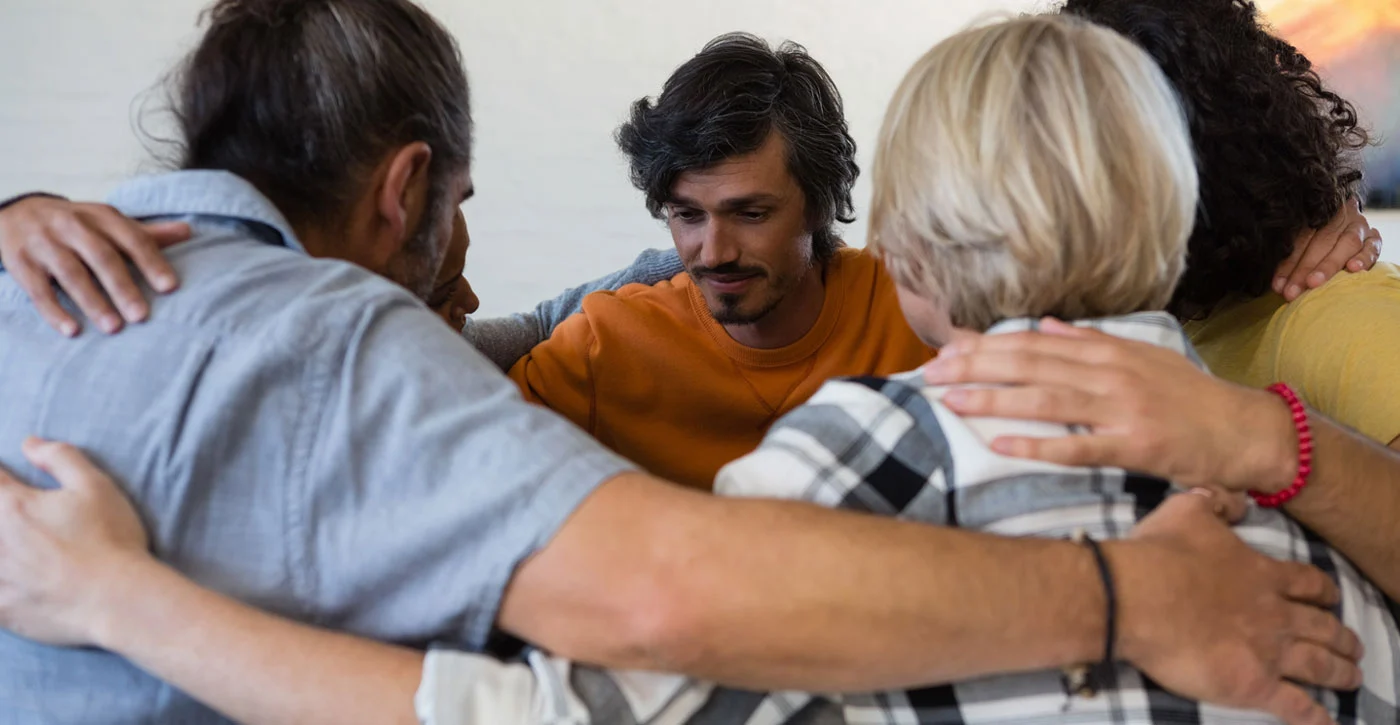
My Experience in the Alternative to Violence Project
My journey in the good news of the gospel of peace began some years ago, toward the end of my adolescence. My concerns led me to question the status quo of institutionalized religion.
I am someone who has experienced firsthand virtually all the brutality of the civil war in El Salvador, its post-war period. I’ve known the charms and disenchantments of governments and policies, first from the right and then from the left, as well as the severe structural violence caused by organized crime, drug trafficking, gangs, and now the severe setbacks and atrocities of the unconstitutional civil dictatorship. I observe—by vocation and a calling from the God of Life—an enormous challenge in seeking spaces where the Way can truly become a reality in the lives of individuals, families, communities, and religious groups of different faith traditions. I continue to hope that at some point such spaces may positively impact my country, which I love deeply.
I observe—by vocation and a calling from the God of Life—an enormous challenge in seeking spaces where the Way can truly become a reality in the lives of individuals, families, communities, and religious groups of different faith traditions. I continue to hope that at some point such spaces may positively impact my country, which I love deeply.
My profound interest in the subjects of justice, peace, forgiveness, and reconciliation led me from a very young age to try to read and study Scripture differently. At one point, this brought me some difficulties and made me the object of suspicion, especially within fundamentalist evangelical spheres. According to some, my questions and concerns put the beliefs or traditions of evangelical Friends in Central America at risk, they having adopted an Arminian-Wesleyan theology.
Along this journey, I came into contact with various ecumenical spaces, where I felt very comfortable and learned a great deal, especially about respecting each and every spirituality and ancestral religion. In a variety of environments, both popular and academic, I developed friendships and fellowship with agnostic people and those who professed to be atheists. This reminds me of what seventeenth-century Friend Robert Barclay taught: the Inner Light is found not only among Quakers but also in all other human beings.
This happened without my knowing that it would later shape my way of believing, thinking, and acting, departing from a worldview that I share with my beloved family. I humbly acknowledge, consider, and accept that the blessed source of inspiration has come from the Spirit, whom I try, within my limitations, to love and serve in everything I do. Without Him-Her, I could not live or do all that I have been allowed to accomplish in my contribution to the construction of a culture of peace with the people with whom I share my daily life. This begins with respect for myself, strengthening my self-esteem, and then having empathy for my neighbor: learning to listen, while respecting and caring for those around me, whether human or non-human.
In my case, I first came to know the Friends testimony of peace through the history of the Radical Reformation; this was followed by direct contact with good Friends in my country. I also encountered writings and accounts about men and women of God, such as the life and testimony of Samuel A. Purdie, who founded the first permanent Protestant mission in El Salvador, a little more than a century ago. He was a Quaker! This awakened in me a healthy interest in investigating the Friends’ vision of peace.
At that time, all of this was compounded by some crises our family was going through. In a special and inexplicable way, these led us to become affiliated first with a monthly meeting and later with El Salvador Yearly Meeting.
Toward the end of the first decade of this century—through a dear Friend, sister, and companion, who later also became my mentor and pastor—I learned about Alternatives to Violence Project (AVP, known by its Spanish acronym PAV). It helped me understand Quakerism much more deeply and in a truly missional and service-oriented way: both through its content and through its methodology, which is grounded in popular education. This profoundly influenced my life!
I recognize this as one of the many effective ways of working from the grassroots to build the Kingdom of God, here and now: the already but not yet. This way puts hands and feet to the gospel, whose values and principles strengthen healthy human relationships by making them more fraternal and harmonious. Could it be that our beloved Lord, our Father-Mother, finds ways for us to do His-Her Holy, perfect, indisputable, and healthy Will in everything we think, believe, and do as we seek His-Her peace and follow it? Everything proposed by AVP— its philosophy and its many other aspects—led me to become more committed and more aware of human needs, because the search for peace is a basic need in El Salvador and throughout the world today!
Being aware of these needs, I became involved so as not to pass by the harsh realities experienced by my Salvadoran brothers and sisters: Latin Americans, people of African descent, and any other ethnic group that has been reviled today. As I serve people, families, and communities considered to be at high social risk, I have witnessed all types of violence, abuse, trauma, and crimes against humanity caused by a dictatorship that perversely upholds a state of emergency for more than four years.
Under this regime, all of us are at risk for being unjustly and arbitrarily arrested, with clear violations of human rights and repressive practices that use revenge, shame, systemic violence, intimidation, threats, and fear as weapons that are sometimes lethal.
My participation in AVP is connected to processes of recovery and healing from wounds I experienced during childhood, adolescence, youth, and even adulthood. This leads me to question myself and attempt to analyze the environments and spaces around me, to take the challenge of contributing in a different way, and to seek to develop proposals that can help transform conflicts in daily life.
In addition to this, great deficiencies have come to light: not only economic ones but also ethical, health, educational, and ecological to which migration is added. At the same time, almost divine and idolatrous authority is granted to the autocrat in power. These circumstances compel us to consider the possibility of respecting and caring for our neighbor in a nonviolent way, as we propose through AVP.
My participation in AVP is connected to processes of recovery and healing from wounds I experienced during childhood, adolescence, youth, and even adulthood. This process has been essential to my life journey. By becoming conscious of these experiences, I can move forward with humility and simplicity, and gradually become a peacemaker. This leads me to question myself and attempt to analyze the environments and spaces around me, to take the challenge of contributing in a different way, and to seek to develop proposals that can help transform conflicts in daily life.
Quakerism is understood as a way of life in which the blessed light of the Spirit guides us to do and think about the common good and to continually seek peace in a holistic way. This does not make us nor will it make us perfect. Instead it motivates us to think and act with a greater sensibility and humanity, to be sensitive and consistent, and to dream that everything around us can become different and change for the better: where peacebuilding (justapaz) can naturally be woven from within us and positively impact everyone and everything.
What is interesting about choosing the way of peace is that it helps us continually learn and unlearn for the sake of life, constantly growing and challenging us to think before reacting as we seek creative proposals.
Today in El Salvador, unfortunately, this is viewed with great suspicion by governmental structures, since a large number of government employees have become a kind of paramilitary force, voluntary and coerced, who hypocritically and unjustly sow division, distrust, and hopelessness among ordinary people in order to keep their jobs or seek another public position with greater financial benefits. In other words, they prioritize the crumbs of the system of death.
Regrettably, a similar reality exists within ecclesial environments—regardless of the creed professed—with some who self-label and present themselves as prophets of the court of dictatorial evil. This reminds us of what the great teacher said: “they have their reward.”
This must be grounded in Quaker values and principles, never in ego! The only thing that should and deserves to shine is the blessed Light of the Spirit, which can transform everything!
Through AVP, I’ve learned about trauma resilience, domestic violence awareness, and power of kindness workshops. These create spaces for dialogue and healing catharsis in every sense. As a team in El Salvador, we have had the opportunity to work with very diverse groups and people from different economic, social, and political backgrounds: children, adolescents, young people, people with disabilities, incarcerated peoples, survivors of the civil war, older adults, churches of different faith traditions, schools, colleges, and NGOs, to mention a few.
Another interesting aspect of AVP is that it has a self-replicating model: that is, whoever actively participates in a workshop learns and teaches at the same time, both within and outside that space. Those of us who decide to commit ourselves do so with the firm conviction of becoming peace workers and facilitators. The idea is not merely to promote a program of workshops or educational and recreational activities. These are spaces where much wisdom is acquired. Their reach is both qualitative and quantitative, strengthening convictions regarding nonviolence. This reminds me of a workshop in which a person with a disability caused us to reflect deeply after actively listening to their excellent analysis: “Listening is an act of justice.” Those words continue to challenge me to this day!
All of this and much more leads me to reflect deeply on the fact that the ministry of peace and nonviolence is truly prophetic! There are many reasons we could find to support this statement: it helps us examine ourselves inwardly to find what we can do to change our reality, beginning with ourselves, encouraging ourselves and other people of good will to think of more holistic responses to the serious problems facing our country, our region, and the world. This must be grounded in Quaker values and principles, never in ego! The only thing that should and deserves to shine is the blessed Light of the Spirit, which can transform everything!
We want to hear from you, not an AI! Please be thoughtful and use your own words. Comments on Friendsjournal.org may be used in the Forum of the print magazine and may be edited for length and clarity.