



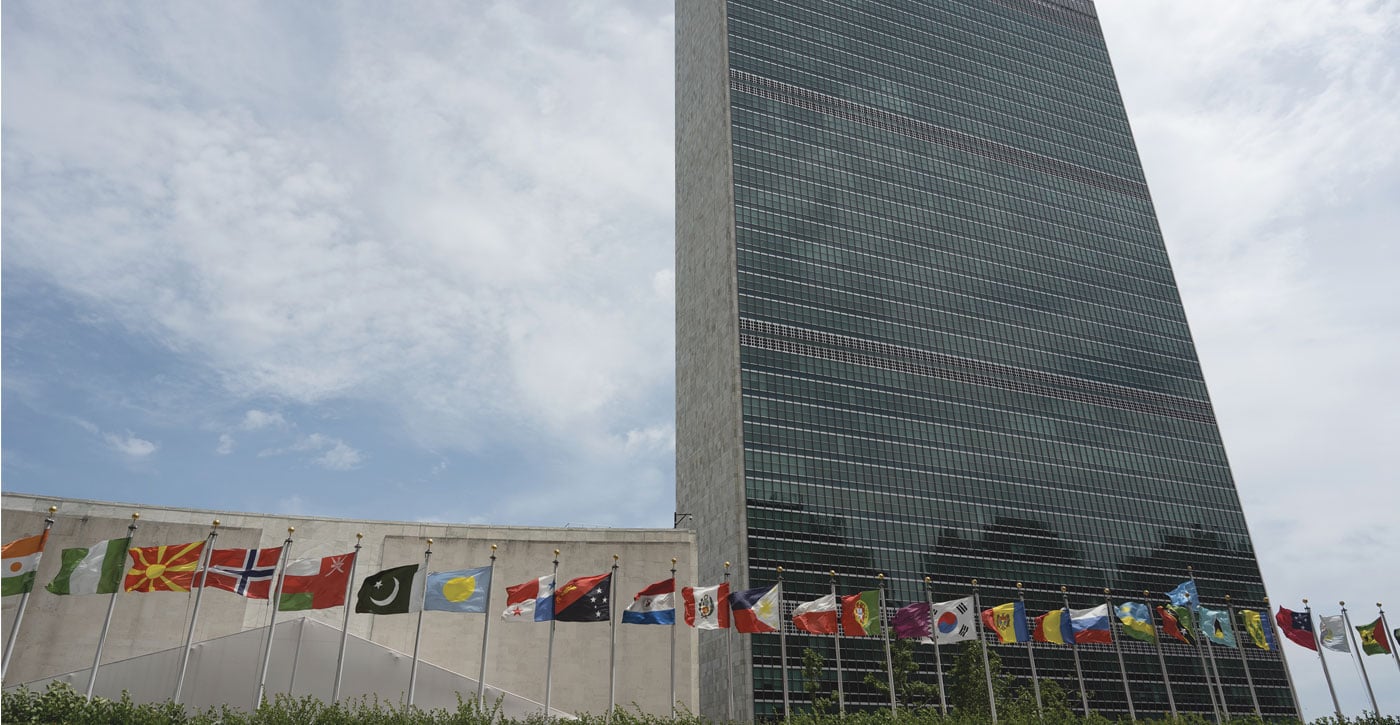
The Quaker Influence on the United Nations
Since the 1600s, Friends have opposed fighting in wars, as well as other acts of physical violence. Refusing to participate in war is one side of Quaker pacifism; developing alternatives to address international conflict is another. In 1660, George Fox and other early Quakers wrote an early statement of the peace testimony, a declaration addressed to King Charles II of England. The declaration reads, in part:
We utterly deny all outward wars and strife and fightings with outward weapons, for any end, or under any pretense whatsoever; and this is our testimony to the whole world. . . . That spirit of Christ, by which we are guided, is not changeable, so as once to command us from a thing as evil and again to move unto it; and we do certainly know, and so testify to the world, that the spirit of Christ, which leads us into all Truth, will never move us to fight and war against any man with outward weapons, neither for the kingdom of Christ, nor for the kingdoms of this world.
By writing this statement, Quakers sought to differentiate themselves from Fifth Monarchy Men, a group of Puritans that Charles II prohibited—along with Quakers and Baptists—from gathering after a violent 1661 uprising in which approximately 40 people died. The Fifth Monarchy Men believed they were ushering in a thousand-year reign of Christ on earth that some believe the Bible foretells.
William Penn and John Bellers were wrestling with how to implement the peace testimony, according to Jordan Landes, curator of Friends Historical Library of Swarthmore College. William Penn was an English Quaker advocate of religious freedom who established Pennsylvania. John Bellers was a prominent Quaker merchant from London who wrote pamphlets opposing the death penalty and supporting the establishment of a public health service.
“They were looking at a Europe that had been through so many wars,” Landes said.
Penn proposed an international peacemaking entity with rotating leadership, secret voting, and an international common language, Landes explained. Bellers wrote that war wastes people, squanders resources, causes unemployment, and contributes to poor health.
Pacifism spread throughout early Friends meetings. In the 1700s, London Yearly Meeting urged Quaker merchants to refrain from putting guns on their ships or transporting cargo for the navy, Landes explained.
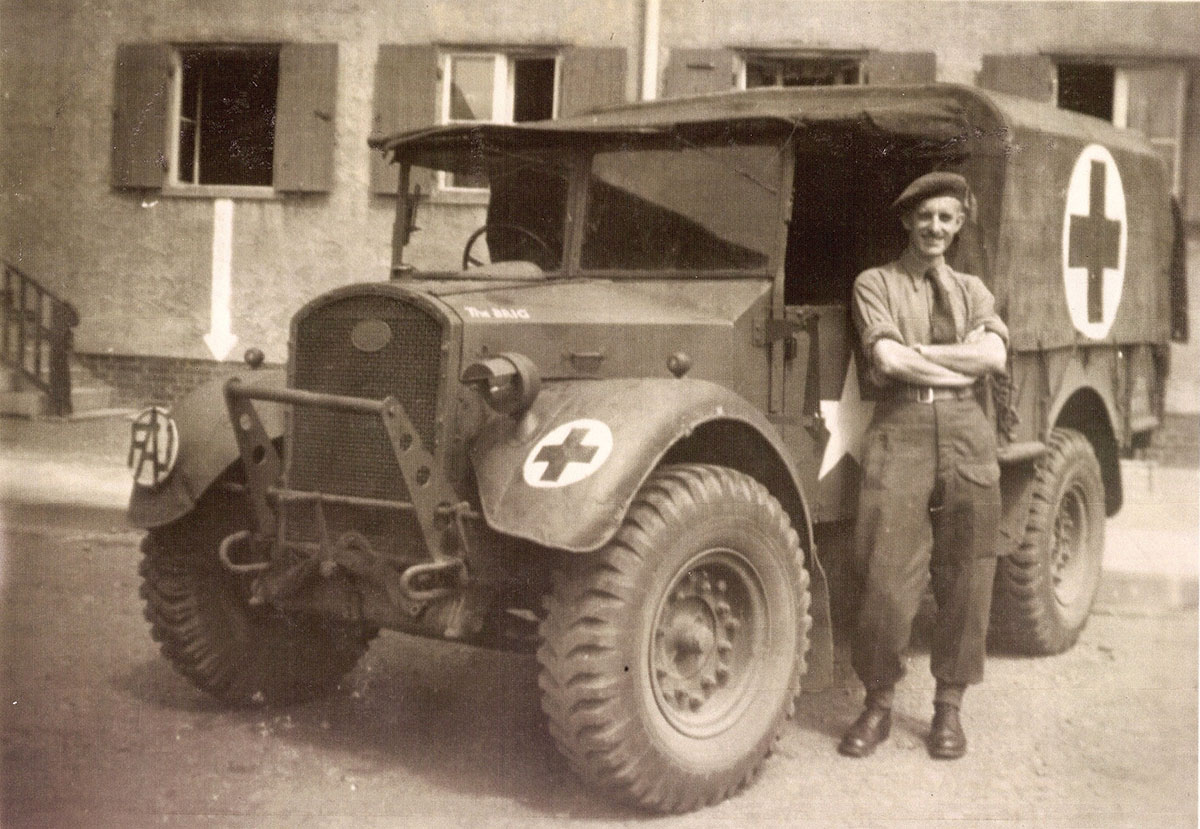
Contemporary Quakers built upon the history of antiwar sentiment and promotion of internationalism. Quaker youth established the Friends Ambulance Unit (FAU) during World War I, according to the Quakers in the World website. In World War II, Quakers and other pacifists staffed the FAU, caring for ill civilians and bombing victims, as well as testing water to prevent the spread of disease.
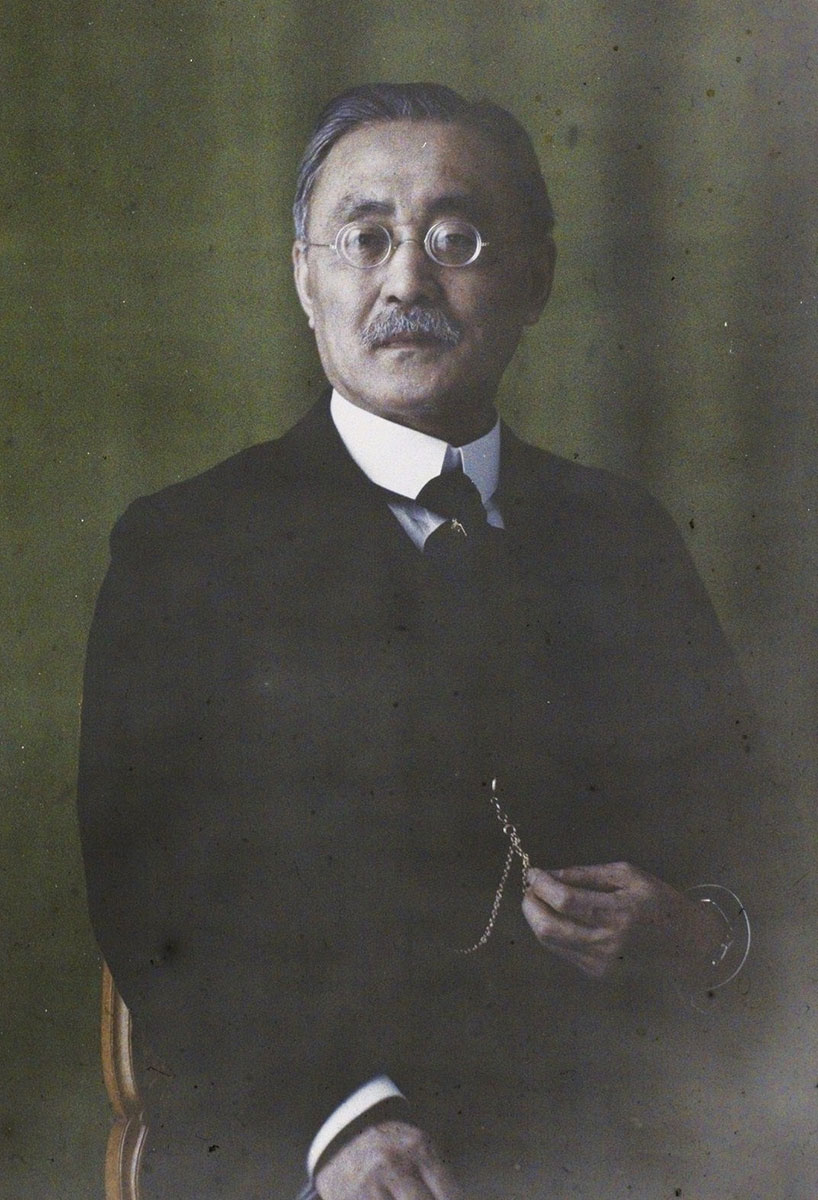
Japanese Quaker Inazo Nitobe (who died in 1933) was an under-secretary general of the League of Nations, according to Stephen Angell, a professor of Quaker studies at Earlham School of Religion. The League of Nations was an international organization intended to promote peaceful resolution of conflicts between countries. It began after the Treaty of Versailles ended World War I and existed from 1920 to 1946. Some historians argue that fascist aggression, as well as British and French efforts to appease Hitler, undercut the power of the League of Nations and led to its demise.
After World War I, Quakers opened centers in several European cities that helped Jewish people emigrate, according to Angell. The outbreak of World War II led to the closing of the centers around 1940.
During both World War I and World War II, many Quaker young men were conscientious objectors; others fought in the wars. Some soldiers who went to battle in the world wars became Quakers after they had recognized the futility of war, according to Angell.
Angell previously worked for Friends Committee on National Legislation with an executive director who had fought in World War II and had become a pacifist Quaker as a result of his military experience.
Historic events that led to Quakers’ interest in establishing the United Nations include the forming of the American Friends Service Committee by conscientious objectors to assist civilian victims of World War I and Friends’ involvement in the Kindertransport in the United Kingdom in the months prior to the start of World War II, according to Andrew Tomlinson, former Quaker United Nations representative and former director of Quaker United Nations Office (QUNO) in New York.
Friends responded to the humanitarian crises caused by the two world wars by advocating for an intergovernmental entity to mediate disputes. “They appreciated more and more the urgency of having an effective international body,” said Angell.
In March 1945, approximately two months before the conference in San Francisco, California, where the United Nations was established, British Quakers’ Meeting for Sufferings drafted a statement of support for the new international body. In the UN Charter, the Economic and Social Council established links with national and international non-governmental organizations (NGOs), according to the 1993 Swarthmore Lecture “Peace Is a Process” by Sydney D. Bailey.
British Quaker Bertram Pickard was extensively involved in the Quaker Centre in Geneva—which later became the office for QUNO—before leaving in 1940, according to a 2001 article in the journal Quaker Studies titled “Quakers, Peace, and the League of Nations” by Maureen Waugh, professor of politics and international studies at the University of Birmingham, England.
“He also took an active part in the post-War planning for a new United Nations organization and in 1945 joined its Secretariat,” Waugh wrote of Pickard. The Secretariat participates in the daily labor of the UN under the leadership of the secretary general, according to the United Nations website. Pickard returned to Geneva and served as a UN liaison officer with NGOs, Waugh states in the article.
Despite widespread Quaker support for the United Nations, some Friends have difficulty reconciling the peace testimony with the UN’s use of armed peacekeeping forces.
“That hasn’t always been easy because UN peacekeeping forces have to carry their arms,” Angell said. The UN’s peacekeepers serve as role models for others in their use of force only as a last resort, according to Angell.
QUNO was among the first set of NGOs to be accredited by the United Nations in New York, Tomlinson explained.
QUNO has two offices: one in New York and one in Geneva, Switzerland. The organization seeks to influence international policies by engaging with diplomats and others involved in UN negotiations at informal gatherings for off-the-record conversations. QUNO staffers refer to the method as “quiet diplomacy.”
“This issue of working methods is really essential to what the QUNOs have to offer,” Tomlinson said.
QUNO discerns its priorities based on Quaker principles; it does not take sides, but it is also not indifferent, according to David Atwood, former representative for disarmament and peace, and former director of the QUNO office in Geneva.
QUNO does not do “naming and shaming” or traditional lobbying, according to Atwood. QUNO staffers provide negotiators with publications and information related to QUNO priorities. Quiet diplomacy helps facilitate listening among diplomats, UN agencies, and civil society organizations.
There are not many peacebuilding experts who participate in high-level UN negotiations, so QUNO has a particular role to play in informing negotiators on establishing and implementing peace, according to Tomlinson. Diplomats can make choices on some issues but not on others; QUNO staffers consider where movement is possible.
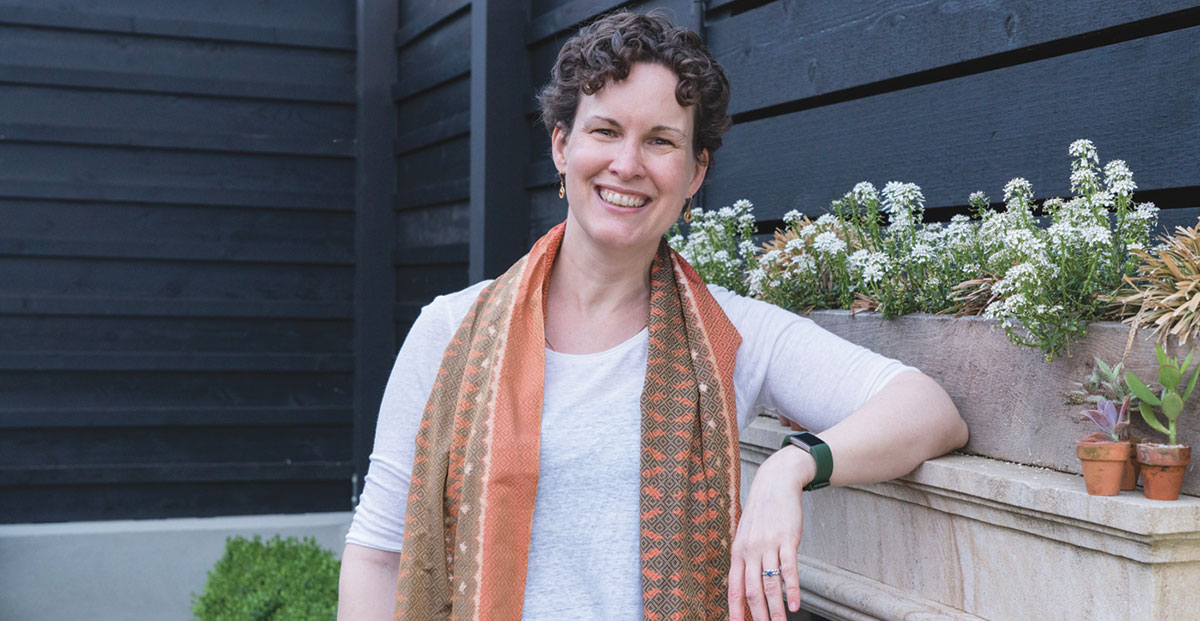
It is helpful for diplomats to meet in a room where they can put aside their official instructions and relate to one another as people, according to Sarah Clarke, director and UN representative at QUNO New York, which holds such meetings at Quaker House near the UN Headquarters.
Clarke explained that because such meetings are off-the-record, she could not share details or mention any specific negotiators who participated. “When you work on things quietly, you don’t want to say publicly what they are,” she said.
Clarke offered an overview of QUNO New York’s recent work. Over the past two decades, QUNO New York has focused attention on ongoing conflicts and instability in Northern Uganda, the Horn of Africa, and the Middle East. Staff has also looked at the tensions in the Korean peninsula as well as the civil war in Myanmar.
The threat of climate change is an example of a global problem the United Nations can respond to. “It’s a threat and a challenge that no one nation-state can address on its own,” said Clarke.
Clarke is a member of Ottawa (Ont.) Meeting. She lives in Philadelphia, Pennsylvania, and finds spiritual sustenance in walking her dog in the park.
There are some parallels between the way UN meetings function and what happens in Quaker meetings. Clarke believes that there is that of the Divine working through gathered Quakers as well as through gathered United Nations members. Members of the UN General Assembly commit to using dialogue to solve disagreements. Clarke considers QUNO’s work to be divinely inspired.
“There is a real emphasis on the idea that we are being led by Spirit,” Clarke said.
We want to hear from you, not an AI! Please be thoughtful and use your own words. Comments on Friendsjournal.org may be used in the Forum of the print magazine and may be edited for length and clarity.