



A Quaker Perspective from Latin America
My life began with a decision that others made for me. I was born with spina bifida and hydrocephalus; doctors told my father that I would not survive more than three days and that it made no sense to “waste” resources on a child like me. The message was clear: my life was expendable. Before I learned to speak, I had already been classified as irrelevant.
This is not a story of overcoming. It is an uncomfortable acknowledgment of how society often decides—without saying it aloud—who deserves to live with dignity and who does not. I survived. And that fact exposes a truth that Friends have held for centuries: there is that of God in every person. My survival was not a medical error; it was an affirmation of an Inward Light that no diagnosis can extinguish, even though in Guatemala and throughout much of Latin America, systems continue to insist on ignoring it.
Friends communities in Latin America live within diverse social realities that are shaped by unequal economies, fragile healthcare systems, and structures that continue to treat disability as a situation calling for charity rather than as a condition of people who have rights. Yet there is a common tension throughout the region: the distance between the testimonies we proclaim—equality, justice, and peace—and the way people with disabilities are actually included in economic, educational, communal, and spiritual life. My story began in Chiquimula, Guatemala, but it does not belong only to this country; it is an embodied reflection of a shared social debt.
The Quaker tradition stems from a premise that is both simple and radical: Every person carries a divine spark. This conviction does not distinguish between “functional” and “deficient” bodies, nor does it measure dignity by productivity. Yet, in Guatemalan society, as in many societies across the region, this truth continues to be denied. Disability is still treated as an exception, a burden, or a personal tragedy rather than being recognized as a legitimate part of human diversity.
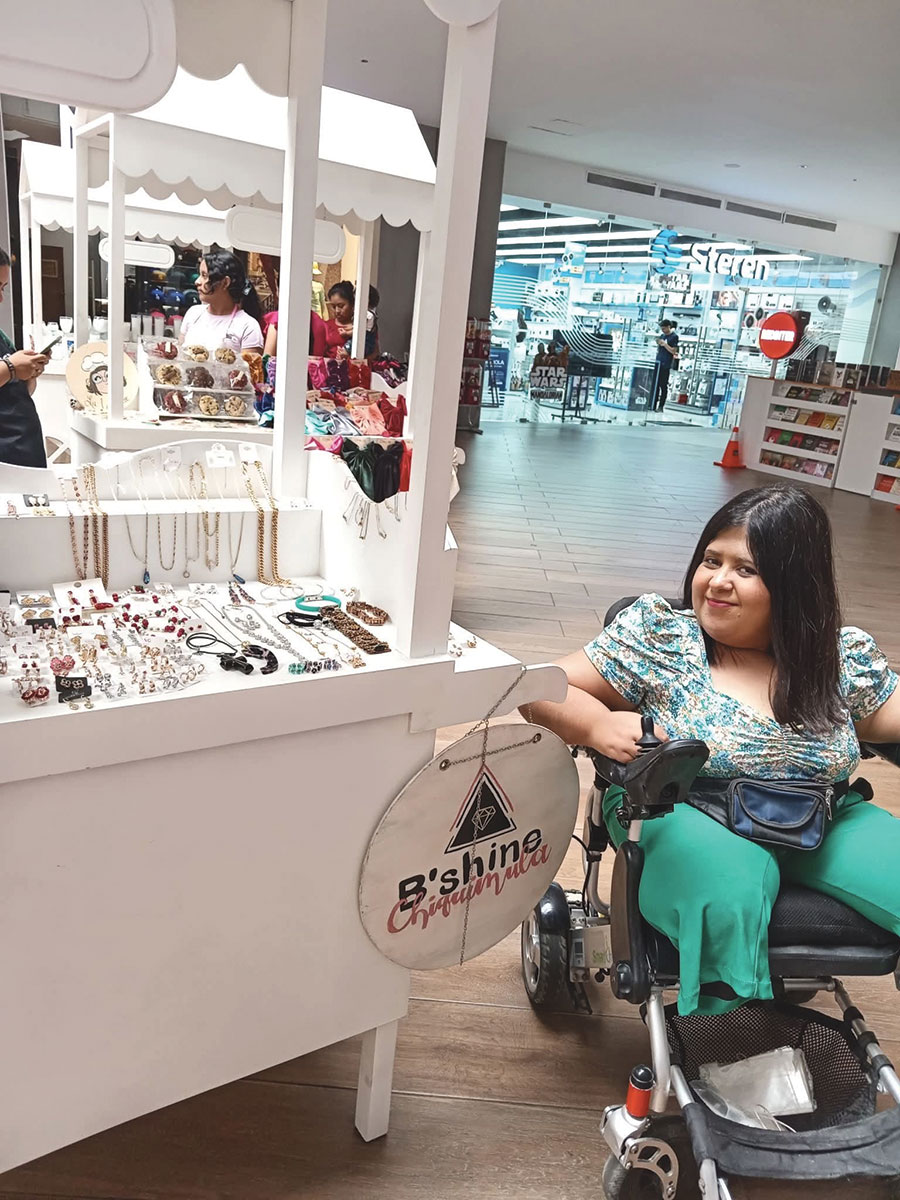
In 2019, I founded B’Shine Chiquimula, a jewelry business born from the margins. For the Quaker tradition, the testimony of integrity calls us to ensure that our outward life reflects our inward truth. Becoming an entrepreneur as a person with a disability was not a romantic endeavor; it was a concrete way of claiming space. Existing as an economic agent is an assertion of justice and equality, which are fundamental principles of our faith and call us to see others not as objects of charity but as equals before the Creator.
That same year, I participated in Miss Wheelchair Guatemala. Beyond the event itself, I experienced the recognition of my own peers, who chose me as “Miss Friendship.” That gesture broke the narrative that the person with a disability is a passive object. There I understood that leadership does not emerge from privilege or visibility but from community and mutual support, where one person’s Light helps illuminate another’s path.
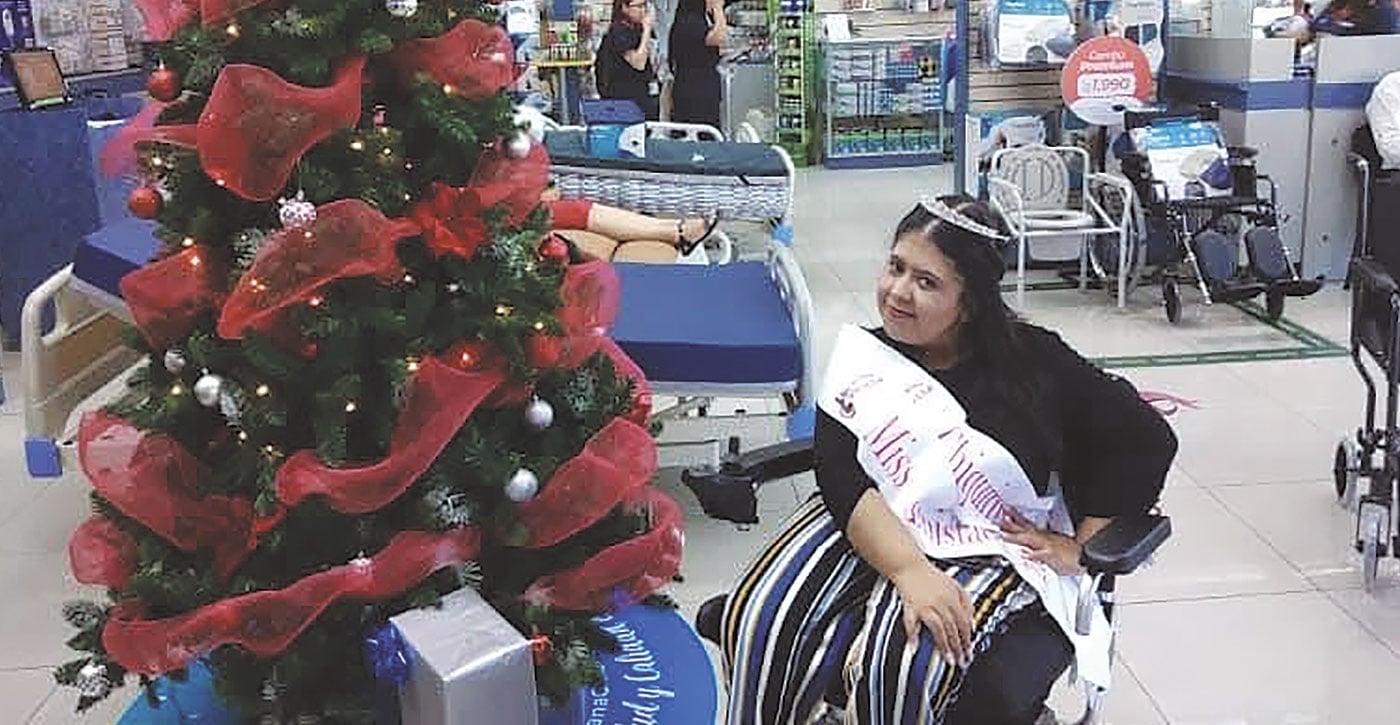
The Light manifested itself in unexpected ways: just one day after the pageant, I was contacted by Casa Médica to record a Christmas commercial. The fact that a company dedicated to mobility products chose my voice for a message of hope reaffirmed that to become visible is also an act of integrity.
Friends communities in Latin America live within diverse social realities that treat disability as a situation calling for charity rather than as a condition of people who have rights. Yet there is a common tension throughout the region: the distance between the testimonies we proclaim—equality, justice, and peace—and the way people with disabilities are actually included.
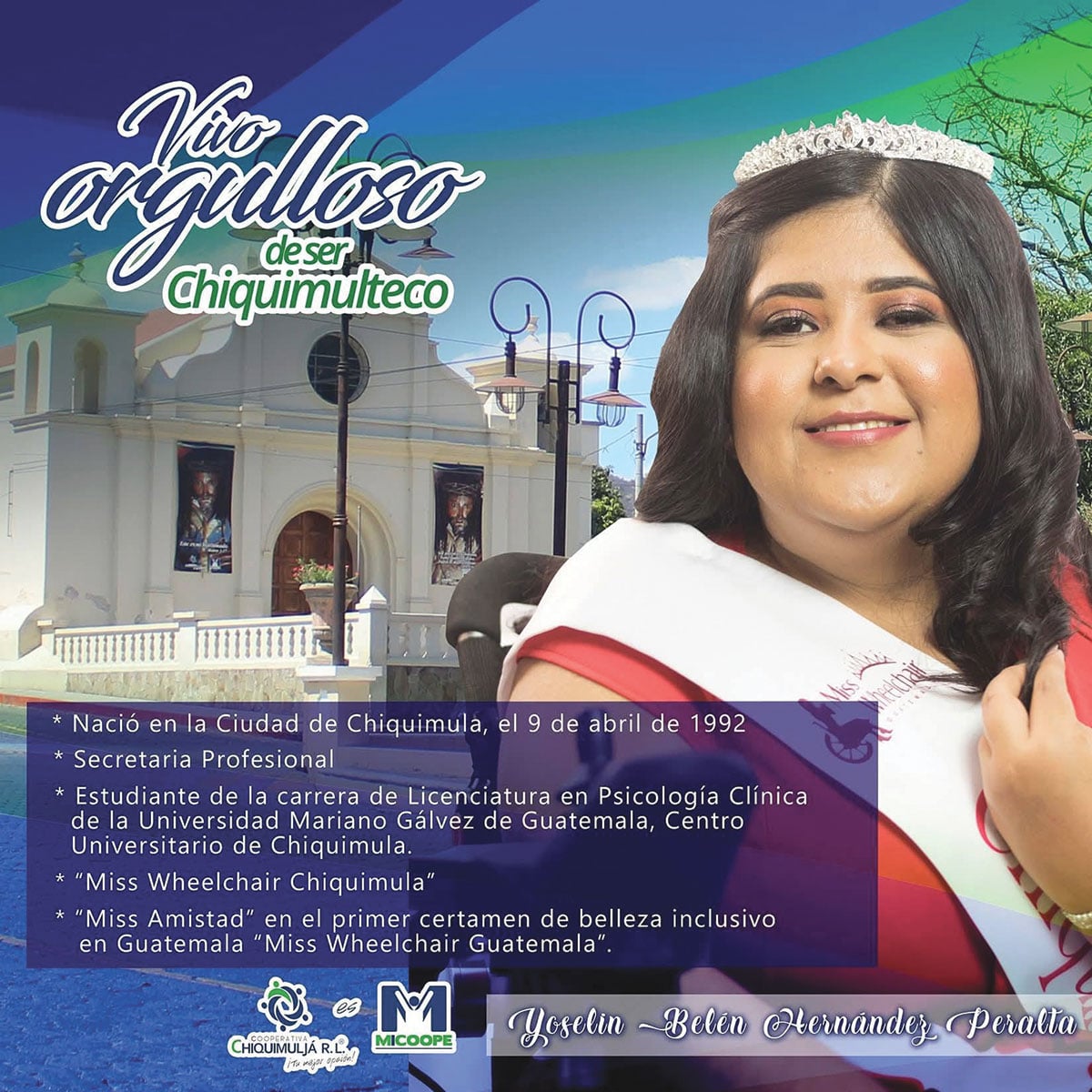
In 2020, Cooperativa Chiquimuljá es MICOOPE included me in the campaign “I Am Proud to Be from Chiquimula.” My voice was heard as a citizen. For a Quaker, this was the testimony of equality in action: the elimination of hierarchies that dictate who is “normal” and who is an “exception.” It should not be news when a person with a disability participates fully in community life, but in a country marked by exclusion it still is.
The discomfort increases when we look at the data. In Guatemala, 80 percent of people with disabilities are unemployed. In the department of Chiquimula, the census records 10,901 people with disabilities, but the picture for the department as a whole is even broader: 40,583 people are counted as having at least one disability, representing 10.83 percent of the department’s total population.
The municipalities with the largest numbers of people with disabilities are Chiquimula and Esquipulas, while San José la Arada has the highest proportional prevalence (15.98 percent), and Jocotán the lowest (7.80 percent). Of all people with at least one disability in the department, 21,677 are women (53.41 percent), and 18,906 are men (46.59 percent). These numbers show that social inclusion is not merely a matter of abstract policy: they represent concrete lives with faces and needs, and demand visibility and real action. My story embodies these numbers; I’m a body that insists on being present where the system would prefer silence.
In 2021, I joined GEU Guatemala, an interdenominational evangelical student movement present in different regions of the country. Students from public universities such as the Universidad de San Carlos de Guatemala and private institutions such as Universidad Mariano Gálvez come together there. In this space, faith is discussed through dialogue. For Friends, the search for truth is always communal, and the principle of the priesthood of all believers finds an echo in these spaces, where spirituality encounters the social, academic, and human realities of Guatemala and the region.
In 2024, I faced two major surgeries that tested the spaces that claimed to support inclusion. It was then that I understood real inclusion is not measured in declarations but in concrete presence. Crisis clearly reveals who accompanies processes and who merely accompanies rhetoric.
At the beginning of 2025, as part of International Women’s Day, I received recognition from Universidad Regional as an entrepreneur and leading woman. This academic honor came at a time of profound transformation. Shortly afterward, following the amputation of my legs, I put into practice one of the deepest practices of the Quaker tradition: discernment. Recognizing when a space ceases to sustain life and having the courage to leave is not abandonment; it is faithfulness to one’s own Light. Choosing where to remain is also a form of justice.
From my testimony as part of the Friends community in Latin America, I have seen how faith can be translated into concrete actions of social inclusion.
From my testimony as part of the Friends community in Latin America, I have seen how faith can be translated into concrete actions of social inclusion, such as the collection of school supplies for children with disabilities and their families called “Chapines Útiles,” carried out nationally in partnership with Fundación No Lucrativa Félix and Miss Wheelchair Guatemala.
It was not charity; it was recognition. Understanding that inclusion encompasses education, economics, healthcare, spirituality, and community life means recognizing that human dignity cannot be fragmented. Inclusion is not an abstract concept; it is either lived or denied every day. Inclusion shouldn’t depend solely on goodwill.
This text is not written by me alone. It is written by the 1,599,999 people in Guatemala and by thousands more throughout Latin America who live with disabilities. And that one who completes the figure—that one who holds the number together—that one is me!
We want to hear from you, not an AI! Please be thoughtful and use your own words. Comments on Friendsjournal.org may be used in the Forum of the print magazine and may be edited for length and clarity.