



In July that year, when the breeze off the ocean faltered and the sun’s weight felt like a fat thumb pressing her down to earth, Carol took to spending her afternoons in the library. She wasn’t a reader by nature, but she’d discovered a chair in the magazine section placed perfectly beneath the AC vent.
The magazine section was across from the children’s section, where two other young women sat cross-legged on the floor, chatting while their toddlers explored. One talked in lurid details about tentacles and the unspeakable actions of a Bug down in Pensacola, Florida. The other, in the distinctive blue uniform of a prison employee, scoffed. “Bugs don’t have tentacles. They’ve got antennae, and you couldn’t go stuffing one of those anywhere. They’re soft, like feathers. They snap.”
Carol turned the pages of her magazine, chosen at random from the rack. The glossy pages stuck to her sweat-damp fingertips. She’d never seen a Bug in real life except through the fogged glass of a prison transport bus. She thought of the Bugs on the posters she’d seen at the county admin building. Had the protuberances atop their heads looked more like tentacles or antennae? Carol wasn’t sure.
She didn’t want to think about Bugs, anyway. She focused on the magazine, flipping through the pages until a spread of photos in unreal color caught her attention. The shapes were familiar enough—common plants, animals, flowers—but the colors were alien: vibrant purple and orange and a green so bright it looked radioactive. She began to read the article so she had an excuse not to turn the page. This was the vision of birds, she learned. Birds and insects and, yes, even Bugs. Ultraviolet light outside the spectrum visible to humans. Or, to most humans. After the French painter Claude Monet underwent cataract surgery in the final years of his life, the article informed her, he reported the presence of a new color—and the strange countenances this new color revealed among certain of his neighbors. He painted these “others,” as he called them, in the colors of life, as he painted everything he saw, but his viewers saw only parasoled women strolling the banks of placid rivers. A century passed before Monet’s others, these Bugs, were revealed in the lens of a modern camera.
Carol stayed until the library closed at sunset. The flowers, the birds, this vibrant invisible world—desire choked the breath in her throat.
When she pulled into the lot at home, a flock of starlings startled up from the little strip of lawn between her apartment building and the concrete wall of the Pay-n-Sav next door. She winced at the sound of tires over gravel, but her landlady’s door, two doors down from Carol’s own, stayed firmly closed. A relief, because Carol was behind on her rent again; and a disappointment, because her landlady also ran the cleaning service that brought Carol most of her income.
She’d had an almost-good job last year, working for the county. She’d been set loose to comb the archive and slice lines through every county record, land deed, and surveyor’s report, slashing zeros into eights. Along their stretch of North Pacific coast, a prison built at 104 feet elevation required a tsunami evacuation plan, prepared at the county’s considerable expense, in order to be eligible for federal grants. Without those grants, the prison would close—like the sawmill, the papermill, and the plywood factory before it. But a prison built at 184 feet elevation required no such plan.
“It took you and me and a hundred other guys to build that prison, but Carol here moved it with her one little hand,” her boss had said once, admiringly, and Carol had hoped that his admiration would translate into permanent employment. But once the work was done, the county preferred to pretend it had never happened. So now Carol cleaned houses.
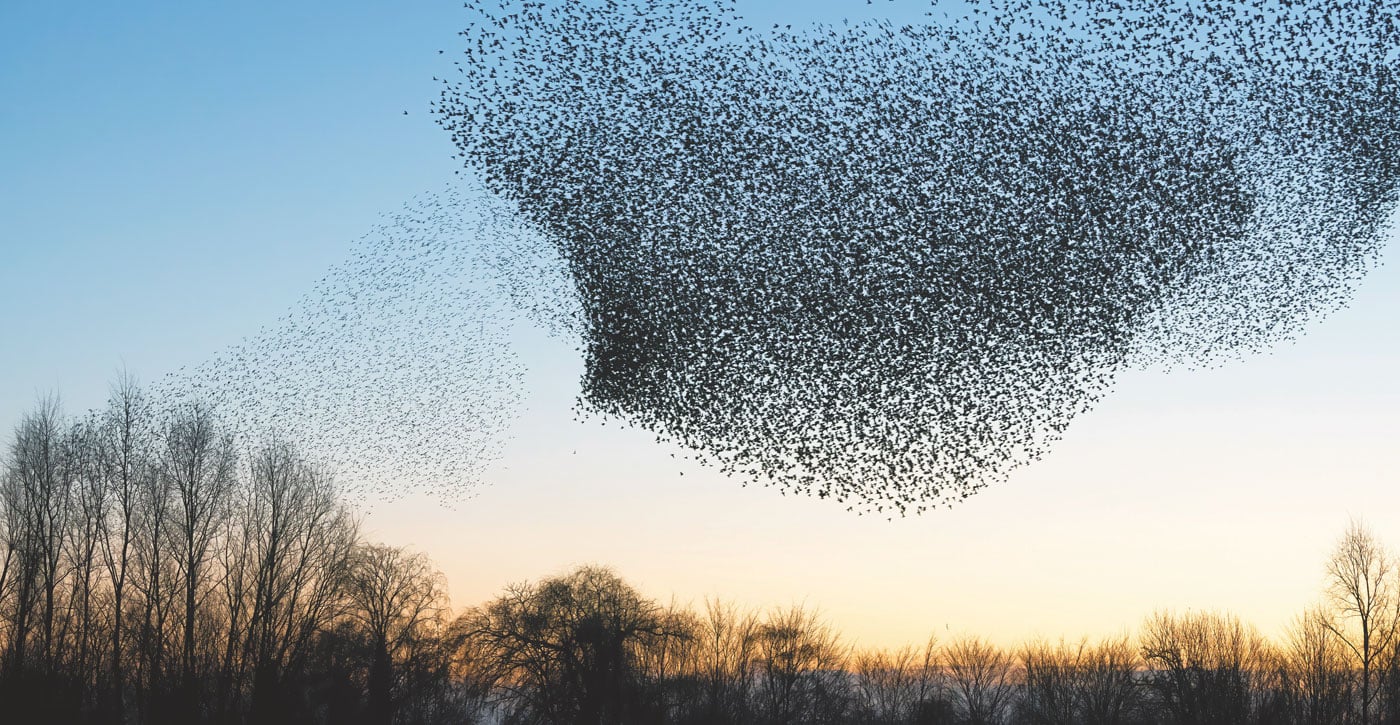
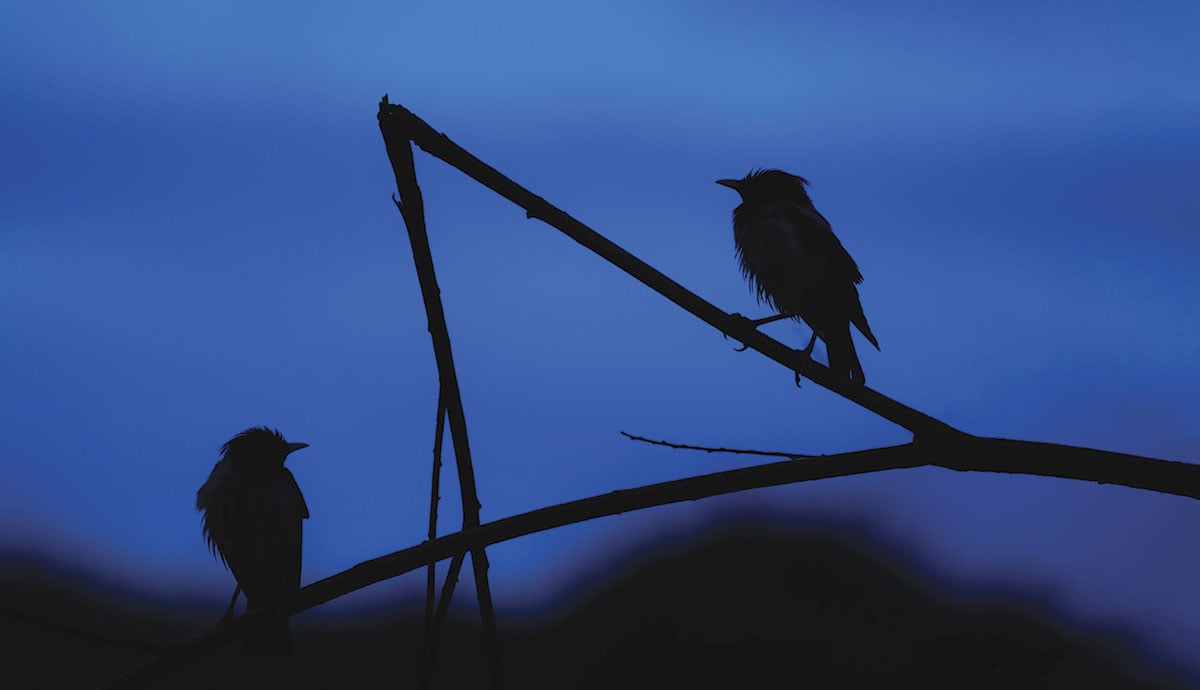
She parked in the lot (elevation 62 feet) and stood awhile watching the starlings’ progress across the sky, lumps of coal against the deep, post-sunset blue, until they settled again on the lawn’s opposite edge to pick seed from between the withered stems of dried grass with neat twists of their bright yellow beaks.
What did a plan matter, anyway? she thought. Not a single Bug would stay in that place more than a week, just long enough to get their paperwork in order before they were blasted off back to wherever it was they’d come from.
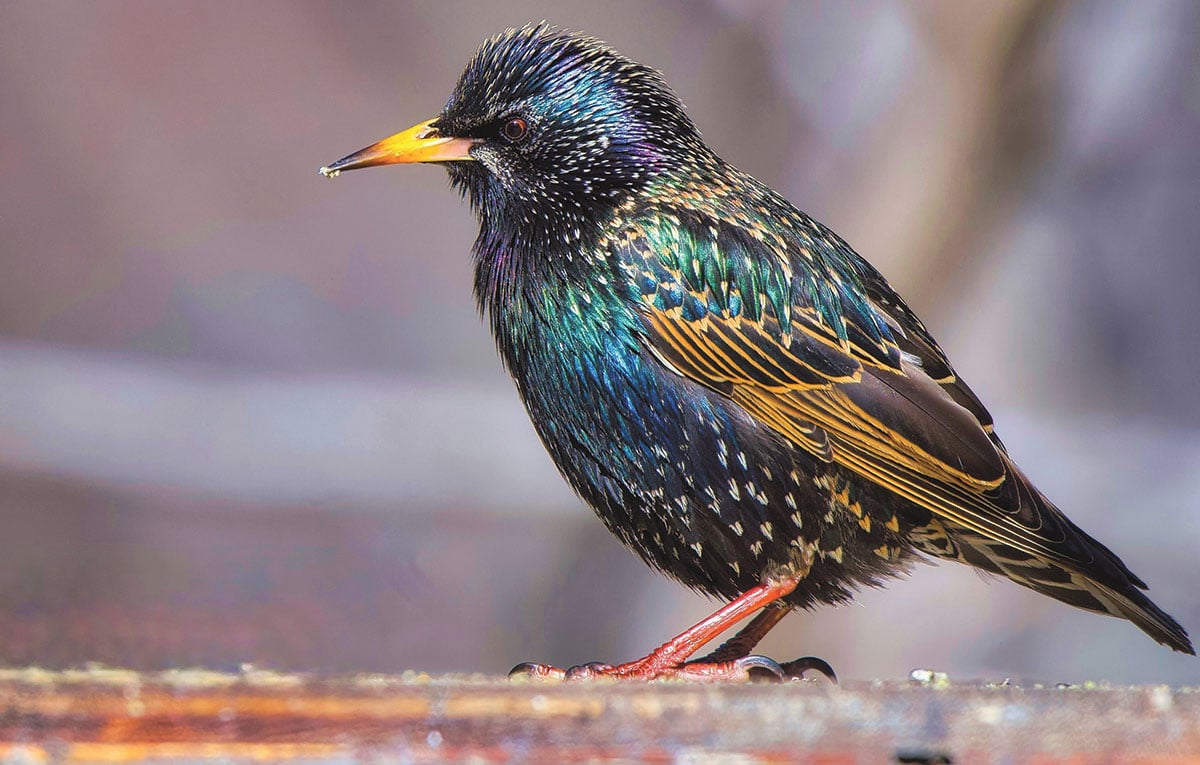
In the magazine, starlings had shone like rainbows, each feather tipped brilliant green. Carol trained her tired eyes on the darting shapes, and, yes, there was a faint iridescent sheen to their dark plumage, like the swirl of motor oil in seawater when the tide came up over the highway.
She kept trying. She scrubbed houses, and she watched the starlings. It was frustrating to stare and not see, maybe pointless—Monet had needed surgery to see, after all—but frustration and pointlessness were familiar companions. Cleaning houses was backbreaking work, exhausting and frustratingly pointless. The beach houses all smelled like dead crustaceans and mouldering swimwear, and no matter how many times she vacuumed, the carpets were still thick with sand.
She was driving to the McMillans’ place on a Monday morning when something clicked.
Their house was her favorite to clean. It was small, two bedrooms and one bath, and Carol appreciated any house that had only a single toilet to scrub, but she liked the place on its own merits, too. It was set back from the ocean, where the sand dunes gave way to real earth. Oak trees soared overhead. The house had the low, squat look of base housing, although the nearest military base was an hour’s drive up the coast (inland, above 180 feet elevation).
Some animal, probably a raccoon, had torn into a trash bag the vacationers had left in the front yard, and the starlings had landed to pick through the mess.
As she pulled up to park at the curb, Carol saw the starlings from the corner of her eye: each feather outlined with vivid, nameless color, the whole flock together so bright it was almost painful to look at. She sat in the car and marvelled at the birds for a quarter of an hour or more. When she did finally open the car door, the birds scattered into the air, glinting in the sun like light reflected through a prism.
Carol smiled; her eyes slid into their new vision, and the whole world came alive with a kaleidoscope of unnamed colors. Even without the starlings, the yard revealed itself in a riot of color: flowers, trees, grasses, all showing new hues.
She carried the starling’s joy with her as she went inside, weaving it into herself as she wiped the formica counters, scrubbed the toilet, and vacuumed the carpet into neat rows, emptying canisters of sand back out into the yard. She was putting the vacuum away when she saw the door at the back of the broom closet. It was cleverly hidden, hinges flush with the wallboard, the moulding drawn straight across the bottom. But the starlings’ light seeped out around the edges. Carol dug her fingernails into the narrow gap and pulled. The door opened soundlessly.
Beyond it was a tunnel with smooth-scraped earthen walls and ceiling. Carol followed the tunnel as it tipped down, corkscrewing as it went, so she could see only the short expanse of hard-packed earth before her and behind. She walked until the tunnel widened into a chamber twice the width of her outstretched arms in every direction. The room was furnished ordinarily enough: a recliner, a little rag rug—but the walls pulsed with soft striations of light.
Carol knew she should leave, close the door behind her, and pretend she had seen nothing. This was a private place. But the burrow’s strange walls wicked the heat away. It was quiet, peaceful; the air was deliciously cool. Carol sank into the recliner, and she felt embraced by the earth itself. Her eyes slipped closed.
Some time later, she woke to the gentle press of a hand on her shoulder. Carol blinked up at Mr. McMillan. There was something different about him in the burrow’s light. It was the antennae, perhaps, or the curved mandible on which he rested his delicate, wire-rimmed glasses.
Carol had met him once before, when she’d first contracted to clean the house. She’d thought his hair was brown, but now it appeared he had no hair at all, only a sleek iridescent carapace she ached to touch. He was as broad-shouldered as she remembered, although he hunched a bit in his suit jacket, which was wrinkled around the waist, as though he had driven straight out from the city after work and worn it the whole way. She wasn’t frightened. His touch was gentle, nonthreatening. A simple, animal presence; ruminative. She reached out to cup his mandible in her hand.
But as she did so she saw that her hand, too, glowed in the burrow’s light. Her hands shone pearly white. That woke her the rest of the way, and woke her into fear. Carol knew her hands. They were plain and brown and lined. Her palms did not glow like the soft flesh of oysters. Her fingers were not so long and beautiful. She wasn’t—couldn’t be—like him.
Carol ran, and Mr. McMillan let her go.
She arrived at her apartment without any clear recollection of the drive.
There was a starling on the porch. The cats must have gotten it, although they hadn’t finished the job. The bird fluttered, one wing dragging. Carol shifted her vision with each pitiful wingbeat. Bright and dim. Tense and release. She practiced until she wasn’t sure which vision was natural and which was the affectation. A headache began at her temples, then crawled around toward the back of her neck like a lover’s caress. She went inside and fanned the freezer door to make a breeze.
When she stepped out again, toward evening, the starling on the porch was dead. The roofline of the Pay-n-Sav buzzed with starlings, but Carol could not see, with either vision, a hole where the dead bird had been snipped from the flock.
Carol practiced not seeing until she could watch the starlings without fear. Until all their brilliance retreated into memory, and she could track their flight across the sky and see no more than little lumps of coal with wings. Until her own hands looked plain again, without a trace of webbing between the fingers or a speck of pearlescence in the nailbed.
Some time later, she heard that Mr. McMillan had been rounded up for deportation. She’d stopped cleaning houses—so much time working alone wasn’t healthy, she’d decided—and found a job at a salon in town instead. She still saw more of her landlady than she would have liked. Having little life of her own, the old woman helped herself to the lives of others: Now she came to the salon where Carol worked, to get her hair cut and gossip.
“I harbored an illegal alien,” the old woman said this time—slowly, as though savoring the taste of the words. She’d brought a photo clipped from the newspaper to show around. “Do you remember this one, Carol? You cleaned his house. Though of course he wouldn’t have looked like that when you saw him.”
The trickiest part of being a stylist, Monica, the salon owner, had explained during the first week of Carol’s apprenticeship, was looking at the hair without really looking at the person. But when Carol gave it a try, Monica smiled. “You’ve got a real knack.”
“I don’t think it counts as harboring,” Monica said now. “Not if he was paying you. And anyway, you didn’t know.”
“What about the house?” Carol asked.
“Sold.” She said nothing about the burrow, and Carol wondered if she was the only person left who knew it existed.
Her landlady thrust the clipped photograph forward again, so Carol could see more clearly. Monica moved her scissors gracefully aside to avoid the old woman’s ear.
It was a bad photo. The newsprint dulled Mr. McMillan’s brilliant green-and-purple carapace, and the surprise of the flash slicked his feathered antennae back in stiff, straight lines like twin stalks of celery. They’d taken his glasses: forever or just for the photo, Carol didn’t know. The old woman’s hand wavered. Carol steadied it with her own, so she could look a moment longer. She had suspected Mr. McMillan would look better without the glasses, and he did.

We want to hear from you, not an AI! Please be thoughtful and use your own words. Comments on Friendsjournal.org may be used in the Forum of the print magazine and may be edited for length and clarity.