



The Contextual Theological Dynamics of Quakers in Bolivia
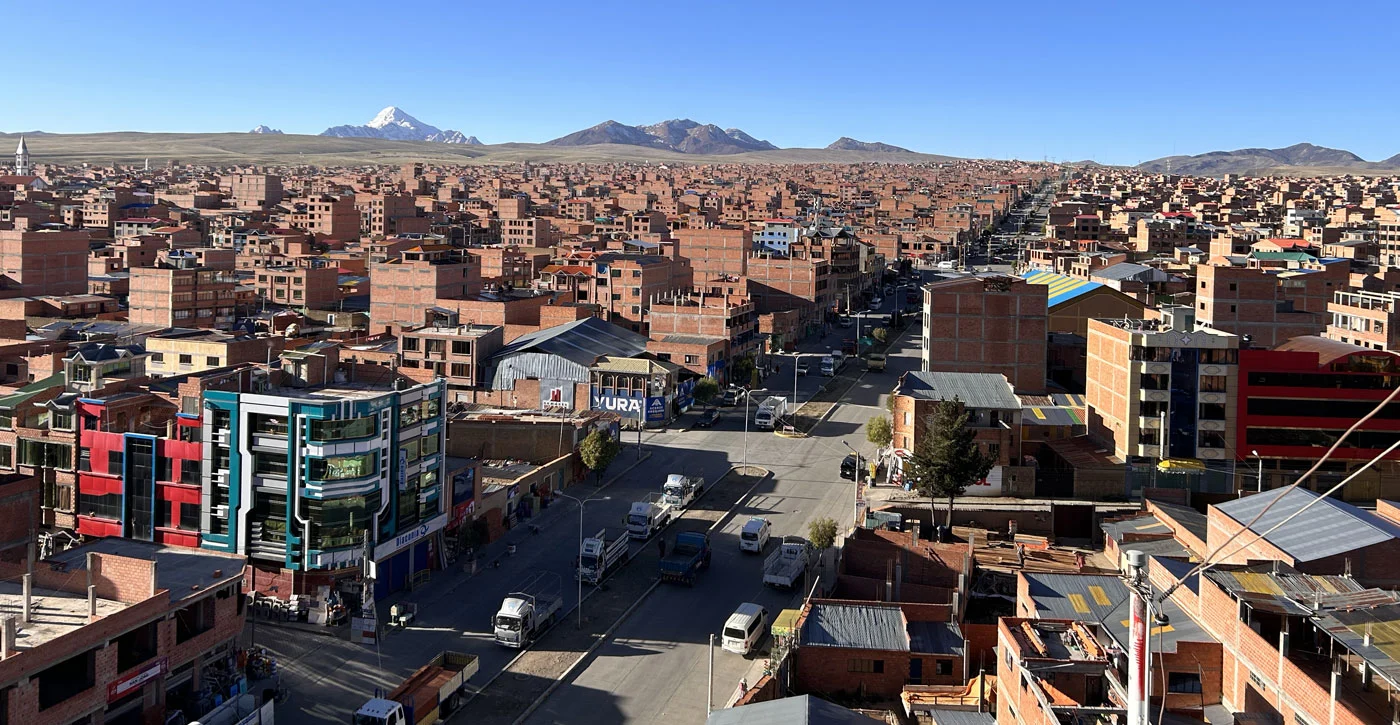
As part of a theology class in my master of divinity program at Earlham School of Religion, I had the opportunity in the summer of 2024 to travel to Bolivia along with a group of students and professors. Visiting Bolivia is a fascinating experience, as it is a country with incredible natural and cultural diversity; people of great warmth and hospitality; and a climate and altitude that—although sometimes requiring a difficult physiological adjustment—become part of the experience itself. Experiencing all of this alongside my fellow seminarians added to the already rich natural and cultural experiences of visiting and meeting brothers and sisters in the faith who share the same Christian tradition; it was a truly extraordinary experience.
Among all the experiences I had in Bolivia, I particularly connected with and became interested in visiting Quaker churches, perhaps because I am Latin American but also because there are many liturgical and theological similarities with the church where I grew up in El Salvador. The processes of evangelization and church planting were quite similar. The way U.S. Quaker missionaries were sent by their yearly meetings at the end of the nineteenth century and the beginning of the twentieth, the challenges they faced in engaging with local cultures and customs, and the evangelistic models they practiced have parallels in the histories of Quakerism in Bolivia and in Central America.
Some of the experiences during the trip, such as visits to Quaker churches and conversations with Bolivian Quaker historians, were particularly meaningful because they overlapped knowledge I had gained about Bolivian Quakerism through my research for course requirements. Even now, nearly two years after the trip, recalling each meeting for worship, each conversation and encounter with my Bolivian Quaker brothers and sisters, and each image of Bolivia’s natural beauty still stirs deep emotion in me.
Quaker Church Planting in Bolivia
The beginning of the twentieth century was marked by a surge in the sending of American missionaries around the world by the broader U.S. evangelical church, including Quakers from California Yearly Meeting. Influenced by the American Holiness Movement (theologically Arminian), they placed strong emphasis on entire sanctification, the authority of Scripture, and global evangelization.
It is important to highlight the establishment of Bible training institutes during this time. William Abel, one of the first American missionaries in Bolivia, stated that it was considered a grave mistake to go to the mission field without having completed biblical and theological training in a seminary. The importance given to the authority of Scripture and other fundamental Christian doctrines in the training of workers reveals much about the model of contextual theology practiced by Quaker missionaries at the time, a model that prioritized the message of Scripture and Christianity over other aspects, such as culture.
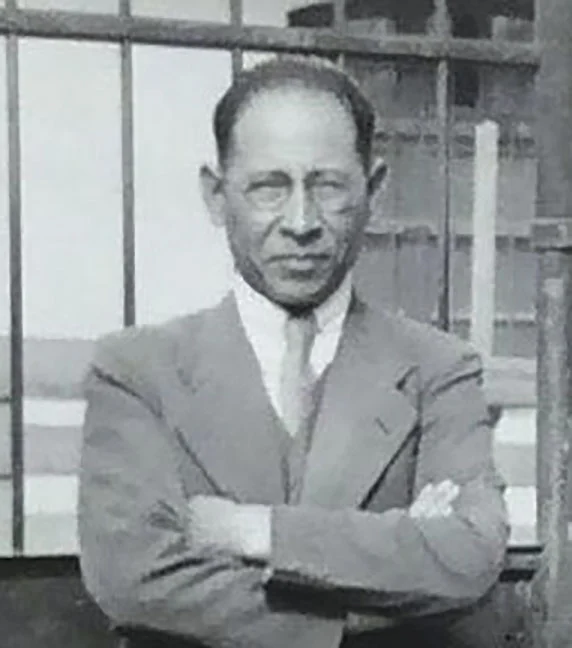
One event that illustrates the importance placed on biblical and doctrinal training by American Quakers is the sending of Juan Ayllón to the Berea Bible Training School in Guatemala. Juan Ayllón was a Bolivian mestizo who converted to Christianity through the Salvation Army, but after hearing the Quaker missionary William Abel preaching in the streets, he felt led by the Spirit to join Abel in ministry. After Abel’s sudden death, missionaries Mattie Blunt and Emma Morrow (sent to Bolivia by Union Bible Seminary in Westfield, Indiana) helped Ayllón connect with missionaries in Guatemala, and he soon traveled to Central America to begin his biblical and theological training. One may agree or disagree with the message and methods practiced by these missionaries, but there is no doubt that through biblical seminaries they received the knowledge and training necessary to carry out their work effectively.
One of the most remarkable experiences of the trip was our visit to a Quaker church in the town of Coripata. Two brothers welcomed us and kindly showed us the church facilities. During the tour, we visited the graves of two American Quaker missionaries who, according to our hosts, died while driving into remote areas to share the gospel, areas where there were still no roads. Their vehicle fell into a ravine, and they died there. Their names were Walter Rhodes, 46, and Arthur Enyart, 35. In my view, and based on this testimony, Quaker missionaries were not only concerned with their biblical and theological preparation, but they also sacrificed themselves by going into difficult places, often risking their own lives, not only to preach the gospel but also to know people, understand their reality, and help them as much as possible. I believe that these missionaries (like many others) not only lived but died for their beliefs and values, both Christian and Quaker, which I find admirable and worthy of imitation.
The Indigenous Aymara culture predominates in Bolivia. Its main characteristics include belief in Pachamama (Mother Earth), linguistic diversity, and strong ethnic identity. These were some of the challenges faced by missionaries who came with the intention of converting Bolivians. To understand the complexity of evangelizing the Aymara people, it is enough to examine their history, which portrays them as resilient and often resistant to foreign ideologies. Historically, the Aymara were conquered twice: first by the Incas and later by the Spanish, but they consistently resisted, especially by preserving their language, culture, and traditions. This is evident today, as Aymara culture remains vibrant in Bolivia. If the Aymara resisted both the Incas and the Spaniards, what would make us think they would accept the gospel message?
Based on the experiences of the Aymaras in their encounters with the Incas and the Spaniards, one can understand much about the way they react to outsiders. When the Incas burst in with the intention of dominating the Aymaras through violence, the Aymaras responded by displaying their military power and warlike instinct, leading to great battles in which much blood was shed. They finally succumbed to the Incas because they were divided into factions. They considered the Spaniards allies and liberators from the Incas, and they behaved with respect and a certain friendliness. The Spaniards, however, later showed their true intentions, though not without also experiencing Aymara resistance. The Spanish missions did not fare much better. Although they made great efforts, such as publishing the first catechism texts, grammars, and dictionaries in Aymara, they did not have enough priests to cover the evangelizing task among the Aymara people, and they were not able to establish deep roots. One could argue that Catholicism did achieve its purpose since it appears to be the religion of the majority, but it is a syncretic Catholicism: a mixture of Catholic teaching that retains many cultural and spiritual elements of Aymara culture.
The American Quaker missionaries to Bolivia were not rejected, as might have been expected, as their message of the gospel was very timely and well-received. In the midst of a past and present marked by so much suffering and violence, a message of peace, love, grace, and hope would find a special place in the heart of the Aymara people. Juan Ayllón and subsequent missionaries are described as rough and aggressive in carrying out evangelistic and church-planting work. Ayllón, far from preaching a diluted message, confronted syncretism and witchcraft, and preached the need for a transformation of life through the power of the blood of Christ. The message preached by the missionaries sought to transform Aymara cultural characteristics with a countercultural model of contextual theology. Juan Ayllón not only shared the gospel, he also began to carry out humanitarian work, such as teaching literacy to children and adults, which demonstrated his genuine interest in the Aymara people. In the first seven years of ministry, Ayllón planted two congregations in La Paz and small groups in different places, though not without first experiencing great opposition and rejection. He was stoned, expelled from towns, and faced many other obstacles, but the power of God was truly at work among the Aymaras through the ministry of Ayllón and the American missionaries.
Development and Current State of the Quaker Church in Bolivia
The 1930s represented some changes for the emerging Bolivian Friends Church, since the Central America Friends Church felt unable to continue sustaining the mission in Bolivia. As a result, it handed the work to Oregon Yearly Meeting, which at that time was seeking a mission field to work in. This change benefited the growth of the Bolivian mission, since there were more human and material resources available to continue the expansion. This change in sponsorship did not imply any change in the model of contextual theology, since Oregon Yearly Meeting was evangelical and influenced by the same holiness movement that influenced Ayllón. Oregon Yearly Meeting appointed Carroll and Doris Tamplin, who were trained in the holiness tradition, to go as missionaries to Bolivia.
Ayllón and Tamplin only worked together for one year, since Ayllón temporarily withdrew due to health problems. To support Tamplin in evangelistic work, other American missionaries came. Ayllón work would soon bear fruit; his aggressive style of evangelism and his strong emphasis on discipleship and leadership training in the Bible school soon produced local workers who would serve as pastors in the new churches being established. In the following years, American missionaries continued replicating the same theological model: an evangelization that prioritized the biblical and evangelical message; that confronted and sought transformation; and that held forth solid biblical-doctrinal discipleship and formation, leadership development, and sending out the newly prepared to preach the gospel.
These Bolivian Friends, organized as Iglesia Nacional Evangélica de Los Amigos (INELA), not only expanded locally: in 1958, they made their first attempts to bring the gospel to Peru. Although there was always a presence of American missionaries and sponsorship from Oregon Yearly Meeting, the work in Peru is recognized as a mission that is the fruit of the Bolivian Friends Church. Many elements of the work were replicated from the original model used by U.S. missionaries, including the establishment of Bible institutes for training workers, social aid such as literacy, a strong emphasis on the doctrine of holiness, biblical supremacy, transformative evangelism, and the training of local workers. By the year 2000, it was said that the Friends Church of Peru had 65 churches with 3,000 members from INELA and about five churches from Holiness Friends.
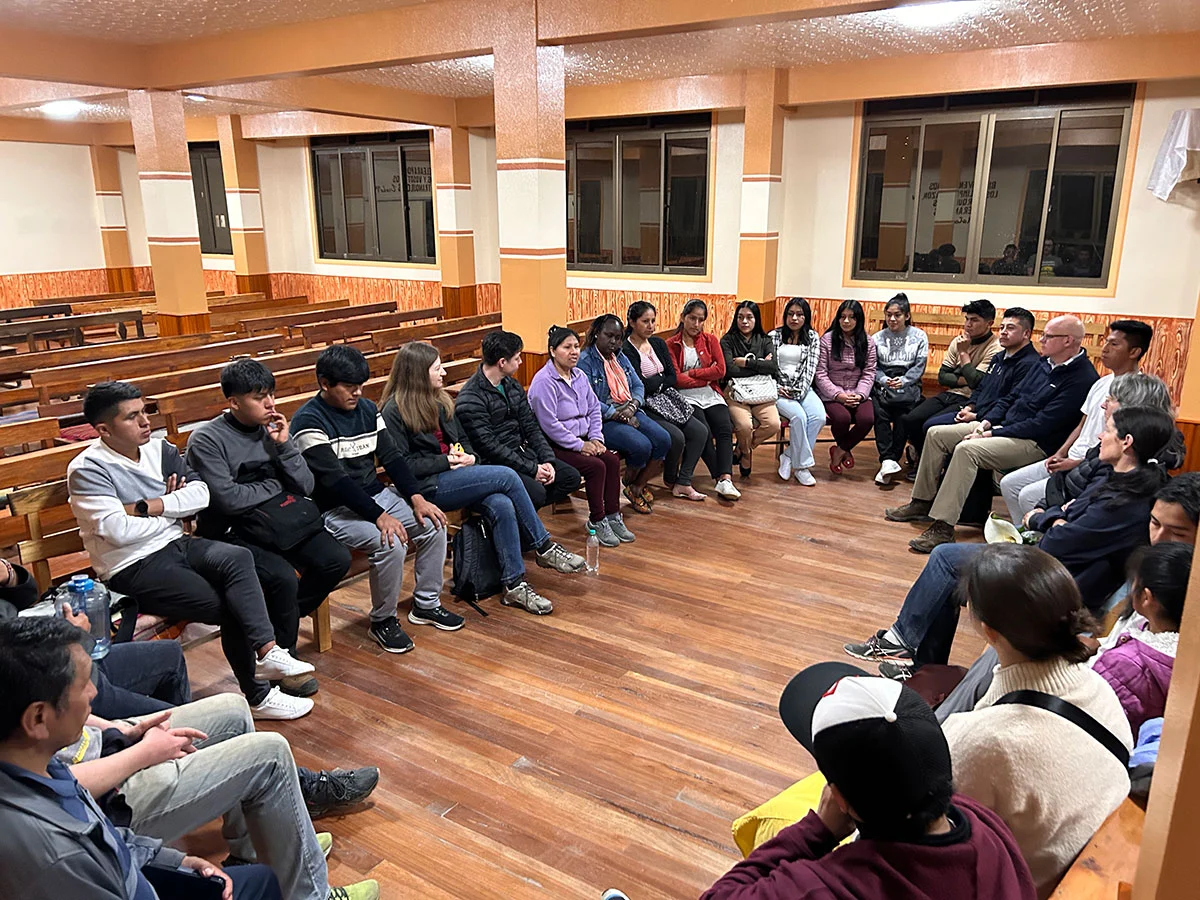
At this point, it seems appropriate to cite another of the pleasant experiences that brought me joy during our trip to Bolivia. This occurred during our visit to the Holiness Friends Church in the town of Sorata. We gathered to meet the youth of the church, and we learned that even though most of them live in the city of La Paz for their studies, they all return on weekends to attend church activities, among which is evangelizing in the streets. The message being preached is the same one they received almost one hundred years ago: “God can transform the life of a human being.” That testimony truly impacted me. One of the local young women told me that only half of the youth were there that night. When I asked how there were so many young people, she responded that many had come to the church through evangelism campaigns. I believe it is important to recognize that evangelism remains very active and fruitful, at least in Latin America.
Currently, Quakers in Bolivia have three main yearly meetings: INELA, Central Friends, and Holiness Friends. All identify as evangelical. By 2017, INELA had between 184–200 churches and just over 7,000 people. By 2002, Central Friends had around 60 churches, and Holiness Friends 513 churches and about 25,000 members. Since 2002, INELA has functioned without the physical presence of U.S. missionaries. It had always been Oregon Yearly Meeting’s vision that the church in Bolivia would become fully independent.
Current Contextual Theological Models in the United States
As a Central American Quaker living and relating to contemporary Quakerism in the United States and after witnessing firsthand the results of American Quaker missions in Latin America, I wish to express some of my perceptions about the current state of Quakerism in the United States. Seeing the great legacy that Quakerism left in Bolivia (as well as in Central America), one might form certain expectations about U.S. Quakerism today (which is what happened to me when I first arrived in the United States). One might think that being the founding church of missions in Latin America, it would have the same theology and doctrine, and that it would hold many aspects in common, but this assumption is not entirely accurate. My impression of Quaker churches in Richmond, Indiana, where I live, was mixed when I arrived in the U.S. three years ago. I felt amazement, contrast, and curiosity. My first impressions were churches with beautiful facilities and buildings but with very few people (who were mostly elderly). It was somewhat strange for the first time to be in unprogrammed, silent meetings for the first time. Above all, I recognized great differences in terms of belief systems and doctrines.
Over time and through relationships with Quakers in the United States, I have come to understand the dynamics of U.S. Quakerism, and my doubts regarding historical missions to Latin America have been clarified. The first thing to understand is that U.S. Quakerism has its own history, and part of it is that there are various branches of Friends (Evangelical, Liberal, and Conservative). Each branch determines its theological system and its form of proselytizing. One method was sending missionaries throughout the world (it is important to be clear that those who sent missions to Latin America were Evangelical Quakers), which, although it has not completely ceased, has different theological and outreach characteristics. I conclude that although U.S. Quakerism has changed (following its natural life cycle), the transcendence of its historical work in Latin America (particularly in Bolivia) is indelible. This does not necessarily mean that its current impact is less; I simply believe it is different.

We want to hear from you, not an AI! Please be thoughtful and use your own words. Comments on Friendsjournal.org may be used in the Forum of the print magazine and may be edited for length and clarity.