

When Clifton Sykes entered the Pine Knot Grill, the bell on the door jingled merrily. The hum and rattle of breakfast used to lift his spirits whenever he and Frances came in together and slid into a booth opposite Jason and Myra Turner. Now that Frances was living in Willow Glen Memory Care, Clifton had one whole lonesome side of the booth to himself.
As he sat, Jason called out, “Nancy, you shouldn’t serve a fellow grits that are still boiling. My mouth is ruined.”
Nancy, moving from table to table with the coffee pot, shook her head and poured coffee for Clifton. “Seems like your mouth’s working all too well. Grits are hot, Jason; that’s life. What you having, Clifton?”
“Scrambled eggs, sausage, grits, and toast.”
Myra, short and round with bright dark eyes and bulldog jowls that disappeared when she smiled, couldn’t resist chiming in, “Ought to warn you, Clif, the grits are hot.”
“So I hear.”
He’d known the Turners so long that sitting with them in the Pine Knot felt like home. Better than home, now that his life had spiraled into a woeful country song—his dog dead, his wife gone, his son stationed in Germany and seldom able to visit.
He felt Myra’s eyes on his face. “Clifton, the Methodist Church sent a text. They want the Barn Cats to play at their fall festival.”
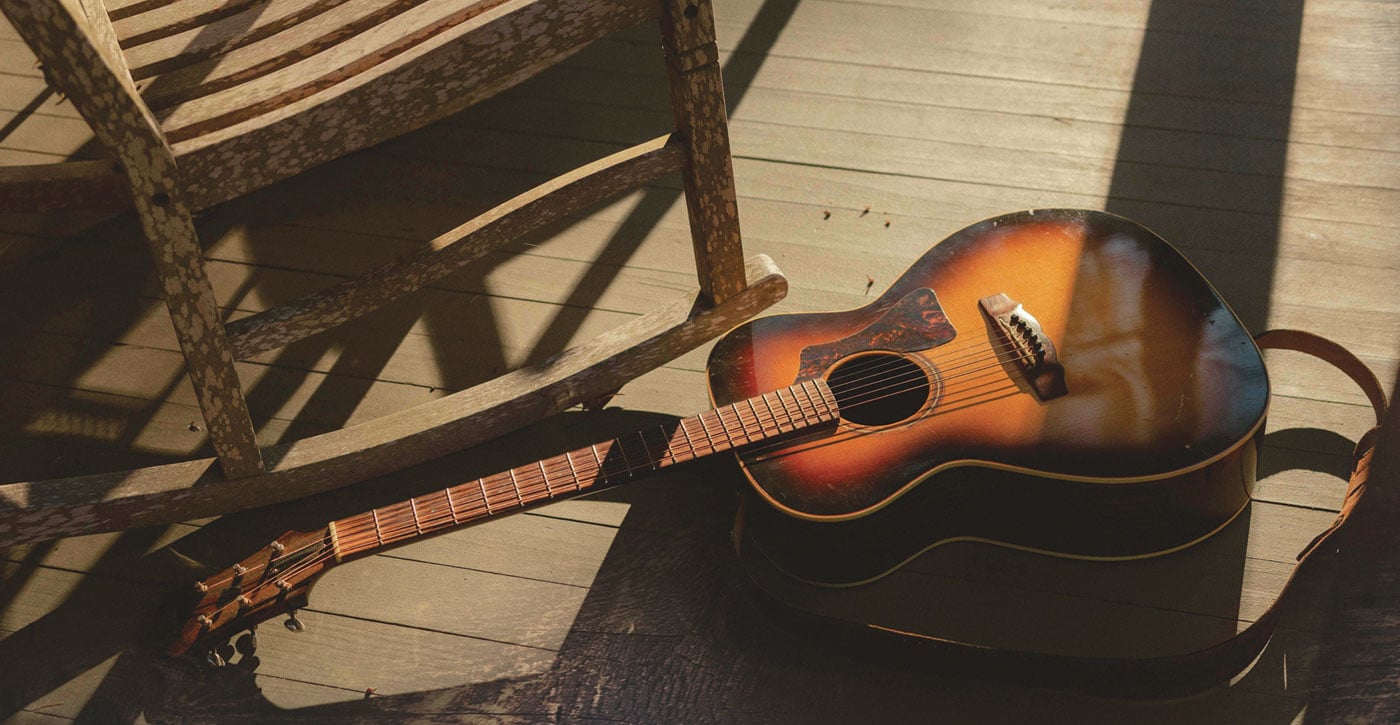
Clifton nearly fumbled his coffee cup. “We can’t play without Frances,” he said flatly. The four of them had played bluegrass and gospel as the Barn Cats for nearly 15 years—Frances on keyboard, Clifton on his Gibson, Myra and Jason on fiddle and banjo.
Jason focused on his toast. Myra persisted. “I don’t propose we try. Let’s play at Willow Glen; see if Frances will sing with us. I bet singing would do her a world of good. They say music really helps people with dementia.”
Clifton looked into his steaming grits. At one time, music had played in his head nonstop, a running soundtrack that matched his mood, whether light or dark. The music had stopped sometime in the past year, he couldn’t name exactly when.
Myra patted his hand. “At least think about it.”
“There are no coincidences,” Frances would insist. “Show me a coincidence; I’ll show you God directing my attention.”
Clifton drove to Willow Glen determined not to think about it. He had no heart for playing or singing. Bringing up the Barn Cats might upset Frances. Heck, it upset him, with his guitar hanging on the wall of the den gathering dust. At one time, his fingers itched to play it, but no more.
He found Frances in the nearly deserted dining room, finishing breakfast. She’d always been a slow eater. A new lady Clifton didn’t know sat with her. He brushed crumbs off the chair next to Fran’s and sat, nodding to the new resident. “How are you?”
She looked older than Frances, with eddies of thin white hair above a pale, puckered face. Her neck seemed too thin for her head, and a slight palsy made Clifton itch to stake her, like a sunflower. Her voice came out low and grating. “Not a bit good. I want to go home.”
Clifton, aware of his cowardice, turned to Frances. She looked pretty in her favorite yellow sweater.
“Got your hair done this morning, Frances? Looks real nice.”
Frances nodded, and stuck out one foot. “See these socks? I don’t know whose they are.”
Sure enough, she wore a pair of unfamiliar green socks. Dang it. He’d written her name in every stitch she owned, but the laundry always seemed to mix and redistribute residents’ laundry at random.
“I swear, I’m going to start washing your clothes at home. Why pay them extra to mess stuff up?” He reached over to help Frances remove the lid from a fruit cup.
The new lady’s head nodded. “Everything’s messed up. It’s not a bit like home.” Then to Frances, “Is that your husband?”
Frances looked thoughtful, a dot of nectar shining on her lower lip. “He’s my husband. Clifton Poole Sykes.”
Clifton nearly wept with relief. “Yep, married 54 years. What’s your name, ma’am?”
“Pam Baker. I used to bake—cakes, pies, cookies.” She continued on about baked goods in her grating monotone while Frances slowly consumed diced fruit. Clifton thought Frances would never finish, but at last she did, and he stood to help his wife to her feet.
Pam Baker looked up at them. “You going home already?” Her neck wavered, and she gripped Clifton’s arm. “Pray for me. Pray the Lord will take me home, away from this messed-up place.”
Later that night, back at home, Clifton carried the trash outside after supper. Pam Baker’s words stuck in his head like a line from a country song: Pray the Lord will take me home, away from this messed-up place. A flash of movement startled him as a slim gray cat ran from the barn’s open double doors. He watched it streak into the woods and vanish.
Clifton had always scoffed when Frances pointed out what she called signs and portents. “That’s only a coincidence,” he’d tell her. “Doesn’t mean a thing.”
“There are no coincidences,” Frances would insist. “Show me a coincidence; I’ll show you God directing my attention.”
Here, on the very day Myra Turner brought up the Barn Cats, a cat had taken up residence, however briefly, in his barn. Show me a coincidence; I’ll show you God directing my attention.
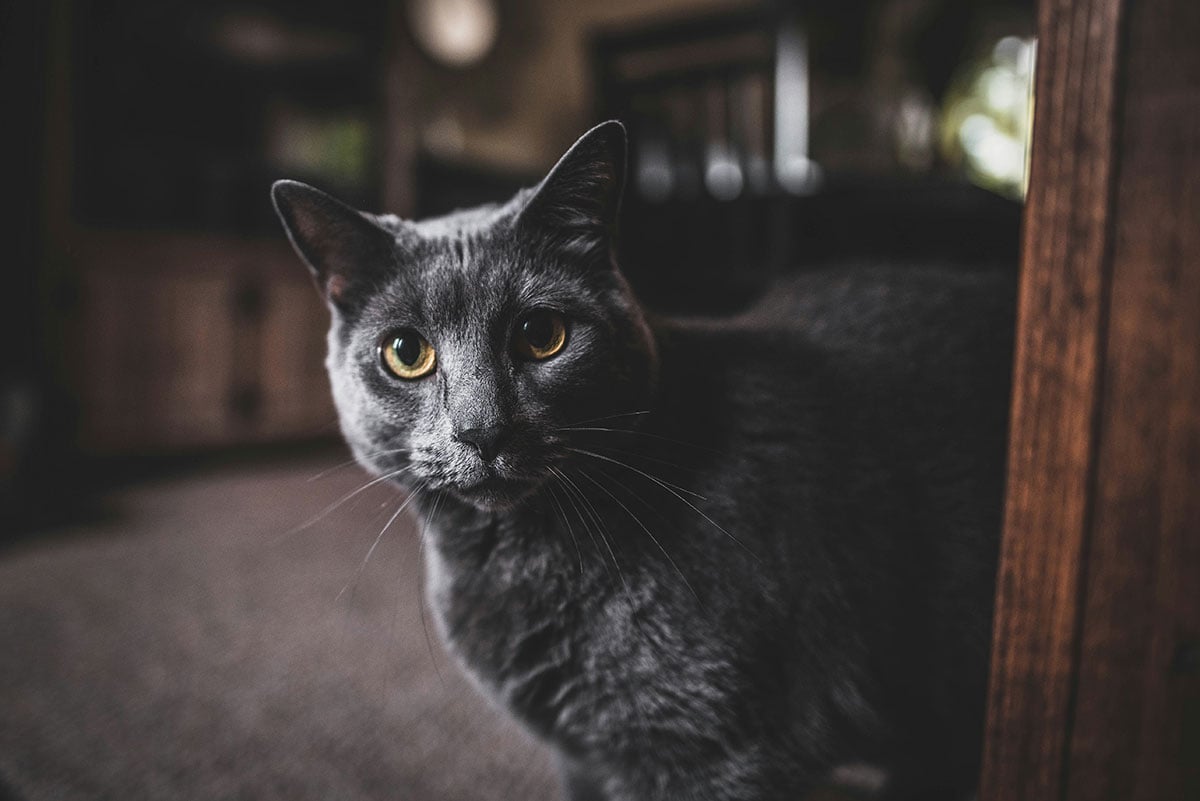
“A stranger came by the house yesterday.” Clifton sat with Frances on the back patio at Willow Glen. “I looked out back, and a gray cat walked out of the barn like it owned the place. This morning, I saw it lying in the sun by the old pump. Looks like we’ve got us a barn cat.”
Frances stared at him. “A cat! Won’t Bella run it off?”
“Maybe not.” Clifton no longer reminded Frances that their retriever, Bella, had died three years back.
On Sunday during open worship, Clifton fought to keep his mind on spiritual matters and off the eternal hamster wheel of his to-do list: Buy Frances toothpaste. Cancel laundry service. Order a new bedspread. The Bible said there was a time for everything. Silent worship had become his time for fretting.
He redirected his thoughts by glancing at the bulletin in his hands. The Scripture reference, James 5:13, read: “Is anyone among you in trouble? Let them pray. Is anyone happy? Let them sing songs of praise.” Clifton folded the bulletin twice and crammed it in his shirt pocket.
After meeting, he pulled into his driveway to eat a sandwich before heading to Willow Glen. A flash of movement by the barn caught his eye. The cat again. A heavy mix of aggravation and something close to despair washed over him. Shut up! he thought, wondering who in the world he was shushing. God?
He and Frances had been sitting in her room chatting for about 20 minutes when the Turners dropped by. Clifton offered his chair to Myra and sat on the bed, shoulders tense. Sure enough, after several minutes of chit-chat, Myra asked, “Do you ever have any sing-alongs here, Fran?”
Clifton waited. He’d shut this down if Frances became confused or anxious.
Unperturbed, Frances cocked her head. “You know, I used to sing all the time.”
Myra almost came out of her chair. “Yes, you did! The Barn Cats made fine music. What’s your favorite song?”
Frances launched into “He Keeps Me Singing.” Myra jumped in; then Jason followed. Hearing their voices again, even without accompaniment, made Clifton’s heart soar, before it quickly plummeted and broke into pieces. His mouth felt dry as sawdust while the others sang. “There’s within my heart a melody. . . .”
The half-open door to the room widened. Pam Baker sidled in, head bobbing. She stopped, one hand raised as if to conduct the singers or demand silence.
“Come in; come in!” Frances acted like the hostess at a party. “I’m Fran. Who are you?”
“Pam Baker. I used to bake.” She looked around the room. “I heard singing, and thought this might be the door to home. I beg your pardon.” She left, closing the door gently behind her.
They sang another verse, and Frances clapped.
Myra looked at Clifton, who wouldn’t meet her eyes. She said to the room, “Oh, that felt good. We’ll have to sing together again soon, Fran.”
Clifton pondered the situation on his drive home. Myra was right: Frances still enjoyed singing. But hearing them sing had only intensified Clifton’s sense of loss. He had no desire to sing, not even his favorite dark ballad by Del McCoury, “Rain and Snow.” I married me a wife, she give me trouble all my life, left me out in the cold rain and snow. . . .
No. Myra could sing with Frances all she wanted; the Barn Cats would never perform again. If the barn cat had been a sign, it pointed only toward closing those barn doors to keep critters out.
Outside the barn, the wind swept him back toward the house, sang across his ear again—an extended note like the song of the barn cat but rising up triumphant and brave.
Closing the heavy wooden doors proved an effortful business. They’d become so deeply engaged with the earth and grass that the barn seemed rooted. Clifton hacked at the earth beneath the doors with a shovel to break the bond, finally freeing both doors enough for them to slide, haltingly, inch by inch. Though he strained every aging cell of his body, he couldn’t close the final two feet of gap.
Clifton stripped off his work gloves as he walked to the house, flinging them onto the porch. A cool breeze bent the leaves on the hickory tree, revealing their pale, veined backs. Storm coming. Clifton watched the clouds blow in while contemplating his failure with the barn door. Then he remembered the Havahart trap he’d used to relocate a groundhog.
He hurried back to the barn with a chunk of ham for bait, pulled the trap free of a tangle of cobwebs, brushed it off, and snugged it into a corner. When the cat sought shelter from the storm, as it almost certainly would, the ham would draw it into the trap. He’d drop it at the animal shelter in the morning, and that would be the end of it.
Clifton made it to the house ahead of the first lashings of rain, which grew harder and steadier by bedtime. He awoke later to hear rain coming down in sheets. Miserable to be out in that mess, he thought, like the aggrieved husband in McCoury’s ballad. The lament ran through his head. Rain and snow, ohhh, oh Lord, left me out in the cold rain and snow.
Standing now, Clifton slipped a flashlight into the pocket of a rain jacket and fumbled into boots. He pulled the hood over his head and stumped down the steps into the backyard. After three steps the wind stripped the hood from his head. Rainwater stung his face. He walked on, wind howling past his ear, creating a hollow, mournful tone inside his head. He nearly laughed as the wind played him like the jug in a country band.
The downpour sounded intent on shattering the barn’s tin roof. Clifton swung the light toward the trap in the corner and caught the glow of eyes. The gray cat emitted a low, rolling yawr—another ballad of pure grievance.
Clifton sang, long and sad, “Left you out in the cold rain and snow,” an imitation of the cat’s aching yowl. Rain drummed heavy on the tin. He strained to catch the beat, paired it with the wind he’d heard in his ears and tapped out a few notes on the side of the flashlight. The rain-song untied the knots in his shoulders.
As if in response, the cat made a low rumbling growl, more plaintive than angry. “You singing with me, or is that your version of ‘Folsom Prison Blues’?” Clifton asked. “Don’t you fret. I’ll get you more ham in the morning before setting you loose. That’ll blow your blues away. Well, good night then.”
Outside the barn, the wind swept him back toward the house, sang across his ear again—an extended note like the song of the barn cat but rising up triumphant and brave.

We want to hear from you, not an AI! Please be thoughtful and use your own words. Comments on Friendsjournal.org may be used in the Forum of the print magazine and may be edited for length and clarity.