



On a loose stone atop the bluestone wall
by the gate, this lichen’s a rough oval
of concentric bands in sage- and olive-green.
I’ve seen this pattern in homey braided hearth rugs,
also the colors. But sometimes I unnerve myself,
imagining it glows after dark. Were it the size
of a welcome mat, its stiffness might tempt me
to wipe my feet—then to think twice, leery
of chemical burn. In fact, the lichen’s
acids are eating the rock—slowly, slowly—
producing a granulate my descendants could sift
with their toes. Which is consoling in its way.
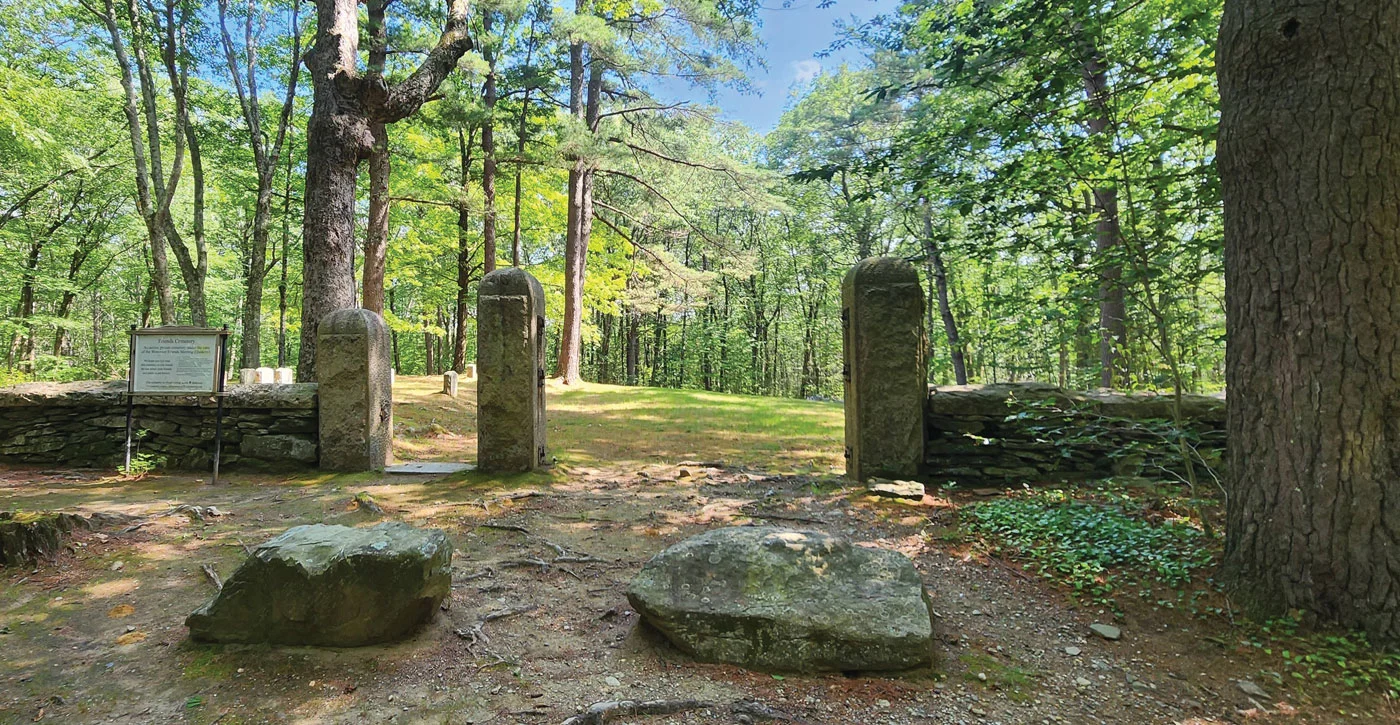
I know an old Quaker cemetery tucked into woods
on a mountain-side: a few rude stones upright still,
others tipped against trees or hugging the earth.
All lichen-splotched, names ruinously weathered.
It’s steadying to stand in its dappled shade where
moldered flesh and dissolving stone converge:
the kinship of matter’s so evident there,
the intimacy of dust to dust.

We want to hear from you, not an AI! Please be thoughtful and use your own words. Comments on Friendsjournal.org may be used in the Forum of the print magazine and may be edited for length and clarity.