



A Quaker Antiwar Activist’s Documentation Reconnects People Decades Later
Imagine: your photo was taken many years ago when you, Hien, were a political prisoner in a special unit in the Quang Ngai hospital during the war in South Vietnam. After the war, you were freed. Fifty years later, you are stunned when a journalist, Huong Bui, comes to your village with some black-and-white photos and asks you if you can identify anyone in them. She tells you, “There is not a single name written on the back of these photos.” Your eyes fill with tears when your own face stares back at you from one of the pictures.
The next day you contact a former prisoner you know from a nearby hamlet. Word spreads about the photos, and two more former prisoners come to your house and identify themselves among the photos. A few weeks later, another prisoner drops in to visit. He doesn’t find a picture of his face, but he shouts with astonishment, “Those are my feet handcuffed to the bed.”
How did this extraordinary project to locate unidentified Vietnamese political prisoners from pictures taken 50 years ago by an American Friends Service Committee (AFSC) staffer evolve?
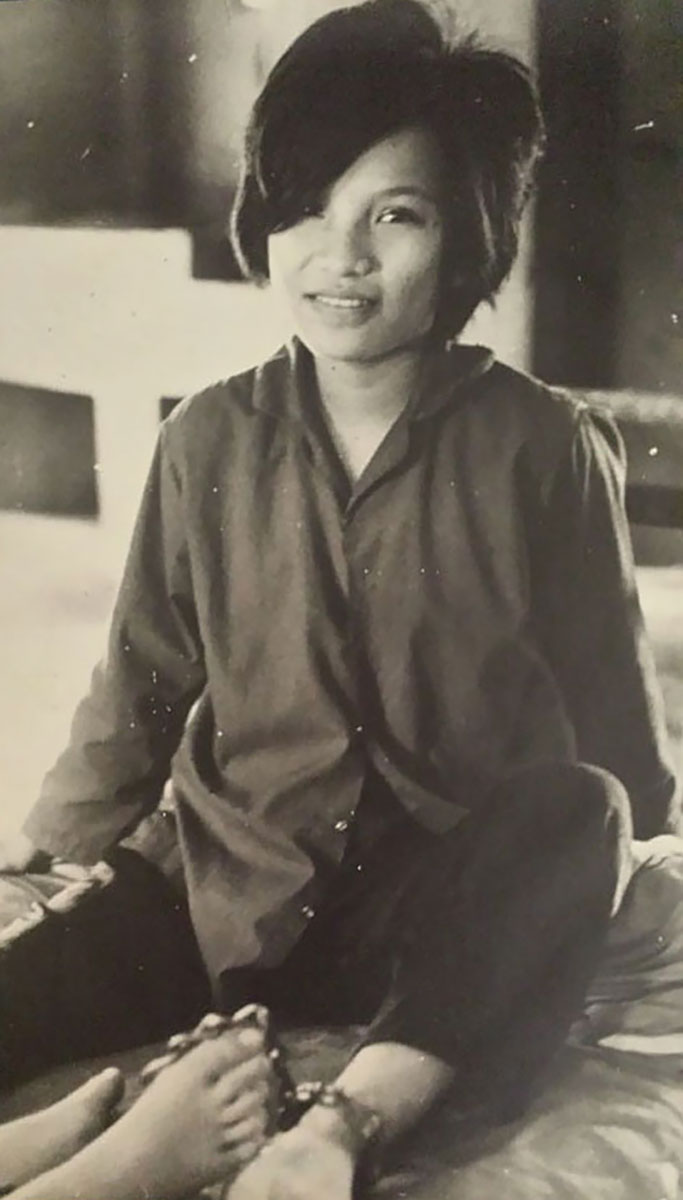
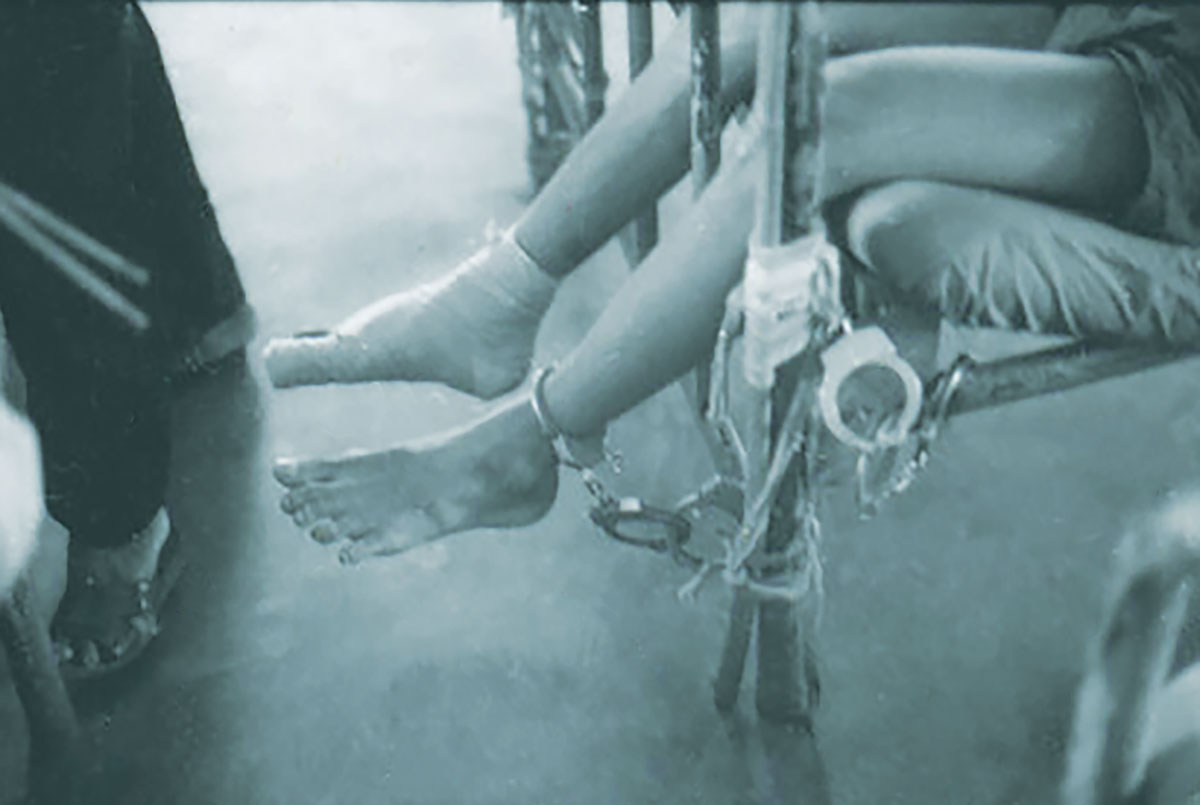
Left: Le Thi Chuc (Bon) in 1972. Right: Legs of Nguyen Chan handcuffed to bed (1973) with Smith and Wesson handcuffs.
This story began with the agreement between AFSC and the South Vietnamese government when the AFSC project was begun in 1965. Influenced by the Quaker practice of visiting prisoners (based on the Society of Friends belief that all people have the Light Within), AFSC requested that the South Vietnamese government allow staff to visit prisoners and provide medicines and nutritional supplements for children held with their mothers. In 1970, Marge Nelson, a physician with the AFSC project, testified before the U.S. Congress that she witnessed physical signs that some of the prisoners had been tortured.
As the war intensified, the South Vietnamese police and military in Quang Ngai became increasingly paranoid about who among the population might be cooperating and supporting “the enemy,” the local Viet Cong. The South Vietnamese government, with funding and training from the United States, initiated a program of rounding up, incarcerating, and interrogating hundreds of local people as political prisoners. Since all men of draft age were required to carry papers identifying their status, it was mainly women and girls who were imprisoned and questioned. The U.S. government contracted with Honeywell Corporation to implement a program of “face recognition.” South Vietnamese families were required to be photographed and identified. In one of the photographs, a mother poses with her three children each holding South Vietnamese flags, all standing under a banner that reads “Determined to kick the communist gang out of South Viet Nam.”
Nearly a thousand individuals were imprisoned in barracks surrounded by concertina wire and guarded by South Vietnamese soldiers in watchtowers. These political prisoners weren’t hidden. The compound was right on the dirt main street of Quang Ngai, the capital city of a coastal province. The AFSC staff heard credible rumors that the U.S. Central Intelligence Agency (CIA) and South Vietnamese military trained by the CIA tortured people inside an interrogation room in the compound.
In 1972, as the South Vietnam government anticipated a visit to Quang Ngai by Senator Ted Kennedy’s staff from the Senate Committee on Refugees, certain political prisoners, particularly ones who had signs of torture, were moved from the large detention facility to a small building on the grounds of the Quang Ngai hospital. That way, if the American observers visited the facility holding the political prisoners, they would not find prisoners with signs of having been tortured.
As co-director of the AFSC program at that time, I discovered the “secret” ward on the hospital grounds and began to visit the 40 to 60 prisoners on that ward with a medically trained staffperson. The Vietnamese guard seemed totally indifferent to my visits. He usually went off for a smoke, leaving me alone unguarded with the prisoners. Two prisoners shared a single bed and were handcuffed together and to the bed frame. Over a series of months, I took photos with a Nikon camera that I’d tucked into a canvas shoulder bag. The prisoners spoke freely; I asked questions and took notes. The women touched my arm or leg in the familiar way that Vietnamese people touch each other. Most of the prisoners had been tortured. Prisoners had broken bones. A 67-year-old woman, who claimed the bag of rice she had in her basket was for her family, not local guerillas, was savagely beaten, resulting in a multi-fractured leg and paralysis. The women were often tortured with electricity attached to their nipples or genitals. And they suffered seizures as a consequence.
I was only able to slip a journalist into the prison ward one time. Jacques Leslie, former war correspondent for the Los Angeles Times, witnessed female political prisoners having convulsions and wrote in his memoir, The Mark:
Like a grenade lobbed into an ammo dump, the first seizure induced another one, and another. . . . I stared dumbfounded as everyone . . . in the room soon either was in convulsions or was caring for someone who was. . . . I spoke with an 18-year-old; she had a gaze so deep I could see miles into her eyes. Her beatings were so fierce, she told me, “I didn’t know pain anymore; I was already dead.” Considering that Americans were widely known to condone and even participate in the torture sessions. . . . I was amazed at her candor.
When I returned to the United States in 1973, my former husband, David, and I were sponsored on an AFSC and Amnesty International speaking tour. As hard as it was to leave Vietnam knowing these political prisoners were still imprisoned, I was grateful to campaign and create awareness that the U.S. government was initiating and funding the random and illegal incarceration of Vietnamese people for their alleged political beliefs.
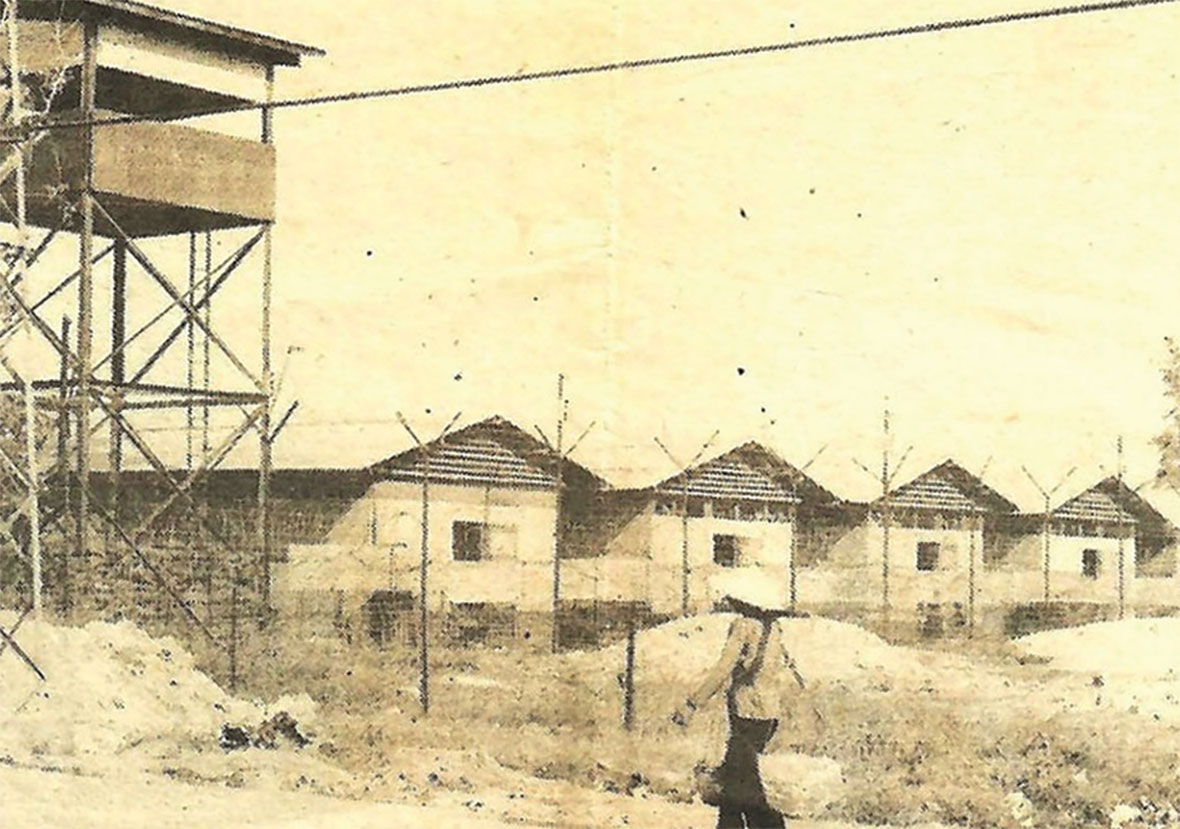
Three decades passed. I returned to Vietnam in 2006 and visited the Museum of Vietnamese Women in Hanoi. Noticing there were no photos of Vietnamese women who had been held as political prisoners, I donated some of my slides to the museum. Huong Bui, who received my photos, was deeply touched by the pictures. She was born after the war ended and was amazed to learn that women were tortured and held as political prisoners. Huong vowed that someday she would investigate and use the photographs to discover if any of the prisoners were still alive.
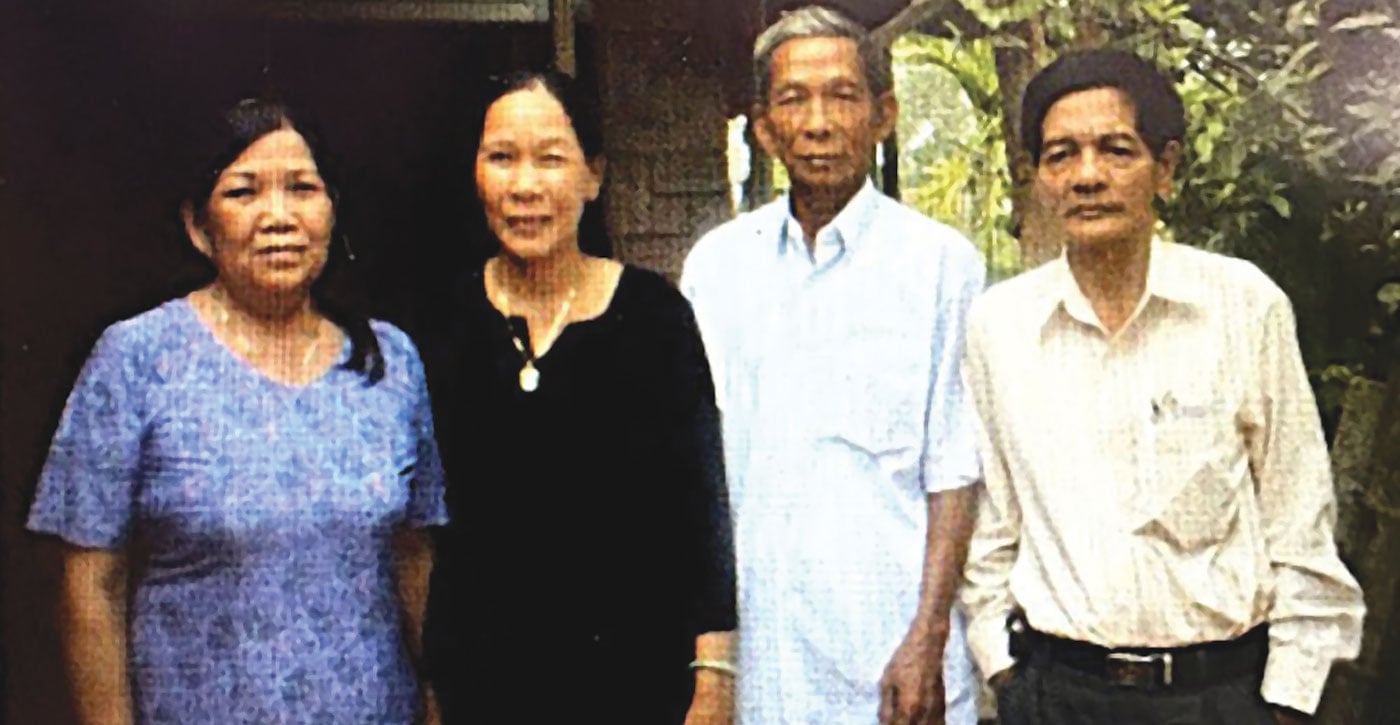
In 2009, with some clues from a former AFSC Vietnamese staff member, Huong Bui traveled from Ho Chi Minh City (formerly Saigon) to Quang Ngai province. Amazingly, she was able to locate a number of the former prisoners. In a modern photo, she stands with two of the political prisoners whose photos I took 50 years ago. I had photographed them behind the bars of the special ward for tortured political prisoners at the hospital. Huong published an article in a journal revealing her astounding findings. And this takes us back to the beginning of the story: how several former political prisoners identified themselves from 50-year-old photographs.
The matching of former political prisoners to my old photos continued. Traveling from Quang Ngai to Ho Chi Minh City in 2024, Pham Thi Xuan Vien, a former prisoner, contacted Huong. Vien told Huong:
When I received the photo from Mr. Hien, I was stunned, overjoyed, and burst into tears. It was really me, back in the Quang Ngai hospital. . . . Even though we were patients, the police were afraid we would escape, so they shackled our feet together. The person shackled with me was Ms. Nguyen Tran Thi Lan. Ironically, Lan never received a stipend from the government for being a former political prisoner. Lan had no record or verification. Once I had the photo of Lan’s feet and my testimony of our being shackled together, Lan received back payment and new monthly allotments. Lan often laughed with me, “Imagine my good fortune, being chained to you in prison 50 years ago?“
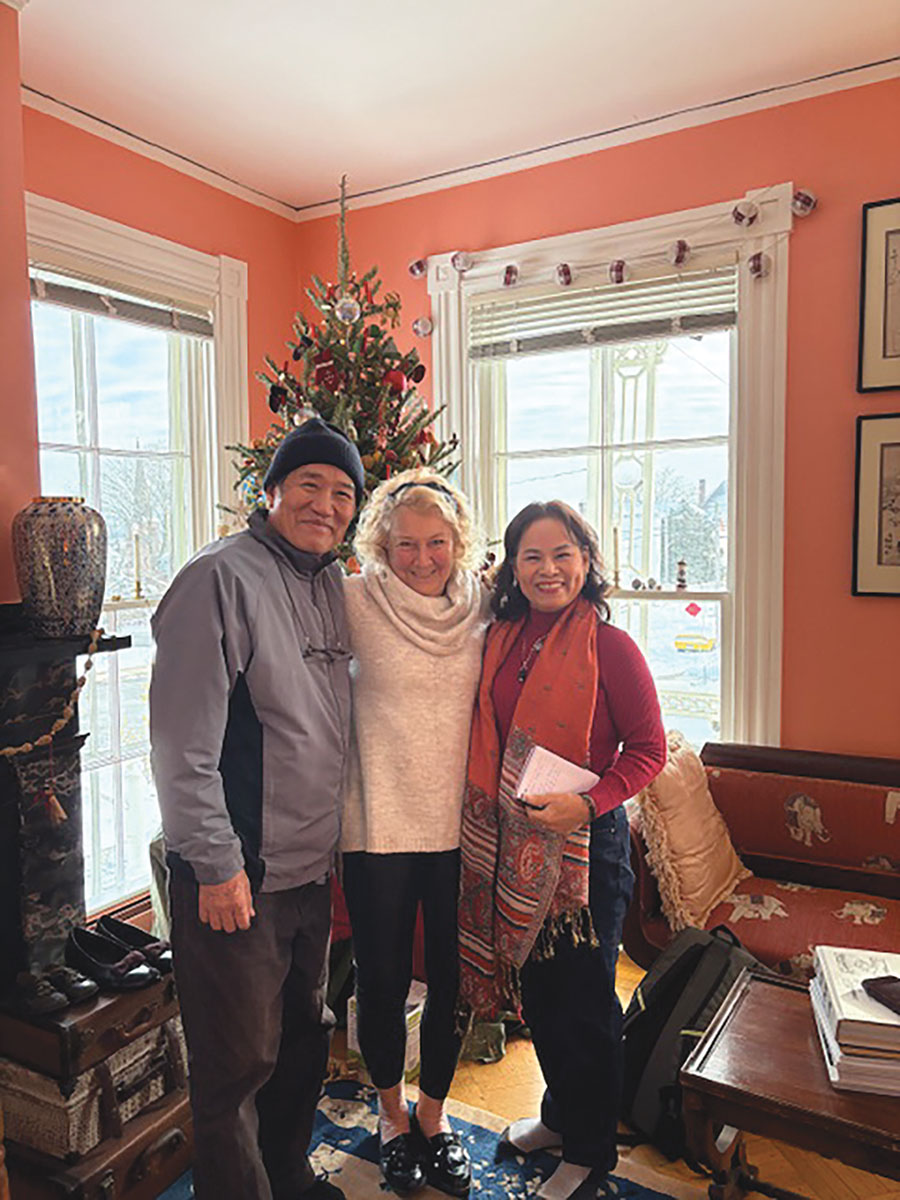
Although Huong had discovered some of the prisoners “alive and well,” I didn’t know of Huong Bui’s detective work until she traveled to the United States 20 years later in 2026, when she was able to locate me. Huong requested that she come to visit me in my home because she had some startling news to share. I vaguely remembered her from my 2006 visit to the museum. Additionally, she and her husband wanted to interview me for a documentary. I didn’t know how to prepare for their visit, as I didn’t know why Huong Bui wanted to meet me.
Huong arrived and immediately shared her story of finding some of the former prisoners. Time was short, and she wanted to interview me, but I was overwhelmed by her news and found it hard to concentrate. I felt happiness and a release of the burden I had carried for years: that I didn’t know the fate of the prisoners I’d photographed. Yet difficult memories flooded me as I recognized that many prisoners that I had photographed were not alive.
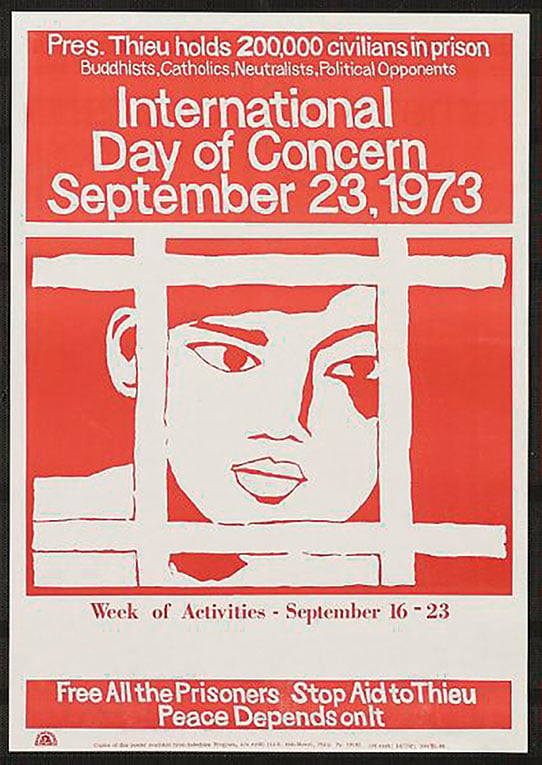
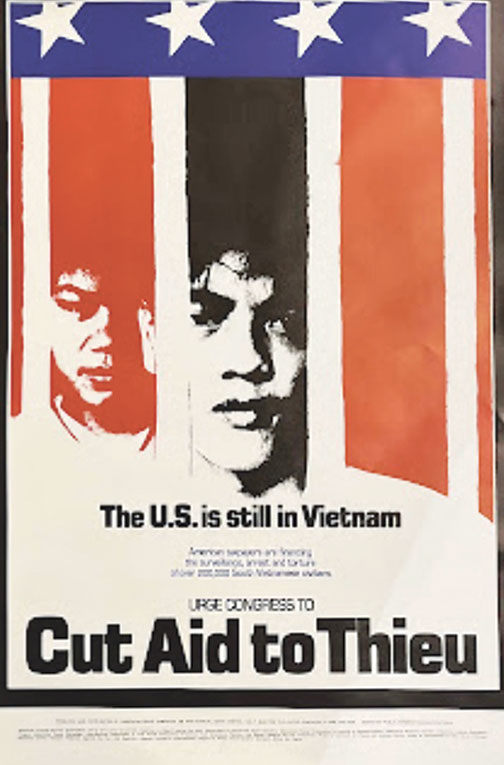
1973 antiwar posters featuring the prisoner photographs
I hope to visit Vietnam one last time, particularly to share with two of the former political prisoners—Hien and Bon—the story of how their faces were transported onto a poster that was widely used by a coalition of antiwar organizations. I’d like to tell them about the major effort on the part of many Americans, and eventually some members of the U.S. Congress, to stop funding the Vietnam War and to free political prisoners. On behalf of Amnesty International, I spoke to audiences in the United States, the Netherlands, and France, and I even testified in a German courtroom about political prisoners in South Vietnam. I wanted them to know about the hundreds of individuals who stood strong to advocate for their freedom and the thousands of other political prisoners imprisoned. Their faces had inspired a major movement on behalf of their fellow prisoners in many places in the world. Hien and Bon had never traveled outside Quang Ngai province, but their faces had traveled the world.
We want to hear from you, not an AI! Please be thoughtful and use your own words. Comments on Friendsjournal.org may be used in the Forum of the print magazine and may be edited for length and clarity.