



Stories from a Palliative Care Chaplain
Oh, peace, bless this mad place! —Thomas Merton
Humboldt County in Northern California is staggeringly beautiful, culturally unique, and bucolic. At the same time, the median household income, at just over $61,000, is more than 27 percent lower than the national median.
Humboldt leads the state in suicide and strokes, and it has exceptionally high rates for gun deaths, car crashes, alcohol-related liver disease, and drug overdoses. The 2018 Netflix true crime documentary series Murder Mountain, about the region’s marijuana industry and its connection to multiple disappearances and murders, is certainly not a complete view of rural Humboldt, but it isn’t wholly inaccurate. Healthcare is the single largest employer in the county, now that logging and fishing have faded to a shadow of their former impact, but healthcare resources are nonetheless woefully inadequate.
Enter ReSolutionCare, the dream of Humboldt doctor Michael Fratkin. I first heard Fratkin on NPR in 2015, when I lived in the San Francisco Bay Area, 233 miles to the south. Fratkin’s trenchant critique of the medicalization of dying called to mind George Bernard Shaw: “The reasonable man [sic] adapts himself to the world; the unreasonable one persists in trying to adapt the world to himself. Therefore all progress depends on the unreasonable man.”
As a cradle Quaker, all of my heroes have been unreasonable people trying to make the world a better place: Margaret Fell, Bayard Rustin, John Woolman. I sent my resume to ReSolutionCare when the outfit had only eight people, hoping their new endeavor would be fluid enough to be shaped around a person-centered approach to wellness. Little did I know that the systems were so fluid that I would soon call our mission of mercy in Humboldt “the wild, wild west.”
When I talked to Fratkin on the phone, ReSolutionCare didn’t have a chaplain or even a chaplain candidate. He offered an hourly wage that approached what chaplains should be paid and it was ten dollars an hour more than I was making at the time. The prospect of working with ReSolutionCare as their only chaplain scared me in all the right ways.
Spirit was moving, and I determined to move with Her.
Medi-Cal, California’s Medicaid program, provides capitated payments for palliative care patients which creates a particular demographic niche for us. Patients are eligible if they have a life-limiting illness such as cancer, chronic obstructive pulmonary disease, congestive heart failure, or liver failure, and aren’t eligible for Medicare. Thus many of our patients are working-class, White folks under age 65 who suffer from the “diseases of despair”—alcoholism, methamphetamine/other drug addiction, depression and suicidal thoughts—in addition to morbid obesity, tobacco use, and trauma. Low income, low literacy, and low life expectancy are common.
For me, it was an abrupt change from the relative idyll of Marin County hospice work. I was encouraged by the words of that first-century young Teacher, “Truly I tell you, whatever you did for one of the least of these siblings of mine, you did it for me” (Matt. 25:40, New International Version).
These patients have particular spiritual challenges. In diverse wisdom traditions, the primary obstacle to spiritual growth is what Sigmund Freud called the “ego.” For many hospice patients I’ve worked with, the ego was softening, allowing miraculous spiritual growth, healing, and transformation even as death approached.
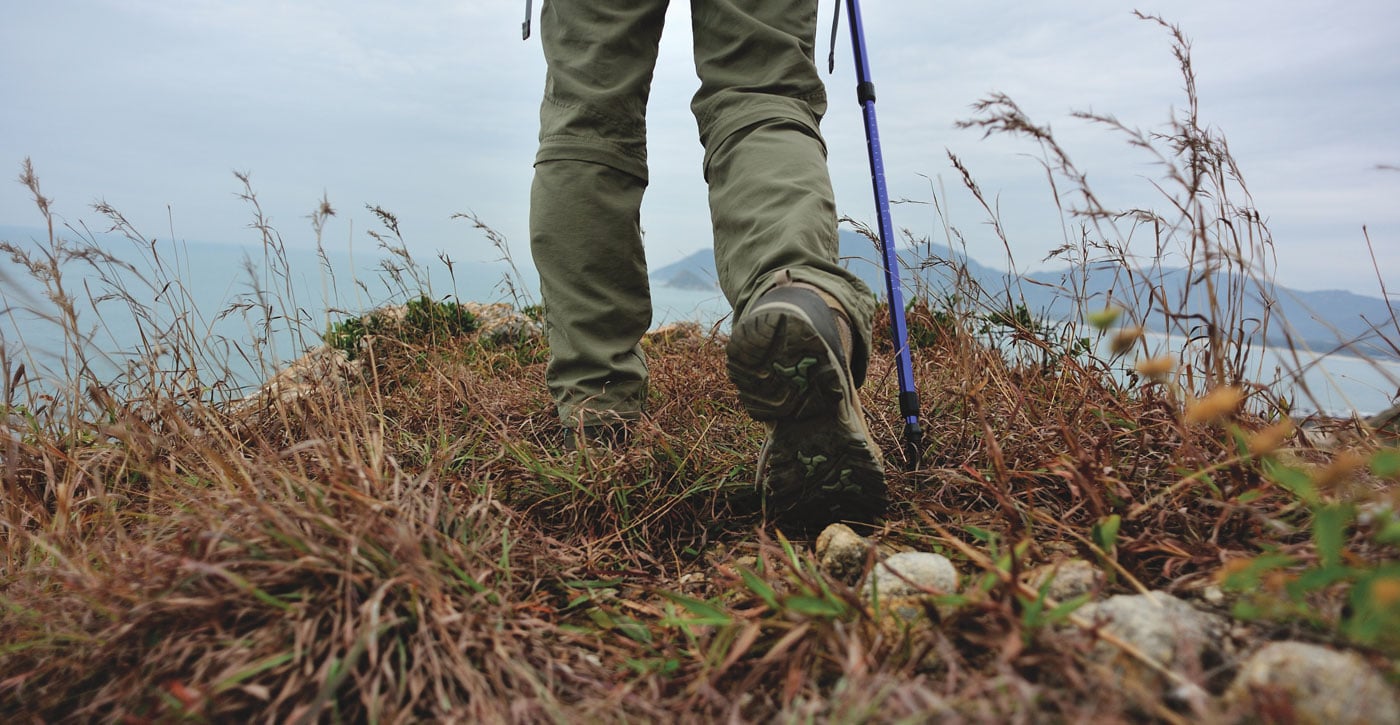
On the other hand, palliative care patients who are still seeking a cure are often in the desperate throes of an ego tantrum. The ego clings to life, frantically insisting that it is inviolate, immutable, immortal, when it is really just terrified. The existential limbo of palliative care provides the perfect environment for spiritual suffering. These souls need spiritual accompaniment as they travel through rough country. Put on some stout boots, and grab that walking stick.
Four years after ReSolutionCare started, we launched satellites in Mendocino, Shasta, and Del Norte counties. We’d proven our worth, so that Blue Shield and other insurance payers started palliative care programs. This provided broader socioeconomic diversity to our census, though we were still selecting folks under 65 who were living with a life-limiting illness. (Anytime Medicare wants to start capitated payments for palliative care of seniors, we are ready to enroll them!)
We provided much of our care through telemedicine long before COVID, using the Zoom video conferencing platform. I sometimes (unquakerly) described us as the Navy Seals of palliative care: you can drop us in from 10,000 feet, and we will bring competent, compassionate care to anyone we meet. Our social worker, Nikki Lang, coined our unofficial motto: “People caring for people by doing what makes sense.”
On our way to a joint visit during my early days at ReSolutionCare, Fratkin was driving, texting, checking the GPS, trying to get a cardiologist on his cell phone, and talking to me. “Eventually, you’ll have ghosts all over this county,” he told me. “I’ve taken care of a cat lady who lived there, and a retired firefighter who lived down that street. . . .” Now I have cherished ghosts of my own all over Humboldt County. Here are the stories of two people who taught me valuable wisdom.

The existential limbo of palliative care provides the perfect environment for spiritual suffering. These souls need spiritual accompaniment as they travel through rough country. Put on some stout boots, and grab that walking stick.
The Medicine Man
Lucas would never call himself a “medicine man” or a “shaman.” The practice of humility among the Hupa, Karuk, and Yurok people means that others may give you an accolade or credential, but you don’t hang it on yourself. Members of his community generally referred to him as a “healer.” Distinguishing between medical healing, spiritual healing, emotional healing, or social healing was irrelevant, as well it ought to be.
The first time we met, I kept my body turned toward Lucas and made good eye contact, as I’d been taught to do in my clinical pastoral education class. Well, that’s pretty rude and pushy among most Native Americans in this part of the world, as I learned. Long silences in conversation that would be awkward in the dominant culture aren’t awkward here. We are moving at the speed of life.
Despite my initial awkwardness, Lucas and I created a bond. For a respected spiritual leader like him, talking to this outsider helped. I was someone he could share fears, regrets, hopes, and celebration with. I think that because he could see that I would accompany other members of his community as time went on, he found value in teaching me how to be with his people. I was blessed by his teaching.
Lucas was a “two-spirit” person, a Native tradition of occupying both male and female ritual and social space long before Anglo culture discovered gender fluidity so dramatically and meaningfully in recent years. (It has always existed.)
He took me on a slow hike and showed me how to “pick sticks” for making baskets while he told me about the tradition of the dance families like his. He invited me to a “jump dance” held on the river for the renewal of the world. I camped in his family camp, helping his sister tend her cook fire, though she sat down so close to me that her hip bumped me aside when I did this. This happened a few times, until she realized that the non-Indian didn’t understand her hip communication. “You shouldn’t touch this fire,” she explained. “It’s a woman’s fire, and you’re a man.” Chastened, I sat to the side and soon could feel the mystical state of the fasting dancers and singers as they approached the close of their ten-day rite.
I married Lucas to his life partner, Jonathan, as no local church would marry a same-sex couple, though it had been legal in California for a time. The clear Karuk song he offered as a blessing before the wedding meal belied the increasingly fragile state of his health.
When a member of their tribe dies, the grave has to be dug the same day as the burial, so I went up with the men of the family at dawn with picks and shovels to dig a grave by hand. Lucas was buried on his family land allotment, where he had been born a little more than half a century before. After I said a few words, I thought that it might be unprofessional as an end-of-life chaplain to cry at a funeral, but it didn’t feel unprofessional. It felt holy.

The Gardener
When we first enrolled her, Sally didn’t want to know her medical test results. She’d taken the most intense treatment available for her stage 4 cancer, and she didn’t want to know if it had “worked.” “I’m tired of being a patient!” she’d say.
She took advantage of the need for a wig: ”I always wanted to be a redhead,” she said, with a coy flip of her russet curls.
She sucked the marrow out of every day by gardening, spending time with friends, taking her dog for walks (which got longer and longer, and then shorter and shorter again).
I knocked and got no answer at her front door one June day. Then she called out from the side of her tiny cottage. I went round to the backyard and found her standing barefoot on her porch in a floral print sundress, expertly aiming a diminutive .410 shotgun at a gopher hole as she waited for the resident to poke his head out. I noticed the melted wax appearance of the skin on her upper arm and shoulder. I knew she’d been in a house fire during childhood, which had claimed the lives of her older sister and younger brother.
Sally’s survivor’s guilt later led her into an addiction cycle that prevented her from being the mother she wanted to be for her daughter. Though she’d been a sober and responsible accountant for many years when the cancer was diagnosed and her daughter, Carrie, had grown up to have kids of her own, she and I talked about how little it helped to reason through her regrets, guilt, and shame.
“I cannot ever be forgiven,” Sally told me.
“Is that for you to decide?” I asked.
“I cannot ask God for forgiveness,” she responded.
We walked the dog, Clarence, past the neighborhood Catholic Church with its outdoor shrine to Mary.
“Could you imagine telling Mary that you are willing to be forgiven?” I asked.
Sally couldn’t go into the church and couldn’t approach God, but she could stand outside under a huge elm where the statue of Mary might intercede for her. She made a practice of visiting the Virgin on her walks, allowing herself to approach the possibility of God’s forgiveness and her own self-forgiveness.
I facilitated some conversations with Carrie, who had long ago forgiven her mother. Carrie then became Sally’s primary caregiver. I wondered if my being a biracial person helped me to build a bridge between the European-descended mother and her half-Yurok daughter. Healing poured into their relationship and into Sally’s life, even as she transferred to hospice to complete her journey.
Carrie adopted Clarence the dog, which was what Sally wanted for both of them.

The Team
As any healthcare chaplain knows, we carry a responsibility for our team members, who are also our teachers. With a budget one-fourth that of hospice and patient situations that our admissions nurse frequently refers to as a “hot mess,” my team was at risk for burnout and moral injury. With a “bug list” on the office whiteboard alerting all to which patients were pediculous or otherwise infested with bedbugs, scabies, fleas, or crabs, we carried on. When a son sells his mother’s oxycontin to buy methamphetamine, we make an Adult Protective Services (APS) referral, hoping it will do more good than harm. We had more than one patient spend time in jail.
If one of our people goes to the emergency department, we might accompany them so they won’t be shamed, ignored, or treated as drug-seeking when they are in a pain crisis. The excellent Hospice of Humboldt will only travel an hour from their doors, so any further out, we’re hospice too.
But we are frontier people. Like the wild lupine that grows in the fields along the gravel road flying below my tires, we blow with the wind, take advantage of every drop of water, and bloom where we are planted. There are no hothouse flowers at ReSolutionCare. No one says, “That’s not my job.” We muck in.
On my way home as the sun heads toward the Pacific, my tires roll onto the long bridge over the Klamath. I stop my motorcycle mid-span, drop the kickstand, and turn the key to “Off.” My boots scrape gravel as I walk to the bridge railing. Looking up, I raise my arms and give thanks for this day, this place, this good work to do.
But we are frontier people. Like the wild lupine that grows in the fields along the gravel road flying below my tires, we blow with the wind, take advantage of every drop of water, and bloom where we are planted. There are no hothouse flowers at ReSolutionCare. No one s ays, “That’s not my job.” We muck in.
Epilogue
I was director of spiritual support services at ReSolutionCare when an earlier version of this article was published in the Spring/Summer 2019 issue of Caring for the Human Spirit, the magazine of the Spiritual Care Association, which is my chaplaincy certification body.
After ten years of working as an end-of-life spiritual care provider, in late August of 2023, I had a severe motorcycle accident and suffered head injury. This time it was my family at the bedside as the medical staff told them to prepare for the worst. Luckily, I’d made an advance health directive after all of my years with seriously ill folks, so they knew my preferences and had a plan to follow while I was incapacitated. (Do yours now, if you haven’t already.)
Nineteen months after my wreck, I went back to work as a volunteer chaplain at San Francisco General Hospital, accompanying the palliative care team. Do I still carry this ministry? Has it taught me what I need to know to move into a new ministry that is calling me, which author Vanessa Machado de Oliveira has called “hospicing modernity”?
Inspiring…thanks