



Integrity in Practice

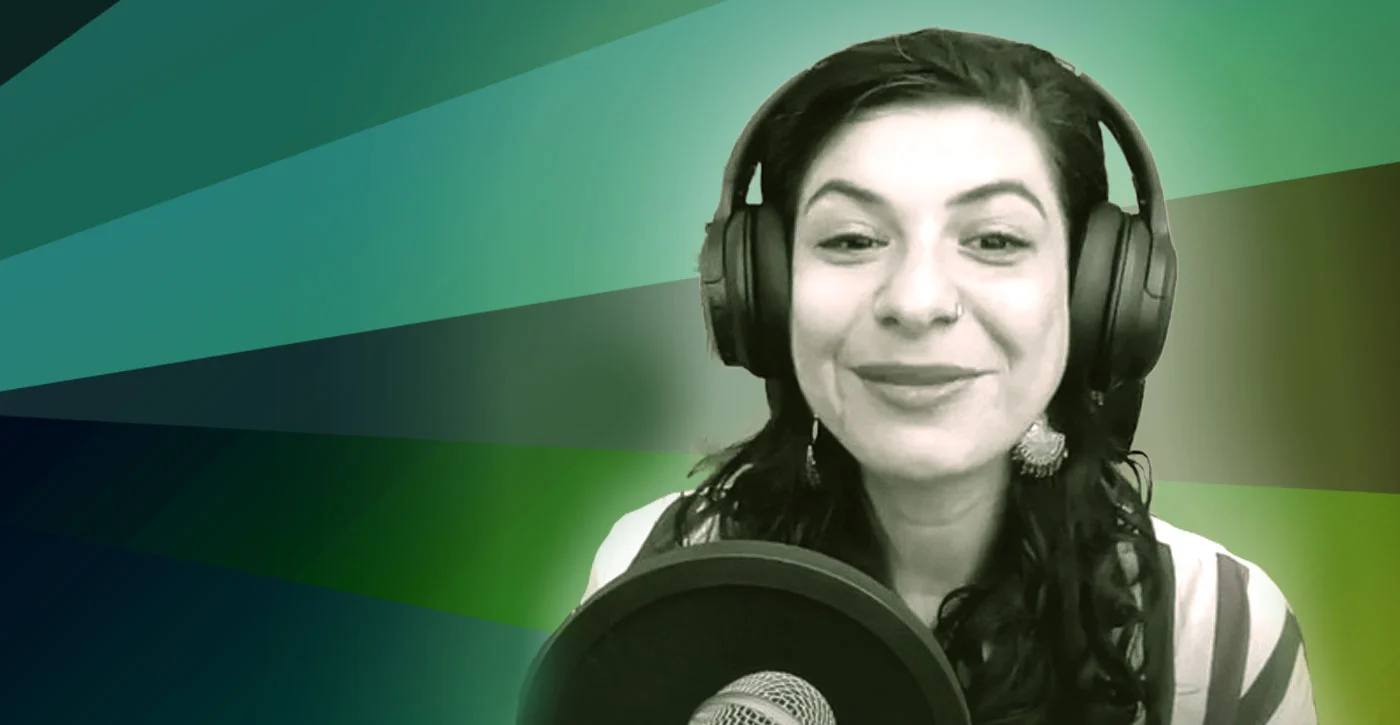
For the past six months, my cohost Peterson Toscano and I have been talking with Quakers about their relationships with money for Season 6 of the Quakers Today podcast. In our final episode of the season (airing October 13), we reflect on what we have learned and focus on concrete, practical next steps to align our money with our values. We can think of these steps in three interconnected rings: personal, institutional, and collective.
The Personal: What Does Your Money Say About You?
In my personal life, the most difficult area to bring integrity to has been the way I earn money. Whatever the job, I will question whether it’s truly aligned with my skills and values. I remember this most clearly as a college intern at a larger investment firm during the 2007–2008 financial crisis. I kept thinking: do I really want to work for the organizations that have created this chaos? After a resounding internal no, I kept switching jobs every year in an effort to find my place. Funny enough, in the end, that place was back in the industry where I started but with a group of people who were committed to ethical investing.
As a relatively new convinced Friend, I have been amazed to learn about the Friends who practice war tax resistance. At this summer’s Friends General Conference Gathering, several people shared with me about their choice to intentionally keep their income below the taxable threshold so that zero tax dollars go toward military spending or foreign intervention. One Friend shared her story of tax resistance for 17 years and the stressful resolution with the IRS. I am in awe at this kind of commitment to integrity and the willingness to bear the consequences.
The Institutional: When Meetings Put Their Money Where Their Values Are
On the institutional level, I love seeing individual meetings get creative with how they embrace integrity in their money decisions as a body. A beautiful example is Red Cedar Meeting in Lansing, Mich. (which was featured in the January 2025 issue of Friends Journal). The meeting’s treasurer, Susan Waltz, shared with me the ways they decided to use money as a vehicle for action: their commitment to moving their funds to a Black-owned bank, self-financing their building renovation, creating a community food pantry, and making financial reparations to descendants of formerly enslaved people.
My own meeting, Central Philadelphia (Pa.) Meeting, is also on a path of impact investing, thanks to the help of Friends Fiduciary. Because of the overlap with my professional work, I was particularly excited to be part of this project, and it reminds me of something Friend Lisa Graustein says in the episode: “Money is a tool and it is a tool of power.” She poses an important question to listeners: “How are we using it to co-create with other people, to share power with other people, and to begin to rectify the centuries of intentional inequity and harm that have been done that also fall along race lines in this country?”
The Collective: Friends Leading the Way
As a collective, Friends have a long history of bringing integrity into their money practices. One of the earliest examples is from hundreds of years ago when Friends, driven by their religious and moral convictions, implemented flat pricing: everyone paid the same amount for a pound of apples regardless of the buyer’s appearance, age, or connections.
We also bring our testimony of peace alive in beautiful ways. Years ago, I was both shocked and proud to learn that American Friends Service Committee, a large international nonprofit with over 350 staff members and an approximately $240 million investment portfolio, avoids or significantly limits investments in U.S. Treasury bonds, which are considered one of the safest and most stable investments. Yet AFSC avoids them due to its “principled opposition” with certain U.S. government policies, including “military policies and wars, treatment of indigenous peoples, environment policies, and immigration policies,” according to the organization’s investment policy statement adopted in 2021.
From the individual who practices war tax resistance, to the meeting that moves its funds to a Black-owned bank, to the organizations that follow socially responsible investing, Friends recognize that our money decisions are an invitation to practice faith through action. I’m curious: what has this podcast series helped you question? Where do you want to make changes, and where might you need more support for discernment?
QuakersToday.org or your favorite podcast app, and watch extended video interviews on our YouTube channel at Youtube.com/friendsjournal.
Quakers Today Season 6 sponsors
Friends Fiduciary: Ethical investing through a Quaker lens.
American Friends Service Committee: Challenging injustice and building peace.


We want to hear from you, not an AI! Please be thoughtful and use your own words. Comments on Friendsjournal.org may be used in the Forum of the print magazine and may be edited for length and clarity.