



Speaking from the Core of Me
What does it mean to say nothing? What do the trees whisper in their silent witness? Why does the blue sky sing? How can silence be not only worship but a testimony of God’s Creation?
Several years ago, I lost my voice. I awoke with a sore throat and strained as if speaking only with air. At first, I wasn’t alarmed and assumed a few days of rest and recovery were needed. Days turned into a week, then two, and then a month, until I stood naked and scared before the possibility that this was not a common illness. I remember that feeling vividly. It is like standing on a precipice looking into an unknown abyss that pulses ominously yet invitingly. She is terrifying and demands all my attention. Every hair is on edge and drawn in by her mystery. Pupils expand to drink in her darkness. Skin prickles, and muscles tremble at the sight of her. There is nothing to say or do; I just listen to the silence. The only way out is through her, but I am too scared to jump.
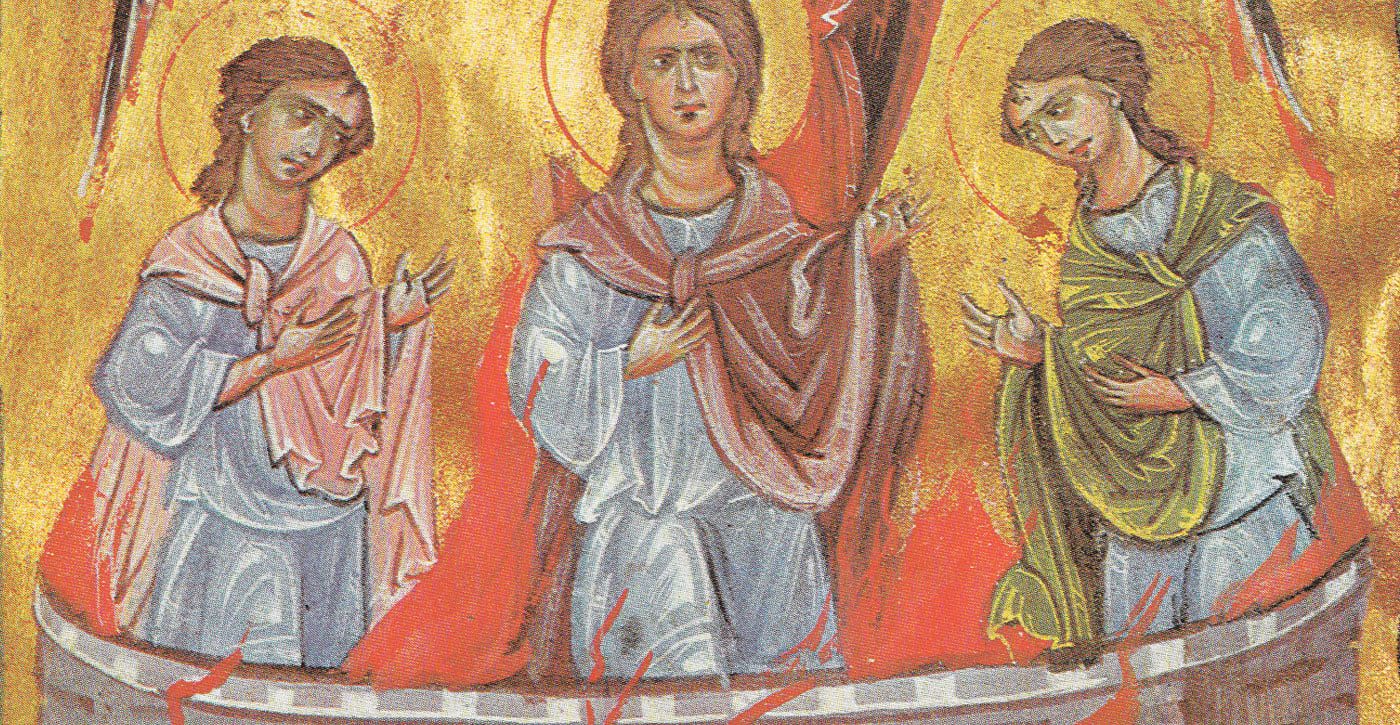
I was eventually diagnosed with a neurological disorder and told that if I ever wanted to speak again, I would need routine vocal cord injections or surgery. Even then, improvement was not guaranteed. In that moment, I took a leap into the unknown, only to discover that inside the abyss that terrified me was a blazing fire. Just as Shadrach, Meshach, and Abednego turned away from a ruling power, trusted their faith, and walked into the fire in the Book of Daniel, I turned away from the power and authority of medicalization and jumped naked into the fire with only my faith in God. I left the doctor’s office and never returned.
The next few months, I lived in near total silence. I entered the beauty of Creation in a way that was not available to me when I wrapped it up in the sharp edges of words, concepts, and sounds. I saw as a flower does: open, curious, without commentary. I traded spoken language for a wordless, cosmic belonging. The silent trees, blue sky, and twinkling stars became my brothers and sisters. They cradled me in the silence as I beheld the Milky Way and felt the spin of the earth for the first time below my feet. At the same time, I raged, trembled, and sobbed for the loss of my voice. I hated myself, my body, and the voice that I once took for granted and had unexpectedly abandoned me. I felt intense, quaking fear every time I attempted to speak. I passed through the darkest places of my consciousness into the deepest seeds of terror, grief, and self-hatred. I was forced to confront suffering. I could no longer ignore the feelings and emotions that I previously had anesthetized with language, and I slowly mended my relationship with my body. Though I said almost nothing, in the silence, my inner world reorganized into a constellation of wild uncertainty, raw emotion, and awe-inspiring unknowns.

Silence poses a subversive contradiction to human conditioning. Spoken language, being unique to humans, keeps our focus trained on the social world. Every spoken word reinforces human ways of knowing that flatten the true nature of Creation into static concepts that are woefully inadequate to describe her glory. A giant, blazing fireball spinning at unimaginable speeds suspended in an unknown, humming darkness that we will never fully understand is reduced to a single syllable: sun. The fact that there exist separate words for “sun” and “human” implies separation, even though most elements in our bodies are made of the same materials and come from the same cosmic origin. Language not only flattens the true nature of Creation but overstates our separation from non-human brothers and sisters in the community of Creation.
Resting in silence provides an opportunity to skim beneath the thick callus of human conditioning with the possibility of glimpsing our true nature in radically unexpected ways. In this sense, silence is the language of whispering trees, the song of the blue sky, the long-held suffering in our cells, and all other ways of knowing that embrace impermanence and interdependency rather than seeking static definition and separation.
I cannot imagine a more powerful testimony than to subvert human conditioning, even for a millisecond, during silent worship; to find myself spinning in the fire and catch a glimpse of God’s design. This is what it means to say nothing. In the nothingness, is everything.
Early Quakers understood this truth. What many now imagine as an ethereal Light that resides placidly within, for early Friends was a wild, often terrifying Light that revealed not only God but that which was contrary to God in each person. Finding the Light within was more a naked leap of faith into the unknown than it was a quiet, sanitized exploration of spirituality. It involved realizing and subverting any societal conditioning that was contrary to God’s Truth. This transformed a person at the core, until a kind of spiritual death and rebirth was experienced. These Friends referred to this wild Light of transformation as a “refiner’s fire,” borrowing the image from the Old Testament Book of Malachi. Sitting in silent worship was one of the many ways to journey to the refiner’s fire and encounter the Light.
Just as Shadrach, Meshach, and Abednego embraced the king of Babylon’s fire and were spared through their test of faith, thereby strengthening their relationship with God, so too did I survive the fire and emerge transformed. Slowly, over many months and years, I taught myself to speak without medical intervention. I prayed; I practiced somatics; I had dreams and visions; I sang songs, which was possible because singing uses a different part of the brain than speaking uses.
Most importantly, I learned to speak simply and from the core of me. Speaking required so much energy and intention that I had to be selective with my words. I focused mostly on speaking what was true and beautiful, affirming this in others. This way of speaking was very different from my default mode of thinking and communicating, which was intellectual, critical, and verbose. Being forced into silence allowed me to rest into the beauty of Creation, of which I am a part, and be fully present with my body and all her feelings and emotions.

Even though I am speaking once more, I have been entirely transformed by this experience in ways that have opened my heart and tethered me to the lessons forever. I still have a practice of holding what is most precious to me in the refiner’s fire of silence. During the COVID-19 pandemic when virtue signaling and performative activism escalated, I made a vow not to speak of my activist work in the community, except with the key stakeholders necessary to further that work. I have continued this vow, with the intention to fully embody my values.
I want my values to be who I am, rather than a performance I sub/unconsciously display to others or a passport to gain entry to an ideological side or political community. This practice has allowed me to better listen and understand how others think, even those on opposing sides, and more effectively communicate my values across differences that seem insurmountable in our current polarized political climate.
This is also the peacemaking work of God only made possible through silence. Silence, when embraced with the right intention, is not only a form of worship but a radical testimony to God’s Truth.
What did I just read? Power. Flame. Fire.
Wow.
Thank you for this beautiful testimony to the power of silence. Your story has opened up new dimensions of silence for me.
The eloquence of your written words is matched only by the magnificence of the testament to transformation.
Thank you for reminding me of the essential purpose of this refining fire that licks at me and invites me, yes, in the Silence.
So impactful.
I was struck by this statement from Leticia Garcia Tiwari in the February issue: “The fact that there exist separate words for “sun” and “human” implies separation, even though most elements in our bodies are made of the same materials and come from the same cosmic origin.”
These words brought a minor explosion in my thoughts: What would our relationships become if we took this to heart and changed our language? What if when I saw you coming, I thought, “Here’s God being [insert your name here],” or when I was walking in the garden, “Here’s the Presence being tomatoes!” What if I noticed, “There’s Source being Mountain, there’s the Divine Friend flowing as ocean!”
I know we’re all made of the same stuff; I was given a vision of that once. I know that we all contain a divine spark. Yet naming this frequently makes it more real, gives it a body, so to speak. It gives it every body, actually.
It would be difficult to forget that the divine is present in you if I add it to your name whenever I see you or even think of you. What if we all did this?
How could I not steward everything to the best of my ability if I constantly name it all with God’s name?
So I’m making it part of my spiritual practice to mentally name this unity for a while. Perhaps I’ll even greet you out loud that way. How would you feel if I did? How might it affect any conflict between us?
I’m filled with gratitude when I read something that completely changes my outlook. Thank you, Love being Leticia!
I want to always remember the author’s phrase: “My values are who I am.”
Thank you Letitia….