




It was in early 2024 that I began to attend Stony Run Meeting in Baltimore, Maryland. This was only a few months after I’d been released from Sheppard Pratt, a nearby psychiatric hospital where I had resided for over four months. By this point, I was living in a residential rehabilitation program, where I was allowed to work part-time and have my car. Aside from an upcoming gender affirming surgery that I was able to finally access upon the passage of the Trans Health Equity Act (THEA) in 2023, my life was in a very uncertain place. I wondered if I would have to spend the rest of my life in this residential rehab program (RRP for short), being unable to properly care for myself as an adult.
I attended Stony Run with Andrea, a fellow trans friend I’d met in the rooms of Alcoholics Anonymous (AA) while at Sheppard Pratt, along with two sponsees. It was helpful to be building a community, and it was nice to be in a space that was openly queer friendly. The four of us would always stay after the Quaker services for the simple lunch Stony Run offered, where we would engage in continued fellowship. It was a nice time and a bright spot during a scary and uncertain period.

It was around this time that I began working to obtain my peer recovery specialist certification. I had taken quite a few classes in the month of February, and by early March, after attending an intensive two-weekend training to become a recovery coach, I was beginning to accrue the required 500 general hours to sit for the certified peer recovery specialist (CPRS) exam. I was accruing these hours by volunteering at a recovery center in Baltimore City. For a little while, everything was fine. Volunteering at the center brought my life more meaning and purpose than the part-time job I’d secured at a fast-food restaurant.
Then one Monday afternoon, everything changed. As my shift at the recovery center was ending, a man came in and approached me at the front desk, where I was seated. He was big and intimidating, and he immediately took an interest in me. He asked about the Narcotics Anonymous meetings offered at the center, but I could tell he was more interested in me than recovery information. He bragged about the jacket he had on, which he said cost him $700. After a bit of talking, the man gave me his number.
“You’re going to call me, right?” he kept insisting. I assured him that I would, just to get him off my back. It took some convincing on my part, but once the man was satisfied, he turned and went back outside.
At this point, with my shift about to end, I approached the program director to inform him of what had happened. He brought me into his office and shut the door behind us. After confiding in him about being sexually harassed, these were the responses I remember him giving me:
“You need to tell Colby (not the person’s real name for safety reasons) as soon as possible that you are transgender. You don’t want him to find out later that you’re trans and have him get upset.”
“Don’t tell any of the female staff about what happened because they’ll get upset.”
“You’re going to have to realize that men are going to come on to you here. A lot of them have just gotten out of prison.”
“Try going to the bathroom to get away from it, and hopefully, when you get back from the bathroom, he’ll be gone.”
After the program director provided me with this “advice,” I felt more helpless, isolated, and despairing. He had been consistently misgendering me over the past few weeks despite my corrections, but while in his office he suddenly came to the realization that I was female.
“You’re female,” he declared before hugging me a little too long for comfort.
As I was leaving the facility minutes later, I saw Colby in the parking lot. He was watching me as I drove off. Now, he knew what type of car I drove.
When I got back to my apartment I told Andrea, the friend who’d introduced me to Stony Run, about what had happened. She was outraged and advised me to get in touch with Maryland Legal Aid. She also helped draft an email to members of Stony Run to request a clearness committee. It was also recommended by my service coordinator at the RRP that for my own safety I should not return to the recovery center.
I contacted Maryland Legal Aid and was redirected to the very same organization I’d worked with to obtain access to my scheduled gender affirming surgery. I received kind words and validation from the attorney I spoke with this time around, but it was ultimately the clearness committee I attended the Saturday morning after the incident that provided me with the direction I needed.
It was a rainy Saturday morning when I met with two Quaker women at Stony Run for my clearness committee. I wasn’t exactly sure what would come out of my meeting with them, but I knew I had nothing to lose by participating.
Both women expressed sympathy and outrage over what had happened. They were in no way patronizing or catering to the bully in the way the program director at the recovery center had been. I was thankful to be among Friends.
“What about Father Martin Ashley?” one of the women asked, referring to the Ashley Addiction Treatment Center, co-founded in the 1980s by Catholic priest Joseph C. Martin, and still commonly called by his name. Surely, I had heard of Ashley but this was the first time I really thought about Ashley as a possibility for me, not as a place to pursue treatment but as a place to pursue work. After all, I’d made some real progress in my efforts to obtain my CPRS certification. I knew I had to do something with my life and refused to settle for returning to work part-time at the fast-food restaurant. If the recovery center where I’d been volunteering was not my means out, then somewhere else had to be.
The following Monday, I called Ashley Addiction Treatment Center to see if they were hiring. When I spoke with the hiring manager, I explained that I was in the process of becoming a certified peer recovery specialist. The hiring manager informed me that Ashley had three openings for the patient support associate position, two that were full-time and one that was part-time. I explained that I was currently housed in an RRP and was encouraged to apply for the part-time position, which I did.
When I was brought in for my interview, I was asked if I could eventually work full-time. While I did not know how I could do this, I said yes, realizing once again that I had nothing to lose by saying so.
One month later, in late April, I had my first day at Ashley as a patient support associate. It was nerve-wracking leading up to that day. I struggled with the transition out of the fast-food job, which had grown familiar, and into something more meaningful yet challenging. Working at Ashley brought my life a newfound meaning and purpose. I soon found myself falling in love with the job. My best days leading up to my facial feminization surgery (which, due to my self-advocacy, had been bumped up from October to July) were when I was at Ashley. My worst days were the long stretches between my workdays there. I worked Mondays and every other weekend, which meant that some weeks, an entire week would go by between one workday and the next. I knew this wasn’t going to be a long-term solution. I hated that I could only work part-time while most of my colleagues were there full-time. I wanted to get to the point they were, but I didn’t know how.
The month before my surgery, my roommate in the RRP had bariatric surgery, which helped prepare me for returning to the RRP after my own upcoming surgery. My roommate also began looking into the permanent supportive housing program the RRP offered to those who demonstrated independent living skills. Earlier in the year the RRP program director told me that I might be better suited to live on my own in permanent supportive housing. Knowing that my roommate was likely to move into her own place following her surgery gave me the push I needed to explore the permanent housing program myself. My roommate was a source of comfort and support, and it would not be the same with her gone. Additionally, I considered the possibility that I might be allowed to work full-time if I lived in permanent supportive housing..
While this presented a possibility that had not appeared before and everyone around me was encouraging, it was still a lot for me to contend with. I attribute my ability to make it through the changes to my having worked through the steps of Alcoholics Anonymous. AA talks about Ninth Step Promises (things like “We are going to know a new freedom and a new happiness”) and these were indeed beginning to materialize in my life.

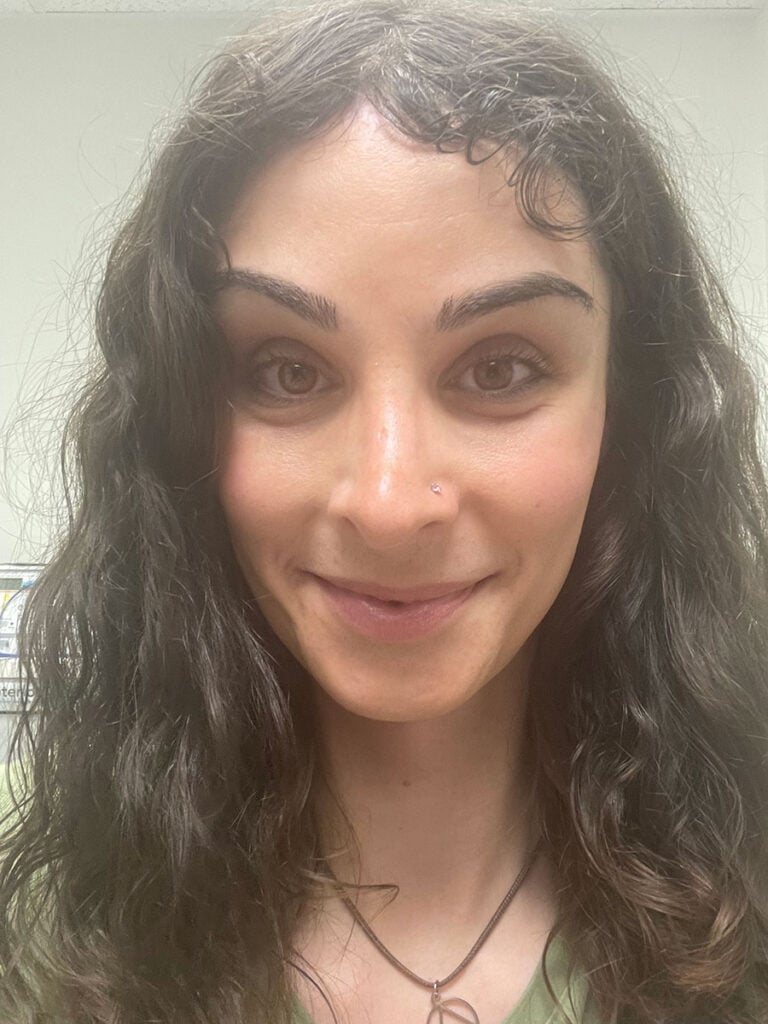
After having my facial feminization surgery in July, I felt a huge weight lifted from my shoulders. Yes, there were challenges ahead, but I had already done so much of the prep work that I could relax for a bit and heal, not just physically but mentally and emotionally as well. While recovering I learned I could work full-time in permanent supportive housing and that an application for a two-bedroom apartment had been approved. The promises were now materializing quickly.
I moved into my apartment in early September, and by the end of the month was working full-time at Ashley. Finally, I could breathe and feel the relief of both feeling more comfortable in my own skin and in feeling like I had a place on this earth again. I was where I was meant to be.
There have been challenges since then. Donald Trump’s return to office increased attacks against trans people such as myself. I live in a more conservative area now and I’ve worried about losing my housing support. A friend of mine was laid off from a job after having come out as trans. I have worried about relapsing and having everything I have worked for up to this point be for nothing.
After accomplishing what I set out to do by obtaining my certification as a peer recovery specialist this past summer, I came to realize that it was time to rework the Twelve Steps with a new sponsor to address these newfound fears, valid as they were. It has been helpful and cathartic unplugging from social media and the news to focus on my spiritual health and well-being. I am almost through working the steps again and am looking forward to the promises continuing to materialize.

I am thankful for Stony Run Meeting and for the two Quaker women on my clearness committee. If it weren’t for them, I would never have thought to contact Ashley and embark on this remarkable career journey. My life has been transformed for the better. Without the housing provided by Sheppard Pratt (itself was founded by a Quaker in 1853), I would not have had a place to live that was just close enough to Ashley for me to get my foot in the door.
While it is not solely due to the Quakers that I am where I am today, they have indisputably played a major role in helping me get to where I am, and for this, I am forever grateful.

I remember meeting you at one our Stony Run forums and am so happy to see how your journey has continued!
As a follow-up to this, my fears about losing my housing and my job came true, but not as I had foreseen. In mid-May, my permanent supportive housing supervisor called to tell me that my apartment would no longer qualify for the PSH subsidy.
“We’re going to have to move you,” she told me, before informing me that she would leave her position the following week to leave the country.
I began to cry, which caught her by surprise.
“Oh, Erica, I didn’t mean to make you cry,” she responded sympathetically. She explained that PSH would continue paying its portion through my lease, which ended in early September. This gave me less than four months to find a new place or pay the rent in full—more than half my net income from Ashley.
Given my safety concerns about living in the United States and living in a red county, staying without PSH support no longer felt responsible. I advocated to remain in the apartment I had worked hard to make home, but ultimately had to move to keep the subsidy.
The Harford County options included one complex nearly 40 minutes from my workplace with a detention center within walking distance. Two others had large Republican signs nearby, and another had a liquor store beside it. None felt safe or adequate for me.
Rather than accepting a promotional opportunity at Ashley, I chose a much smaller, more expensive apartment in Montgomery County that still qualified for PSH assistance, because of my concerns about Harford County and mistreatment from new property management. Montgomery County had been recommended by a sober-support friend because of its LGBTQ+ Bill of Rights.
I moved into my new place just over two weeks ago. While I have not had any issues yet, the situation has been far from ideal. There has been considerable grief and loss of purpose. I am doing my best to find good, but I also envy my former PSH supervisor for having had the privilege of leaving the United States.
Google Review:
https://share.google/XwwWmUaGUqh9SwE9T