



Reflections from a Quaker Fired from USAID
A fundamental belief in Quakerism is that there is that of God, or the Light of God, in every person. I understand this to mean that each person has a divine spirit that is inherent, inviolable, and everlasting, and that every person is a unique reflection of God’s will, creativity, and love. Flowing from this, I can only conclude that the Light of God exists regardless of and unrelated to the religion a person practices, the passport they carry, the language they speak, the color of their skin, etc. Those characteristics may be salient for earthly historical, social, or political reasons, but I cannot imagine that they matter much to God.
In his Journal, George Fox wrote, “But the Lord showed me, so that I did see clearly, that He did not dwell in these temples which men had commanded and set up, but in people’s hearts.” Reflecting on Fox’s revelations and on the body of Quaker wisdom that has developed over almost 400 years of discernment, I understand the Light of God to both surround us and dwell in our hearts, to be an expression of our universal value and worth, and to be a guiding Light that points us as individuals toward God’s purpose for us.
When done with genuine humility and respect for the recipient, giving to those less fortunate is an important spiritual practice and an act of solidarity. It is a mental and emotional recognition of the existence of the Light of God in every person, followed by a practical action to alleviate suffering.
I do not come from a worldly or international family. There is nothing in my background to suggest that I would become a world traveler and a humanitarian. From a young age, though, I had an inherent love for, and fascination with, the wider world. I felt a deep desire to study foreign languages and to travel and connect with people from different cultures and nationalities. This calling was so deep that I was willing to sacrifice many comforts and conveniences for it, but I’m not sure I can explain why. Why does a botanist love plants or a basketball player love to shoot hoops? It just is.
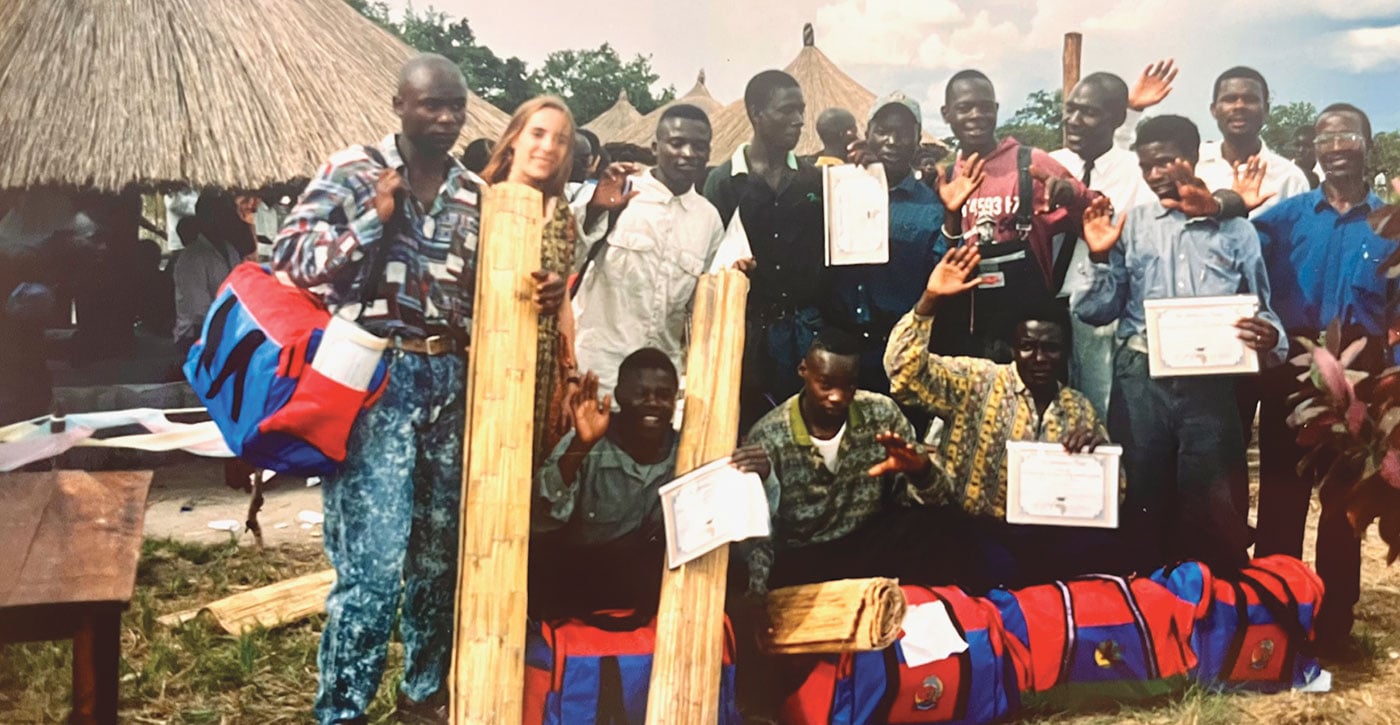
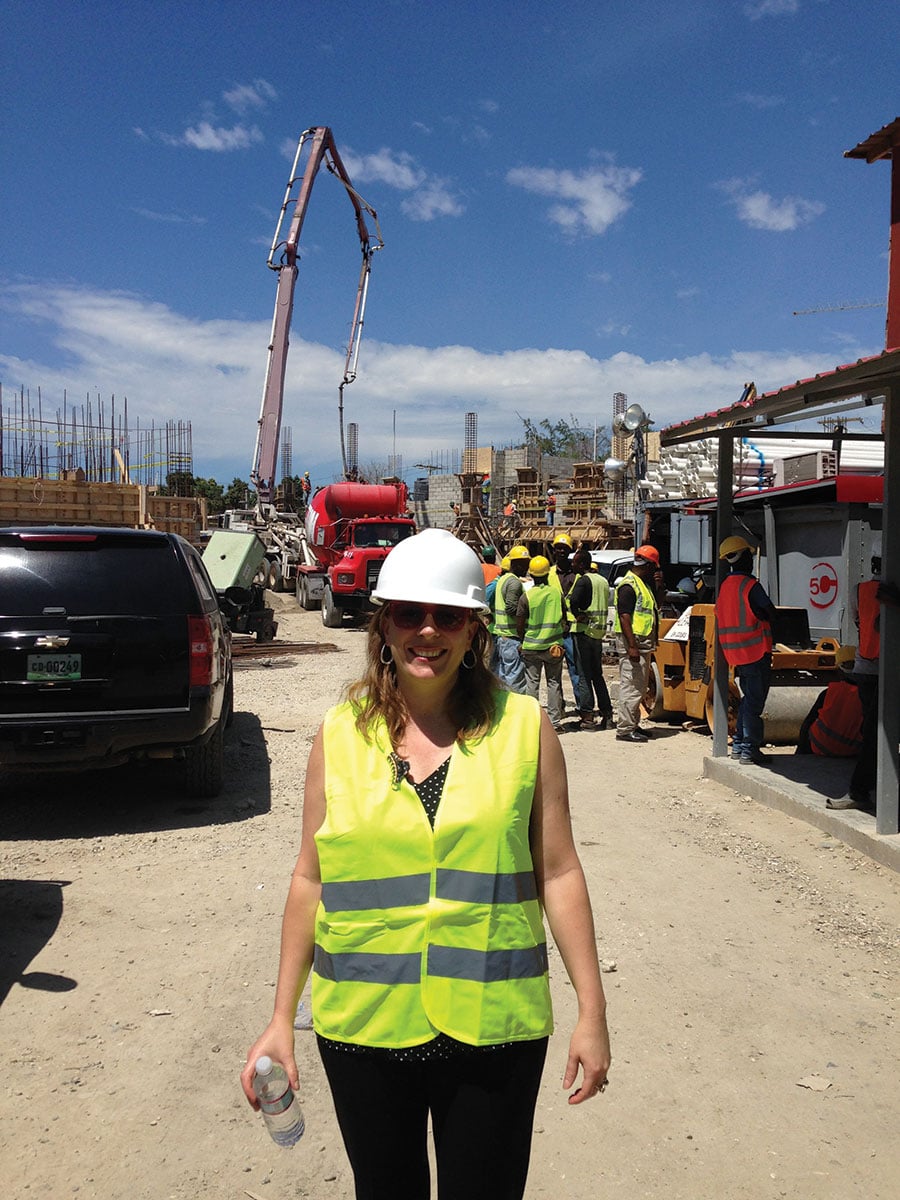
I’ve lived and worked overseas for more than 16 years, or close to one third of my 53 years of life so far. Those years were spent engaged in various forms of humanitarian assistance or development aid in Nicaragua, Denmark, Germany, Zambia, Cameroon, Senegal, Iraq, Turkmenistan, Haiti, and Saudi Arabia. At three and a half years each, I stayed the longest in Senegal and Haiti. At three months each, my shortest stints were in Nicaragua and Denmark. For the first few years, I worked with non-governmental organizations doing both fundraising and on-the-ground projects in poor, rural communities overseas. I then spent 17 years as a foreign service officer with the United States Agency for International Development (USAID).
People react in a lot of different ways when they hear about my somewhat-unconventional life path. Some think I am a saint-like figure who lived in deprivation while handing out food rations to starving babies. (I actually mostly lived in high-quality U.S. Embassy housing in foreign capitals.) Others think I am akin to a traitor to the American people who should have deployed my humanitarian inclinations here at home, and that any available funding—especially taxpayer dollars—should have been used strictly for the benefit of people living in the United States.
As it usually does, the truth lies somewhere in between, but I would particularly like to address the second perspective. Before the Trump Administration destroyed USAID early last year—and thus I was fired at 52 from my dream job and life’s calling—our budget was less than 1 percent of the overall federal budget. The U.S. federal budget is enormous, so while this figure represented a great deal of money in absolute terms, in relative terms, it was tiny.
As a proportion of our total gross national product (GNP), the United States gave far less than other industrialized countries even before the recent cuts. While the amounts vary year-to-year and country-to-country, according to a 2019 op-ed in The Ripon Forum by Brookings Institution senior fellow George Ingram, giving 0.7 percent of GNP for international aid is a benchmark that many industrialized countries aspire to achieve. Some, like the Scandinavian countries, typically exceed the goal, but the average is around 0.4 percent. The wealthiest nation on the planet by a wide margin, the United States, significantly underperforms its peers on this measure, giving less than 0.2 percent of GNP.
Most major world religions consider charitable giving a cherished act. For example, Christian tradition has historically included a 10 percent tithe for the church, while biblical parables, such as the story of the Good Samaritan, emphasize the importance of showing compassion and mercy for a person who is suffering, regardless of the person’s group identity. Matthew 25:31–46 describes a time when God, sitting on his throne in heaven, will separate the righteous from the cursed. The difference between the two is that one fed the hungry, welcomed the stranger, clothed the naked, looked after the sick, and visited the prisoner, while the other did not. In Islam, the principle of zakat requires Muslims who meet a minimum wealth threshold to give 2.5 percent of their annual wealth to the needy. Judaism, Hinduism, and Buddhism all have similar concepts and expectations of their adherents.
When done with genuine humility and respect for the recipient, giving to those less fortunate is an important spiritual practice and an act of solidarity. It is a mental and emotional recognition of the existence of the Light of God in every person, followed by a practical action to alleviate suffering.
Since I believe that every person on the planet is inherently valuable and an expression of God’s love, I personally feel led to focus my humanitarian energies on where the need is the greatest. Of course, I do not want to see Americans suffering, and I agree that there is far too much poverty in the United States. I greatly respect the people who are working to reduce that suffering, and I wish them success in their efforts. That said, as of 2024, according to figures from Our World in Data, the gross domestic product (GDP) per capita, which is the country’s GDP divided by its population, was $75,490 for the United States. In Nicaragua, it was $7,660. In Senegal, it was $4,460. In Zambia, it was $3,710. In Haiti, it was $2,810.
While GDP can give an overall sense of a country’s economic output and the size of its economy, it is not a particularly useful measure of human well-being. I prefer to look at other measures, such as life expectancy at birth or mean years of schooling, to get a sense of what kind of life the average person in a country can expect. According to the latest United Nations Human Development Report (2025), life expectancy at birth in the United States is 79.3 years, and we attain an average of 13.9 years of schooling. The life expectancy for Zambians is 66.3 years, and for Haitians it is 64.9 years. On average, Yemenis receive five and a half years of schooling while Senegalese people receive less than three years.
These are grave discrepancies. The average Zambian lives 13 fewer years than the average American. It shocks me that we, as a world, allow that type of injustice to continue, especially considering that we have the tools, know-how, and resources to greatly improve the lives of the world’s most vulnerable and disadvantaged. What is required is not that expensive or complicated. Ensuring that people have clean drinking water, adequate nutrition, access to basic healthcare services, pre- and post-natal care, childhood immunizations, and simple sanitation systems increases life expectancy enormously. This is precisely the type of work that USAID was doing. And we were seeing results. According to the World Health Organization, life expectancy in Zambia was 44.5 years in 2000. That more than 21-year improvement can largely be credited to America’s partnership with the Zambian government and the Zambian people that made essential healthcare, and particularly HIV/AIDS treatment and prevention services, available to the population.
A recent study in The Lancet that evaluated the impact of two decades of USAID interventions found that “91,839,663 all-age deaths, including 30,391,980 in children younger than five years, were prevented by USAID funding over the 21-year study period” (2001 to 2021). Their forecasting model indicates that recent cuts to USAID could result in more than 14 million additional all-age deaths by 2030.
A recent study in The Lancetfound that “91,839,663 all-age deaths, including 30,391,980 in children younger than five years, were prevented by USAID funding over the 21-year study period” (2001 to 2021). Their forecasting model indicates that recent cuts to USAID could result in more than 14 million additional all-age deaths by 2030.
The world’s richest man, Elon Musk, gloated on social media about feeding USAID into a woodchipper. He called USAID a “criminal organization.” His net worth is over $800 billion and increasing. USAID’s annual budget was around $40 billion. To my knowledge, Musk does not use any of his money to help anyone, but in his role as head of the so-called Department of Government Efficiency, he gleefully destroyed a government agency that was saving and improving lives on a daily basis. Sadly, many of my fellow Americans believed his lies and cheered his efforts. I only wish they and Musk could visit a therapeutic feeding center for starving children, as I have. The Light of God is in the eyes of those children. When we abandon them, we abandon our own humanity as well.
Such a great article, thank you for all your hard work and dedication to help so many souls all over the world. God bless you and your family.