




The Inconspicuous Prophets Who Tend the Light
The first time I encountered the word “elder” in its Quaker context was at a social hour after worship when I overheard someone in a nearby bouquet of Friends say with dismay that they had been “eldered.” What leapt to my mind was the scene in Ghostbusters in which Bill Murray moans, “He slimed me!” after an encounter with a particularly odious green wraith. I didn’t know the definition of the word, but I gathered its connotation pretty clearly.
In recent years, I’ve served as an elder in a variety of contexts, and I feel neither green nor slimy. As Mary Linda McKinney demonstrated in her article “Growing into Our Perfect Selves” (FJ Sept. 2024), eldering in the sense of correction has to be done with love. But study and experience have shown me that “tsk-tsk eldering” is only a tiny fraction of what the word means. I’ve come to appreciate the crucial importance of rescuing the concept of eldering from this desiccated use of the word and restoring it to its full significance.
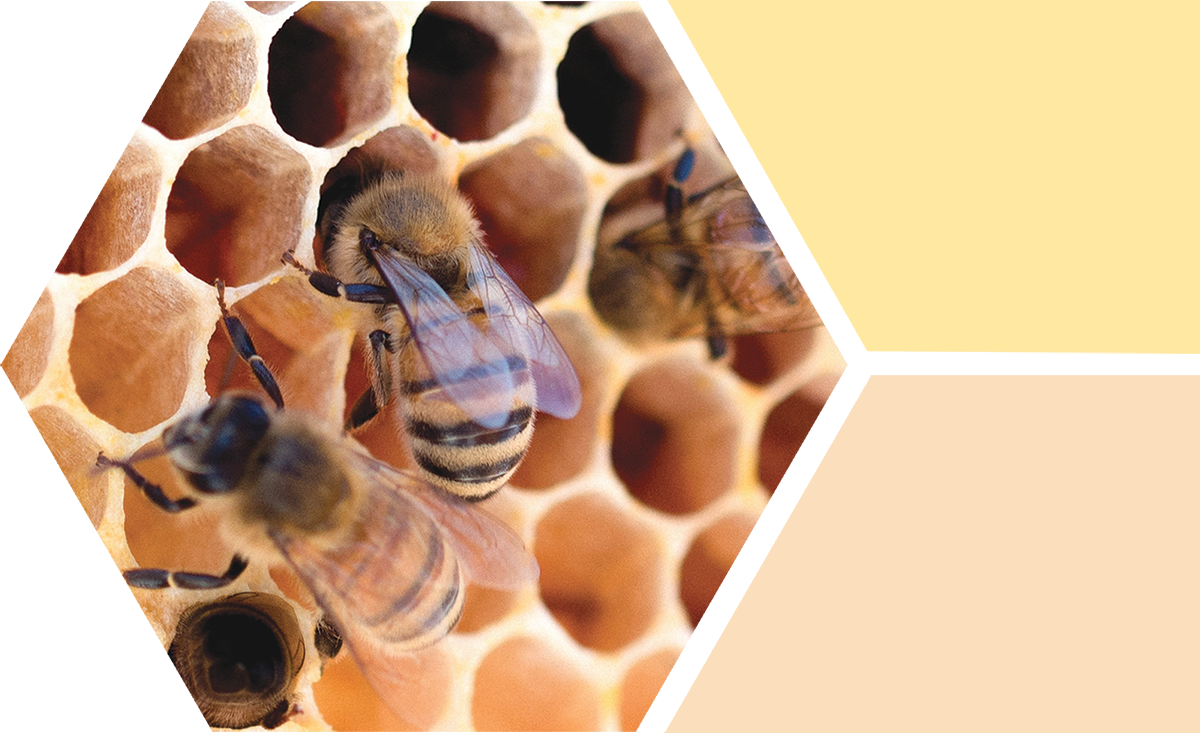
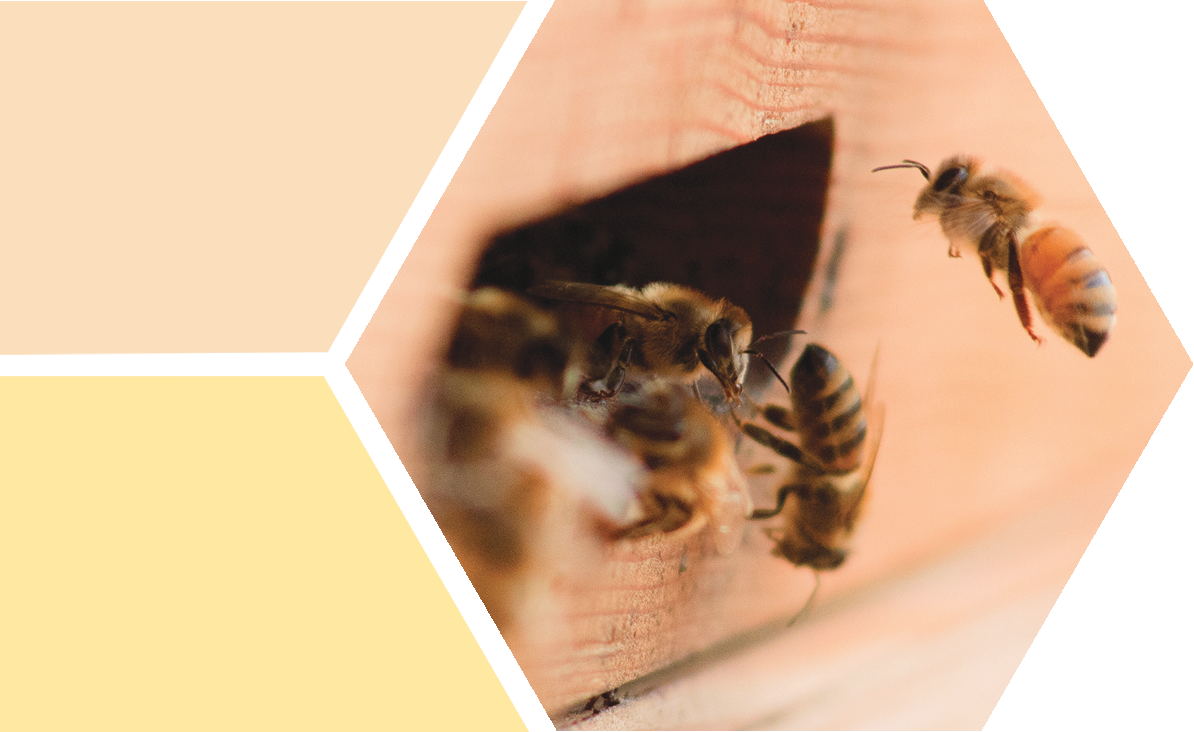
Elders are a keystone species in the ecosystem of the Religious Society of Friends. Like system engineers such as bees, prairie dogs, beavers, and elephants, they have an outsized influence on the health of the whole. In nature, these species support other species, and more significantly, they maintain the balance that keeps the entire ecosystem functioning.
Elders are a keystone species in the ecosystem of the Religious Society of Friends. Like system engineers such as bees, prairie dogs, beavers, and elephants, they have an outsized influence on the health of the whole. In nature, these species support other species, and more significantly, they maintain the balance that keeps the entire ecosystem functioning. Bees’ pollination helps plants reproduce so that countless other species have food and shelter; those species in turn join the food chain that sustains birds, insects, and mammals, while the plants protect and enrich the soil, improve water quality, and sequester carbon. All this makes the whole system more resilient to climate instability and other existential threats.
Elders are an essential source of strength and spiritual vibrancy in their communities. Like bees, they perform small actions that have enormous consequences. Their absence, too, leaves the system vulnerable to collapse.
At a yearly meeting gathering, I sat down early in the worship room, closed my eyes, and centered myself. I could hear the murmur of conversation from outside each time the doors softly opened and closed. One by one Friends entered, paused, scanned the room, and made their way to their chosen places. Inwardly I greeted each person as I traced their movement with my ears, picturing with closed eyes the room gradually filling with scattered Friends. Then I felt someone sit a few rows ahead of me and slightly to my right, and something shifted. I no longer heard the rustling and coughing of people settling in. It was as if the room had taken a deep breath and released it slowly and gently, and the floor had drifted downward, the walls outward, and the ceiling up.
Suddenly there was immeasurable space around and inside me; the darkness behind my closed eyes took on the texture of velvet; and I felt myself suspended in a world of trust and acceptance. I opened my eyes just enough to identify the catalyst for this change, and it was someone I knew as a wholly committed Friend: someone who lets her life speak, whose word is true, whose vision is expansive, whose purpose is love. She was motionless, already deep in worship.
This elder—as in that moment I recognized her to be—facilitated for me a palpable experience of God. I’m sure she didn’t do it with conscious intention: she certainly didn’t come into worship thinking I’m going to bring the folks here into the Light or I’ll give Ann a little attention today. There was nothing deliberate here, and no “I” was in it. She was simply entering worship, and the quality of her presence opened me.
Another time, I gave a workshop on a topic that was new for me. It went according to my plan, and people seemed engaged and stimulated, but I left sensing I could have done more, and I felt uneasy for not having a clear sense of how. At lunch afterward, I greeted a man who had sat quietly through the whole workshop, mostly watching his feet. I asked him how it had been for him. “Yes,” he said slowly, “the topic is a stretch for you. But you will answer faithfully, and with two or three more tries, it will come together.” His answer seemed as if we’d been in a long conversation already, and I realized that we had been, ever since the workshop began. His silence had been the deepest kind of listening, and he had heard not only my faltering voice but also my heart’s longing to be of service. The message he conveyed in those few words was that the workshop did indeed fall short; that my desire to do better was honest; and most important, that the solution would come through faithfulness. This wasn’t the usual kind of answer to “So how was that for you?” It wasn’t a critique or an assurance that everything was fine; it was a call to turn to God. This elder showed me that I had been relying exclusively on my own talents and gifts, and the results were unsatisfying because they were mine, not God’s.
Both of these were momentary events. These elders brought me spiritual sustenance as bees bring pollen to a plant: without fanfare and apparently without effort. Also as with pollination, each of these experiences has had far-reaching effects. The second one directed me toward Divine assistance as a solution for my human limitations, and my experience has proven this dependable again and again. The first one ushered me into new depths of spiritual experience and made palpable the value of corporate worship. In Thomas Kelly’s words, “[I]n the depth of cosonmmon worship it is as if we found our separate lives were all one life, within whom we live and move and have our being.” Both of these elders inspired me to deepen my practice as a Friend.
While we often think of elders as people who support ministers, in fact eldership itself is ministry. This is a foundational principle of Elaine Emily and Mary Kay Glazer’s essential book An Invitation to Quaker Eldering: “We define eldering as the ministry of deepening the spiritual grounding of individuals, a Quaker meeting, or other faith groups or gatherings.” The book’s subtitle describes eldering as “the ministry of spiritual nurture.”
Elders can serve specific roles within a meeting. An elder may accompany a traveling minister to support both the minister and the ministry. A speaker preparing a lecture may seek out an elder to help in discerning the message as it emerges. An elder may sit with Friends considering a decision, silently holding the process in prayer. Elders often voice the one comment or question that opens a decision-making process to new and Spirit-filled possibilities. They can provide spiritual support for someone making an important transition, for mentoring a newer Friend, or for helping Friends navigate conflict.
Such visible actions, though, are only a small part of elders’ contribution. Meetings that embrace eldership may experience more gathered worship, more Spirit-led decision making, and more loving community. Simply by their manner of being, elders offer a radical counterbalance to a world that privileges doing as much as possible, as quickly as possible. Their consistent lived connection with God testifies to the transformational power of the Inward Light and keeps our focus on the sacred. Elders steward the spiritual electricity that charges our activism with purpose and our community with love. Emily and Glazer quote William Taber from The Prophetic Stream: “[T]he Society of Friends would soon die out if we could not depend on the silent and inconspicuous prophets who are necessary for each gathered meeting, for if they do not stay faithfully in that living center, how can others ‘catch’ the spirit which leads us and holds us together?”
Taber’s warning about the Society’s demise is not rhetorical. Sadly, some meetings treat eldership as an optional accessory, a quaint vestige of Quaker history, or a dangerous path to authoritarianism. Friends may minimize the significance of eldership by asserting that every Friend can be an elder, just as every one can be a minister, but there’s a long road between “can be” and “is.” Today’s world clamors to drown out the still, small voice that gathers us as a Religious Society, but elders’ lives amplify that voice so it remains loud and clear. We need elders now, more than ever.
Today’s world clamors to drown out the still, small voice that gathers us as a Religious Society, but elders’ lives amplify that voice so it remains loud and clear. We need elders now, more than ever.
Like any form of ministry, eldership requires resources, preparation, and ongoing commitment. Elders cultivate their “measure of the Light” over years of study, prayer, and dedication. Meetings can nurture emerging elders by providing financial and logistical support for education and opportunities such as retreats, workshops, and spiritual direction. Elders who travel may need their expenses covered, their plants watered, their pets cared for. Meetings can free elders from other responsibilities to allow them to focus on spiritual deepening, as too often, people with gifts that could blossom into eldership are also those who carry the weight of committee work, clerking, and other time-consuming roles.
In a conversation transcribed in Emily and Glazer’s book, Angela York Crane points out the need for elders to have both recognition and accountability: two sides of the same coin. Recognizing elders in some way, she explains, both validates their contributions and allows meetings to hold them accountable. Elders are not immune to self-deception or temptation away from the Divine. Their outsized spiritual influence can become especially destructive if they fall into error. Elders are both recognized and accountable when it is normal for them to report on their activities to the meeting as a whole. A care committee can provide practical and spiritual support and assist with discernment for an elder’s leadings and calls to service. Elders may also help one another to stay grounded in the Spirit and should be affirmed in seeking insight from others. A robust prayer ministry for elders and their faithfulness can have a powerful impact on all concerned.
Elders are living proof of George Fox’s revelation that the Divine is always present, here and now. They anchor us in the definitional Friends experience of God-with-us. Strong elders, strongly supported, lead us back to the Light when we skitter off into worldly tasks and concerns; when our practice loses vitality; when we mistake ego for power; and when we lose sight of the Truth that guides us, binds us together, and infuses our lives with purpose and joy.
Helpful. Causing me to think more carefully about the role of elders in our local meeting. Thank you.