



A Quaker Practice of Starting Anew
When I was five years old, I learned what to do if I ever caught on fire: Stop. Drop. Roll. It was a simple safety lesson. But even then, I sensed that the hardest part wouldn’t be dropping or rolling: it would be stopping. Some part of me knew that if I ever caught fire, I’d want to run.
And over time, I learned I was right: not in the literal sense—thank goodness—but in the spiritual and emotional crises that have swept through my life, burning down my carefully made plans. In those moments, my reflex has frequently been to run, to fix, to do.
Over the 30 years of deepening my Quaker practice, I have found a different rhythm. It has returned me to those childhood words, transfigured into a spiritual practice: Stop. Drop. Roll.
We have all experienced times when the surface of our lives—our ordinary routines—can no longer hold us. Grief, illness, or sudden life changes can upend our lives and send us spinning in reaction. Our personal world collapses. We can no longer rely on the ordinary.
We are now experiencing a wider collapse: a world ablaze with injustice, climate crisis, grief, and political instability. Our collective sense of normalcy is being disrupted. Many of us are experiencing ourselves filled with outrage, despair, powerlessness, and fear.
It is said that times of crisis are when God can do the best work: in us and through us. Crises force us to stop. And when we stop, not in resignation but in holy attention, we make space for Spirit. This is not passivity; it is faithfulness. It is turning toward the deeper current that runs beneath appearances. Stopping is the moment when, in silence, we become present to what is.
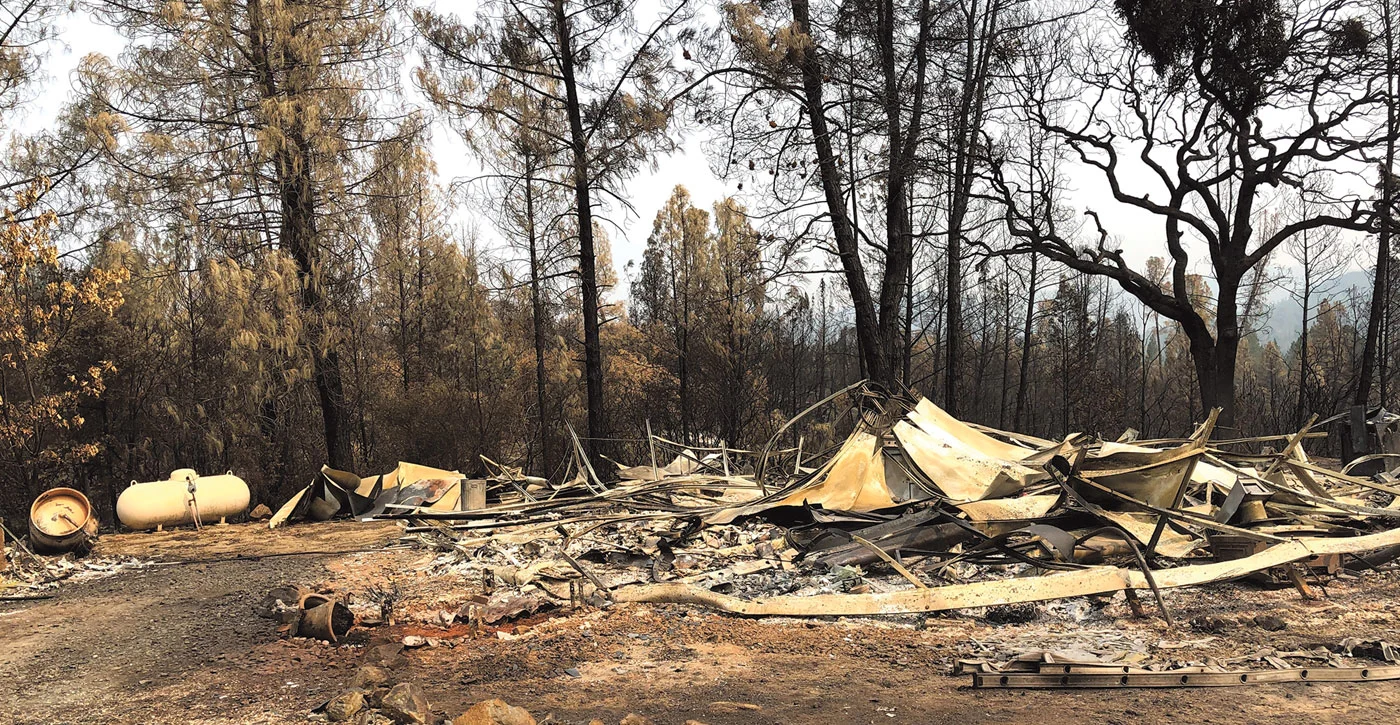
In my own life, the invitation to stop came in a form I could never have imagined. In August 2020, the home I shared with my husband, Chamba, in Northern California burned to the ground in a wildfire ignited by lightning strikes. The fire also burned the western portion of Woolman at Sierra Friends Center, the Quaker school I had been part of for two decades and whose land bordered our own.
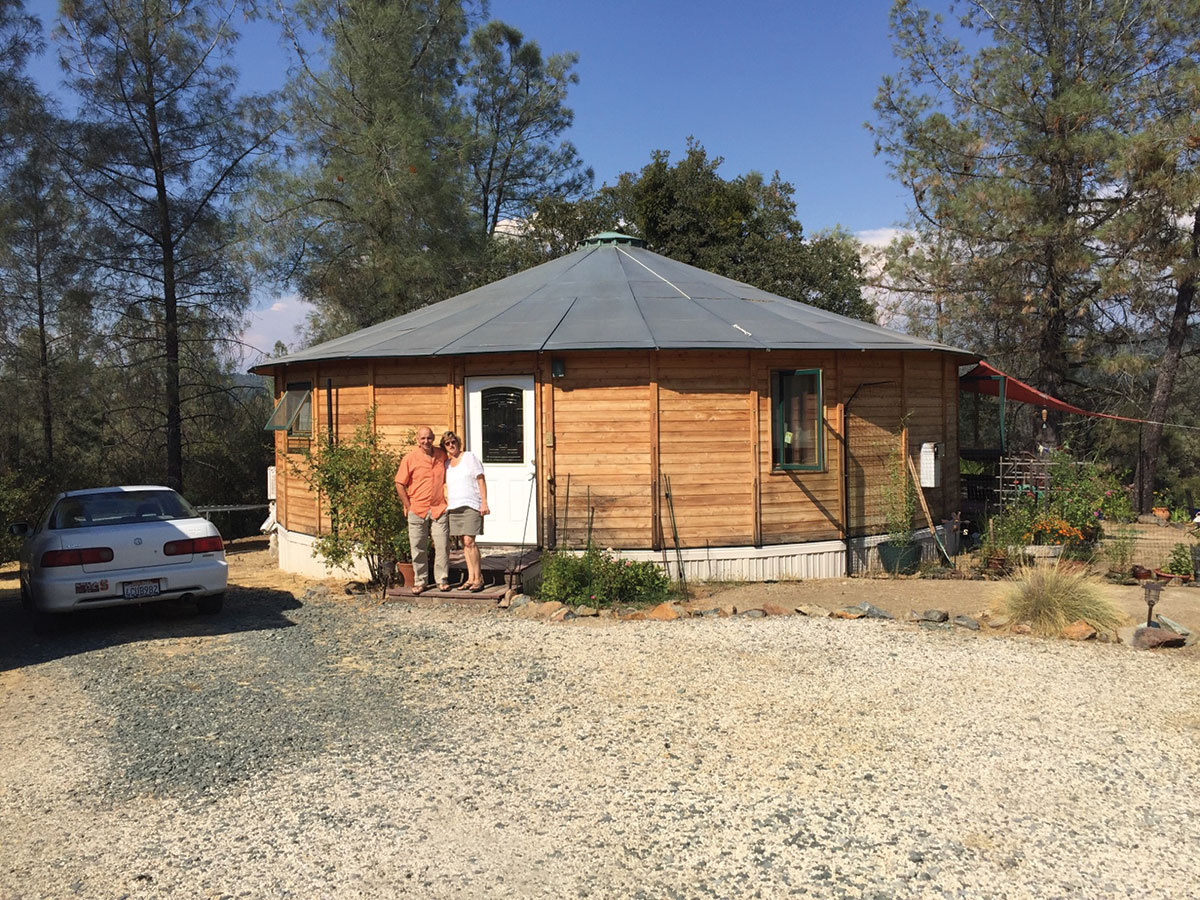
Our house, built by our own hands and with the help of dear friends, was more than shelter: it was our sanctuary. It was full of memories and meaning. It held family heirlooms, treasured books and photographs, and my beloved kitchen. It was surrounded by our garden. All lost. In the days after the fire, that is what I thought. I thought that I had lost everything: my home, my carefully built life, my center.
But when I stopped—when I entered the stillness of worship—I heard these words rise from the silence: “Oh, Amy. Don’t you know? You’ve always been home.” That message broke me into both grief and reassurance. The home I had lost was real, but so was the home I could never lose.
Stopping allowed me to hear that truth. And it helped me to drop, to descend below the surface: below my reactions, below planning, below the stories I had constructed to define my life. This was the practice I had been deepening every First Day as I learned to drop down into worship, in the listening silence. When my husband and I lost our house that practice suddenly seemed imperative. It helped me return to God.
After the fire, our family was held: by our local meeting, by friends, by the wider Quaker community. I was not alone in my grief. And through this communal holding, I was able to drop into Spirit, into the mystery that sustains us even when everything else falls away. I didn’t have clarity about what was next. But I no longer had to carry the burden alone. I was seeking with others in the Light, held and listening.
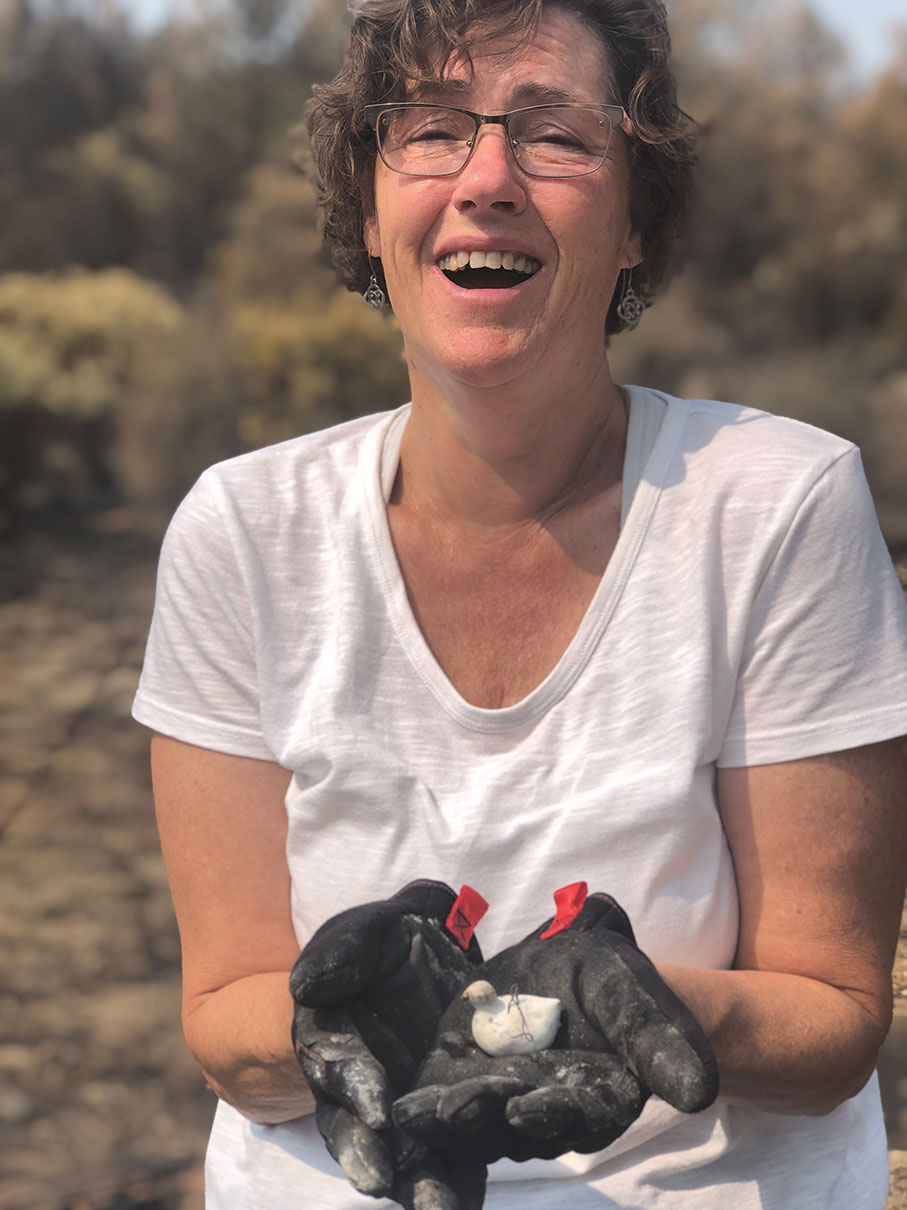
When Chamba and I returned to the land where our house had stood, little remained: a plate, a small dove that hung on our Christmas tree. The underbrush had burned away, revealing the contours of the land in new ways. I could see all the way down the hill toward Woolman. I could see the path of the underground spring, a place I knew was holy to the local tribe: the Nisenan. I saw the same was true in our lives. As I stood in the remains of that home, the contours of a new life were emerging. A life I could never have dreamed of.
A friend shared something with us during that time. There are seeds that only germinate in fire. “Pyrophytic seeds,” they are called, and they are sealed in resin until intense heat melts their outer coat. Only then can they sprout.
The fire that destroyed our home and the surrounding area became the heat that cracked open seeds of new life. Unexpected ministries emerged, and not only in our own lives. Four years after that catastrophic day, the land I once called “Woolman” was restored to the Nisenan people, whose ancestors were displaced from it nearly two centuries ago, the result of devastating genocide and erasure. They are now listening to the deep voice of the land, finding the ancient and the new.
Seeds appeared as we waited together in the silence. We were released from one beloved life into another we could not have foreseen. And we found home again: in community, in worship, and eventually in a new calling among Friends in France, where we became Resident Friends at the Maison Quaker in Congénies.
I learned to be faithful to the path God was leading us into. This was the roll: to move—not with our own plans and solutions but with divine guidance. I moved forward step by small step, often confused by things that did not seem to make sense. It was only later that I saw the pattern emerging. By rolling, by being faithful in action, I began to see a new life emerge.
It didn’t mean forgetting the fire; it let the fire transform us. It was the shift from reaction to discernment, from striving to surrender, from isolation to accompaniment.
This has been the precious lesson that emerged from the fire, the seed that has become a practice. When I stop, I can drop down. And when I drop down, I can roll into being led.
The world is burning: literally, politically, spiritually. Old systems are collapsing; old stories no longer hold. But in the heat of these times, perhaps something new is germinating. Can we learn to stop, finding our still center? Can we drop into Spirit and worship, into the deeper current? And can we roll faithfully, tenderly toward what is next?
I really appreciated this story. I hope I can take it to heart in my own life.