




How One Meeting Ministers to Military Personnel
As the face of the woman sitting across from me crumpled and tears spilled out, I sat surprised: her memories were flooding back to a period of obvious pain in her life, which held lingering, deep wounds that were easily reopened and apparently still raw. We waited for her to gather herself, and she began to tell us how injured she had been by one of her previous meetings. To feel judged by others unleashes a host of emotions: embarrassment, shame, anger, resentment, animosity, grief, self-loathing, self-questioning, a feeling of alienation, and a profound sense of being looked down upon and found lacking. When we are the ones judging others, we can exude an aura of self-righteousness, perhaps cloaked as “just helping” but often coming across as acting superior or holier than others. It can lack any expression of curiosity and humility. To pass judgment is to perhaps assume authority that is not ours to assume while fracturing the warmth of communion and community. Is it our place, really?
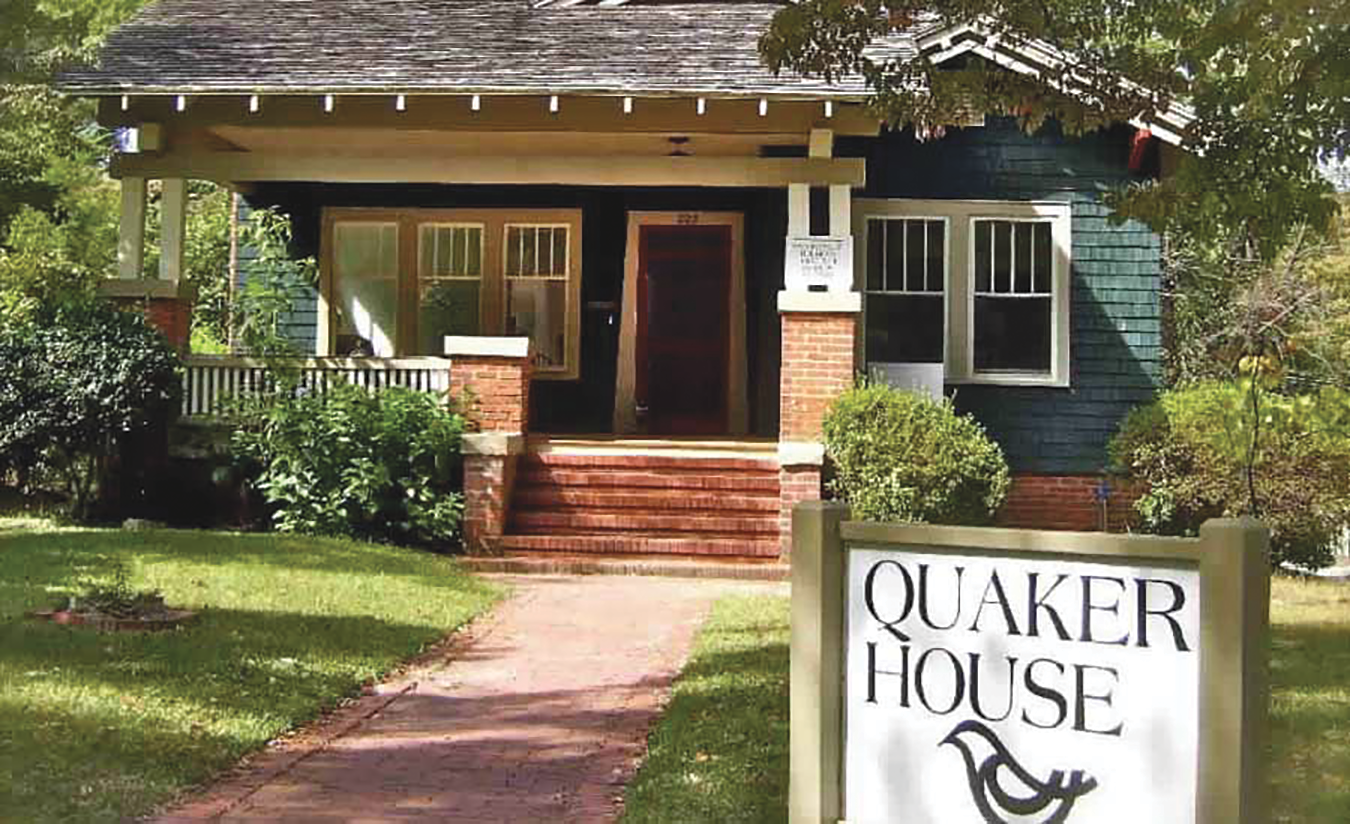
Strange and unique might be an apt descriptor of my little Friends meeting, which is located near the largest (by population) military base in the United States. Fayetteville (N.C.) Meeting’s worship is not held in a meetinghouse of its own but in the family room of Quaker House, a support and counsel center for service members. Life in a military town has a strong flavor of military service and serves as a melting pot of folks from all over the world who have come to spend some time here in North Carolina. The meeting is no exception: we have veterans, military family members, and former military family members. In the past two years, we have had multiple active-duty attenders, both in-person and online. It is a hard truth that we will often have a limited time with most of them, as world situations and changes of duty stations call them away from us. The peace testimony takes on a special dimension for us, as we focus on inclusion and welcome without reservation and turn away from any notion of condemnation. We hold the belief in individual discernment and trust all to pursue their particular spiritual journeys.
Our meeting space itself provides us with a symbiotic relationship. Quaker House is an advocate for peace. Along with their critical work staffing the GI Rights Hotline and educating people about both conscientious objection and moral injury, the organization provides no-cost individual counseling to military members, veterans, and military families. Executive director Wayne Finegar observes:
I see Quaker House as the immediate and continuing expression of the peace testimony every day. Quaker House started from a small group of soldiers asking for help without really knowing what they needed, and with Friends responding to the request without really knowing what they were going to do. Both the soldiers and the Quakers had faith that together they would find the way to provide the help that was needed. More than 55 years later, we still are.
As a participant in our meeting, Wayne points out that Fayetteville Friends is a worship space dedicated both to seeking peace and being welcoming to people who are directly connected to the military.
We are able to provide a continuing place of sanctuary from the violence and insanity of daily life everywhere, and especially in this town where everything is suffused with the influence of the base. [Fayetteville Friends is] creating a place where people who spend all of their lives being part of the military-industrial complex can have an hour of silence and contemplation. A place where they can know they are not going to be judged either for being part of the military nor for questioning being part of it.
The peace testimony takes on a special dimension for us, as we focus on inclusion and welcome without reservation and turn away from any notion of condemnation. We hold the belief in individual discernment and trust all to pursue their particular spiritual journeys.
Part of my own path regarding the peace testimony led out of seeing how moral, psychological, and physical injury as a result of military service destroyed my spouse, body and soul. It turned him into a person so filled with rage and hurt that it became impossible for me to remain in the marriage. Leaving after 20 years of struggle brought desperately needed peace into my life and allowed me to heal. That healing eventually circled back around and allowed us to participate amiably (for the most part) together in the lives of our adult children and our grandchildren. While I will probably always harbor personal resentment towards aspects of military life, I must also acknowledge that in bringing me to North Carolina, that life has grown into a deep and rich sense of community in this military town.
Others within my meeting have come to us with their own past experiences of reconciling not only with their own discernment but with the hurt inflicted by other Friends in regards to judgment of military service.
As a meeting, we join in the various aspects of members’ and attenders’ lives. I was honored recently to participate in the promotion ceremony of CeCe Bernstine, an Army judge advocate during her time at Fayetteville Friends. CeCe offers the following testimony:
The civil rights struggle of my lifetime has focused on access to housing, free healthcare, and more affordable education: all things the military offers. I had been told—and believed—that the military targeted people of color because America didn’t care if they died. As I learned more about the military, I learned that many of the people who joined did so for real benefits that tangibly improved their quality of life and that of their families.
When I thought of the military from our antiwar testimony, I only thought of the front lines. Then, all at once, I started learning about the lifestyles and career paths of different support roles: IT; cooks; and most significantly, lawyers. I learned that the lawyers of the Army who work in the Judge Advocate General’s Corps (JAGC) are considered “the conscience of the military.”
I started feeling that “still small voice” calling me to learn more, and when I brought my confusion to a clearness committee, it became apparent to me that I was not a conscientious objector in the sense of holding a moral stance against weapons; my peace testimony comes from acting as a bridge between worlds. To bring the voices of my Friends into rooms where we were discussing how to deal with “enemies.” To contribute to uphold liberty and freedom for all, from our religious freedoms to defending soldiers in a federal court of law.
I don’t think I anticipated losing my connection to Quakers when I joined the military. I had the support of my meeting, but as we moved, I realized how the military impacts the community and Quaker meetings don’t generally establish themselves in the same space as a military presence. I started to feel the divide and worried about how I would be received if I attended a Quaker Meeting and told them I was in the military.
The search for individual peace has been a common thread voiced by the members and attenders that I spoke with at our meeting. Veterans Nate and Amanda Crew were searching for a community that reflected their family beliefs. Nate says:
After attending Fayetteville Friends Meeting at Quaker House, the feeling of worship being based on quiet simplicity clinched it for me. Here was not just a philosophy of peace, but a whole attitude, lifestyle, and worship style based on peace. For someone who’d long been turned off by any sort of religious group, now to find myself (an army veteran) immersed in a community steeped in the way of nonviolence—this has been a healing and growing experience.
Our meeting has been deeply blessed by Nate and Amanda and their two young sons: a blessing we might have missed out on if we had led from a place of judgement rather than one of curiosity and welcome.
And what about the woman who had broken down in tears? When I sat down privately with Mayland Reilly to learn more, she discussed openly how multiple experiences of the judgement of meetings had impacted the life of her family. When Mayland and her husband Sean had gone through their clearness committee prior to marriage, the committee initially welcomed Sean (who is not a Quaker) and agreed to marry them under the care of the meeting. Two years later, however, when Sean decided upon military service, some members of the clearness committee expressed regret at not having inquired regarding his relationship with the idea of military service. How might this experience of feeling judged have influenced this young couple as they began their life together? Sean and Mayland had discussed her concerns in a long decision process and were aligned in feeling that medical service would save lives and make a difference: young soldiers would have a chance at life because of the medical care that Sean would be able to provide. In their view, this was not in conflict with the peace testimony. The lack of thoughtful response in the committee members implying the marriage endorsement was a mistake hampered opportunities for communion and deep fellowship.
Another unfortunate experience with Friends occurred when the young family moved to a new area and Mayland called a local Quaker meeting to inquire about attending. She was met with the harsh response that as military they were not welcome. Mayland did find out later that the person answering the phone did not represent the feelings of the meeting as a whole, but the damage had been done, and Mayland did not feel she could expose her children to potential conflict. The family later attended a non-Quaker church, drawn in by how accepting they were. This huge difference from the unprogrammed manner of worship left Mayland sacrificing her preferred way of worship in order to have a much-needed sense of welcome and inclusion for her family. “Love, care, and concern is doing the work,” she said, “[of] giving people what they need and meeting them where they are.” By choosing the military life, they chose a life rich in service to others; Mayland states firmly that she would choose it all over again.
Each of us must reconcile with our own leadings regarding nonviolence and how we use our resources to promote peace. When we examine our differences, we can enter into those discussions with tenderness and from a place of safety. Fayetteville Friends reaches out to those who may need a helping hand, listening ear, and fellowship as they face the many challenges and difficulties that military life can bring. We cannot pretend to know another’s path, and we recognize that keeping an open door to all enables Spirit to move and provides a peace resource to those in the community who might need us. Our interconnectedness draws us together as we lean into supporting one another right where we are. When we move with a sense of open listening, to seek communion and explore differences with a sense of curiosity, we can leave behind the mistaken notion that we know best in regards to the paths of others. Our entire community surrounds us with the military. Perhaps our role here is to be a special place of welcome and grace.
We want to hear from you, not an AI! Please be thoughtful and use your own words. Comments on Friendsjournal.org may be used in the Forum of the print magazine and may be edited for length and clarity.