




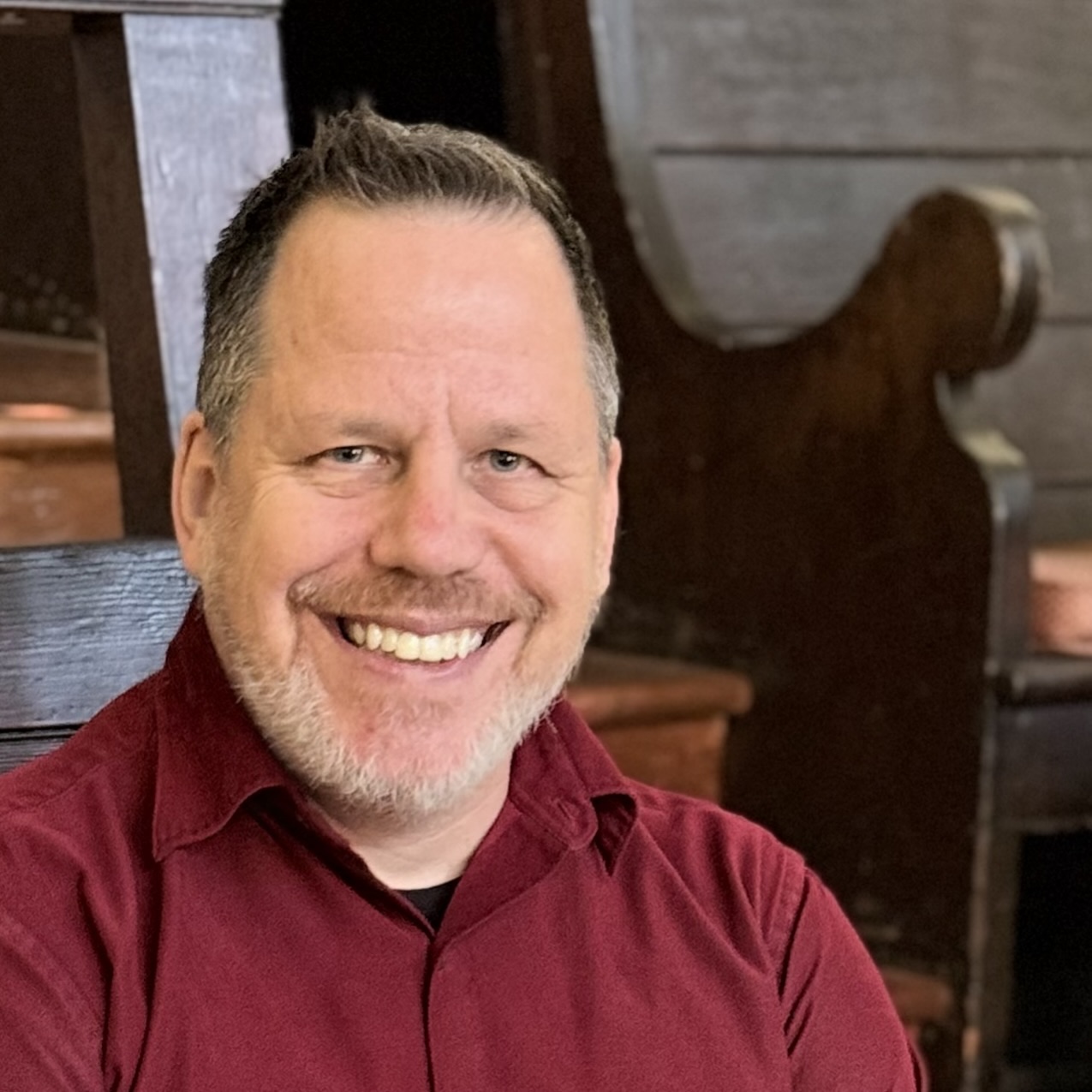
A conversation with Scotty Utz, author of “Forging Peace and Disarming Hearts: Inside the Guns to Gardens Movement.”
In this episode, Scotty Utz shares his inspiring work transforming firearms into symbols of peace and healing, blending faith, community action, and gun safety. Discover how ecumenical efforts and practical tools come together to promote peace and reconciliation.
Related Links
Bio
Scotty Utz isn’t in the circus anymore, but life can still make him feel like he’s walking the high wire when juggling the dynamic gifts of three teenagers and a spouse, while taking the RAWtools South show on the road. To keep life spicy, he’s an active member of Asheville (N.C.) Meeting, Artist Blacksmiths of North America, and Forging for Peace. Website: south.rawtools.org.
Transcript
Martin Kelley (00:05.738)
One of the most profound and oft quoted statements from probably the entire Bible is from Isaiah, and it goes And he shall judge among the nations, and shall rebuke many people, and they shall beat their swords into plough shares, and their spears into pruning hooks. Nations shall not lift up sword against nation, neither shall they learn war any more. And this may seem like a wonderful lyrical kind of statement.
But what if we actually took it seriously and actually started taking our instruments of war and turning them into pruning hooks? And I’m here today with a friend from Asheville, North Carolina, Scotty Oots. Scotty, welcome to Quaker Talk. And tell us about you you start your article in French Journal with a story about Teresa, someone named Teresa. Why don’t you share what was going on you know, at that experience and what was going on in your heart as you were
Scotty (00:57.692)
Yeah.
Martin Kelley (01:05.886)
there with her.
Scotty (01:07.927)
yeah, Teresa has been such a inspiration for me and Stan my partner in this work. and we fell into doing what has now become something that we call rites of transformation because of Teresa. Teresa came to us
And asked us if we could help her. She was struggling with the death of her son who died by suicide here in North Carolina on a marine base. And the firearm was getting ready to be released. She didn’t want it shipped back to her. We have our federal firearms license, so we were able to work with NCIS and get that f firearm shipped directly to us.
And when she reached out to us, our instinct was to say, Yes, we can help you with this. And then as it got closer, my partner Stan and I were like, he said, Well, what’s our plan? What are we gonna do? And so we kind of s took a step back and we asked her about her faith tradition and Stan, who is a Baptist minister.
reached into his traditions and I brought silence from our tradition. and we kind of wove these things together to to to create a container. it was it happened to be close to the year anniversary from the time her son Alex died and she and her three living children came over and
We dismantled that gun and they all took turns beating on that and turning that into something life giving. We took part of the slide and I made a shovel and was able to make a split cross out of the barrel for with some of her children. We we forged hearts and so that was a really powerful experience for us. Some
Scotty (03:29.606)
really the most meaningful one of the most meaningful experiences I’ve I’ve had in my professional career and we continue to be in relationship with Teresa and other families have found us and we’ve done similar s sorts of things with them, always kind of working with their faith tradition where they’ve come from, to make something that that works
for them on their healing journey.
Martin Kelley (04:01.613)
That sounds like a real holy moment to to grieve and memorialize someone like this and find a way of creating a keepsake that has a a more peaceful purpose.
Scotty (04:05.21)
Scotty (04:18.064)
Yeah, and it’s it what’s really Wendell Berry has been on my mind as he died recently. And I don’t know if you’re familiar with the manifesto of the Mad Farmers Liberation Front. it ends with the line Practice resurrection. And this that has been kind of a calling that I have felt
It’s a kind of a question, an invocation, a commandment. I don’t know what it is how he ends that poem, but it is something that that has stuck with me for decades and thinking about practicing resurrection as being a way that we live into our all the various forms of our Christian faith. And so this feels like that or
Another theological terms is the paschal mystery that out of death comes life. And it feels like we are taking some piece of material culture and we are getting to participate and co-create in this way and creating something new and injecting something of beauty into some grief which also feels to be in keeping with that of God inside of us, our inner light.
that creative spark in us and we we get to participate that and to create some new stories and experiences out of both the material culture that’s been harmful and our own grief and experiences in in that dynamic, creating something new. So it’s it’s powerful and it’s different every time we get to be close to that place.
Martin Kelley (06:13.805)
Yeah, and t tell me what the the scene is like though. You you have a a van with all this equipment and all this complicated equipment and metaphors and language. I mean it’s kinda fascinating, not being, you know, a gun person myself really much. you know, I don’t know all this. So so tell us about just the the mechanics of all these tools and how to learn them and how to use them safely.
Scotty (06:40.22)
Sure. So there’s a a couple of different things. One, we have a shop here in Asheville where I have a lot of tools that don’t leave the shop. And so sometimes people bring firearms to us in our shop. Sometimes they mail to us through our FFL. and then other times we have a van and a trailer, as you alluded to, that’s full of chop saws and angle grinders and generators and
PPE and all that stuff. And so we take that van and trailer around. We also have I have a small forge and a couple anvils and some blacksmithing tools. And so we go and we partner with different congregations and community groups to hold safe disposal events. and this is where the Presbyterian Peace Fellowship has been so instrumental in this work. They’ve
offer these action circles which if people are interested in doing this in their hometowns, getting that training through the PPF is fantastic. So there’s a group of volunteer the I’m sorry, the Presbyterian Peace Fellowship. Which Yeah, which they call them Action Circles. and it’s a five week Zoom training.
Martin Kelley (07:53.281)
And what’s a PPF? The
peace fellowship, right, okay. They’re getting the training through there.
Martin Kelley (08:04.342)
Okay.
Scotty (08:07.654)
They hold it four times a year. it’s one of the many ministries out of the Presbyterian Peace Fellowship, which started off supporting conscientious objectors, much like our Quaker House, which also has a great article.
Martin Kelley (08:23.629)
So you you get to be very ecumenical, it sounds like here too. I mean it’s a way that all of our traditions can overlap to take Isaiah’s vision to make it manifest.
Scotty (08:33.926)
Yes, ecumenical and to inner faith. it’s it’s not uncommon for our Jewish brothers and sisters to join with us in certain locations to take part in these also. And there’s some secular groups of that don’t claim any particular faith perspective that also sometimes join in. So we yes, it’s we work with
Martin Kelley (08:37.279)
And inner faith, yeah.
Scotty (09:02.924)
all different flavors of Christians and non-Christians. and it’s one of the it’s one of the kind of exciting things about this work too is learning more about different faith communities and their traditions and getting invited into those spaces and trying to figure out how we can bring together all our different gifts to do this important work of peace building.
Martin Kelley (09:31.568)
that’s great. A another well I was
Scotty (09:31.73)
So anyway I was just gonna say, yeah, we we have all those tools and we train people on the safety of those and set it all up and it’s kind of a circus. And then and then s or sometimes we will go and not be cutting up firearms, but you know, not everybody’s ready for that. Sometimes we go and speak at churches
Sometimes we’ve we’re invited to preach or at peace conferences and sometimes we just show up with our forge and I have some already cut up gun parts and we just forge on some things with people. We also do some rituals where
People will remember someone who they know who they’ve lost to gun violence and invite them to kind of come up and pound on a gun as we hold that person in the light and cycle people through. So there’s lots of different ways we show up in people’s communities.
Martin Kelley (10:45.089)
Yeah, that’s wonderful. another thing that you mentioned in the article that I found fascinating, it was that you know there’s there’s the ecumenical interfaith, but also across gun culture. Like you’ve actually had to go and get trainings, you have a gun license, you work with the NRA, with the ATF, and have to actually like learn the language of of guns. so you’re sort of bridging that too. Tell tell me a little bit about
Scotty (11:09.2)
Yeah.
Martin Kelley (11:14.623)
about that work with with the gun folk and and bureaucracies.
Scotty (11:18.126)
Yeah, well and I am a Quaker by convincement. I the ecumenical stuff I think comes easy to me because my mother was Roman Catholic and my father was Presbyterian and I grew up going to Presbyterian Sunday school and Catholic Mass and participating in both of those. so I grew up with firearms
In my house, I learned to shoot when I was young. I hunted. My first job after college was working for an outfitter where I took people into the wilderness in Wyoming, into the Cloud Peak Wilderness, fishing in the summer and elk hunting in the fall. So I I worked as a hunting guide and did that on another ranch as well.
So I kind of came into this work being familiar with firearms and around them. My partner Stan did not. and if there’s one I I as I looked at the article, if there’s one word I could change in the article, I think I say we begrudgingly took an NRA class and I kinda I wish I had left that word out.
there was a part of that was begrudging. The NRA is an interesting institution. It has a long history. And there’s kind of two parts to it. There’s the political wing of it, which I think we can say became sort of more strident and militant, like after there was a split, and then there’s the education wing. And the education wing
does a lot of really good things. They’re they produce a free hunter education for folks, which is really excellent. And if all gun owners would follow all the rules and the things that they teach, our society would be safer. And so I have this complex relationship with the NRA. Also I’m an NRA instructor. I became an NRA instructor.
Scotty (13:40.986)
So that I could teach folks how to safely unload firearms and get a certification, which helps with our insurance. that we get the people who do this to get all these certifications from other groups. And then we have one that we do too, specifically to our safe disposal events. and so one of the things in my partner Stan is really good about talking to this because he had an
handled firearms and was really new and he was really more skeptical of the NRA than I was when we got started in this. and I think he would say he begrudgingly like I kind of drug him into all of this gun culture with me. And we were really pleasantly and delightfully surprised by
Martin Kelley (14:19.693)
Okay. Right.
Scotty (14:38.585)
some of our NRA instructors. And one of the things that was surprising for us as we were getting our instructor certification was that we are not allowed to talk about politics during our classes. If that comes up, we we were instructed that we were to shut down any political talk that happened during our classes and to invite people to do that during break time. We were we were really surprised and impressed by that.
Quite honestly. there was also a section on sexual harassment and making sure that you ask for permission before you touch someone, which sometimes you have to do when you’re training people to hold and carry firearms. And so there were parts of that that we were really impressed and surprised by. And there’s also you know, this idea of proximity, of being close to folks. Brian Stevenson is so
good on this point talking about our need to be near folks. And so this is like one of the ways that being in relationship with people who think really differently than you about something.
to like them and to enjoy their company and to learn from them, to realize they know things that you don’t know, that’s really helpful to carry with us. And you know, when I hear people make a flippant offhand remark, you know, I I I kind of remember like what would this friend of mine say in this situation? And it softens us, it disarms our own hearts. and I think for
Martin Kelley (16:05.72)
Yeah.
Scotty (16:22.585)
Many of us who identify more on what would be called the liberal side of this issue, there is a softening of our own hearts that might be the work that we’re called into around this. And getting to know and understand and be around people is is really powerful. And as you said, like we necessarily have to work with gun owners to get
get firearms and we work with folks wherever they are. So if you know, some folks think it’s ridiculous that we cut up firearms and
We ask you know, are they keeping their firearms locked up and safe storage. We can help create a lot of safety by really encouraging safe storage of firearms. So that’s something that we talk with other friends about if that’s where they are on their journey.
Martin Kelley (17:13.454)
Culture of safety, yeah.
Martin Kelley (17:26.646)
Sure. I’m I’m curious like how the Quaker associations have helped you in this process. you know, your Asheville Friends meeting has been supportive and the Southern Appalachian yearly meeting, I guess you’re part of. how how has that been and what kind of support and if friends elsewhere want to do something like this, w what what might they do with their meetings to start this or at least get an invite to you to
Scotty (17:42.437)
Yes.
Martin Kelley (17:54.968)
Bring your Rocho over to them.
Scotty (17:56.37)
Yes, we love bringing our show on the road. first I I started off just vi I found out from another pastor friend of mine about Raw Tools, the national organization. I was working as a blacksmith. I started volunteering and showing up to stuff. and then when it got to a point where I found out
more about these folks and was getting more and more drawn in and I kept getting invited to more things. I had a clearness committee that Asheville Friends set up for me about should we should I found this raw tool south and there was support. we got clearness with local friends about that. The first safe disposal events
Our meeting helped sponsor that both with volunteers and financially, and we’ve done three of those now, and our meeting has shown up for all of those events. They also wrote me a minute of travel in ministry and
Which has been helpful when we go into different towns and cities. I always try to reach out to friends where we’re gonna be and send them my letter. And then our yearly meeting also wrote me a minute of travel as I travel outside of our yearly meeting. And so that has been a helpful way for me to for friends to know that I have the backing of
our community.
Martin Kelley (19:50.863)
Yeah, it’s great to see the processes working as they should for that. Yeah. Yeah. So what’s what’s next for you? Are you are you doing some more travel? Are you doing more of these events various places, expanding in in a way?
Scotty (19:53.99)
Yes. Go friends.
Scotty (20:08.049)
Yes, I am gonna be going to Missouri next Tuesday for a conference, a national gathering called the Atwood Institute. So I’ll be there teaching and demonstrating. Stan and I’ll both will be there. We come home from that, we go to Columbia, South Carolina, where we’re partnering with a group of churches down there, and also excitingly we’re
We’re working with the sheriff’s department there, which we’re waiting on final approval for that. But we are hoping to be able to connect with law enforcement agencies. And it looks like this is going to be our first one in South Carolina where when they have firearms that they need to dispose of, that they can send them to us and that we can do that. And then I’m gonna be coming up to your neck of the woods up into Philly.
Martin Kelley (20:41.439)
great.
Martin Kelley (21:01.462)
Great connection, yeah.
Scotty (21:06.745)
into Ken Kensington where with red letter Christians hosting the third annual peacemaking summit. We’ll have folks from all over the country coming and being with y’all. So we’ll be up there for that. And then you can go to rawtools dot org. There’s an events page and it will show you what we at Raw Tools South are doing and what other affiliate groups from a around the nation are doing.
Martin Kelley (21:38.104)
Great. Sounds like you’re keeping real busy and continuing to make lots of interesting and counterintuitive connections that I think will help the cause of peace and reconciliation. So I’m I’m glad you’re doing this, Scotty.
Scotty (21:51.471)
Well, it feels it really
It’s such a tangible way of living into our peace testimony and our community testimony. And it’s such a I feel so fortunate that all these different strands of my life have sort of come together and brought me into this place feels like a real blessing. And thank you, friends journal, for sharing our story with the larger
friends out there that’s super meaningful to me to get to be included in that.
Martin Kelley (22:33.112)
We’re we’re glad to have you. it’s a article for for those watching in the September issue of French Journal, which is all about what the Quaker peace testimony means to us today. So glad to have your perspective, Scotty, and thanks for coming on the podcast here to talk with me.
Scotty (22:47.971)
Yeah, you bet. Thanks, Martin. It’s good to be together.
Martin Kelley (22:51.311)
Great. See you soon. Bye bye.
Scotty (22:52.764)
All right, take care, bye bye.
We want to hear from you, not an AI! Please be thoughtful and use your own words. Comments on Friendsjournal.org may be used in the Forum of the print magazine and may be edited for length and clarity.