



Wars Fought Without Guns or Missiles
In Africa and globally, war extends beyond physical violence. It encompasses a wide range of socioeconomic, psychological, and environmental harm. While we read, write, and talk about border and regional wars, and the use of weapons, it is important to appreciate that some wars are silent in nature. They don’t knock in advance, and they don’t prepare us for the inevitable. Such wars, when they occur—as they have historically done across Africa—leave generations struggling to survive.
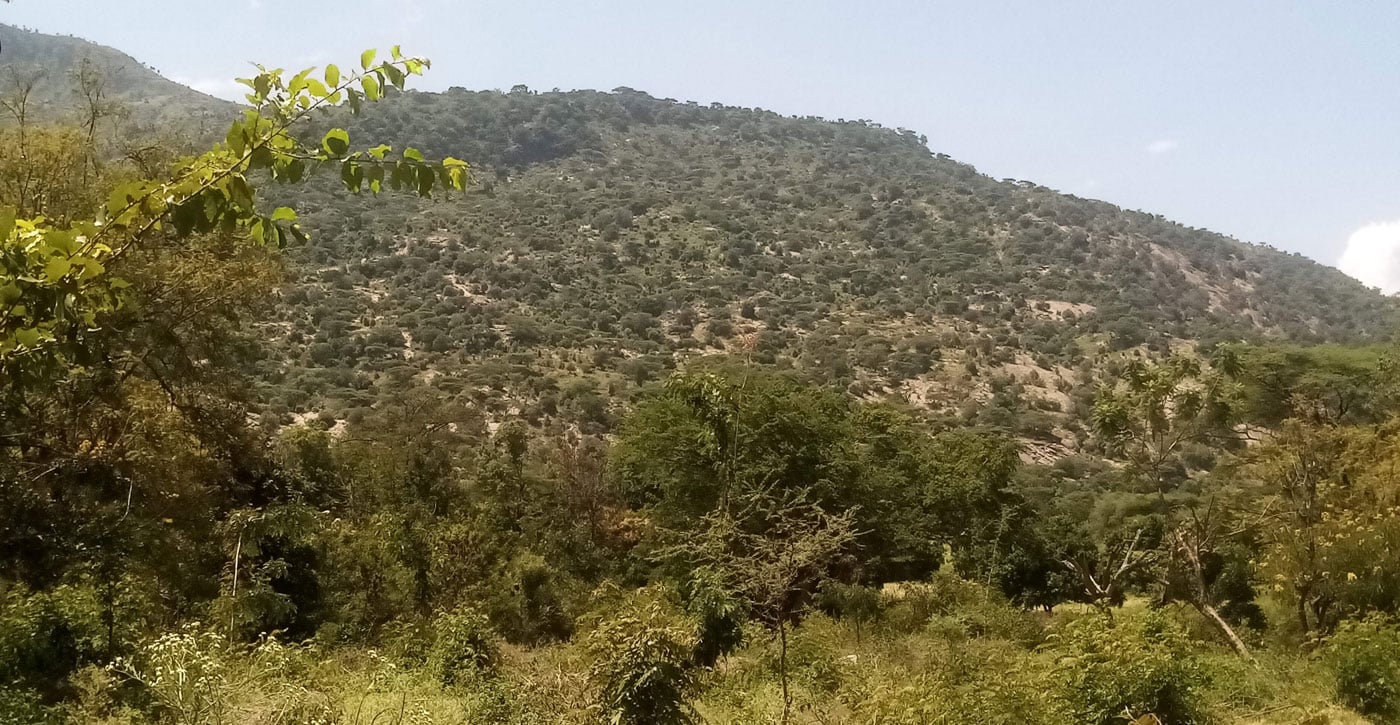
Such are the wars that are neither fought with guns nor missiles but with rising temperatures, failed rainfall seasons, and continuous ecosystem collapse. This is the kind of war that comes with slow-yet-relentless effects whose victims are often invisible. This is the war of climate justice. In places like Kenya’s Kerio Valley, as in other regions in Africa, climate war makes environmental crises inseparable from human suffering, conflict, and global systems.
I was an online participant at the thirtieth annual United Nations climate change conference, Conference of the Parties (COP30), that was held in Brazil. I did not have a chance to rub shoulders with climate champions in the conference halls, nor did I take a turn in contributing questions in the negotiation room presentations, but thanks to Quaker Earthcare Witness, I logged in daily with a notebook, a cup of tea, and a quiet sense of expectation. Conversations around climate finance were a personal favorite. They spoke directly to real communities like the ones I work with and those living with the consequences of climate change.
A hybrid conference can feel distant at first when you are among the online participants. Screens take away live emotions, and sensing the weight of decisions made in virtual rooms can be difficult at times. As the days passed however, things became lighter. I began to follow the conversations not only as policy discussions but as stories shaped by power, fear, responsibility, and the urgent need for survival.
It dawned on me that climate finance is not a minor issue but one that lies at the heart of climate crisis, with two conflicting contrasts. On one side were the carefully polished statements about “commitments, mechanisms, and pathways,” while on the other side lay the realities that are rarely named out loud, such as the flooded homes in Namanjalala in Kitale, the deadly landslide in Chesongoch in Kerio Valley, the failed harvests in my own home, the drought in northern Kenya, and the marginalized communities struggling to adapt with little support. I repeatedly wandered into deep thoughts and asked myself, who are these systems really designed to serve?
As I later reflected, I realized that one truth becomes impossible to ignore as far as the COP30 is involved: that the communities most affected by climate change are often those that are least responsible for causing it.
As I later reflected, I realized that one truth becomes impossible to ignore: that the communities most affected by climate change are often those that are least responsible for causing it.
When Climate Fuels Conflict
It is impossible to separate peace from the environment in Kerio Valley. Water is scarce, and the grazing land is overstretched. In many places, the soil alone is extremely fragile. When resources shrink, the air is filled with tension, yet what is happening is not simply local.
Before I participated in the COP30, I believed that famine and drought in most African states was a natural occurrence that required sufficient funding to alleviate. If you ask me if I still believe so now, I’d possibly laugh at my naivety. I have learnt that the issue is not only about nature and finances but also about how the finances revolve, who controls them, and who are the personnel entrusted to use them. Isn’t it funny how loans are presented as solutions for developing countries that are already burdened by foreign debt? The fact that communities that are suffering climate loss must repay the funds that are meant to help them feels profoundly unjust, considering they are mostly unaware of the causes of climate crisis.
For instance, in northern Kenya—areas like Turkana—which experience prolonged drought, have pushed pastoralist communities into crisis. In western Kenya, floods continuously cause havoc displacing families and destroying livelihoods. Nairobi, despite being the capital city, hasn’t been spared from fatal flooding. In parts of Congo, Tanzania, Uganda, and Malawi—just to mention but a few—environmental degradation intersects with displacement and conflicts, and these create conditions of ongoing deep suffering and health concerns. The worry is these are not isolated events; they are all connected to each other. Rural communities have no idea what is happening and blame gods and nature—and, at times, ancestral wrongdoing and curses.
Resilience in the Face of Injustice
I once paid a visit to a group of women in Kerio Valley; they were planting mango trees under the scorching afternoon sun. I watched as the heat slowed their work but not their determination to get the work done. One of the women said to me, “Tunalimia Watoto wetu. Hata tusipopata kivuli, hao watafurahia.” (“We are doing this for our children. Even if we don’t enjoy the shade, they will.”) I have never forgotten those humble words which speak of hope that is rooted in sacrifice for a future that is unknown.
Environmental care is becoming part of peacebuilding, especially through the work of Friends Ecojustice Practical Action (FEPA). By rallying young people to take a front role in tree planting, soil conservation, and water protection, environmental protection is not only an action for the elite but a means for everyone’s survival, because when it is all said and done, resilience must not be mistaken for sufficiency.
When a member of a family is in distress, the family members have a role to play in holding the hand of their member and providing strength and support. In a similar fashion, while FEPA is helping communities to adapt to what they have, even as global systems fail to support them, the larger Quaker family has a big role to play in helping those in environmentally degraded societies. Such forms of support can mean more than financial support. It can be in the form of stopping work in protest and organizing with their Quaker friends. This war can be speaking up and against perpetrators, and speaking for and on behalf of those without a voice, for we all exist in a context.
Listening from the Margins
As I listened to the delegates and presenters at COP30, I came to understand individual and group positions differ from one region to another. While some countries touched on fear of economic instability, others dwelt more on strong political pressures at home. Representatives from vulnerable climatic regions spoke with urgency, frustration, and sometimes deep exhaustion. While all these perspectives are strong and deeply meaningful to each context, I did not agree with every position but learned how history, power, and inequality shape what each actor considers reasonable.
The reality of the matter is that when polished statements and policy directions are brought to the same table along with those who have lived through flooded homes, failed harvests, and drought-stricken lands, harsh loans are not acts of justice or peace; it is simply a gold-coated declaration of war. Even more troubling is the structure of climate finance itself whereby loans are frequently presented as solutions for developing countries, which are already burdened by foreign expensive debt.
What does it mean to be Friends in a world marked by inequality? What does it mean to walk in the Light when some voices continue to be shut down or remain unheard? Being Friends as envisioned by George Fox means being ready to stand in the gap, to speak up, to speak for and on behalf of the oppressed, even when the oppressed means an African child facing a climate crisis caused by our international friends and allies.
The Silence of Power and the Power of Silence
My experience in Kerio Valley and during COP30 kept me thinking about Quakers in other parts of the world: Friends who may never see these landscapes or hear these stories firsthand, and yet they are part of these stories. War not only points to the use of weapons or the absence of national peace. Going to war can also imply standing in solidarity and demanding honesty.
What does it mean to be Friends in a world marked by inequality? What does it mean to walk in the Light when some voices continue to be shut down or remain unheard? Being Friends as envisioned by George Fox means being ready to stand in the gap, to speak up, to speak for and on behalf of the oppressed, even when the oppressed means an African child facing a climate crisis caused by our international friends and allies. Being Friends must mean more than advocacy, because to remain silent is to speak for the oppressor.
We want to hear from you, not an AI! Please be thoughtful and use your own words. Comments on Friendsjournal.org may be used in the Forum of the print magazine and may be edited for length and clarity.