



A Workshop for Justice and Peace in Ukraine
In 2023, nearly 20 Ukrainians, mostly Alternatives to Violence Project (AVP) facilitators, gathered in Poland for the Friends Peace Teams Europe and Middle East two-week workshop: Alternatives to Violence Project for Justice and Peace (AVP-JP). After two years of brutal warfare following Russia’s invasion in February 2022, even the most experienced Ukrainian facilitators admitted that the war had deeply shaken their belief in nonviolence. In the face of overwhelming violence by a powerful aggressor entering their land and their homes to kill, rape, and destroy, principles of nonviolence didn’t feel sufficient to keep their loved ones alive and safe. Their very identity and way of life felt threatened.
Many of the Ukrainian facilitators hadn’t attended or led an AVP workshop since before the war began: partly because logistically, it was difficult in a war zone but also because their belief in nonviolence that they had shared with others as AVP facilitators before the war had been shaken. One facilitator described this belief as a bright Light that had almost gone out.
But during the Poland workshop this Light was rekindled. It was now more of a small, flickering flame growing stronger on a personal level. Practicing the exercises together allowed a sense of joy and inner peace to return, a reminder of the gift and power of nonviolence. Conscientious objection to war does not abdicate a legal right to self-defense. Still, nonviolent options are stronger than violent ones and are necessary for just, peaceful civil societies during and after violence. Violence only destroys. It cannot create. It has no future. Nonviolence on the other hand is life-giving: it heals, generates, and creates. It offers a future.
Though reconciling nonviolence with the injustice of ongoing military invasion of their country still felt hard, they found different starting points for cultivating and practicing it within themselves and with those around them. They emphasized that peace without justice wouldn’t work, but ways to work step by step for justice and peace had opened.
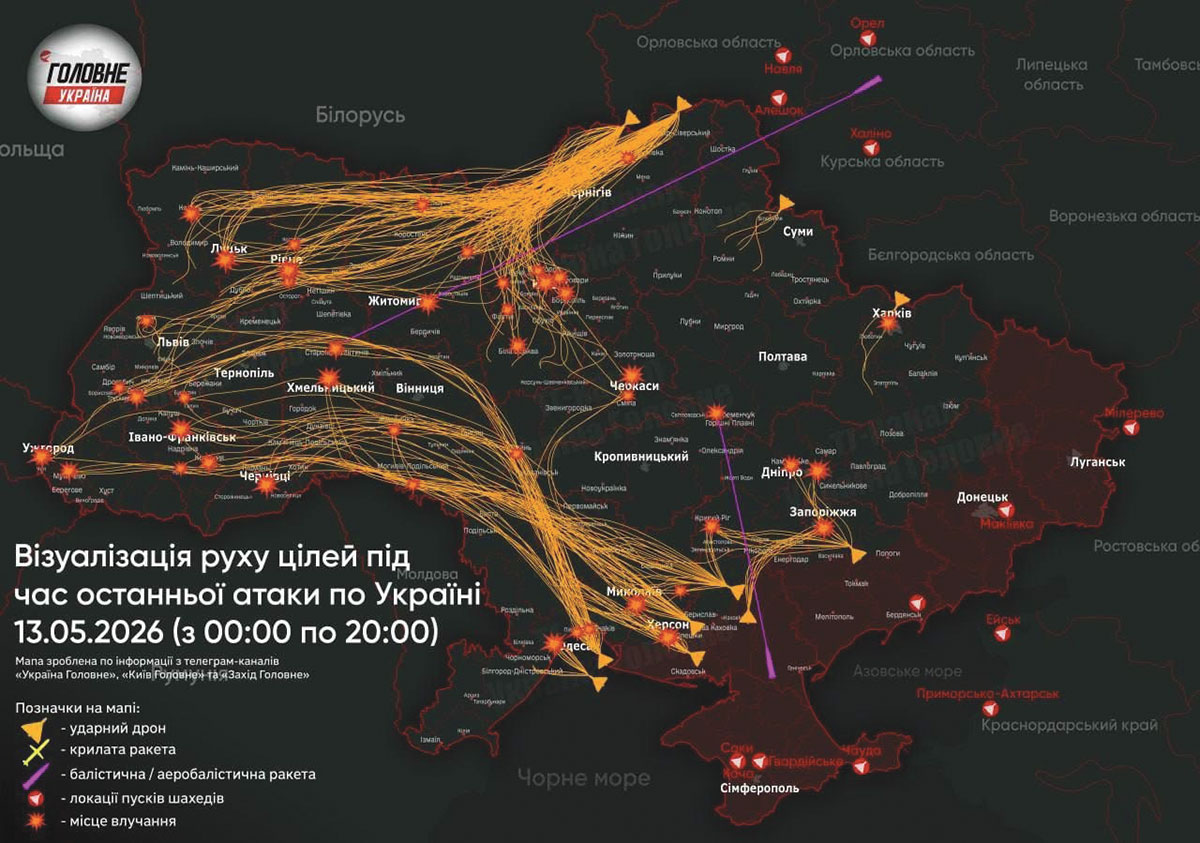
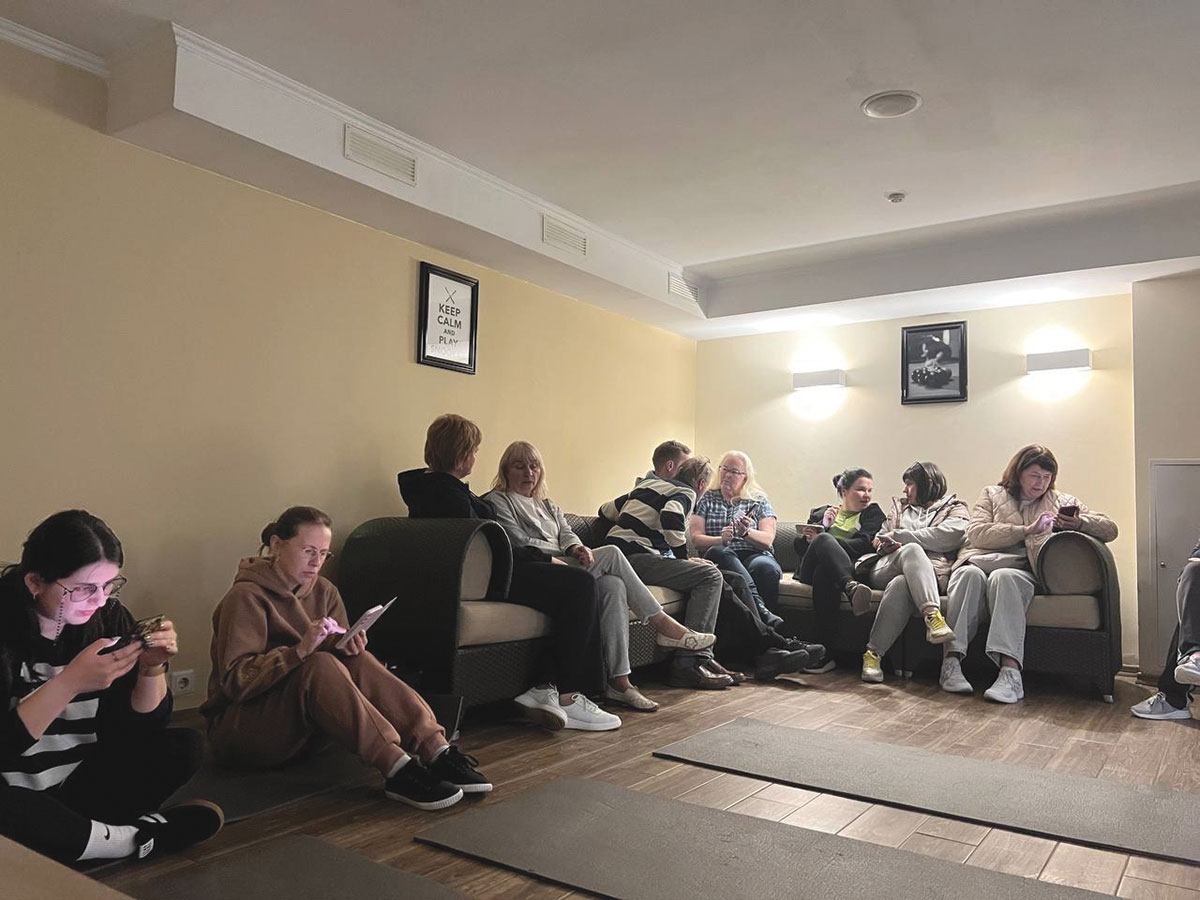
Missile and drone strikes on the day we had to take refuge in the hotel shelter hotel shelter after Russia fired 800 missiles and drones across Ukraine.
At the Poland workshop an idea to hold a workshop combining AVP-JP with trauma relief exercises in Ukraine was suggested by Olha, Friends Peace Teams local coordinator in western Ukraine. Olha and her colleague Yuliya support Ukrainians by relieving psychological trauma among those seeking refuge from the war in western Ukraine, many of whom were displaced by attacks in the east. They counsel groups and individuals and train professionals. Their therapeutic work largely focuses on getting people to believe in themselves so that they can stay energized and motivated. The transforming power of life helps people overcome hopeless situations, and being energized helps them to resist. Olha says:
Stress tolerance, flexibility, and striving for the best are the three pillars for people who want to survive tough battles and remain human while spreading peace. This work promotes the idea of the possibility of peace and reduces the degree of hatred between people.
Delayed by several challenges, including the logistics of organizing anything in a war, the idea for a workshop in Ukraine finally came to life in mid May of this year in the Carpathian Mountains of western Ukraine. We gathered with a group of 20 Ukrainian teachers and psychologists from all over Ukraine to learn and practice new tools, recharge, and spend time together in a relatively safe part of the country.
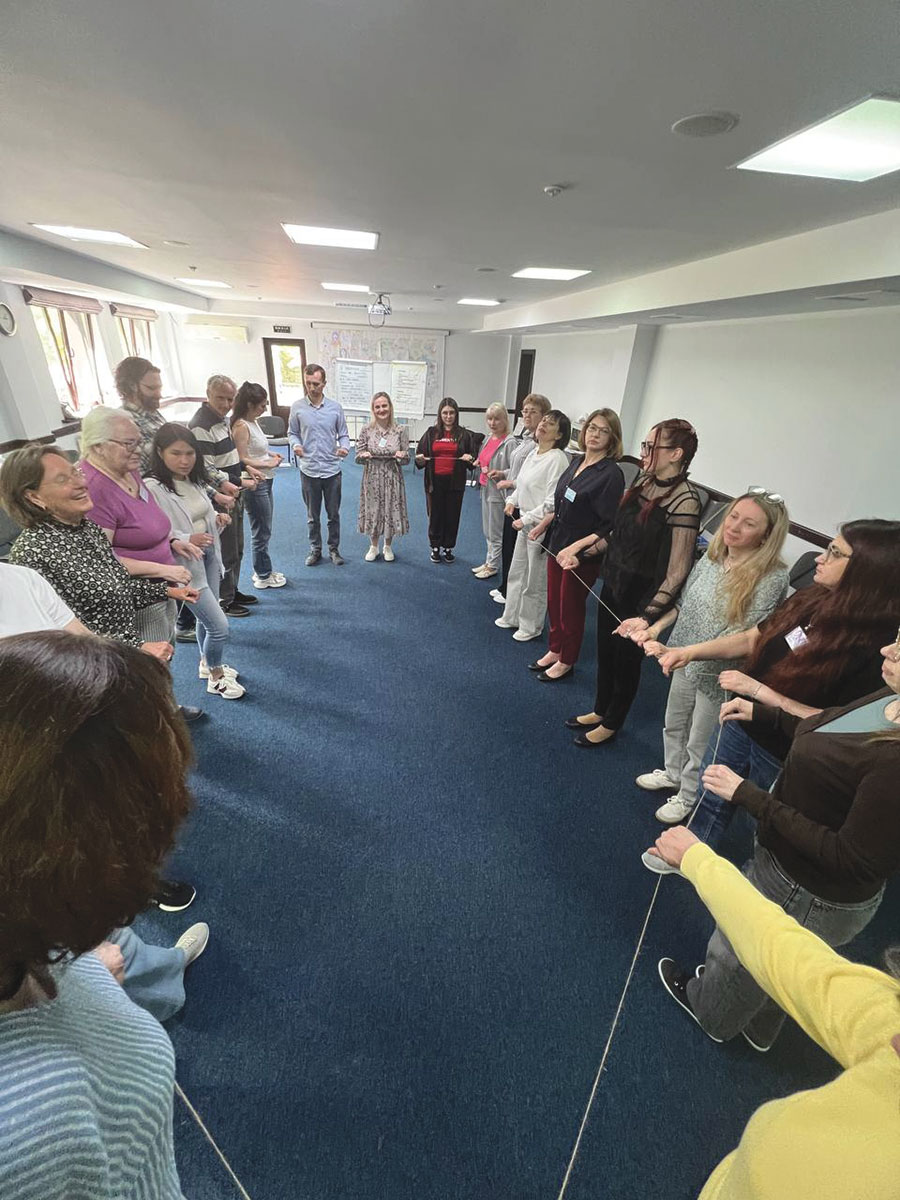
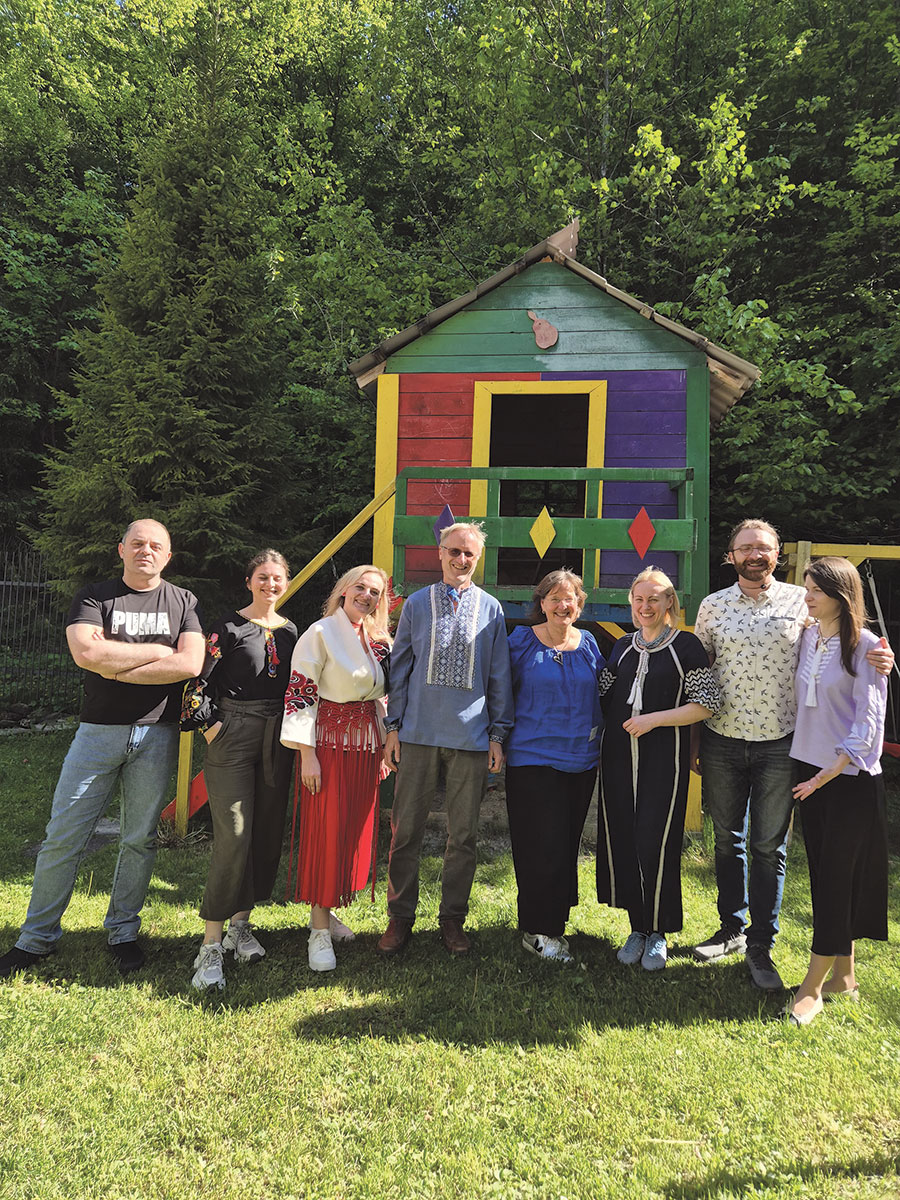
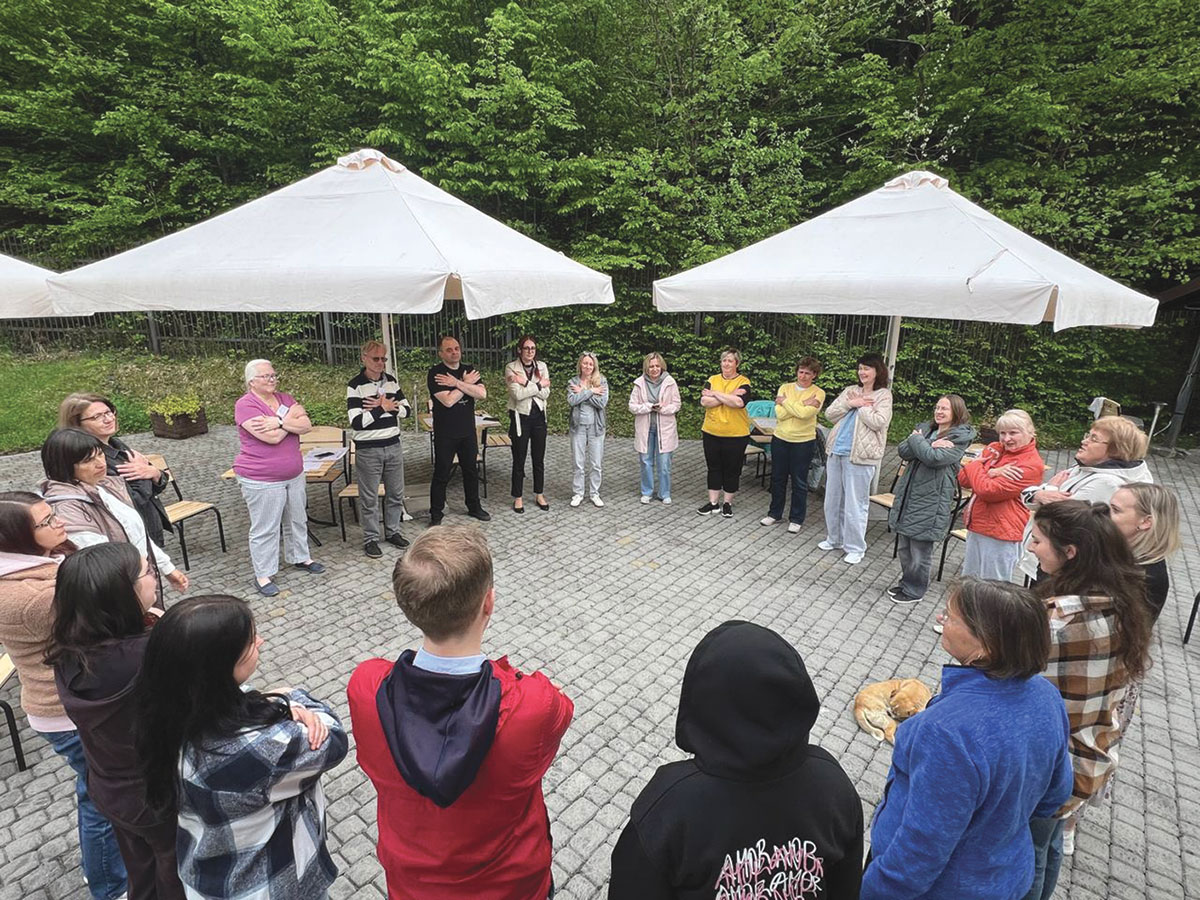
The program was made possible through a partnership across the programmed and unprogrammed branches of Friends. We are grateful for the fundraising efforts of Friends in Western Yearly Meeting, Fairfield (Ind.) Meeting, and to Friends everywhere who helped make this retreat possible. This is a reminder to us all that we are all needed and can work across the lines that we perceive to divide us.
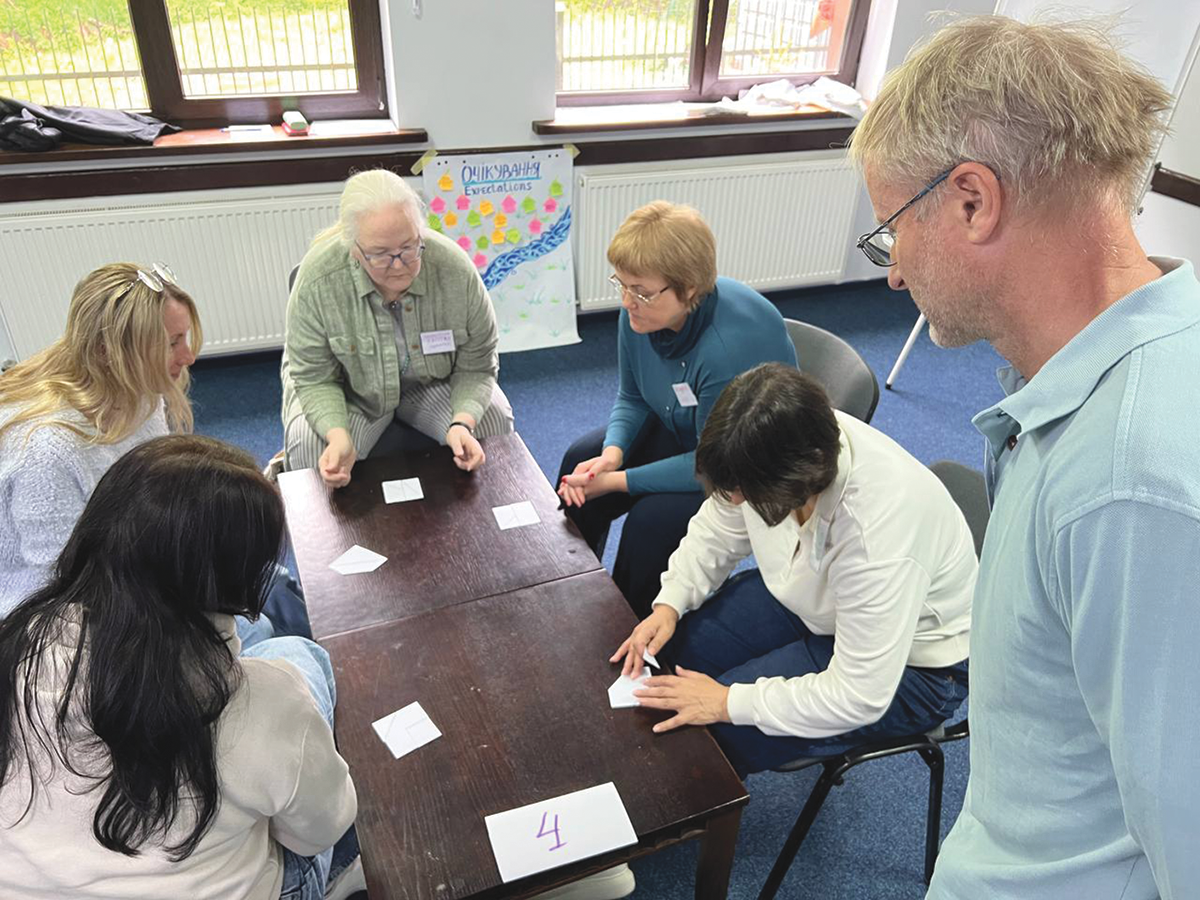
The workshop, titled The Art of Presence, Cultures of Justice and Peace, blended AVP-JP with the trauma relief exercises that Friends Peace Teams Ukraine coordinators Olha and Yulia have been conducting. The program was tailored by Ukrainians for the needs of people experiencing war for the fifth year, with facilitators from Ukraine, the United Kingdom, and the United States. Many participants arrived tense, anxious, and traumatized. The workshop helped them relax, open up, recharge, and build a good sense of community.
As well as surviving over four years of war themselves as teachers and psychologists, they have also been caring for children: continuing their education and helping them deal with the trauma of war. Some teachers shared that they take whole classes of schoolchildren into air-raid shelters, often on a weekly basis, and some for whole days at a time. Teachers from one school close to the frontline conduct all of their teaching underground to keep the children safe.
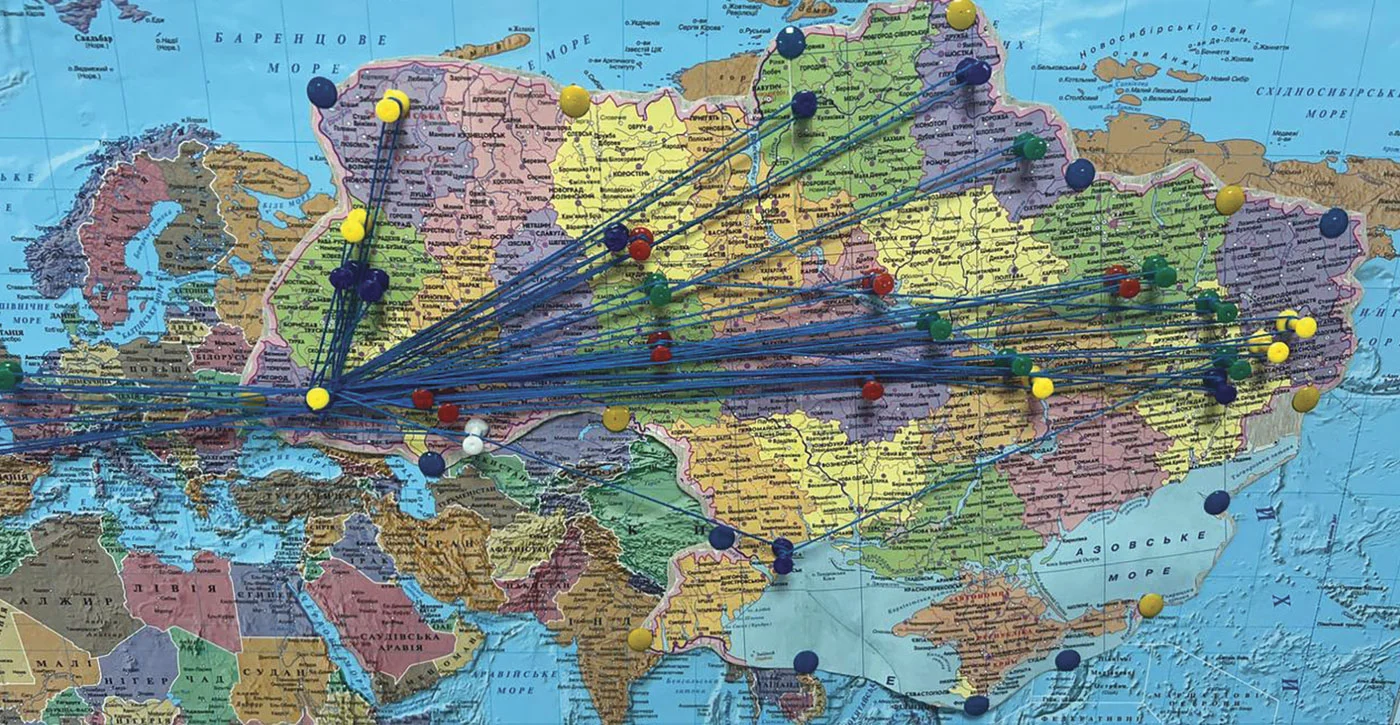
Workshop activities allowed space for participants to consider and plan how to share these new tools with the children and other groups at home. We created a map with threads showing where everyone had come from in the country, including many from the east where the war is most intense. Some participants shared that this was the first time that they had felt relaxed and light since before the war started in 2022: a valuable opportunity to both learn new tools and recharge.
We gathered in a hotel surrounded by forest in the Carpathian Mountains, close to Slovakia, supposedly the safest area in Ukraine. It was held here because people from regions experiencing war can travel to this area easily, meet safely, and enjoy much needed respite. But on day five of the workshop, even this most peaceful far southwestern region of Ukraine was hit by multiple Russian missiles and drones. Despite a three-day ceasefire, phone app alerts urging us to find an air-raid shelter sounded four times during the afternoon and evening. The Slovak government closed the nearby border indefinitely “for security reasons.” Chris and Tanya, British Friends, and Jackson, a former Quaker co-pastor from Western Yearly Meeting in Indiana, had used this crossing to arrive and planned to use it to leave Ukraine. The closure was a real inconvenience for us but for our Ukrainian friends, it was an unremarkable day in a war in which hundreds of thousands of people have lost their lives.
Participants remain connected through a social media group where they continue sharing resources and stories. Olha and Yulia support them on this forum and hope to conduct annual or biannual workshops if support can be found.
One of the workshop participants, Marina shared: “There are places where you go with your body, but come back with your soul. That’s exactly what the psychological training Art of Presence, Cultures of Justice and Peace in the Carpathians became for me.”
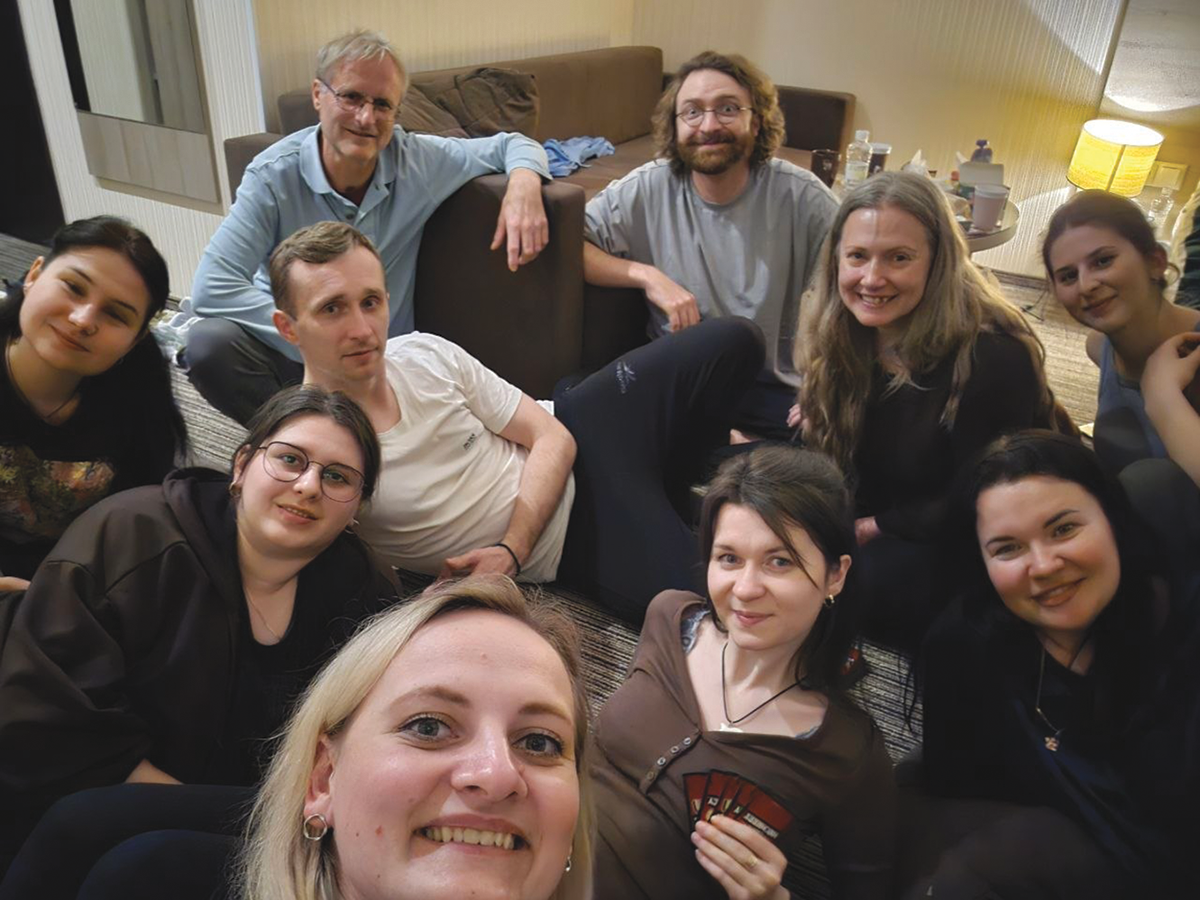
Among the mountains that silently hold the sky, one senses life particularly strongly: real without masks, rushing, and unnecessary noise. The Carpathians have become not just a location but a living metaphor for the inward journey: somewhere you had to rise above your own fears, somewhere you had to go through the fog of doubt, and somewhere you just had to stop and learn to be here and now.
The art of presence is not just about psychology. It’s about the ability to hear the silence within yourself and with people who could be mirrors in which you could see your true emotions. And it was also about warm conversations, views without judgment, and support that heals better than words. And now I know: presence is not just being there. It’s all about being alive in every moment of your life.
“My children don’t like going to the shelter. My son ignores the air-raid sirens, and my daughter sometimes goes down to the shelter,” said Olha. “There are many parents like me in Ukraine. We all worry about the safety of our children and look to the future with hope.”
The workshop will not end the war, but it helped those who attended and those who will benefit from their new skills, mostly children, to keep going through it. It gave people a positive time of respite and a deep sense of companionship and support: in itself a powerful witness of nonviolence in the midst of war.
We want to hear from you, not an AI! Please be thoughtful and use your own words. Comments on Friendsjournal.org may be used in the Forum of the print magazine and may be edited for length and clarity.