



What I’ve Learned from Eleanor Dart
In Holy the Firm, Annie Dillard describes a moth that is drawn to a flame, is caught in it, and “burns, like a wick, for hours.” She is referring to the life of a writer who is transformed by one’s pursuit of truth. This is also true in the religious life. When we apply ourselves to our religious ideals, we are transformed to become a light for others.
The ability of a person to be a light for others is diminished when a person does not value themselves. This can occur through a value system, such as the Christian faith, which emphasizes care for others over care of oneself. This sets the giver against themselves when they believe that others are more worthy of care. To fully claim one’s abilities, a person must value themselves as much as they value others; they must like themselves. To do so is to have a positive identity. Responsibility to oneself, beginning with honesty about one’s wants and needs, enables a person to be responsible to others. Responsibility for oneself in relationships is one’s integrity, and it is maintained by having good boundaries.
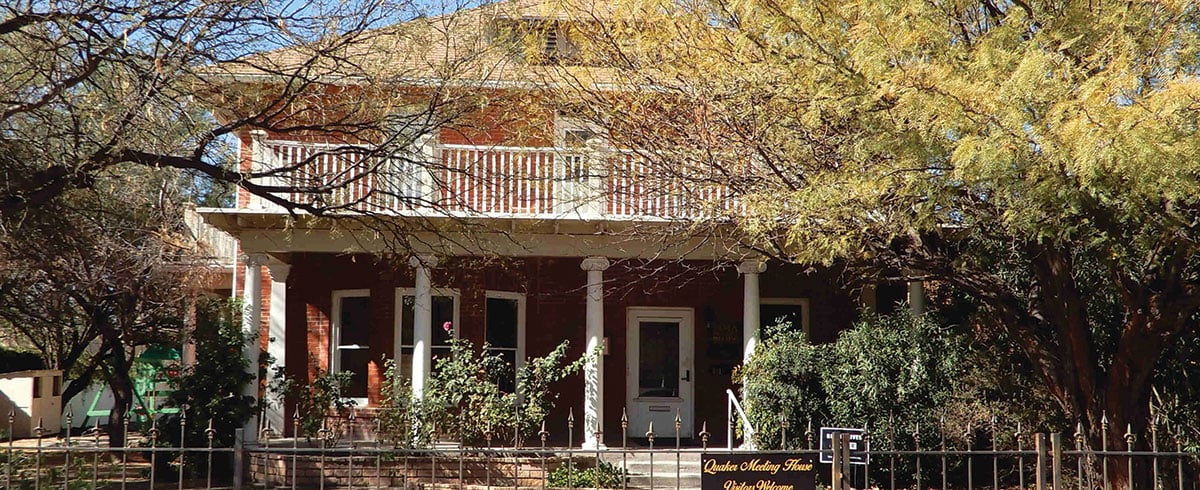
I was raised in the Lutheran Church–Missouri Synod (LCMS), where I was taught that I should always put others’ needs before my own. The LCMS taught that everyone was born with a bad will and could not, of themselves, want to do any good things. My mother also became depressed during my adolescence; she seemed to need someone to agree with her and to support her when the rest of my family did not. I never developed my own boundaries because I always deferred to her. Further, in my family, it was important for a woman not to express or address her needs directly. Female goodness came from not recognizing one’s needs but prioritizing the needs or desires of someone else. This is the antithesis of a positive identity: a person is not supposed to acknowledge themselves at all.
In short, I learned not to have any boundaries. This led to serious mental health problems by the end of high school. Later, psychology and psychotherapy helped me learn to take care of myself and find a way of being religious while maintaining boundaries.
After I graduated from college, I found Unitarian Universalists who helped me acknowledge myself. I eventually had a dream to learn about being in a spiritual community, which I interpreted to mean that I should visit a Quaker meeting. I did, and after I had been at Pima Meeting in Tucson, Arizona, for several years, I found Rufus Jones’s Social Law in the Spiritual World. It allowed me to join what I had learned through therapy about self-care with my study of psychology and my practice of spirituality. Jones explains how a person can develop themselves to embody the values they hold most dear. He writes that each person has a quest to realize one’s relationship to God, or one’s relationship to life itself, through the development of one’s character. Beginning with the emergence of one’s will in early childhood, a person can apply themselves to the real but unseen spiritual values such as “love and sympathy, goodness, and patience.” Jones writes that as we seek to embody our ever-greater understanding of these characteristics, we come to have a “divine–human life.” As we come to be the person we actually like, we’ll want to maintain our identity to be able to share ourselves with others; in other words, we want to have good boundaries.
When I first came to Pima Meeting, I was amazed by the number of women who were able to state their own needs and positions plainly and without apology. It is clear, in this community, that people have different opinions and a person has to do what they think is right, even if that is not what other people want to do.
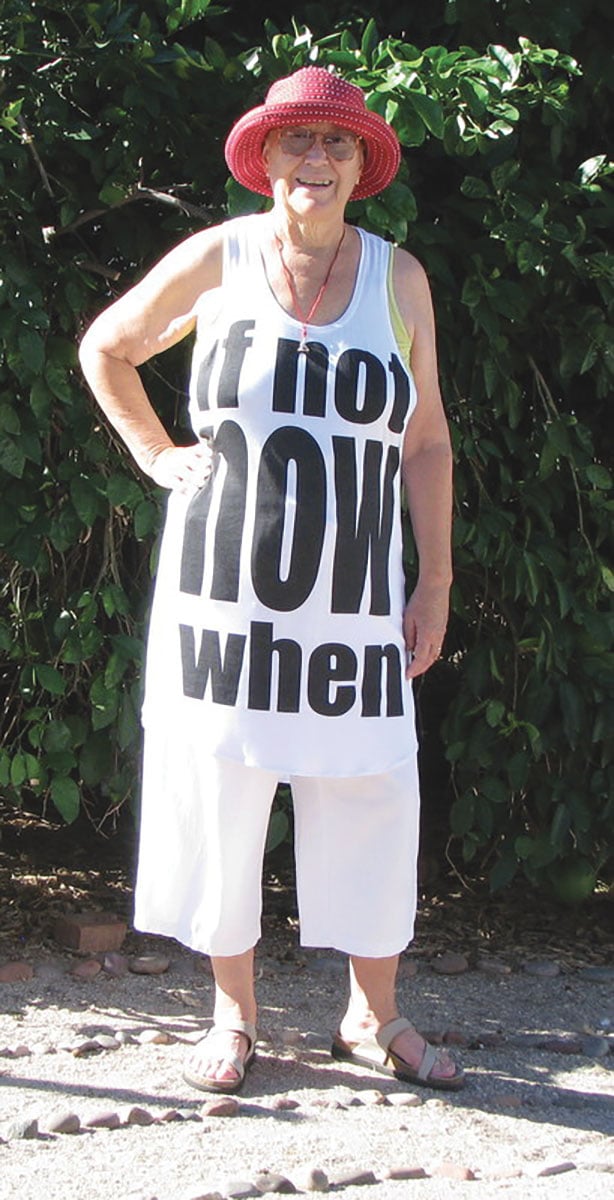
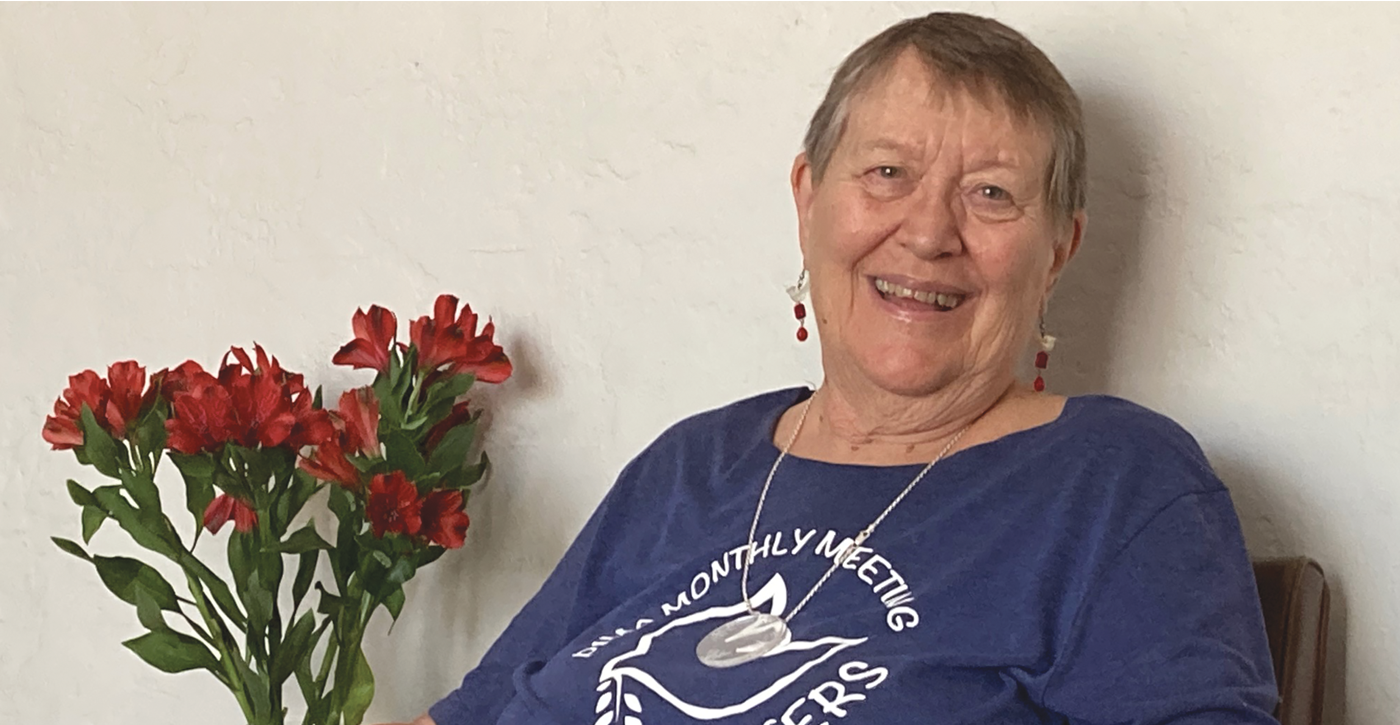
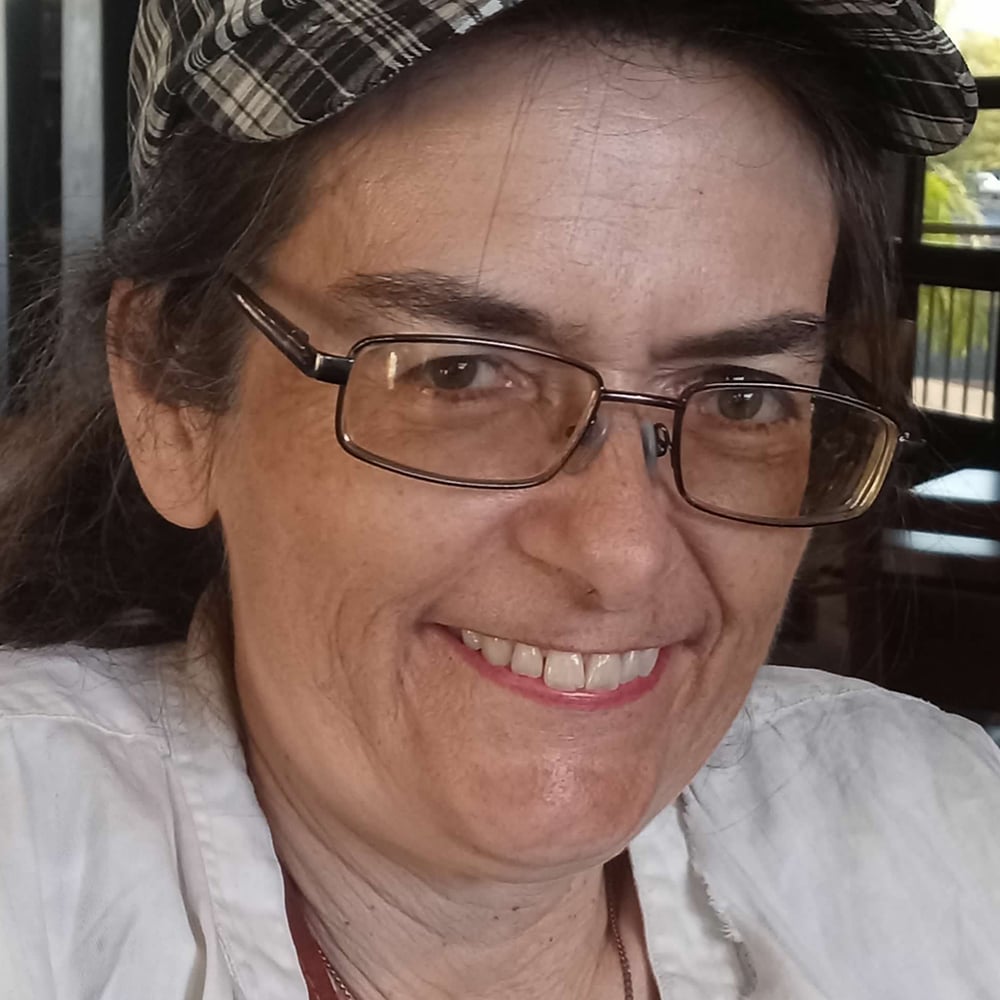
One woman in particular, Eleanor Dart, an elder at Pima Meeting who is active in Intermountain Yearly Meeting, impressed me with her ability to be honest about her limits. She was able to share her truths, which come from her vulnerability. Recently, we sat down to talk about how she became able to establish and maintain good boundaries.
Early in her life, Eleanor experienced a gross violation of her boundaries: Eleanor and her sister were sexually abused as infants by a family member (not their father). Memories of these experiences were repressed but were the underlying reason for her anger as a young adult.
Because anger was unacceptable to her family and her Quaker meeting, she withdrew from her family and her meeting. The memories of her abuse resurfaced when she was 40, and she began therapy, which she continued for five years. She also attended an Incest Survivors Anonymous group twice a week. Through both of these experiences, she gained support to recognize and talk about what had happened, was able to work through her anger, and to reconnect with her family and her Quaker life.
At first, the experiences of abuse and the refusal of her family and her Quaker meeting to accept her anger inhibited Eleanor from developing a positive identity. Her words follow:
I think that I felt that I was a bad person for a very long time, partly because of the abuse, [because] children think they deserve it. I was nonverbal at the time this happened to me, but still, it’s like darkness comes at you, and you absorb some of that, and you think it’s yours. The darkness didn’t belong to me; I was an infant; it belonged to my family member, but I certainly absorbed some of that, and then, [I was] also . . . the rebel in my family. (“We are an all-good Quaker family and we don’t talk about anger and stuff like that; we don’t do that.” But I did it.) I expressed and acted out anger, and I got punished for it, so I really had a sense of myself as part of me was bad and shameful.
Through help from other people, Eleanor became self-affirming.
When I became aware of my history, which was through flashbacks and was very traumatizing. (I got therapy and attended a support group for incest survivors.) So there was a lot of support in that context, to name it—the secret I had been carrying without knowing it, that had everything to do with so much about my history, and so much pain, and so much alienation. I became more aware of what had happened and not afraid to say so. And that suited me. It also suited my inclination. I think I’ve had that inclination since I was born; I want to tell the truth.
A clinical consultation group also helped Eleanor address issues without feeling a sense of shame. Through her own studies to become a therapist, Eleanor met an extremely capable facilitator whom she asked to lead a clinical consultation group.
For like eight years, I met once a week with a group of therapists with her as a leader, and she would not let us avoid things that were limiting our ability to do good work as therapists. She was really good at seeing it and challenging you to look at it in yourself. . . . That was all about facing up to mistakes and not being ashamed but learning from them. . . . We really, really looked at that stuff and that helps because there was no shame in that group. She didn’t shame us. She just said, “Ok . . . now look at this stuff. Look at it. What are you going to do to become the person you want to be?”
Through the years, Eleanor has learned how to set boundaries to be in better relationships with other people. When she is responsible to herself, she is able to be responsible to other people. She has learned that when she does not acknowledge her own limitations, she can end up hurting other people. In 2014, Eleanor was diagnosed with cancer, and she said the following while she was being treated:
I sat down and I made a chart of the prior five or ten years, of all the things I had been doing and I looked at it, and I got it. I saw that I had been overdoing and exhausting myself physically to where my immune system was trashed over a period . . . of at least five years. Of course I got cancer, of course my body forced me to stop. So I’ve learned—that’s a huge one—but I’ve learned from experiences like that, the trouble that will result, not just for me but imagine for my husband and my family—maybe I’m going to die now, or I’m so sick that I need to be taken care of in a major way over a period of years. You know, that’s a terrible burden to put on others, even if they love you and they’re perfectly willing to do it. If I [can avoid that], that would be better. So, realizing the damage I’ve done and realizing I don’t want to do that kind of damage anymore. . . .
This led her to place limitations on herself and to say no when she needed to. Eleanor further states that a person can learn to respect their limitations by listening to themself:
I kind of think there is a Quaker model in there, and it has to do with leadings. I perceive leadings as everything from very small to very large. So when I’m asked to do something, I ask myself, am I led? And it might be something really small, but it’s still the right question: am I led? And not wanting to, is what my sister [with whom Eleanor has an informal clearness process when they are asked to do anything within their meetings], who always helps me, calls “a stop in the mind”: kind of like a little stop sign in your mind that flips up and says, “I don’t wanna,” or it’s saying no in some form, and, if you have a stop in the mind, you’ve got to respect that because you’re headed into doing something you don’t want to do.
She further clarifies:
There are things in life that I am not led to do, and I do them even though I don’t want to, because they’re part of life. I don’t want to clean my house; I don’t like cleaning the house . . . there’s a certain amount of things having to do with being in a marriage and having a home that I don’t want to do, but I want to have my marriage work more than I don’t want to do them. So sometimes I have a stop in the mind that’s self-indulgence—I just would rather read another book than do anything, like wash a floor—so a stop in the mind needs to be inquired into: is it self-indulgence? Or is it in some strong internal place that not only do I not want to [but] that there also isn’t an imperative that will override that? That’s important.
Cause sometimes there is, and I have to respect that. So if I’ve done that kind of discernment—and that can happen very quickly, or not—then I don’t have trouble saying no. Well . . . there’s this long history in terms of women and feminism and learning to say no. Somebody said to me once (this is Quakerism again) that in order to say one strong yes, you have to say five strong nos. So if I want to be able to have my yes—to have the light and energy to carry out a leading that is a yes—I have to say no to the things that will divert me. That’s a hard thing to learn in this world . . . and I think it may be harder for women because historically we haven’t been brought up well to say no. So there’s a learning curve there, and I’m past the point now [laughs] where it’s difficult for me. Um, doesn’t mean I’m always going to get it right, but I’m pretty good at saying no. And if you’re going to say it, say it!
Following one’s leadings helps a person have better relationships. Eleanor explains:
See, if I say yes to something that someone wants me to do, but I really don’t want to do it, I’m going to end up being a pissy person. I’m going to end up mad at them; I’m going to end up annoyed; I’m going to end up shirking it; I’m going to end up not doing it and feeling guilty. I mean there are all kinds of bad consequences that will interfere with my relationship with this person I care about, who really wants me to do something, or maybe it’s the meeting, and I’ll f— it up. I’ll muddy it. If I start to do something I really don’t want to do, it’s going to create trouble [that] we will then have to overcome, and it’s better not to get into it to begin with.
Honoring our boundaries allows us to embody our greatest values, to be the Light we truly wish to be. As Eleanor has illustrated, we sometimes lose our sense of wholeness through our experiences in the world, but through relationships with other people, we can regain appropriate boundaries. Honoring our boundaries and the boundaries of others is our integrity. We become the embodiment of our greatest ideals and a light to others.
We want to hear from you, not an AI! Please be thoughtful and use your own words. Comments on Friendsjournal.org may be used in the Forum of the print magazine and may be edited for length and clarity.