



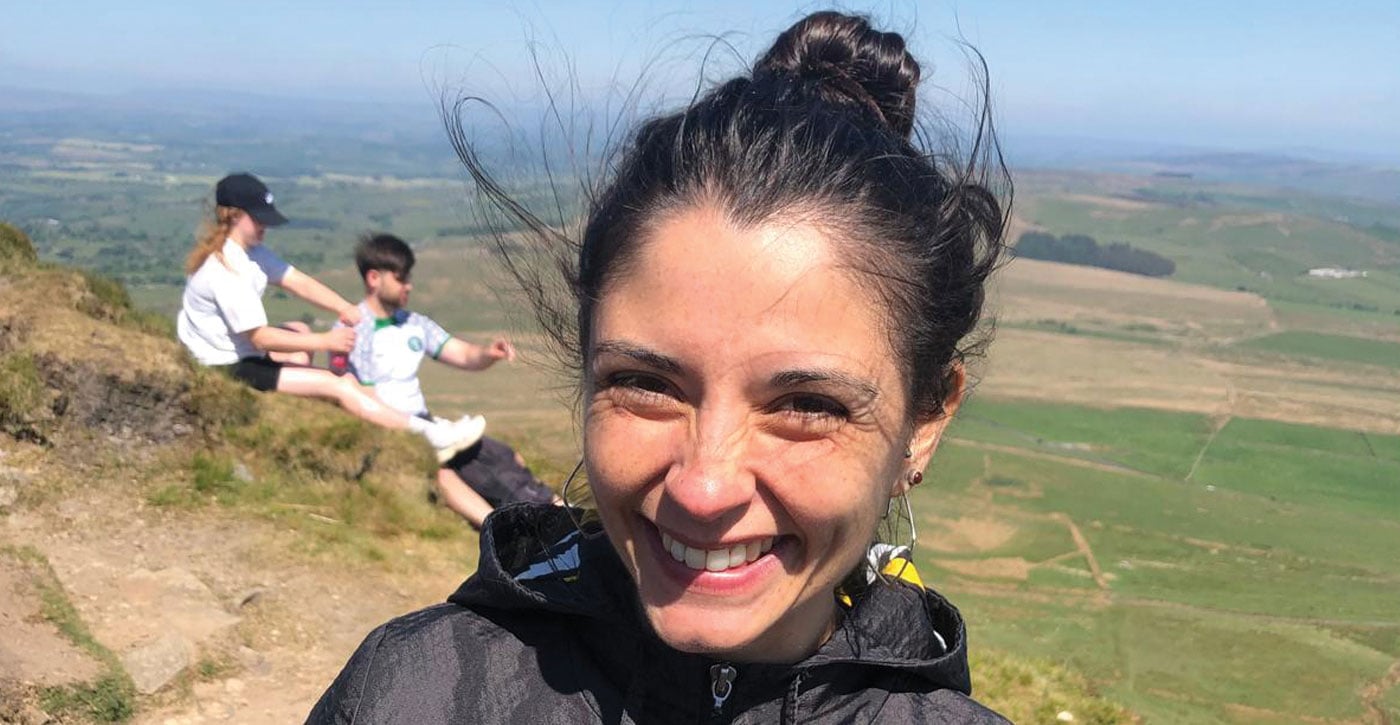
My Latin American Faith Journey
My paternal grandparents arrived in Costa Rica from Fairhope, Ala., in the 1950s. They were part of the group of Quaker families whose pacifist values led them to defy the American draft and leave the United States, settling in Costa Rica, a country that had abolished its army in 1948. Seeking to live in peace and community, they founded Monteverde, and started an unprogrammed meeting and a school. It’s a beautiful haven that continues to thrive today.
Although my father grew up in the Quaker tradition, he later chose an evangelical path, and it was there that he met my mother. They married, and after I was born, they raised me in that faith. Nonetheless, as a family, we also participated in some Quaker community activities organized by Monteverde Meeting, such as shared lunches and the Christmas program.
I grew up between two spiritual worlds, and also between two different ways of understanding the role of women, power, and the relationship with the Divine. In the evangelical context, my experience was shaped by a patriarchal worldview. I did not know any female pastors, at least not in the church we attended. There was frequent discussion of the woman’s role as homemaker; mother; and faithful companion to her husband, the head of the household. Terms such as “spiritual warfare” were common, and we were taught the concept of the fear of God, fear of sinning, fear of outsiders, and fear of hell. I felt that I needed to remain vigilant at all times.
When I entered seventh grade at the Friends school in Monteverde, which is under the care of Monteverde Meeting, I carried deep insecurities and an aggressive attitude that concealed my need for protection. Yet it was there that a profound transformation began—one that was neither immediate nor linear but constant and radical.
One of the first lessons that deeply affected me was about nonviolent conflict resolution. I found it revolutionary to be able to engage in dialogue across differences without raising my voice, exaggerating, or imposing myself. I connected with the idea that every voice matters, including my own; that I can set boundaries without shouting; and that I can speak from my center and be heard. I learned that peace is not merely the absence of war but a daily practice of active listening and shared understanding.
Later, I discovered another idea that changed my life: I do not need books or hierarchies to connect with the Sacred. There is an Inner Light and a living wisdom within every person, accessible through silence and stillness. From that Light, everything becomes possible. No demon from the past can hold me captive if I possess the power to learn and transform. I can observe everything, feel everything, explore everything, and then choose what resonates with my truth. And I learned something even more radical: silence.
Those who know me understand that I have always been restless. If my body is not moving, my mind races intensely. Yet having the opportunity to practice an hour of silence every week throughout my adolescence has been one of the greatest gifts I have ever received. I learned that it does not matter where I am, who I am with, or what I am experiencing: I always have access to my own inner sanctuary. All I need to do is close my eyes, become silent, and listen to myself. Silence has brought me back to myself again and again. Doesn’t that sound like a truly liberating combination for life?
This is how a girl raised among expectations, fears, and hierarchies discovered that her voice had value. That she could think, feel, and choose from love rather than fear. That she could be a free woman within a context still influenced by machismo.
Over time, I have often wondered what it means for me to be Quaker, especially in Latin America, where the majority of Friends—outside of Costa Rica—practice Quakerism in evangelical, programmed meetings. I do not see myself as the most plain or the most “proper” person in the traditional sense. I love rings and earrings; I enjoy a glass of wine while watching the sunset; I tell provocative jokes; and I use language playfully and with wit. If I were walking through any city, nothing about my appearance would identify me as a Quaker.
And yet, in the deepest part of my being, I have chosen to live faithfully according to my Inner Light. Many times, I fail and doubt, but every day I choose to listen to myself more carefully, respect myself more lovingly, and express myself more clearly.
I choose to live the testimony of peace in all its forms and colors.
I choose to act with gentleness toward everything around me.
I choose to bring harmony to my thoughts, emotions, and actions.
I choose to share, regenerate, and build community.
I honor that I am a free and diverse Latin American woman, carrying the same sacred worth as all people and living beings.
Perhaps all of this sounds like the path of any person, not necessarily a Quaker, who has chosen to live in a regenerative way. Yet there is something uniquely powerful in the combination I experienced among the Quakers of Monteverde: silence, community diversity, and a deep connection with nature. I hope that essence continues to intertwine with my Latin roots and continues to accompany me on my journey.
Gracias por compartir tu luz. Tu texto me ha tocado el corazón. Disculpa por esta redacción. Sé muy poco español y las apps de traducción no son las mejores.